
Chef Juliette
John Dory (St. Pierre)
John Dory has the delicacy of sole and the firmness of turbot. A light flouring, a quick butter sauté, and nut-brown beurre noisette show exactly why looks never mattered.
A cooking platform built around craft, culture, and the stories behind what we eat.
Created by Chef Juliette
Based on No. 1065, Filet de Bœuf Perigourdine, from Le Guide Culinaire (1907) by Auguste Escoffier
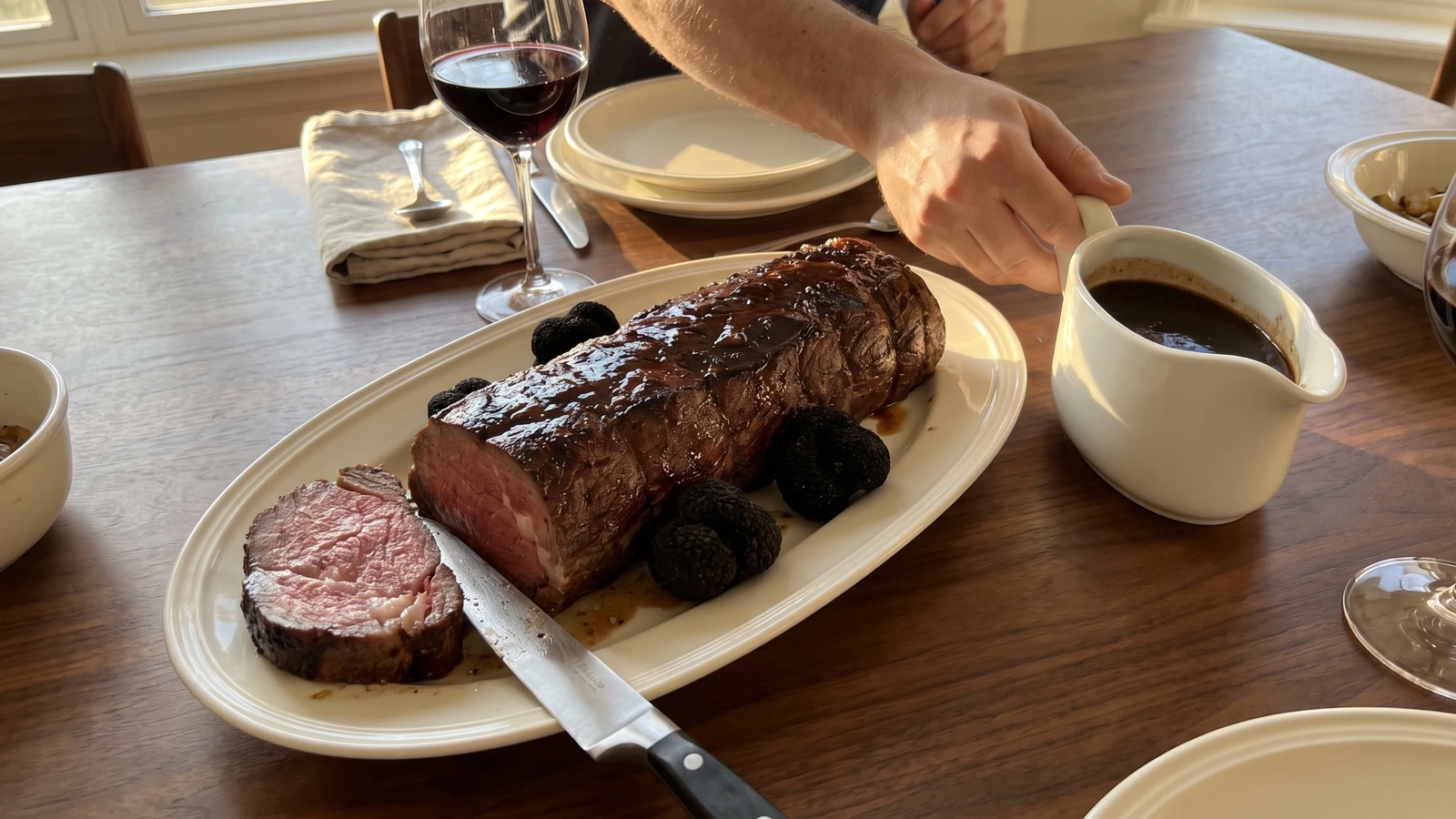
A butter-poëled beef fillet, lacquered with its own juices and ringed by whole black truffles cooked in Madeira, with Périgueux sauce at the side: Périgord's grand lesson in keeping luxury precise.
Filet de Bœuf Périgourdine (beef fillet with whole truffles and Périgueux sauce) teaches a severe and useful lesson: when an ingredient gives the dish its name, you don't scatter it on at the end. The truffles are cooked whole in Madeira with fine Mirepoix (No. 228), arranged generously around the fillet, and echoed by the sauce served apart. Truffle is the point, not garnish.
The original assumed a larding needle, a deep poëling pan, a saucier guarding the Périgueux sauce, a stock never off the fire, and enough hands to finish meat and truffles together. At home, a narrow knife and skewer replace the larding needle, a snug covered casserole handles Poëlings (No. 250), and the linked preparations are readied before the beef meets heat. That separation is brigade scaffolding. What stays is the dish itself: larding, butter-rich poëling, whole Madeira-cooked truffles, a shining glaze, and Périgueux sauce sent separately. One cook, one stove, one evening.
When it lands correctly, the fillet is Maillard-bronze outside and evenly rosy within, the whole truffles are black and glossy, and every thick slice receives sauce only after it reaches the plate. The one step that decides everything is the moment you pull the beef from the oven. Use a thermometer and take it out before it reaches its final temperature; tenderness cannot rescue an overcooked fillet.
Filet de Bœuf Périgourdine belongs to Périgord, the black-truffle country surrounding Périgueux in south-western France. Classical kitchens carried that regional larder into the national canon by poëling a whole fillet, surrounding it with whole truffles cooked in Madeira, and sending Périgueux sauce separately. The distinction matters: Périgourdine here promises whole truffles as a true accompaniment, not merely chopped truffle hidden in a sauce.
Quantity
1 fillet, 2 lb (900 g)
trimmed
Quantity
2 oz (55 g)
chilled and cut into 4 long batons
Quantity
1½ teaspoons (7.5 ml / 9 g)
Quantity
¾ teaspoon (3.75 ml / 1.5 g)
Quantity
1 home-scaled preparation Poëlings (No. 250), sufficient for one 2 lb (900 g) beef fillet
Quantity
4 medium truffles, about 5 oz (140 g)
scrubbed, or whole preserved truffles, drained
Quantity
½ cup (120 ml / 100 g) fine Mirepoix (No. 228)
Quantity
1 cup (240 ml / 240 g)
Quantity
1 tablespoon (15 ml / 14 g)
Quantity
1 cup (240 ml / 250 g)
Quantity
2 tablespoons (30 ml / 30 g)
only if needed to loosen the sauce
| Ingredient | Quantity |
|---|---|
| center-cut beef fillettrimmed | 1 fillet, 2 lb (900 g) |
| ready-to-eat unsmoked cured pork back fatchilled and cut into 4 long batons | 2 oz (55 g) |
| fine sea salt | 1½ teaspoons (7.5 ml / 9 g) |
| freshly ground black pepper | ¾ teaspoon (3.75 ml / 1.5 g) |
| Poëlings | 1 home-scaled preparation Poëlings (No. 250), sufficient for one 2 lb (900 g) beef fillet |
| whole black Périgord trufflesscrubbed, or whole preserved truffles, drained | 4 medium truffles, about 5 oz (140 g) |
| fine Mirepoix | ½ cup (120 ml / 100 g) fine Mirepoix (No. 228) |
| medium-dry Madeira | 1 cup (240 ml / 240 g) |
| cold unsalted butter | 1 tablespoon (15 ml / 14 g) |
| finished Périgueux sauce | 1 cup (240 ml / 250 g) |
| cold water (optional)only if needed to loosen the sauce | 2 tablespoons (30 ml / 30 g) |
Take the beef from the cold 45 minutes before cooking. Chill the pork-fat batons until rigid. With a larding needle, draw them lengthwise through the fillet so each future slice carries a little fat. Without one, make narrow channels from both ends with a slim boning knife, keeping the blade pointed away from your supporting hand, then guide the batons through with a bamboo skewer. If the fat bends or the beef begins to tear, stop and chill both for 10 minutes; cold fat passes cleanly. Season with the salt and pepper, then tie the fillet at 1-inch (2.5 cm) intervals to give it an even cylinder.
Carry out the home-scaled Poëlings (No. 250) with the tied fillet, keeping its proportions and method intact. Begin checking the center after 20 minutes, then every 5 minutes. Remove the beef when it reaches 120 to 122°F (49 to 50°C) for a final rosy medium-rare temperature after resting. If the pan contents smell sharply burnt before the beef is ready, move the fillet and the clean cooking fat into a fresh snug pan at once; leave every blackened scrap behind and continue the poëling.
While the fillet finishes, place the whole truffles in a small saucepan with ¾ cup (180 ml / 180 g) of the Madeira and the fine Mirepoix (No. 228). Cover and hold at the barest tremble for 12 to 15 minutes, turning the truffles once, until they are heated through and deeply aromatic. The Madeira should bathe them gently, never boil hard. If its level falls too quickly, add the reserved Madeira a spoonful at a time. Whole preserved truffles are already cooked, so warm them for only 5 minutes.
Transfer the fillet to a rack set over a warm plate and rest it loosely covered for 15 minutes. Its center should rise to about 129 to 131°F (54 to 55°C), while the juices settle back through the meat. If it reaches that temperature sooner, uncover it completely. Do not return it to the oven for reassurance; the final glaze will warm its surface without driving the center further.
Lift out the truffles and keep them covered. Strain their Madeira liquor through a fine sieve without pressing the Mirepoix, then reduce the clear liquid in a clean saucepan until about 3 tablespoons (45 ml / 45 g) remain and it lightly coats a spoon. Take it off the heat and swirl in the cold butter, then roll the truffles through this glaze. If the glaze turns greasy, whisk in a teaspoon of reserved Madeira and keep the pan off the heat. Ça se rattrape.
Take the strained, degreased poëling stock produced by Poëlings (No. 250) and reduce it in a small saucepan until glossy enough to cling to the beef in a thin coat. If fat gathers on the surface, let the pan stand for a minute and spoon it away before reducing further. If the stock tastes too salty before it reaches a glaze, stop reducing and use a little of the truffle Madeira glaze instead. Brush the hot glaze over the rested fillet twice, waiting a few seconds between coats.
Warm the finished Périgueux sauce over very gentle heat, stirring from the bottom, until it flows from a spoon in a broad glossy ribbon. Do not let it boil. If it tightens too far, loosen it with cold water one teaspoon at a time; if fat beads at the edge, take it off the heat and whisk in another teaspoon of cold water until smooth. Transfer it to a warm sauceboat.
Remove the strings and set the glazed fillet lengthwise on a heated oval platter. Arrange the four whole glazed truffles around it, carrying every drop of their Madeira glaze onto the platter. Bring the fillet whole to the table and carve it into thick slices there, giving each person one truffle. Send the Périgueux sauce separately so the cook's glaze remains visible and each guest can spoon sauce beside the beef. À table!
1 serving (about 300g)
Culinary guides, cultural storytelling, and the editorial depth that makes cooking meaningful.
Discover Culinary ExplorerChef Juliette
John Dory has the delicacy of sole and the firmness of turbot. A light flouring, a quick butter sauté, and nut-brown beurre noisette show exactly why looks never mattered.

Chef Juliette
Fresh haddock proves its delicacy in the meunière pan: a fine flour crust, moist pearly flakes, and beurre noisette sharpened with lemon and parsley, ready from one skillet in half an hour.

Chef Juliette
Éperlans à l’Anglaise turns small fish into a lesson in disciplined coating: boned smelts under a close, crisp crumb, pan-fried in clarified butter and finished with bright, half-melted maître d’hôtel butter.

Chef Juliette
Tiny smelts, shallot, mushrooms, white wine, gratin sauce, and fine bread raspings meet a fierce oven, where the fish must turn tender in the same breath the buttered crust bronzes.