Chef Juliette
Fillet of Beef (Relevé)
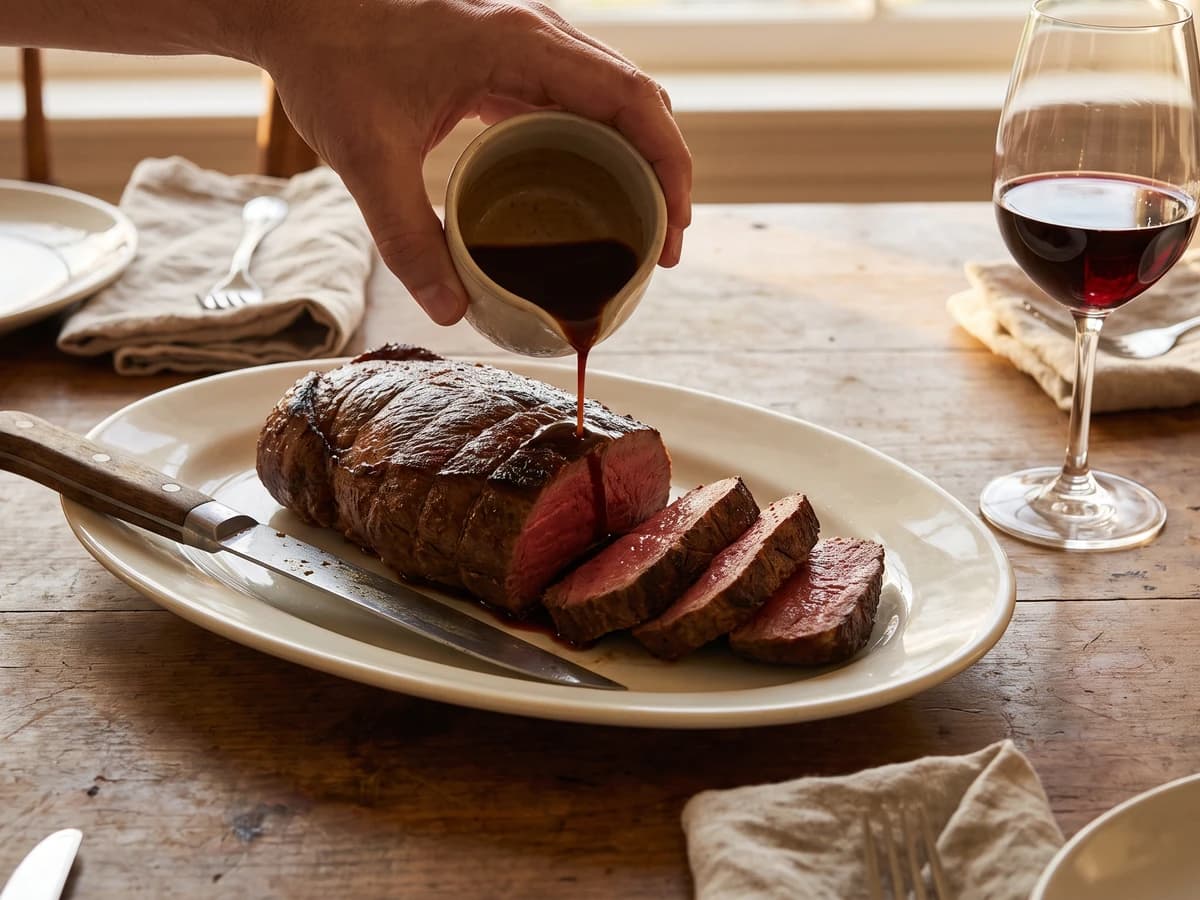
A whole rosy fillet, larded with cool fatback and poêlé beneath butter, then carved thick under glossy jus. The lesson is exact but simple: deep colour outside, red tenderness within.
A cooking platform built around craft, culture, and the stories behind what we eat.
Created by Chef Juliette
Based on No. 1056, Filet de Bœuf Japonaise, from Le Guide Culinaire (1907) by Auguste Escoffier
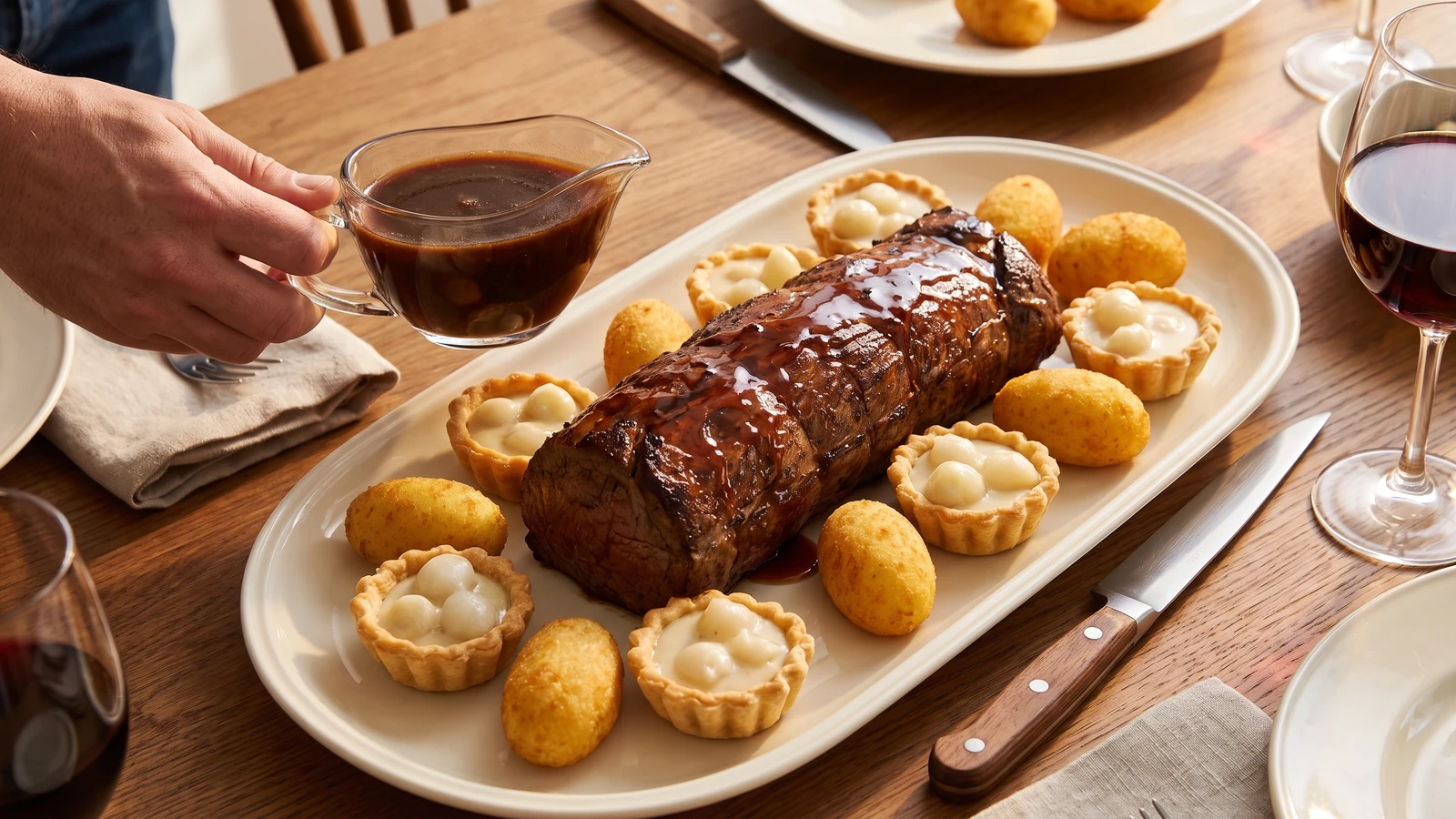
Filet de Bœuf Japonaise turns one poëled fillet into a composed feast, with ivory crosnes tucked into crisp croustades, egg-shaped potato croquettes, and the beef's own clear, butter-rich gravy.
Filet de Bœuf Japonaise (beef fillet gently butter-roasted with crosne-filled pastry shells and potato croquettes) teaches composition. Three preparations must arrive together, but only one may wait: the fillet rests while the croquettes fry and the croustades are filled. Reverse that order and the crisp garnishes sit themselves soft. That is the one true thing to know before touching a pan.
The original assumed a larding needle, a saucier on duty, stock never off the fire, a drying box for pastry, a salamander for glazing, and enough hands to fry while someone else strained the gravy. Your kitchen gets honest equivalents: a narrow knife and chopstick thread the chilled fatback, Croûtes et Croustades (No. 2393) are made ahead or first, Poëlings (No. 250) is scaled to one compact roast, a small saucepan builds the velouté, and the broiler supplies the final lacquer. The brigade choreography is scaffolding and can go. The butter poëling, crosnes bound with velouté, freshly fried croquettes, and clear gravy served separately are the dish, so they stay.
Done properly, Japonaise arrives burnished and generous: glossy beef at the center, pale knobbled crosnes nested in crisp fluted shells, golden croquettes between them, and a sauceboat that tastes of the roast rather than grease. One cook, one stove, one evening. Rest the fillet fully before you fry the croquettes and fill the croustades; that order decides the dish.
Filet de Bœuf Japonaise belongs to the formal Parisian repertoire, where a principal roast was often named for the composed garnish arranged around it. Japonaise refers to crosnes, the knobbled tubers called Japanese artichokes, which entered French market gardening through Crosne, outside Paris; it does not indicate soy, ginger, or Japanese seasoning. Bound in velouté, spooned into croustades, and alternated with potato croquettes, the garnish shows how generations of grand-kitchen cooks absorbed a newly encountered vegetable into French service.
Quantity
1 roast, 2 lb (900 g)
evenly trimmed
Quantity
2 oz (55 g)
cut into 6 slender lengthwise batons
Quantity
1 home-scale preparation Poëlings (No. 250), sufficient for one 2 lb (900 g) beef fillet and its gravy
Quantity
8 from Croûtes et Croustades (No. 2393), each about 2½ inches (6 cm) wide
baked and thoroughly dried
Quantity
12 oz (340 g)
Quantity
2 tablespoons (30 ml / 36 g)
for cleaning the crosnes
Quantity
1 tablespoon (15 ml / 15 g)
Quantity
4 tablespoons (60 ml / 56 g)
divided between the velouté and croquettes
Quantity
2 tablespoons (30 ml / 16 g)
for the velouté
Quantity
1 cup (240 ml / 240 g)
divided
Quantity
1¼ lb (570 g)
peeled and quartered
Quantity
2
Quantity
⅛ teaspoon (0.6 ml / 0.25 g)
Quantity
⅓ cup (80 ml / 40 g)
for breading
Quantity
2
beaten
Quantity
1½ cups (360 ml / 135 g)
Quantity
6 cups (1.4 L / 1.3 kg)
Quantity
1 tablespoon (15 ml / 18 g)
divided
Quantity
½ teaspoon (2.5 ml / 1 g)
divided
Quantity
½ teaspoon (2.5 ml / 1 g)
| Ingredient | Quantity |
|---|---|
| center-cut beef tenderloin roastevenly trimmed | 1 roast, 2 lb (900 g) |
| chilled unsmoked pork fatbackcut into 6 slender lengthwise batons | 2 oz (55 g) |
| Poëlings | 1 home-scale preparation Poëlings (No. 250), sufficient for one 2 lb (900 g) beef fillet and its gravy |
| small grooved pastry casesbaked and thoroughly dried | 8 from Croûtes et Croustades (No. 2393), each about 2½ inches (6 cm) wide |
| fresh crosnes (Japanese artichokes) | 12 oz (340 g) |
| coarse saltfor cleaning the crosnes | 2 tablespoons (30 ml / 36 g) |
| fresh lemon juice | 1 tablespoon (15 ml / 15 g) |
| unsalted butterdivided between the velouté and croquettes | 4 tablespoons (60 ml / 56 g) |
| plain flourfor the velouté | 2 tablespoons (30 ml / 16 g) |
| unsalted light veal or chicken stockdivided | 1 cup (240 ml / 240 g) |
| floury potatoespeeled and quartered | 1¼ lb (570 g) |
| large egg yolks | 2 |
| freshly grated nutmeg | ⅛ teaspoon (0.6 ml / 0.25 g) |
| plain flourfor breading | ⅓ cup (80 ml / 40 g) |
| large eggsbeaten | 2 |
| fine dry breadcrumbs | 1½ cups (360 ml / 135 g) |
| neutral frying oil | 6 cups (1.4 L / 1.3 kg) |
| fine saltdivided | 1 tablespoon (15 ml / 18 g) |
| ground white pepperdivided | ½ teaspoon (2.5 ml / 1 g) |
| freshly ground black pepper | ½ teaspoon (2.5 ml / 1 g) |
Complete the eight small grooved cases from Croûtes et Croustades (No. 2393) as their own linked preparation, then hold them uncovered in a dry place. Set out everything required for the home-scale Poëlings (No. 250), measured for the 2 lb (900 g) fillet. These linked preparations stay whole here because each carries its own method; the work of this dish is timing them together.
Cover the potatoes with cold water, season with some of the fine salt, and simmer until completely tender, about 15 to 18 minutes. Drain well, return them to the dry pan over low heat for a minute, then pass them through a ricer or mash until smooth. Beat in 2 tablespoons (30 ml / 28 g) butter, the yolks, nutmeg, a pinch of white pepper, and enough salt to taste. Cool until manageable, divide into eight equal portions, and mould each into the shape of a small egg. If the mixture slumps, don't bury it in flour. Spread it on a tray and chill for 15 minutes; ça se rattrape. Chill the shaped croquettes for at least 30 minutes.
Put the crosnes in a clean towel with the coarse salt and rub them firmly so the thin outer skin loosens from their ridges. Rinse under cold water, then hold them in a bowl of cold water acidulated with the lemon juice. Simmer them in fresh salted water for 6 to 8 minutes, just until a knife enters with slight resistance. Drain immediately. They must remain themselves beneath the velouté, tender but not collapsing.
Heat the oven to 375°F (190°C). Use a larding needle, or make six narrow lengthwise channels through the beef with a slim boning knife and guide each chilled fatback baton through with a clean chopstick. Tie the fillet at even intervals, then season it with fine salt and black pepper. Carry out Poëlings (No. 250) in a snug covered casserole, scaled to this fillet. Begin checking the center after 22 minutes and follow the linked preparation through its uncovered coloring stage. Remove the beef when its center reaches 138 to 140°F (59 to 60°C), then rest it loosely covered for 12 to 15 minutes; the rest and final glazing should bring the larded meat to 145°F (63°C).
While the beef cooks, melt the remaining 2 tablespoons (30 ml / 28 g) butter in a small saucepan. Stir in the 2 tablespoons (30 ml / 16 g) flour and cook this roux gently for 2 minutes without letting it color. Whisk in ¾ cup (180 ml / 180 g) stock a little at a time, then simmer for 6 to 8 minutes until the velouté coats the back of a spoon. Season with fine salt and white pepper. If it forms lumps, whisk firmly and strain it before adding the crosnes. Ça se rattrape. Fold in the drained crosnes and warm them at the barest simmer for 2 minutes; they should be cohered by the sauce, not drowned in it.
When Poëlings (No. 250) is complete and the beef is resting, finish the gravy produced by that preparation. Strain it finely, let it settle briefly, and remove every visible trace of fat with a spoon or fat separator. If the gravy is thin, simmer it gently until its flavor concentrates and it lightly coats a spoon. If it tightens too far, loosen it with a spoonful of the reserved unsalted stock. Set aside 3 tablespoons (45 ml / about 45 g) and reduce those separately to a light syrup for glazing; keep the remaining gravy warm for the sauceboat.
Warm the finished Croûtes et Croustades (No. 2393) in a 325°F (165°C) oven for 5 minutes. Meanwhile, heat the frying oil to 350°F (175°C) in a deep, heavy saucepan no more than half full. Roll each chilled croquette in flour, then beaten egg, then breadcrumbs. Fry two or three at a time until evenly deep gold, about 3 minutes, and drain on a rack without covering. If the first croquette splits, lift it out, bring the oil fully back to temperature, press extra crumbs over any weak seams, and chill the remaining croquettes for 10 minutes. Fill the warm croustades with the crosnes and enough velouté to bind them, keeping their fluted rims clean.
Heat the broiler fully. Brush the rested fillet with the syrupy reserved gravy and set it about 6 inches (15 cm) below the broiler for 30 to 60 seconds, only until the glaze catches the light. This ordinary broiler is the home salamander. If the glaze slides away instead of clinging, return it to the saucepan and boil for another 30 seconds, then brush again. Transfer the whole fillet to a warmed long platter and arrange the filled croustades and egg-shaped croquettes alternately around it. Send the strained, completely degreased gravy to the table in a warm sauceboat. À table!
1 serving (about 630g)
Culinary guides, cultural storytelling, and the editorial depth that makes cooking meaningful.
Discover Culinary ExplorerChef Juliette
A whole rosy fillet, larded with cool fatback and poêlé beneath butter, then carved thick under glossy jus. The lesson is exact but simple: deep colour outside, red tenderness within.
Chef Juliette
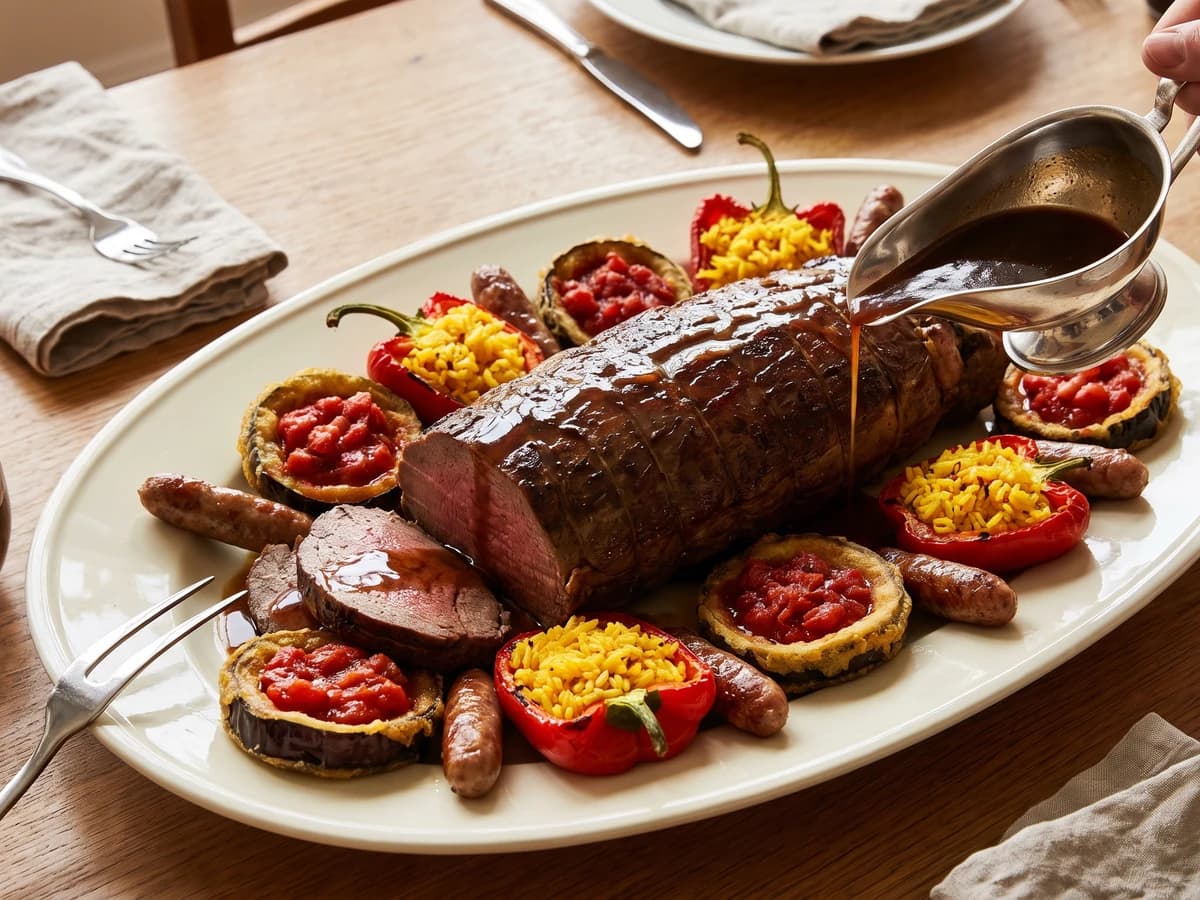
A larded fillet glazed at the last moment, surrounded by rice-filled peppers, crisp aubergine cases, tomato concassée, and chipolatas: a grand garniture brought within reach of one attentive home cook.
Chef Juliette
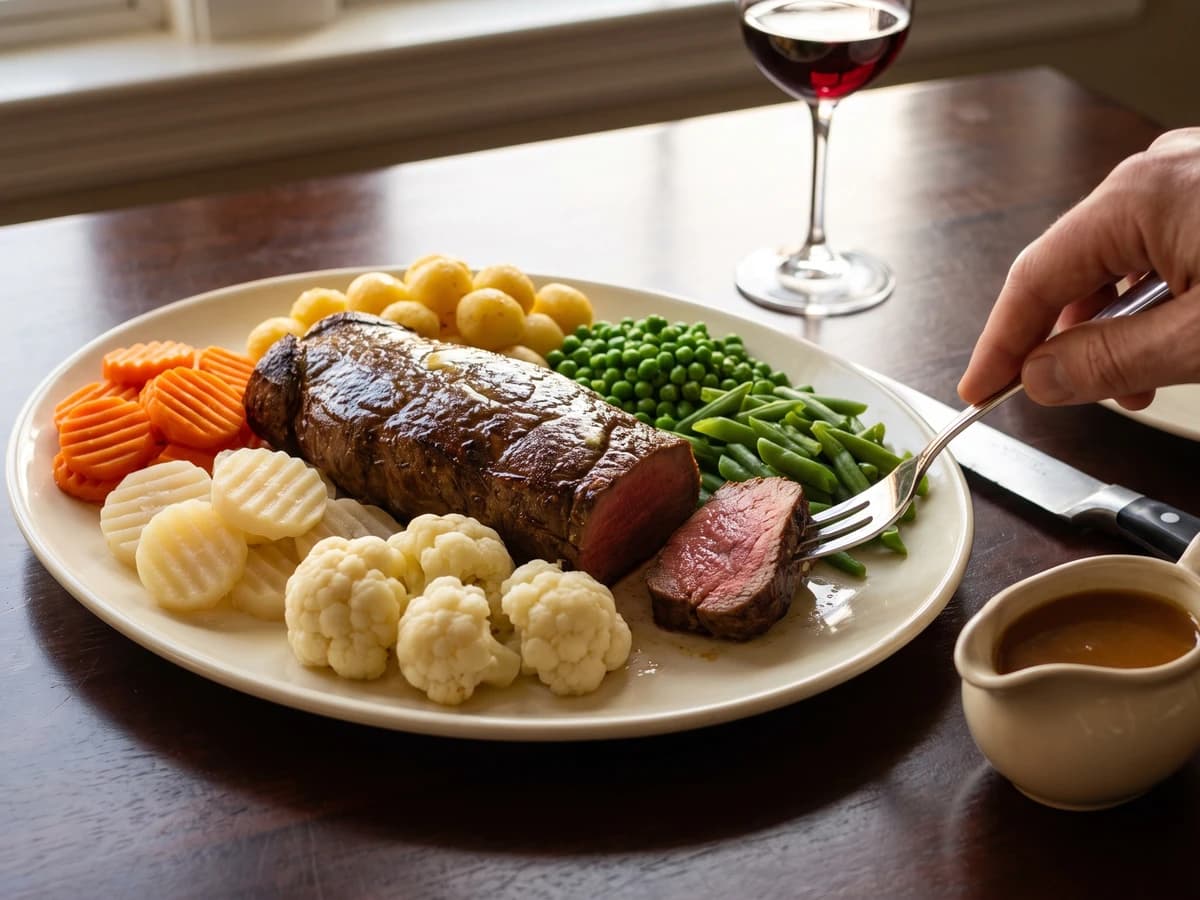
One burnished fillet, six vegetables, and a clear gravy passed beside it: Bouquetière teaches the classical art of cooking each garnish correctly, then arranging colour with generosity rather than fuss.
Chef Juliette
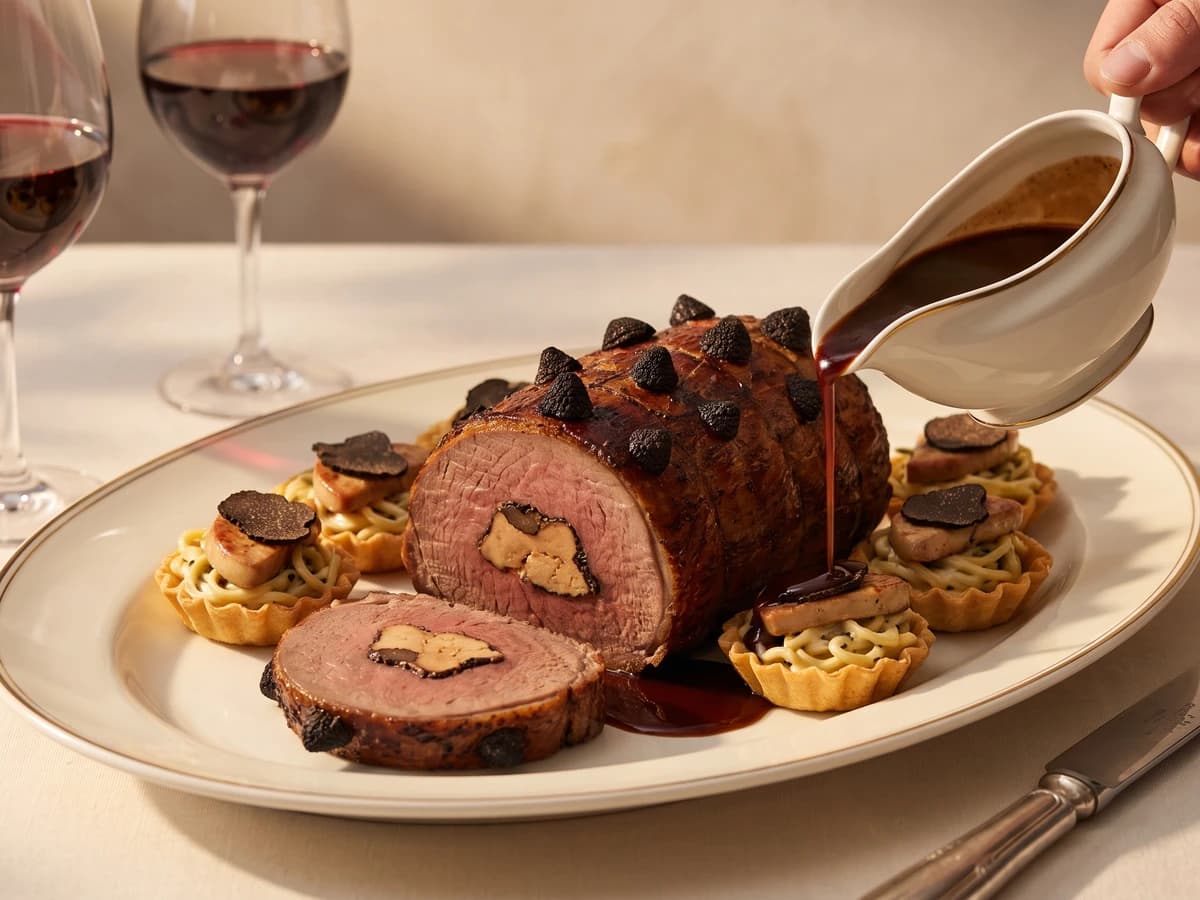
Beef fillet hollowed and rebuilt around foie gras, cream, and truffle, then poêled until the center is just set and the roast gleams under Périgueux sauce and four garnished tartlets.