
Chef Juliette
Flan aux Carottes
A pale short-paste shell holds silken, lightly sweet carrot purée beneath neat glazed half-discs, their butter syrup catching the light: a classical tart poised between vegetable course and sweet.
A cooking platform built around craft, culture, and the stories behind what we eat.
Created by Chef Juliette
Based on No. 2393, Croûtes et Croustades, from Le Guide Culinaire (1907) by Auguste Escoffier
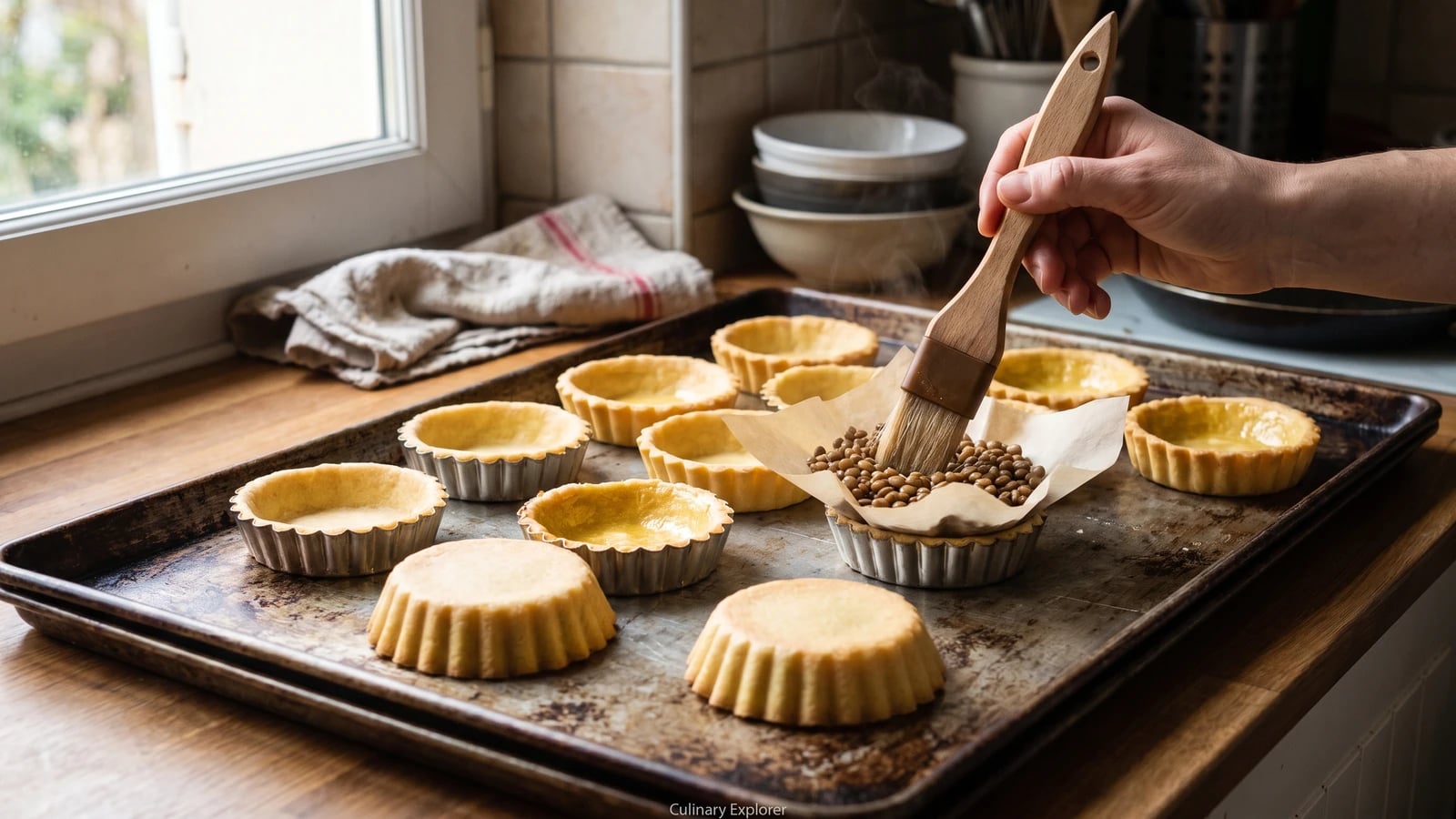
Croûtes et croustades teach the discipline of blind baking: buttered moulds, short paste rolled five millimetres thick, and enough lentils to hold every base flat before the shells are dried or gilded.
Croûtes et croustades (blind-baked tartlet shells) teach one uncompromising lesson: the weight is what keeps the base flat. Pricking helps trapped air escape, but it cannot replace a paper liner filled right to the rim with lentils, split peas, or rice. Skimp there, and the pastry lifts before it has strength enough to hold itself.
The old formula assumed short paste already waiting in the pastry section, ranks of even or grooved moulds, and a drying-box ready to finish the bake. At home, one compact batch of pâte brisée, twelve small moulds, and a domestic oven turned low do the same work. The stored paste and drying-box were brigade scaffolding, so they go; the one-fifth-inch thickness, buttered moulds, pricked bases, paper, and full weight are the dish, so they stay. One cook, one stove, one evening.
When the shells are pale gold and firm, dry them until crisp, or gild the interiors with beaten egg and give them a few more minutes of heat for a thin protective sheen. If a base bubbles when the paper comes away, don't despair; prick it, press it flat under the paper, and return it to the oven. Ça se rattrape. Before you touch the rolling pin, remember the step that matters most: fill every lined mould completely with weight.
Croûtes et croustades belong to the classical Parisian pastry kitchen and dining room, where crisp edible cases allowed one foundation to receive many different garnitures without losing its shape. Croustade names the case rather than a particular filling, and cooks formed large and small versions from pastry, bread, or other starches according to their use. In this short-paste tartlet branch, buttered moulds, paper, dry pulses, and a final drying or gilding carried the method easily from professional service to the bourgeois table.
Quantity
2 cups (475 ml / 250 g)
Quantity
1/2 cup (120 ml / 125 g)
cut into small cubes
Quantity
3/4 teaspoon (3.75 ml / 4 g)
Quantity
3 tablespoons to 1/4 cup (45 to 60 ml / 45 to 60 g)
Quantity
1 tablespoon (15 ml / 14 g)
for buttering the moulds
Quantity
3 cups (710 ml / 570 g)
reserved as baking weights
Quantity
1
beaten for gilding
| Ingredient | Quantity |
|---|---|
| plain flour | 2 cups (475 ml / 250 g) |
| cold unsalted buttercut into small cubes | 1/2 cup (120 ml / 125 g) |
| fine sea salt | 3/4 teaspoon (3.75 ml / 4 g) |
| ice water | 3 tablespoons to 1/4 cup (45 to 60 ml / 45 to 60 g) |
| softened unsalted butterfor buttering the moulds | 1 tablespoon (15 ml / 14 g) |
| dry lentils, split peas, or ricereserved as baking weights | 3 cups (710 ml / 570 g) |
| small egg (optional)beaten for gilding | 1 |
Combine the flour and salt, then rub in the cold butter with your fingertips until the mixture resembles coarse sand with a few small flakes of butter remaining. Toss in 3 tablespoons (45 ml / 45 g) of ice water and gather the crumbs together without kneading; add the remaining water a teaspoon at a time only if dry flour remains. If the paste turns greasy or sticky, stop and chill it for 10 minutes. If it refuses to hold when squeezed, add another teaspoon of water. Flatten into a disc, wrap, and refrigerate for 45 minutes.
Heat the oven to 350°F (180°C), or 325°F (165°C) with a fan. Brush twelve 3-inch (7.5 cm) metal tartlet moulds with a thin, complete film of softened butter, reaching into every groove, then arrange them on a rimmed baking sheet. Cut twelve parchment liners large enough to cover each base and rise above the sides.
Let the pâte brisée stand for 5 minutes if it is too firm to roll, then roll it evenly to one-fifth inch (5 mm) thick. Stamp out twelve rounds with a fluted cutter about 4 inches (10 cm) across, adjusting the cutter size if your moulds differ. Press each round against the base and sides without stretching it, because stretched pastry shrinks as it bakes. Pierce each base four or five times with the point of a small knife. If the lined shells have softened, chill them for 10 minutes before continuing.
Fit parchment into every shell and fill each one completely with dry lentils, split peas, or rice, pressing the weights gently into the edge where the base meets the wall. The weight is what stops the base from lifting; a token handful in the middle does nothing useful. If there are not enough weights to fill every mould to the rim, bake in batches rather than spreading them thin.
Bake the weighted shells for 18 to 22 minutes, rotating the tray once if the oven browns unevenly. They are ready for the next stage when the rims are pale gold, the sides feel firm, and the pastry no longer looks raw where it touches the paper. Keep the colour restrained; the final drying or gilding completes the bake.
Lift out the parchment carefully and pour the weights into a heatproof bowl. If a base has bubbled, prick it immediately, replace the paper, and press it flat with the back of a spoon while the pastry is still pliable. Ça se rattrape. For plain dry shells, lower the oven to 300°F (150°C) and bake for 7 to 10 minutes, until the interiors are dry, crisp, and evenly pale gold. To gild them instead, brush the interiors very thinly with beaten egg, leaving no puddles, and bake at 340°F (170°C) for 3 to 5 minutes, until the egg has set into a smooth golden seal.
Let the croûtes rest in their moulds for 5 minutes, then turn them out gently and cool them completely on a rack. If one catches, ease the rim with the point of a small knife rather than forcing the base. Store or fill only when completely cool; for moist fillings, the gilded shells keep their crispness longer.
1 serving (about 32g)
Culinary guides, cultural storytelling, and the editorial depth that makes cooking meaningful.
Discover Culinary ExplorerChef Juliette
A pale short-paste shell holds silken, lightly sweet carrot purée beneath neat glazed half-discs, their butter syrup catching the light: a classical tart poised between vegetable course and sweet.
Chef Juliette
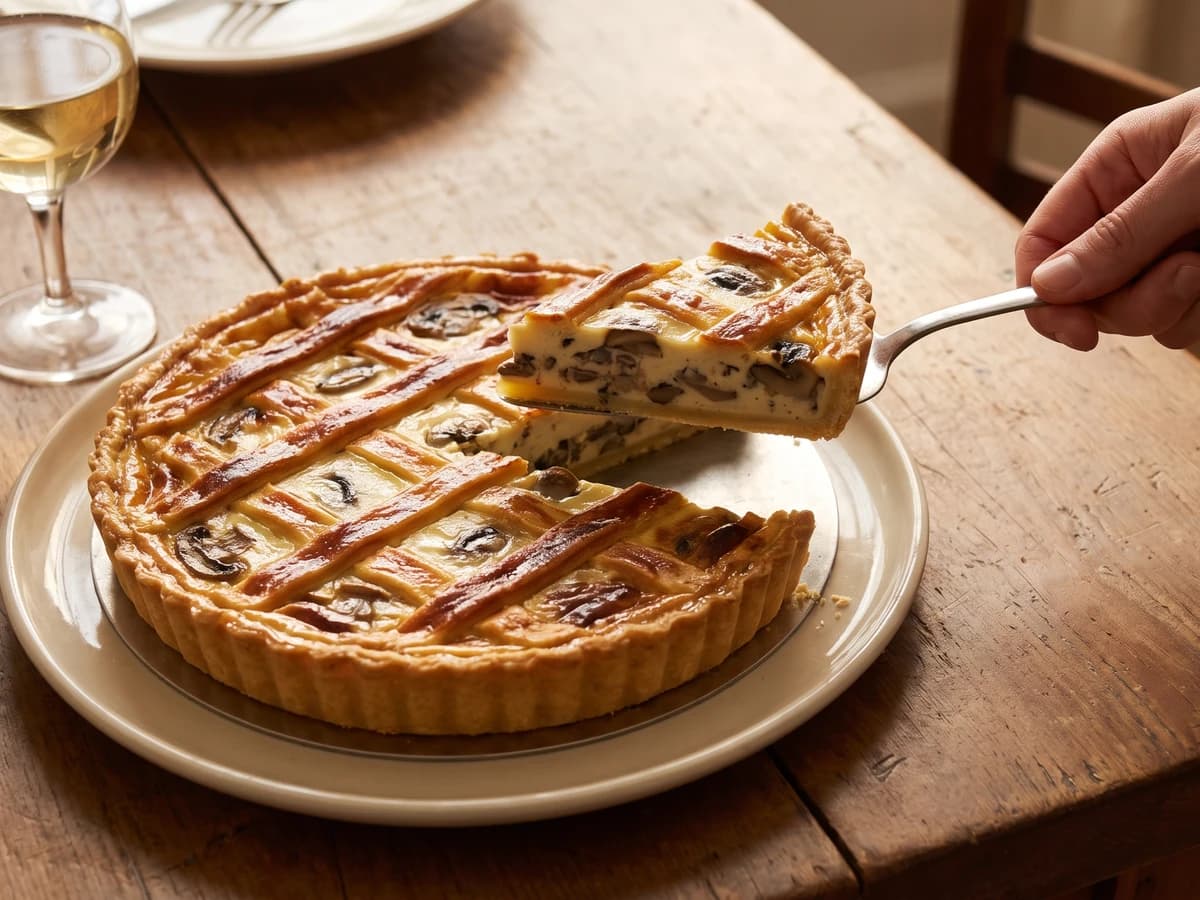
A hot mushroom flan under a butter-gold lattice, with cream reduced close around barely opened caps and a crisp short-paste base protected by one discipline: cool the filling completely.

Chef Juliette
Four little mushroom flans, latticed and gilded, baked hard and fast until butter-gold: a classical garnish scaled to the meat it accompanies and served before its crispness has time to fade.
Chef Juliette
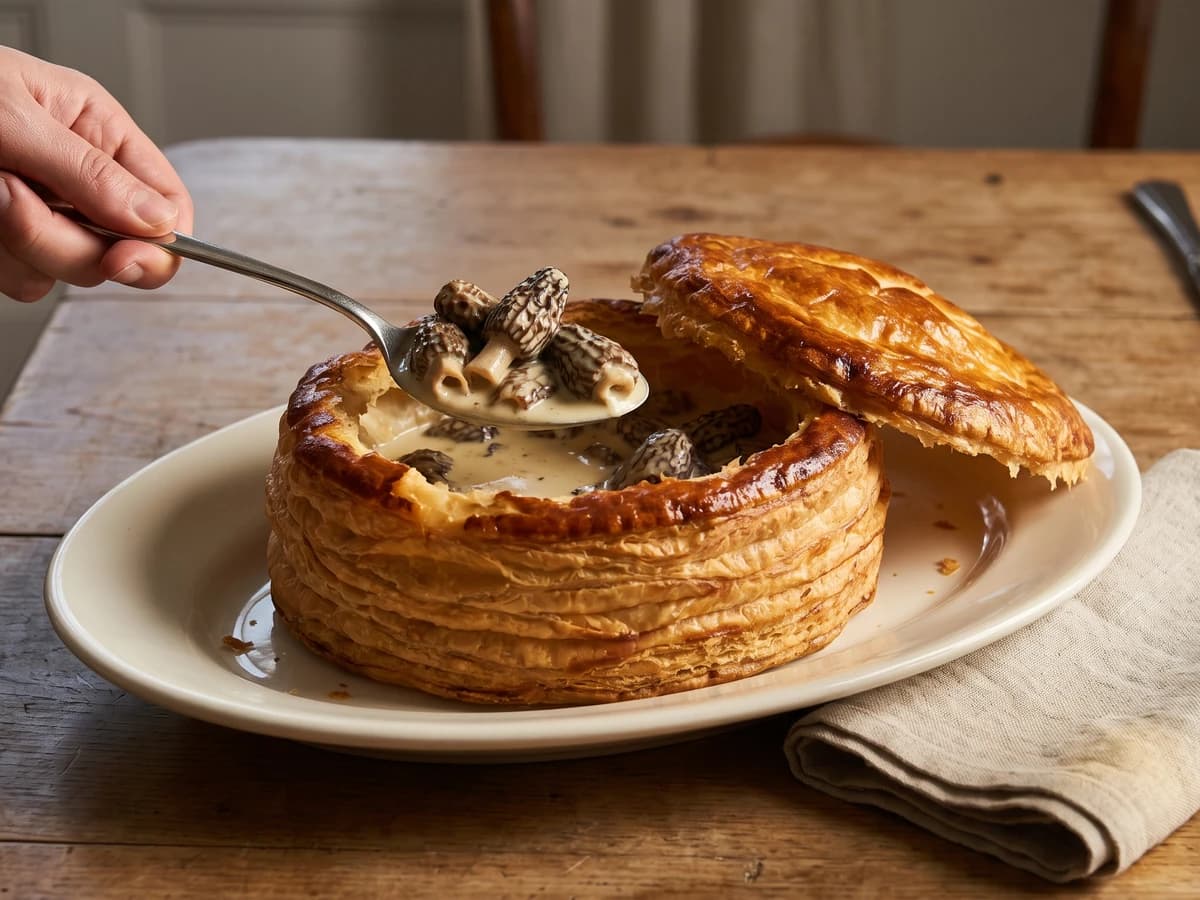
Morels surrender their liquor, then take it back as a glossy cream-and-butter sauce inside burnished puff pastry. The lesson is simple and absolute: reduce with patience, then heat gently and never boil.