Culinary Explorer

A cooking platform built around craft, culture, and the stories behind what we eat.
Discover Culinary Explorer
Yuzu-Miso (柚子味噌, winter citrus miso)

Yuzu-Miso (柚子味噌, winter citrus miso)

Created by

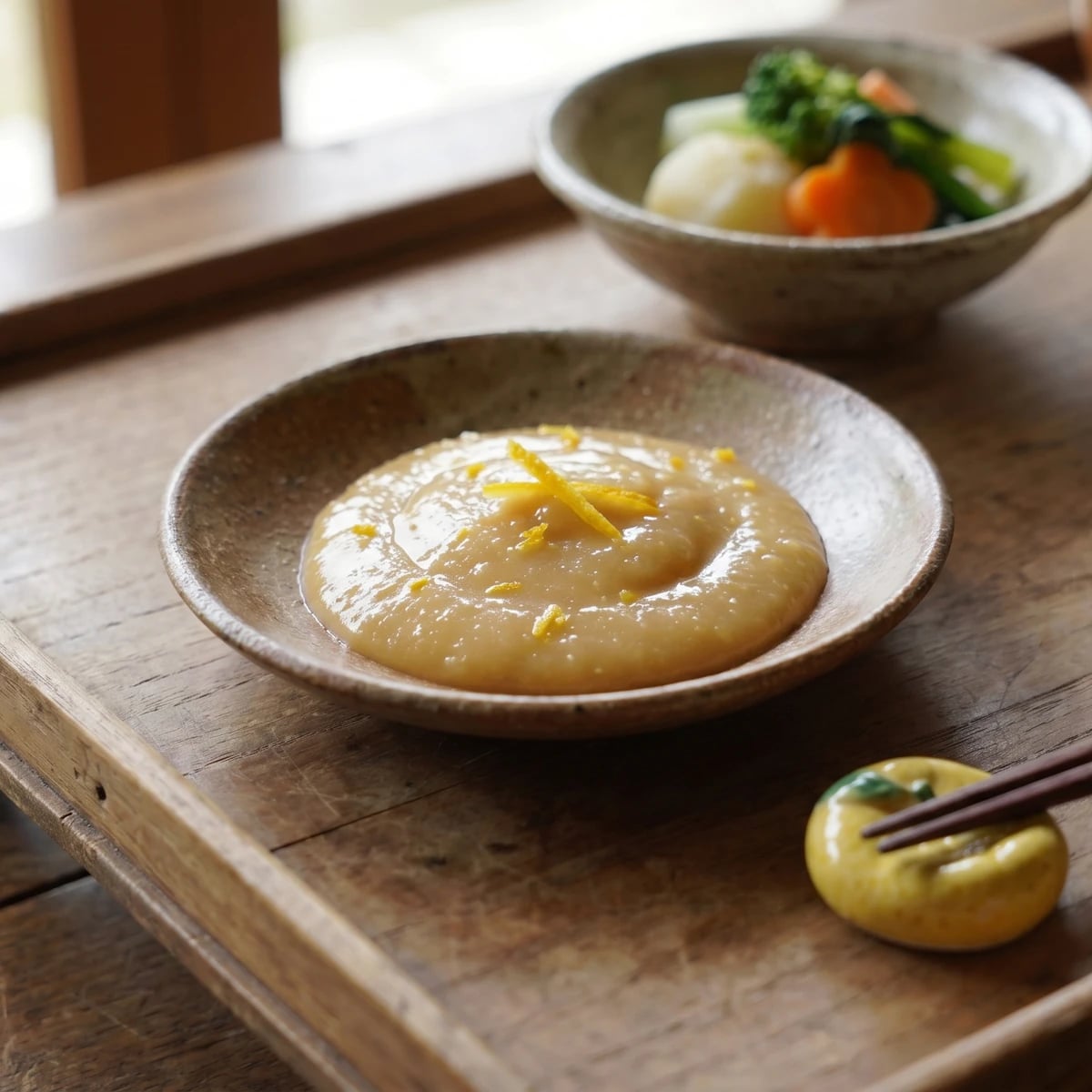
When yuzu arrives in November, use the peel first. Its fragrance turns a quiet white miso base into a winter sauce for tofu, daikon, and konnyaku.

Sauces & Condiments
Japanese
Make Ahead
Special Occasion
10 min
Active Time
20 min cook30 min total
YieldAbout 1 cup

Yuzu is the winter signal before it is an ingredient. The fruit is knobbly, rarely pretty in the polished way, and that is part of its honesty. Cut it open and the room changes. This sauce exists for that moment.

Yuzu-miso looks like something from a careful ryōtei kitchen, and in spirit it is. In practice, it is only tamamiso, a gently cooked white miso base, finished with yuzu zest and a small squeeze of juice. The first secret is timing. Cook the miso until it turns glossy and thick, then add the yuzu off the heat. Heat chases the fragrance away, and yuzu without fragrance is just sourness wearing good clothes.

Use sweet white miso if you can, especially Saikyō miso from Kyoto. It gives the sauce its pale color and rounded sweetness. Red miso makes a fine sauce of another sort, but not this one. We are not hiding anything under force here. The citrus should sit at the front, the miso behind it, steady and warm.

Brush it over grilled tofu, spoon it onto simmered daikon, or glaze konnyaku and warm it briefly under a grill until the surface shines. This is the method, not the menu: a winter seasoning that turns plain things ceremonial without making them fussy. Leave the dish room, and let one strip of yuzu peel tell the season.

Yuzu-miso belongs to the family of dengaku miso sauces used on grilled tofu, konnyaku, and vegetables, a style associated with temple and teahouse cookery from the medieval period onward. Tamamiso, a white miso sauce enriched with egg yolk and cooked slowly, became a useful mother sauce in Kyoto-style cooking because it could carry seasonal flavors such as yuzu in winter or kinome, young sanshō leaves, in spring. Yuzu itself has been cultivated in Japan for centuries, with Kochi Prefecture now especially known for its production.

The technique, the tradition, and the story behind every dish.

Discover Culinary Explorer

Ingredients

sweet white miso, preferably Saikyō miso

Quantity

200g

sake

Quantity

2 tablespoons

mirin

Quantity

2 tablespoons

sugar

Quantity

1 tablespoon

or to taste

egg yolk

Quantity

1 large

fresh yuzu zest

Quantity

1 tablespoon

finely grated

fresh yuzu juice

Quantity

1 to 2 teaspoons

Equipment Needed

  • Fine grater for yuzu zest
  • Heatproof bowl set over a pot as a double boiler
  • Wooden spoon or silicone spatula
  • Small clean storage jar

Instructions

  1. 1

    Prepare the yuzu

    Wash and dry the yuzu, then grate only the yellow peel. Stop before the white pith, which is bitter and dulls the clean fragrance. Cut the fruit and squeeze the juice through a small strainer. Keep zest and juice separate, because the peel carries aroma and the juice carries sharpness.

  2. 2

    Mix the base

    Set a heatproof bowl over a pot of barely simmering water. Add the miso, sake, mirin, sugar, and egg yolk, then stir until smooth. The bowl keeps the heat gentle, so the yolk enriches the miso instead of scrambling. Direct heat is possible, but it asks more from your wrist than it deserves.

  3. 3

    Cook until glossy

    Cook the miso slowly, stirring with a wooden spoon or silicone spatula, until it thickens and turns glossy, 15 to 20 minutes. Drag the spoon through the sauce. It should briefly leave a clean path before closing. This slow cooking removes the raw edge of the alcohol, cooks the yolk, and gives the sauce a smooth body.

    Do not let the bowl get fiercely hot. A quiet heat gives you sheen; a hard heat gives you grain.
  4. 4

    Finish with yuzu

    Take the bowl off the heat and let the miso stand for two minutes. Stir in the yuzu zest and 1 teaspoon of the juice, then taste. Add the second teaspoon only if it needs brightness. Yuzu is strongest in the peel, so use the juice with restraint or the sauce turns thin and sour.

  5. 5

    Use or store

    Use the yuzu-miso while soft, or cool it and store it in a clean jar. To serve, brush a thin layer over grilled tofu, simmered daikon, or konnyaku and warm it briefly under a grill until the surface shines. Don't burn it. Miso moves from fragrant to bitter quickly under strong heat.

Chef Tips

  • Use fresh yuzu in its season, from November into winter. Bottled juice can sharpen a sauce, but it cannot give the fragrance of fresh peel. If there is no yuzu, wait, or make plain tamamiso and call it that.
  • Saikyō miso gives the palest, gentlest result. If your white miso is saltier, reduce the sugar only after tasting the cooked base, not before.
  • For a meatless table, this particular tamamiso is not the right sauce because of the egg yolk. Make nerimiso instead: white miso, sake, mirin, and sugar cooked glossy, then finished with yuzu off the heat. Honmono, but a different branch.

Advance Preparation

  • Yuzu-miso keeps about 1 week refrigerated in a clean covered jar. Press a piece of parchment or plastic wrap directly on the surface if the jar has extra space.
  • Make it a day ahead if serving for a special meal. The miso settles and rounds out, while the yuzu stays clear if it was added off the heat.
  • If it stiffens in the refrigerator, soften it by setting the jar in warm water and stirring. Do not boil it.

Frequently Asked Questions

Nutrition Information

1 serving (about 18g)

Calories
35 calories
Total Fat
1 g
Saturated Fat
0 g
Trans Fat
0 g
Unsaturated Fat
0 g
Cholesterol
12 mg
Sodium
300 mg
Total Carbohydrates
5 g
Dietary Fiber
0 g
Sugars
4 g
Protein
1 g

Note: Chef personas and recipes are created with AI assistance. Cook with care: follow safe food-handling practices, check doneness with a thermometer when needed, and adapt for allergies and your kitchen.

Where cooking meets culture.

Culinary guides, cultural storytelling, and the editorial depth that makes cooking meaningful.

Discover Culinary Explorer

More from Miso Glazes, Koji & Sake-kasu Marinades

Browse the full collection