
Chef Takumi
Ago Dashi (あごだし, grilled flying fish stock)
Ago dashi is quiet luxury: roasted flying fish, konbu, and patient water. Steep it slowly and you get a clear stock that tastes sweet, clean, and full without heaviness.
A cooking platform built around craft, culture, and the stories behind what we eat.

Created by
Sake lees look stubborn at first, then soften into one of the most generous beds in the Japanese kitchen: fragrant, pale, gently sweet, and patient enough to season while you do nothing.
Sake kasu, the lees left after pressing sake, doesn't look like much when you first unwrap it. Pale, crumbly, a little sharp in aroma. Give it mirin, sake, sugar, and salt, and it turns into kasudoko, a soft marinade bed that seasons fish or vegetables while they rest in the cold. The brewer's leftover becomes the home cook's quiet advantage.
The hesitation is usually the smell. Sake lees can seem too strong, as if they might take over the dish. They won't, if you balance them properly and keep the layer thin. The lees lend fragrance and depth, the salt seasons, the sugar and mirin round the edge, and time does the work more gently than any hand can. This is honmono made reachable: mix, wrap, wait.
The one detail that decides it is contact without excess. Coat the fish or vegetable completely, but don't bury it under a heavy mound. Too little and the seasoning is patchy; too much and you taste the bed instead of the ingredient. Wipe the kasudoko away before cooking, because sake lees scorch quickly over heat. We want its perfume and seasoning, not a burnt crust shouting over a good piece of fish.
Kasuzuke, food pickled or marinated in sake lees, belongs beautifully to colder months, when sake brewing has given its lees and grilled fish feels right beside rice and soup. But the method, not the menu, is the lesson. A good bed, a fresh ingredient, and two unhurried days. Nothing hidden.
Sake kasu became widely useful in Japanese home and temple cooking because sake brewing produced it in quantity after the mash was pressed, especially in the colder brewing season. Kasuzuke, pickling or marinating in sake lees, developed as both a preservation method and a way to season fish, vegetables, and regional products without wasting the brewer's byproduct. Nara-zuke, vegetables preserved in sake lees and often associated with Nara, is one of the best-known older forms of this practice.
Quantity
300g
crumbled or chopped if firm
Quantity
1/4 cup
Quantity
1/4 cup
Quantity
3 tablespoons
Quantity
1 1/2 teaspoons
Quantity
4 pieces, about 150g each
black cod, salmon, Spanish mackerel, or sea bream
Quantity
6 to 8 pieces
daikon, carrot, cucumber, or turnip
| Ingredient | Quantity |
|---|---|
| sake kasu (sake lees)crumbled or chopped if firm | 300g |
| mirin | 1/4 cup |
| sake | 1/4 cup |
| sugar | 3 tablespoons |
| sea salt | 1 1/2 teaspoons |
| fish fillets (optional)black cod, salmon, Spanish mackerel, or sea bream | 4 pieces, about 150g each |
| firm vegetables (optional)daikon, carrot, cucumber, or turnip | 6 to 8 pieces |
Put the sake kasu in a bowl and break it up with your fingers or a spoon. Add the mirin and sake a little at a time, pressing and stirring until the lees loosen into a thick paste. Add the liquid gradually because sake kasu varies: some is soft and creamy, some is as firm as a book spine. You want miso-like thickness, spreadable but not runny.
Mix in the sugar and salt until the paste is smooth and even. Taste a tiny dab. It should be fragrant, lightly sweet, and clearly salty, because it must season the ingredient slowly from the outside in. If it tastes flat, add a pinch more salt. If it smells harsh, let it rest covered for an hour before using.
For fish, sprinkle the fillets lightly with salt and rest them for 20 minutes, then wipe them dry. This pulls surface moisture away so the kasudoko can cling and season cleanly. For vegetables, pat them very dry; watery pieces dilute the bed and make the flavor thin.
Spread a thin layer of kasudoko on a sheet of cheesecloth or directly in a shallow container. Lay in the fish or vegetables, then cover them completely with another thin layer. Cheesecloth is traditional and useful because it keeps the lees from clinging too stubbornly; plastic wrap or a lidded glass container works if that's what your kitchen has.
Cover and refrigerate for 24 to 48 hours. Thin fish fillets and cucumbers need less time; black cod, salmon, daikon, and carrot can take the full two days. Cold, slow seasoning is the point. Warmth would push the lees toward sourness and make fish unsafe, which is a poor bargain for impatience.
Lift out the ingredient and wipe off the kasudoko thoroughly with your fingers or a damp cloth. Do not rinse fish unless the coating is stubborn, because water washes away the seasoning you just waited for. Grill or broil fish gently, watching closely, since sake lees and sugar brown fast. Vegetables can be sliced and served as pickles.
1 serving (about 115g)
Culinary guides, cultural storytelling, and the editorial depth that makes cooking meaningful.
Discover Culinary ExplorerChef Takumi
Ago dashi is quiet luxury: roasted flying fish, konbu, and patient water. Steep it slowly and you get a clear stock that tastes sweet, clean, and full without heaviness.
Chef Takumi
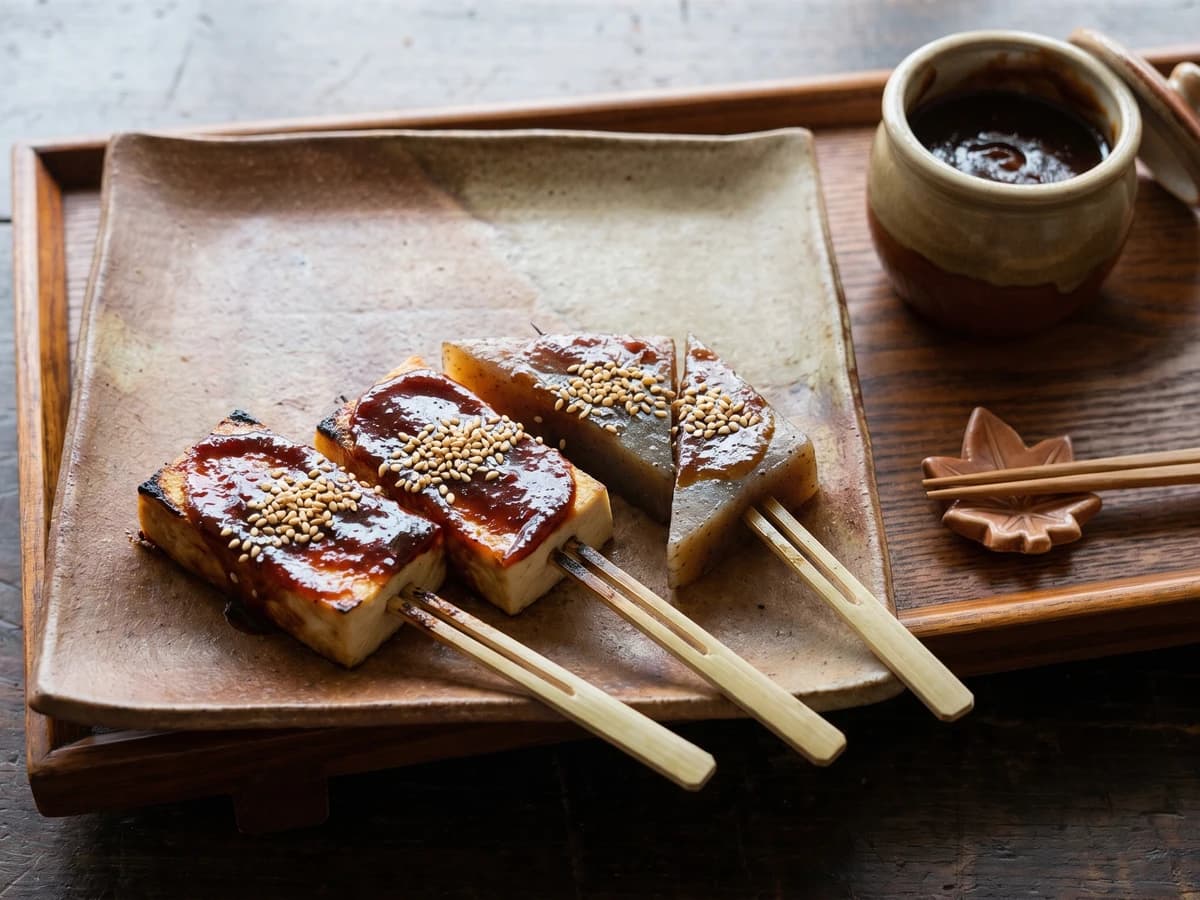
Akamiso dengaku-miso is plain work: bean miso, sweetness, sake, and patient stirring until the glaze turns dark, glossy, and thick enough to cling to the grill.
Chef Takumi
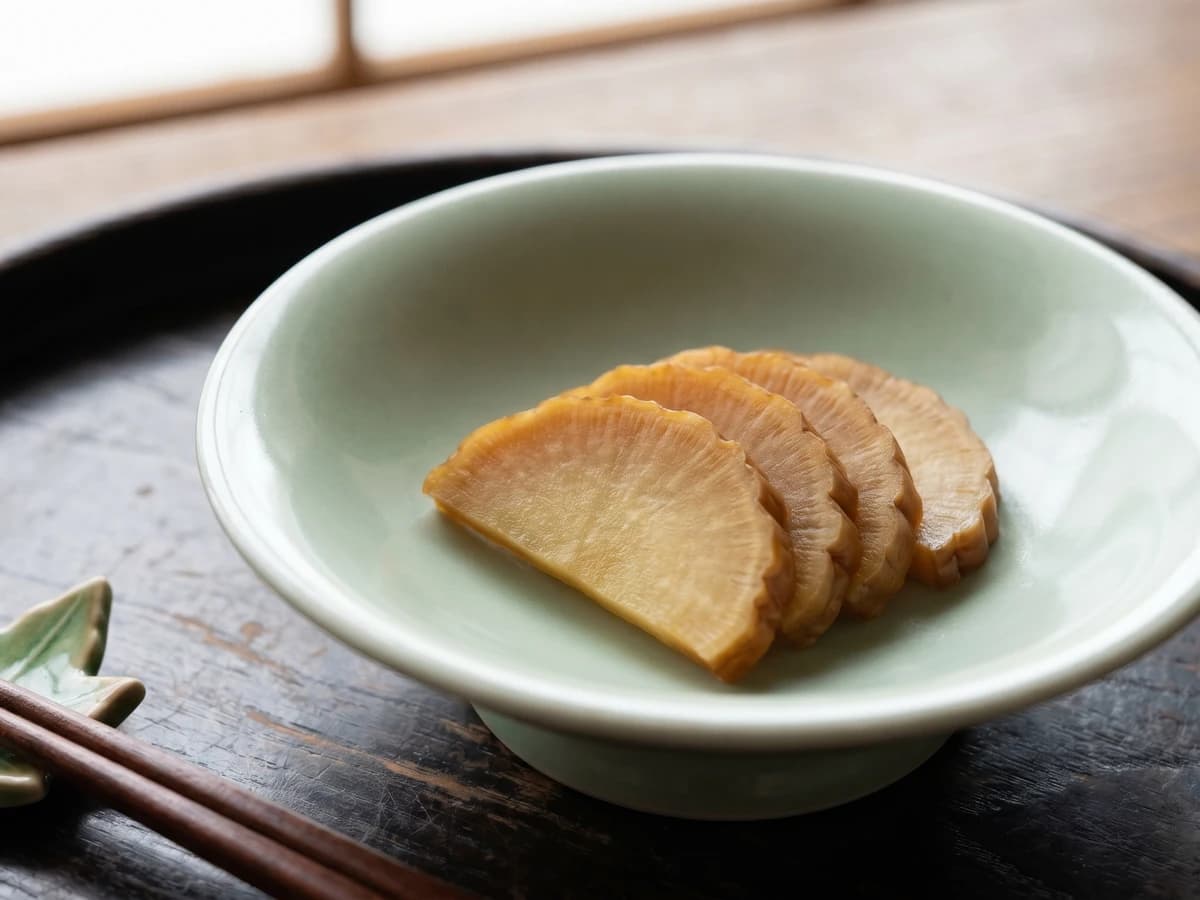
Snow-country takuan begins with smoke. Hang the daikon, dry it gently, then let rice bran, salt, and time turn it into Akita's amber pickle.

Chef Takumi
Aso takanazuke is spring caught in salt: sharp mustard greens pressed until they soften, fermented until their edge turns round, then fried briefly with sesame for rice.