
Chef Takumi
Ago Dashi (あごだし, grilled flying fish stock)
Ago dashi is quiet luxury: roasted flying fish, konbu, and patient water. Steep it slowly and you get a clear stock that tastes sweet, clean, and full without heaviness.
A cooking platform built around craft, culture, and the stories behind what we eat.

Created by
Tamamiso is the quiet mother paste behind many miso sauces: white miso, yolk, sake, sugar, and dashi warmed slowly until glossy, ready for vinegar, yuzu, or spring kinome.
Tamamiso looks modest, almost too plain to be important. Then you notice how often it appears under another name. Add vinegar and it becomes su-miso. Fold in yuzu peel and you have yuzu-miso. Pound in spring kinome, the young leaf of sanshō, and the season has changed in one spoonful. Learn this one paste and you learn many.
The hesitation is the egg yolk. People imagine curdling, scorched miso, a paste gone sandy and sulky. The work is gentler than that. Mix everything smooth before heat touches it, then cook it slowly while scraping the bowl so the yolk thickens the miso instead of setting into little grains.
Saikyō miso matters here. Its pale color and natural sweetness give tamamiso its quiet face; a strong red miso would make another thing altogether. Dashi loosens and deepens, sake and mirin carry aroma, sugar rounds the salt. Nothing hidden, just balance.
The one detail that decides it is heat. Keep the water below a hard boil and keep the spatula moving, especially at the edges where a thick paste likes to catch. When the tamamiso turns glossy and falls from the spatula in a soft mound, stop. It should serve the ingredient it touches, not bury it.
Tamamiso belongs to nerimiso, cooked or kneaded miso pastes used in Japanese cooking for aemono, dressed dishes, and vinegared miso sauces. Its Kyoto connection comes through Saikyō miso, the sweet white rice miso whose name spread after the imperial court moved to Tokyo in 1869 and Kyoto was sometimes called Saikyō, the western capital. The tama points to tamago, egg: yolk gives the pale miso gloss and body so it can carry vinegar, yuzu, kinome, or karashi without turning thin.
Quantity
200g
Quantity
2 large
fresh, or pasteurized for vulnerable guests
Quantity
3 tablespoons
Quantity
2 tablespoons
Quantity
3 tablespoons
cooled; ichiban dashi or konbu-shiitake dashi
Quantity
1 tablespoon
| Ingredient | Quantity |
|---|---|
| Saikyō miso or sweet white miso | 200g |
| egg yolksfresh, or pasteurized for vulnerable guests | 2 large |
| sake | 3 tablespoons |
| mirin | 2 tablespoons |
| dashicooled; ichiban dashi or konbu-shiitake dashi | 3 tablespoons |
| sugar | 1 tablespoon |
Put the Saikyō miso in a heatproof bowl. If it looks coarse, press it through a fine sieve first. This is not fuss. Lumps of miso hide dry pockets, and those make you stir longer than you should once the yolks are in.
In a small pan, combine the sake, mirin, dashi, and sugar. Warm gently until the sugar dissolves and the sharp smell of alcohol softens, then take it off the heat and let it cool until it is no warmer than your hand. Hot liquid would set the yolk in streaks before it can blend with the miso.
Beat the yolks lightly, then whisk them into the miso until the color is even. Add the cooled seasoning liquid a little at a time, stirring until the paste is smooth and loose. Mixing off the heat gives the yolk nowhere to seize; everything warms together later.
Set the bowl over a saucepan of gently trembling water for yusen, a hot-water bath. The bottom of the bowl should not touch the water. Stir constantly with a wooden or silicone spatula, scraping the sides and bottom, for 12 to 18 minutes. The paste will loosen first, then thicken and turn glossy. If you use a thermometer, bring it to 71°C, or 160°F, while stirring.
Lift the spatula. The tamamiso should fall in a thick ribbon and sit for a moment as a soft mound before settling. Draw the spatula across the bottom of the bowl; the line should stay open for a second. Take it off the heat then, because the paste keeps cooking from its own warmth.
Transfer the tamamiso to a clean jar or shallow container. Press parchment directly on the surface, cool it quickly, then refrigerate. Use it plain as a base, or season only the portion you need: rice vinegar for su-miso, yuzu zest for yuzu-miso, or finely pounded kinome for kinome-miso. Fresh herbs and vinegar shorten storage, so don't mix them into the whole jar unless you plan to use it soon.
1 serving (about 18g)
Culinary guides, cultural storytelling, and the editorial depth that makes cooking meaningful.
Discover Culinary ExplorerChef Takumi
Ago dashi is quiet luxury: roasted flying fish, konbu, and patient water. Steep it slowly and you get a clear stock that tastes sweet, clean, and full without heaviness.
Chef Takumi
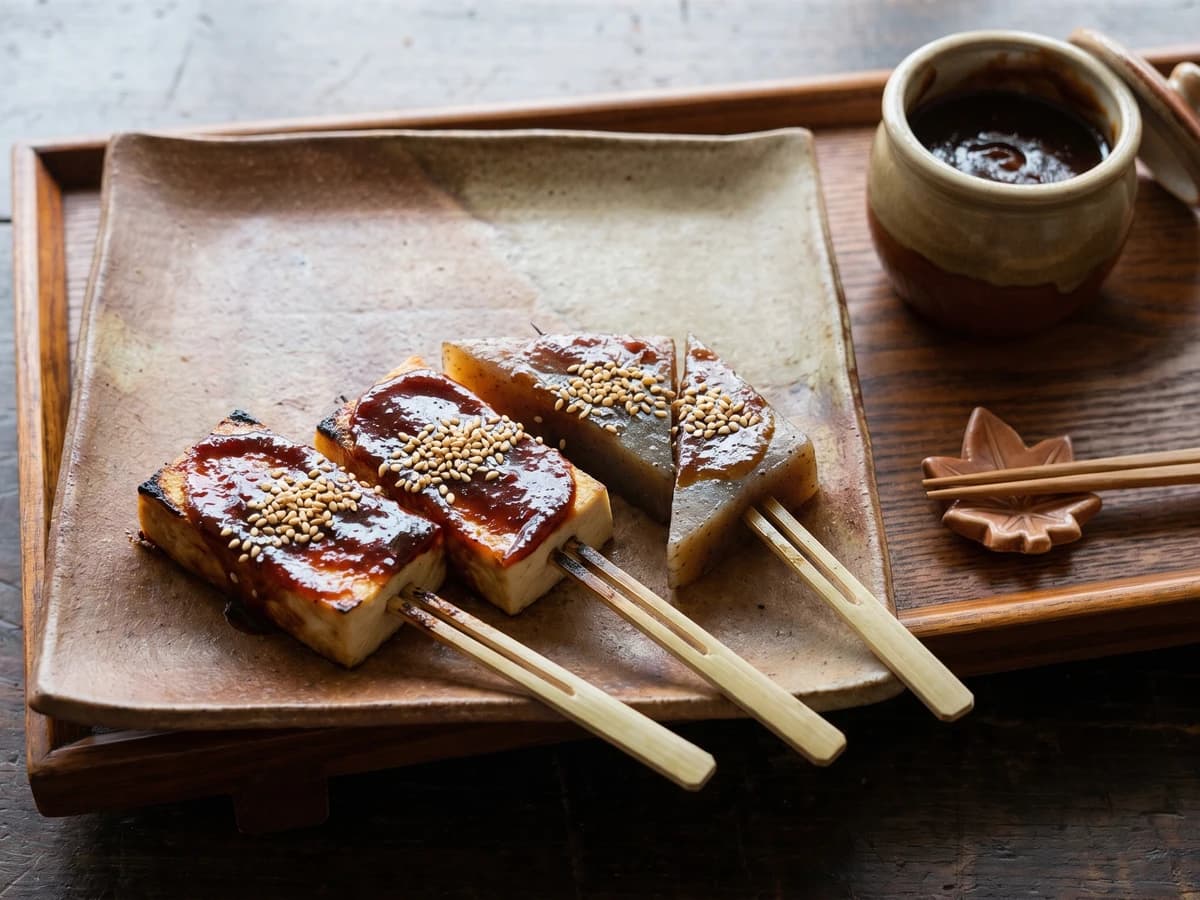
Akamiso dengaku-miso is plain work: bean miso, sweetness, sake, and patient stirring until the glaze turns dark, glossy, and thick enough to cling to the grill.
Chef Takumi
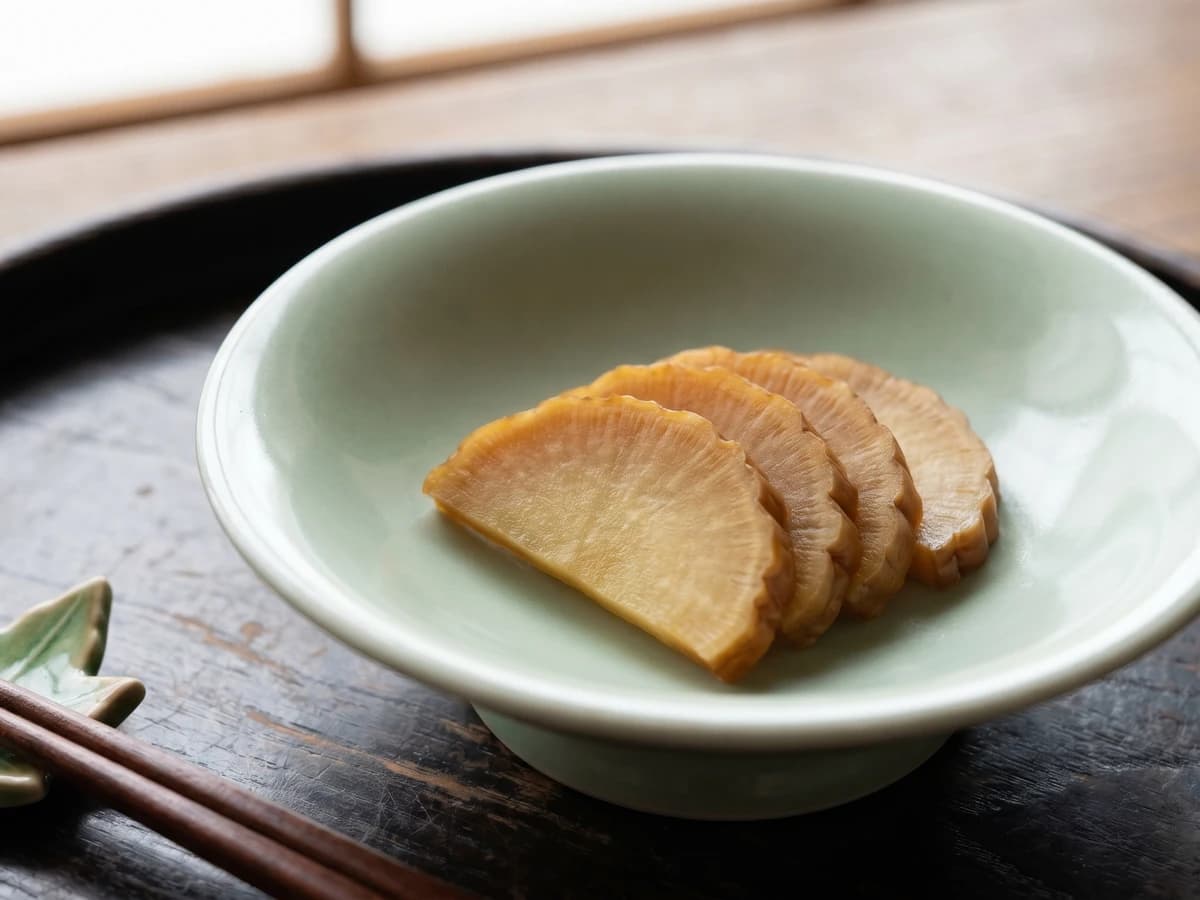
Snow-country takuan begins with smoke. Hang the daikon, dry it gently, then let rice bran, salt, and time turn it into Akita's amber pickle.

Chef Takumi
Aso takanazuke is spring caught in salt: sharp mustard greens pressed until they soften, fermented until their edge turns round, then fried briefly with sesame for rice.