
Chef Takumi
Ago Dashi (あごだし, grilled flying fish stock)
Ago dashi is quiet luxury: roasted flying fish, konbu, and patient water. Steep it slowly and you get a clear stock that tastes sweet, clean, and full without heaviness.
A cooking platform built around craft, culture, and the stories behind what we eat.
Created by
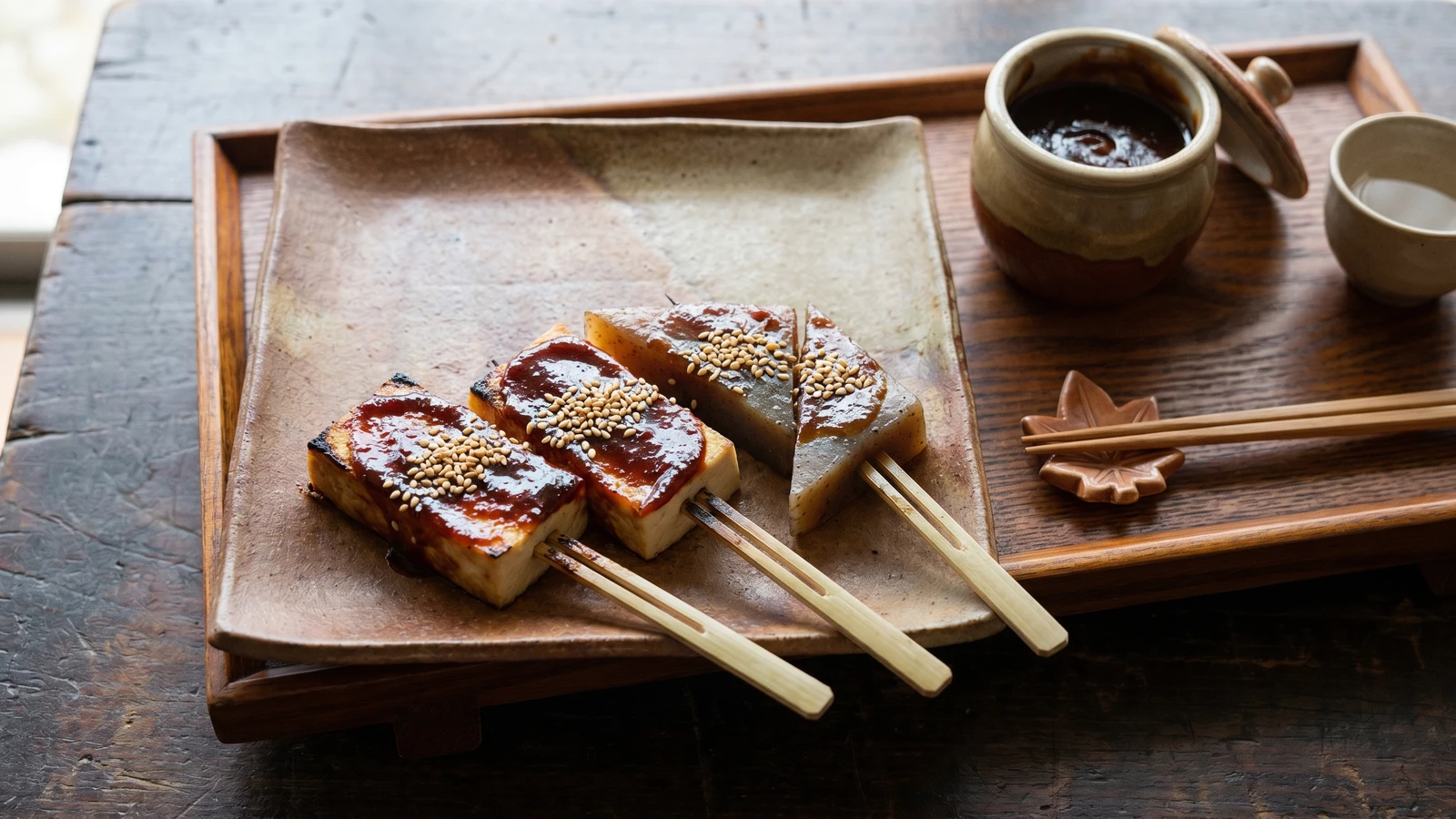
Akamiso dengaku-miso is plain work: bean miso, sweetness, sake, and patient stirring until the glaze turns dark, glossy, and thick enough to cling to the grill.
Red bean miso is not shy. Aichi's mame miso is dark, firm, and a little stern at first meeting, the sort of ingredient that makes a nervous cook wonder whether something has gone wrong before anything has begun. Nothing has gone wrong. This is the character you came for.
Dengaku-miso asks for no cleverness, only control. You loosen the miso with sake and mirin, sweeten it, then cook it gently until it becomes spoonable and glossy. The reason is simple: raw alcohol tastes sharp, sugar needs time to dissolve into the paste, and the miso must thicken without scorching. Rush it and the glaze tastes hot and dusty. Stir patiently and it becomes deep, rounded, and ready to cling.
This is the sauce we brush over skewered tofu, konnyaku, eggplant, or satoimo before a short pass near the fire. The grill is not there to cook the miso from scratch. It only wakes the surface, darkens the shine, and gives the edge a little bitterness. The first secret is the bean miso itself. Use Aichi mame miso if you can, Hatchō miso if you find it, and don't bury it under extra seasonings. Honmono is sometimes just the courage to leave a strong ingredient plainly itself.
Dengaku began as skewered tofu grilled and served with miso, and the name is linked to medieval dengaku performers whose tall hats were said to resemble tofu on sticks. In Aichi, the local version developed around mame miso, a soybean-only miso long associated with Mikawa and Owari, including Hatchō miso made near Okazaki. The result is darker and less sweet-tasting than many Kyoto-style white miso glazes, a regional difference that still marks the dish clearly.
Quantity
150g
Quantity
3 tablespoons
Quantity
3 tablespoons
Quantity
3 tablespoons
Quantity
2 tablespoons, plus more as needed
Quantity
1 teaspoon
| Ingredient | Quantity |
|---|---|
| aka miso, preferably Aichi mame miso or Hatcho miso | 150g |
| sugar | 3 tablespoons |
| mirin | 3 tablespoons |
| sake | 3 tablespoons |
| dashi or water | 2 tablespoons, plus more as needed |
| toasted white sesame seeds (optional) | 1 teaspoon |
Put the miso, sugar, mirin, sake, and dashi or water in a small heavy saucepan before the heat goes on. Stir until the paste loosens and the sugar begins to disappear. Starting cold lets you smooth the miso without fighting lumps, and it keeps the bottom from catching before the liquid has done its work.
Set the pan over low heat and stir with a wooden spatula, scraping the bottom and corners. The mixture will look loose at first, then turn glossy and darker as the alcohol cooks off and the sugar settles into the miso. Keep it below a hard boil. Miso scorches quickly, and scorched miso tastes bitter in a way no garnish can apologize for.
Cook for 10 to 15 minutes, until the glaze falls slowly from the spatula and leaves a brief trail when you drag the spatula through the pan. It should be thick enough to sit on tofu without running off, but soft enough to brush. If it tightens too much, stir in dashi or water a teaspoon at a time.
Take the pan off the heat and let the glaze cool to warm or room temperature. It will thicken as it stands, so judge the final texture after five minutes. Brush it onto grilled tofu, konnyaku, eggplant, or satoimo, then set the pieces near the grill just long enough for the surface to shine and darken at the edges.
Scatter sesame only if you want that small nutty note. Do not crowd the surface with garnish. This glaze is dark and plain by nature, and the better it is, the less it wants decoration.
1 serving (about 17g)
Culinary guides, cultural storytelling, and the editorial depth that makes cooking meaningful.
Discover Culinary ExplorerChef Takumi
Ago dashi is quiet luxury: roasted flying fish, konbu, and patient water. Steep it slowly and you get a clear stock that tastes sweet, clean, and full without heaviness.
Chef Takumi
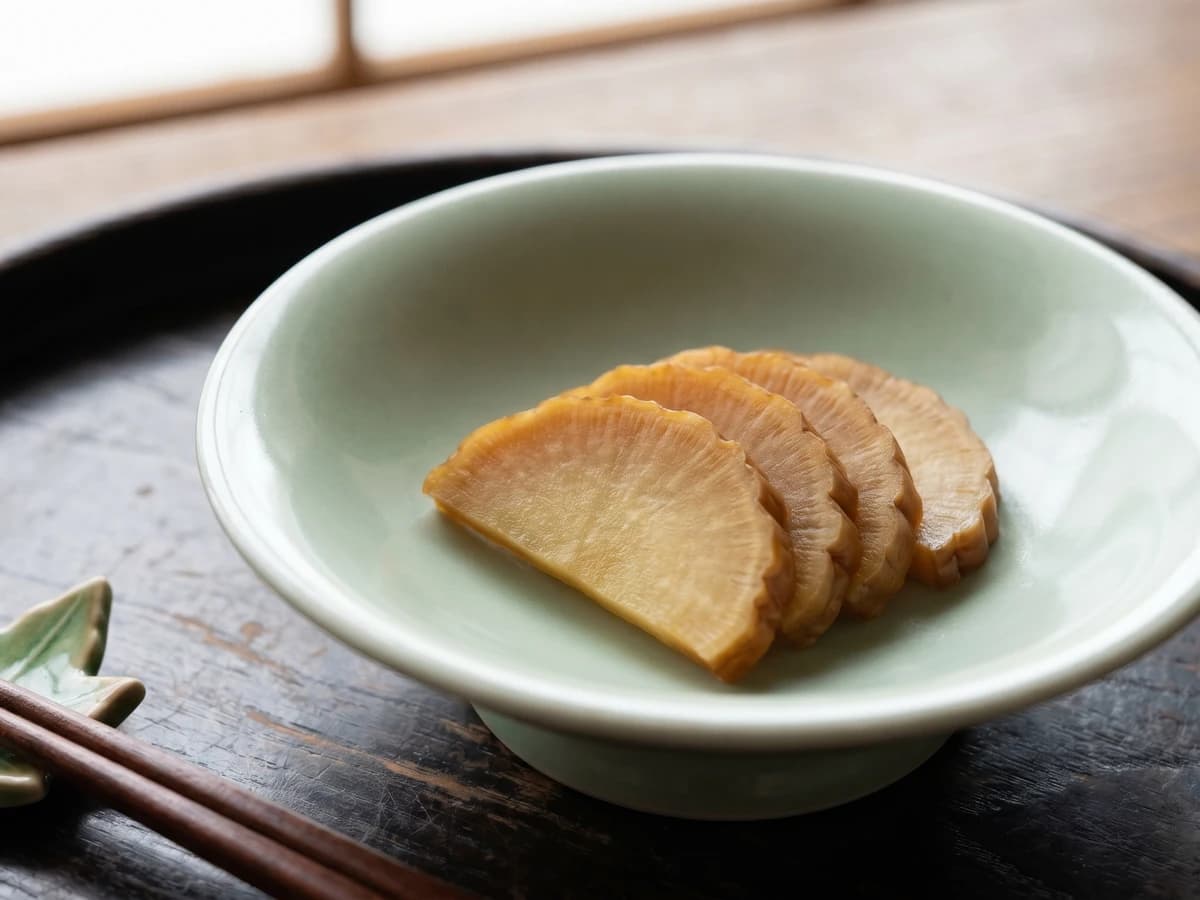
Snow-country takuan begins with smoke. Hang the daikon, dry it gently, then let rice bran, salt, and time turn it into Akita's amber pickle.

Chef Takumi
Aso takanazuke is spring caught in salt: sharp mustard greens pressed until they soften, fermented until their edge turns round, then fried briefly with sesame for rice.

Chef Takumi
A white daikon, a red chili, and a grater. Momiji oroshi looks like a small flourish, but it brings clean heat, fresh bite, and autumn color to the table.