
Chef Takumi
Aji Fry (アジフライ, panko-fried horse mackerel)
Aji fry is weeknight fish with no mystery: fresh horse mackerel opened cleanly, breaded lightly, and fried until the panko crackles while the flesh stays sweet.
A cooking platform built around craft, culture, and the stories behind what we eat.

Created by
Shime saba is not difficult, only strict. Buy mackerel good enough to cure, salt it to firm the flesh, then let vinegar brighten the fish without hiding it.
Mackerel makes a cook a little nervous, and it should. It is an oily fish, glorious at its winter 旬 (shun, at its prime), but it loses freshness quickly and tells the truth without shame. For shime saba, sourcing comes before technique. Buy glistening fresh mackerel from a fishmonger you trust, preferably already treated for raw eating by proper freezing, because salt and vinegar season the fish. They do not make tired fish safe.
The method is simpler than its reputation. Salt first, vinegar second. The salt draws out surface moisture and firms the flesh so the vinegar can season cleanly instead of making the fish watery and harsh. The vinegar cure is brief enough to leave the center tender, with the surface turned pearl-bright and the flavor sharpened, not pickled into obedience.
The one detail that decides it is timing. Too little salt and the fish tastes loose. Too much vinegar and the mackerel goes chalky and sour, a small tragedy with fins. We want honmono here: clean fish, measured curing, nothing hidden. Slice it with a sharp knife, set it with grated ginger or wasabi, and leave the plate room. The cut face should do most of the speaking.
Shime saba belongs to a long Japanese practice of preserving fish briefly with salt and vinegar before modern refrigeration made fresh transport easier. Mackerel was especially important because it spoiled quickly, and routes such as the Saba Kaidō, the old mackerel road from Wakasa to Kyoto, carried salted fish inland for the capital's table. In Kyoto, cured mackerel became central to dishes such as saba-zushi, where vinegar-cured fish is pressed over rice.
Quantity
2 fillets (about 300g total)
pin bones removed, treated for raw eating by proper freezing
Quantity
3 tablespoons
Quantity
1 cup
Quantity
1 tablespoon
Quantity
1 strip (about 5cm)
Quantity
1 teaspoon
for serving
Quantity
1 teaspoon
grated
Quantity
1 teaspoon
grated
Quantity
1 small handful
| Ingredient | Quantity |
|---|---|
| very fresh mackerel filletspin bones removed, treated for raw eating by proper freezing | 2 fillets (about 300g total) |
| fine sea salt | 3 tablespoons |
| rice vinegar | 1 cup |
| sugar | 1 tablespoon |
| konbu | 1 strip (about 5cm) |
| soy saucefor serving | 1 teaspoon |
| fresh gingergrated | 1 teaspoon |
| wasabi (optional)grated | 1 teaspoon |
| shredded daikon (optional) | 1 small handful |
Start with mackerel that smells clean and faintly of the sea, never sour or strong. Ask the fishmonger whether it has been handled for raw eating and properly frozen for parasite safety. Salt and vinegar are a cure for flavor and texture, not a rescue for poor fish.
Pat the fillets dry and lay them skin-side down on a tray. Cover both sides evenly with the salt, using more on the thicker shoulder end. Refrigerate for 45 minutes to 1 hour, until the surface looks wet and the flesh feels firmer under your finger. The salt pulls out excess moisture and tightens the flesh so the vinegar can season it cleanly.
Rinse the salt off quickly under cold water, then pat the fillets very dry with clean towels. Be quick here. You are removing surface salt, not washing away the fish. Dry flesh takes the vinegar evenly, while wet flesh weakens the cure.
Stir the rice vinegar and sugar together until the sugar dissolves, then add the konbu. The sugar softens the vinegar's edge without making the fish sweet, and the konbu lends a quiet sea depth. Pour the cure into a shallow nonreactive dish just large enough to hold the fillets.
Lay the mackerel in the vinegar cure, flesh-side down first, then turn once halfway through. Cure for 35 to 45 minutes for a tender center, or up to 1 hour if the fillets are thick. The surface should turn pearl-bright while the middle remains slightly translucent. That contrast is the point.
Lift the fillets from the vinegar and pat them dry. Starting at the head end, catch the thin outer skin with your fingers or tweezers and peel it back slowly, leaving the silver-blue pattern beneath. The outer skin can be tough, and removing it lets the knife pass cleanly through the flesh.
Use a sharp knife to slice the mackerel across the grain into pieces about 1cm thick, drawing the blade in one clean pull. Do not saw. Arrange the slices in an odd-numbered fan with a little height, set grated ginger, wasabi, or shredded daikon to the side, and serve with a small dish of soy sauce.
1 serving (about 80g)
Culinary guides, cultural storytelling, and the editorial depth that makes cooking meaningful.
Discover Culinary ExplorerChef Takumi
Aji fry is weeknight fish with no mystery: fresh horse mackerel opened cleanly, breaded lightly, and fried until the panko crackles while the flesh stays sweet.
Chef Takumi
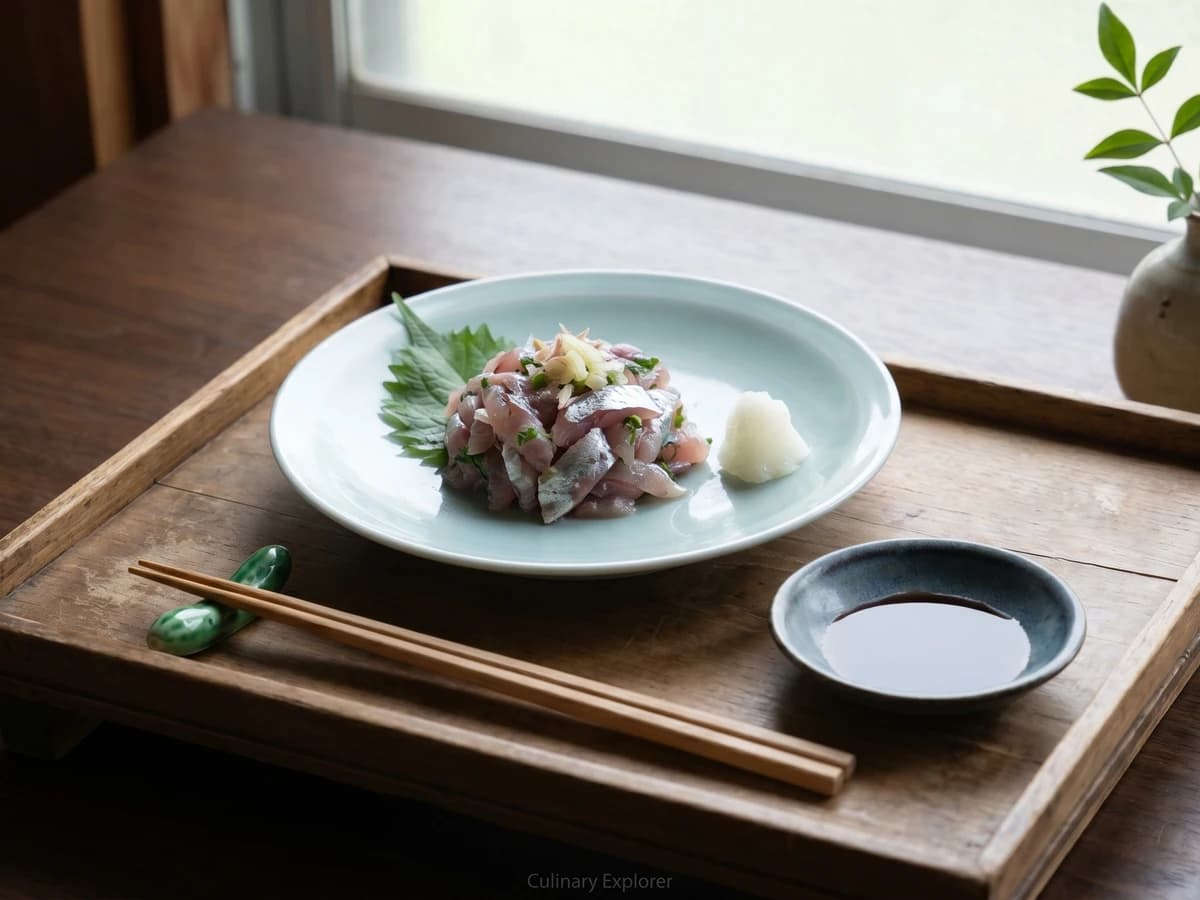
Summer horse mackerel, chopped just enough to catch ginger and scallion, becomes a cool, clean main dish with rice. The secret is fresh fish and a knife that does not bruise it.
Chef Takumi
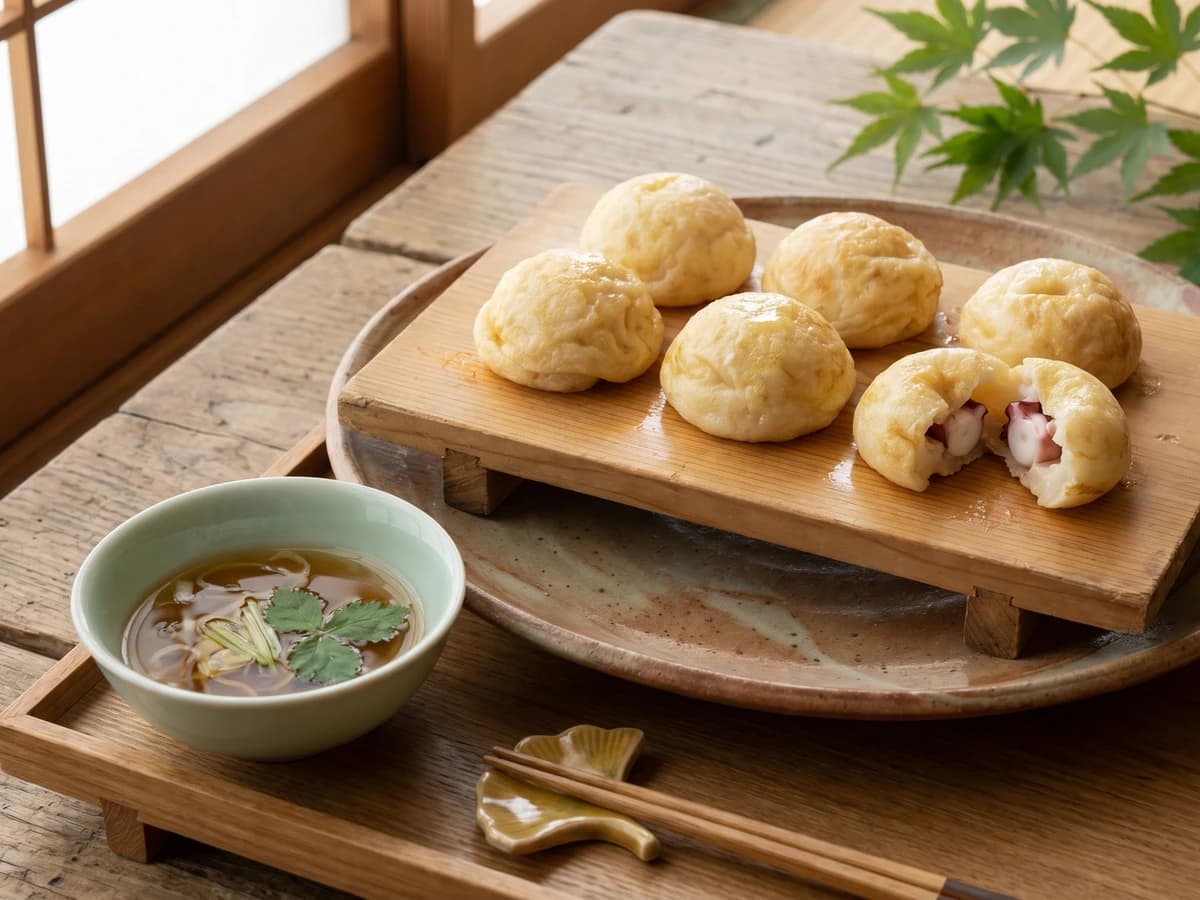
Akashi-yaki is not sauced takoyaki. It is egg-rich batter, tender octopus, and clear dashi, cooked pale and soft so each ball can be dipped like a small custard dumpling.

Chef Takumi
A whole anago looks like a test of nerve. It is mostly good sourcing, a dry skin, cold batter, and oil hot enough to leave the eel sweet under its lace.