
Chef Takumi
Aji no Tataki (鯵のたたき, Boso chopped horse mackerel)
Summer horse mackerel, chopped just enough to catch ginger and scallion, becomes a cool, clean main dish with rice. The secret is fresh fish and a knife that does not bruise it.
A cooking platform built around craft, culture, and the stories behind what we eat.
Created by
Sashimi isn't a dare; it is sourcing, cold handling, and a clean pull of the knife. With winter buri, the fat does the patient work.
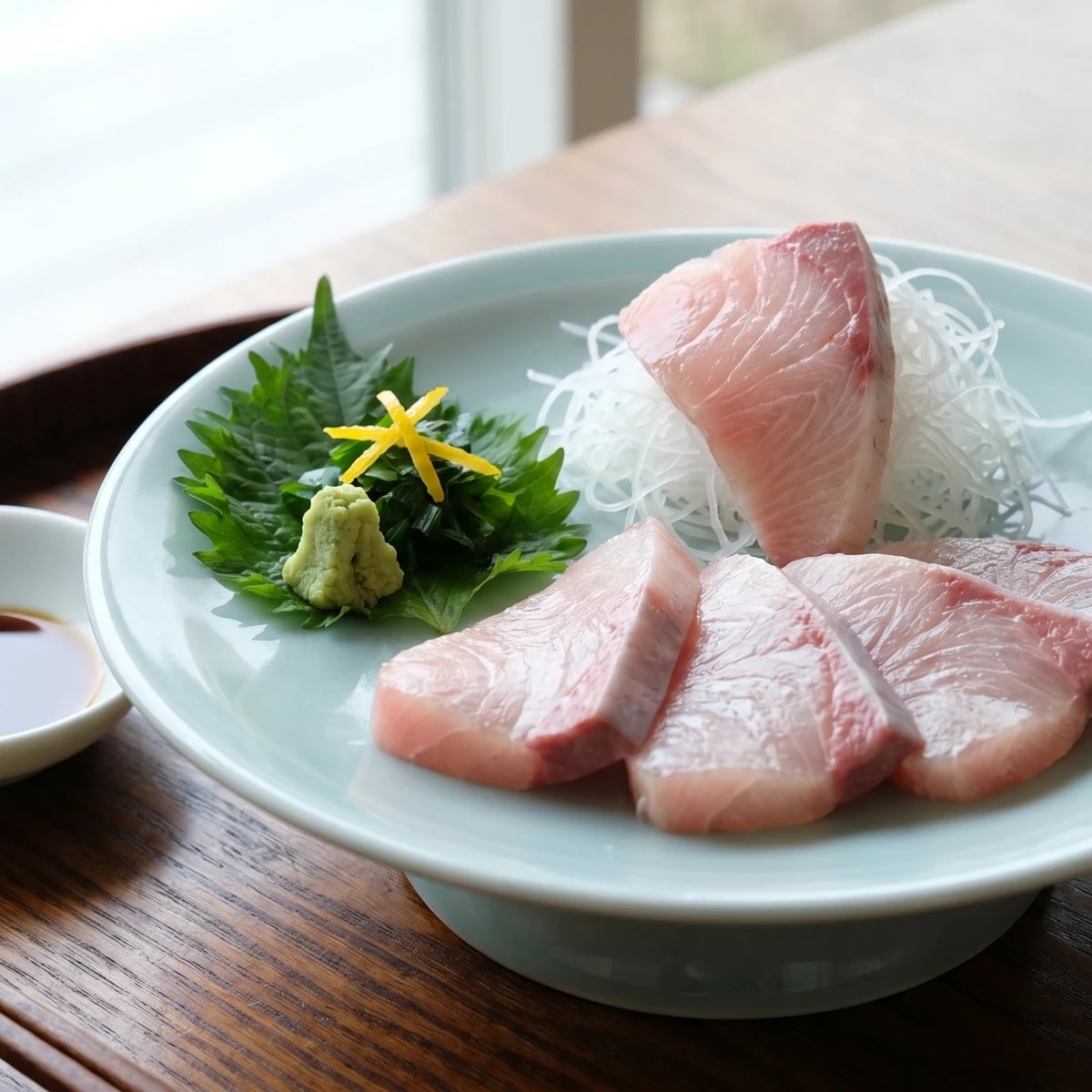
Kan-buri is yellowtail after the cold has done its quiet work. The flesh turns pale rose, threaded with ivory fat, and the cut face should shine wet and clean. This is winter sashimi, not a year-round prize. When buri is at its shun, at its prime, it asks for less than people expect.
The hesitation is reasonable. Raw fish at a dinner party makes everyone suddenly very expert, which is how you know they're nervous. The first secret is not courage, it's sourcing. Buy a sashimi-ready saku, a trimmed block meant to be eaten raw, from a fishmonger who can tell you when it arrived and how it was kept. If it smells strong, feels tacky, or looks dull, don't make sashimi. Salt-grill it and keep the meal honest.
Once the fish is right, the method is simple. Keep everything cold, dry the block, and draw a sharp yanagiba through in one clean pull. Buri carries winter fat, so slice it a little thick, about 8 mm, enough for the flesh to meet the teeth before it melts. Saw at it and you bruise the surface; cut once and the knife does almost all the seasoning.
Serve it with shredded daikon, a little wasabi, soy on the side, and a few grains of salt for the first slice if the fish is truly good. That sounds severe only until you taste it. In a Japanese meal, sashimi is the raw method speaking plainly beside rice, soup, and something cooked. Leave the plate room, and leave the fish alone.
Buri is a shusse-uo, a 'promotion fish,' because its name changes as it grows; in Kansai, tsubasu becomes hamachi, then mejiro, then buri, while Kantō uses a different sequence. That name-changing made buri auspicious for New Year, especially in western Japan, where it still appears in winter and year-end meals. Kan-buri, the cold-season adult yellowtail, is tied closely to the Sea of Japan coast and Toyama Bay; fixed-net yellowtail fishing there was recorded by the Edo period, and Himi remains one of the famous names.
Quantity
400g
skinless, boneless, kept cold
Quantity
1/2 small
peeled and shredded very fine for tsuma
Quantity
8
Quantity
to taste
grated just before serving
Quantity
for dipping
Quantity
a small pinch per serving
Quantity
1 small strip
cut into hair-thin threads
| Ingredient | Quantity |
|---|---|
| sashimi-ready winter yellowtail (buri) sakuskinless, boneless, kept cold | 400g |
| daikonpeeled and shredded very fine for tsuma | 1/2 small |
| shiso leaves | 8 |
| fresh wasabi root, or good prepared wasabigrated just before serving | to taste |
| soy sauce | for dipping |
| fine sea salt (optional) | a small pinch per serving |
| yuzu peel (optional)cut into hair-thin threads | 1 small strip |
Buy a skinless, boneless saku of winter buri from a supplier who sells fish for raw eating. Ask what arrived today and how it was held, not only whether a label says 'sushi grade.' The flesh should be pale pink to amber with fine ivory marbling, moist but not sticky, and clean-smelling. If it smells strong or looks tired, cook it. Sourcing first, always.
Keep the buri in the coldest part of the refrigerator until the last moment. Chill the serving plates and soy dishes for 15 minutes if you have the space. Sashimi warms quickly, and cold ware buys you calm time for cutting and plating.
Shred the daikon into very fine threads, rinse them in cold water, then drain and squeeze gently so they are crisp, not wet. This is tsuma, the white garnish set beside sashimi. It lifts the fish from the plate, cleans the mouth between bites, and gives the cold slices a little brightness without becoming sauce.
Grate the wasabi just before serving, or shape a small mound of prepared wasabi if that is what you have. Pour soy sauce into small dishes and set out a pinch of fine salt. Don't drown the fish. Soy is seasoning, not a bath, and salt lets the first slice show you exactly what you bought.
Pat the buri dry with a clean towel. Look for the faint lines in the flesh and turn the block so each slice will cut across them. Cutting across the grain shortens the muscle fibers and gives a tender bite; cutting with the grain makes even good buri feel stringy.
Use a yanagiba, or the longest sharp slicing knife you own. Hold the blade nearly upright and draw it through the fish in one unbroken pull, from heel to tip, making hira-zukuri slices about 8 mm thick. Wipe the blade with a damp cloth between cuts. Buri's winter fat smears if you saw at it, so let the knife do the work.
Set shiso leaves and a small bundle of daikon off-center on each chilled plate. Arrange five slices of buri in a loose arc, slightly overlapping but never piled, with at least a third of the plate left empty. Add wasabi and, if using, a few threads of yuzu peel. Serve at once. For the cleanest bite, place a little wasabi on the fish, touch one edge to soy, or taste the first slice with salt alone.
1 serving (about 145g)
Culinary guides, cultural storytelling, and the editorial depth that makes cooking meaningful.
Discover Culinary Explorer
Chef Takumi
Summer horse mackerel, chopped just enough to catch ginger and scallion, becomes a cool, clean main dish with rice. The secret is fresh fish and a knife that does not bruise it.

Chef Takumi
Battera looks severe, all straight edges and polished fish, but the work is simple: cure good mackerel, season the rice while warm, then let the press make order.

Chef Takumi
The most welcoming sushi is not rolled at all: vinegared rice, a little sweet-salty simmering, and beautiful things scattered on top with care.

Chef Takumi
Ehōmaki looks ceremonial, but it is simply one good thick roll, seven fillings for luck, and the discipline not to cut it before it reaches the table.