
Chef Takumi
Aji Fry (アジフライ, panko-fried horse mackerel)
Aji fry is weeknight fish with no mystery: fresh horse mackerel opened cleanly, breaded lightly, and fried until the panko crackles while the flesh stays sweet.
A cooking platform built around craft, culture, and the stories behind what we eat.
Created by
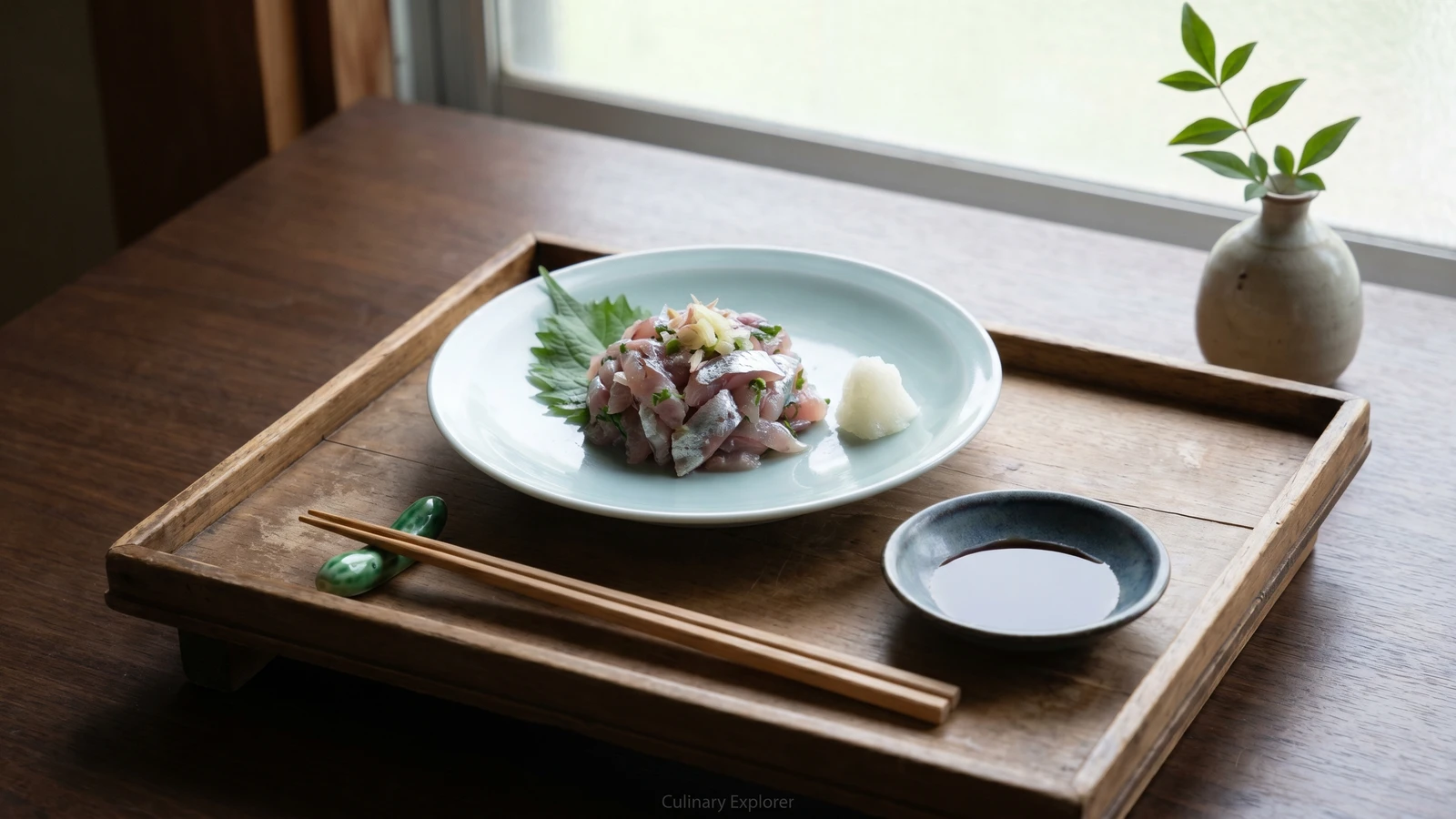
Summer horse mackerel, chopped just enough to catch ginger and scallion, becomes a cool, clean main dish with rice. The secret is fresh fish and a knife that does not bruise it.
Aji is a summer fish, and when it's glistening fresh it hardly asks to be cooked. That is the whole pleasure of aji no tataki: bright horse mackerel, ginger, scallion, a little shiso, all cut together until the fish holds the seasonings without becoming a paste. You may look at the word sashimi and think this is the advanced corner of the kitchen. It isn't. The hard part is buying well.
Sourcing first, always. Ask for horse mackerel you would eat raw the day it came in, with clear eyes, firm flesh, and a clean smell. If it smells strongly fishy, change the dish and grill it. Nothing hidden here. Tataki gives you no sauce to hide behind, only the fish and the cut.
The one detail that decides it is the chopping. Use a sharp knife and short, clean strokes, gathering the fish with the aromatics until the pieces are small but still distinct. Pound it into paste and you've made another dish's poor cousin. Leave a little texture, so each bite tastes of cold fish first, then ginger, scallion, and the faint green edge of shiso.
On the Boso Peninsula this belongs to the fisherman's table: quick, direct, eaten with rice and often a spoon of grated daikon to keep the mouth clean. It is weeknight food if the fish is right. Honmono does not need to announce itself loudly. It sits cool on the plate and lets the knife do the seasoning.
Aji no tataki is closely tied to fishing communities along Chiba's Boso Peninsula, where horse mackerel was chopped on board or near the harbor with ginger and green onion while it was still at its freshest. The word tataki here means chopped or lightly pounded, not the seared preparation associated with katsuo. In the same region, a related dish called namerō adds miso and is worked more thoroughly, showing how one fresh fish could become several boat-side dishes by changing only the seasoning and the hand.
Quantity
2 fish (about 150-180g each)
filleted, pin bones removed, skinned, kept chilled for raw eating
Quantity
1 tablespoon
peeled and finely grated or minced
Quantity
2
very thinly sliced
Quantity
4
3 finely sliced, 1 reserved for plating
Quantity
1 tablespoon, plus more for serving
lightly drained
Quantity
2 teaspoons, plus more for serving
Quantity
1 teaspoon
for wiping the knife and board
Quantity
2 bowls
freshly cooked, for serving
| Ingredient | Quantity |
|---|---|
| very fresh horse mackerel (aji)filleted, pin bones removed, skinned, kept chilled for raw eating | 2 fish (about 150-180g each) |
| fresh gingerpeeled and finely grated or minced | 1 tablespoon |
| scallionsvery thinly sliced | 2 |
| shiso leaves3 finely sliced, 1 reserved for plating | 4 |
| grated daikonlightly drained | 1 tablespoon, plus more for serving |
| soy sauce | 2 teaspoons, plus more for serving |
| rice vinegar (optional)for wiping the knife and board | 1 teaspoon |
| Japanese short-grain ricefreshly cooked, for serving | 2 bowls |
Keep the horse mackerel cold until the moment you cut it. The flesh should be firm, glossy, and clean-smelling, with no sour or strong fishy odor. Tataki is raw, so this decision happens before the knife. If the fish is tired, cook it instead and call that an honest supper.
Set a clean cutting board over ice packs or chill the board beforehand. Wipe the knife and board with a little rice vinegar if you like, then dry them well. Cold, clean surfaces keep the fish firm and make the cut clean instead of smeared.
Lay the fillets skin-side down and cut them crosswise into thin strips, then turn the strips and cut into small pieces. Use one clean draw or firm chop at a time, not a sawing motion. Sawing bruises the flesh and makes the surface dull, and this dish has nowhere to hide that.
Gather the chopped aji with the ginger, scallion, and sliced shiso. Chop lightly for 20 to 30 seconds, folding the fish back together with the side of the knife as you work. Stop while the pieces still have texture and shine. You want the seasonings caught in the fish, not fish paste.
Fold in the grated daikon and 2 teaspoons soy sauce just before serving. The daikon freshens the bite and softens the oiliness of the aji, while the soy seasons without taking over. Taste a little and add only a few drops more soy if the fish needs it.
Set one whole shiso leaf on a cool plate and mound the tataki slightly off-center, building a little height. Leave space around it. Serve at once with warm rice, extra grated daikon, and a small dish of soy sauce. The contrast is the point: cool fish, warm rice, clean seasonings.
1 serving (about 260g)
Culinary guides, cultural storytelling, and the editorial depth that makes cooking meaningful.
Discover Culinary ExplorerChef Takumi
Aji fry is weeknight fish with no mystery: fresh horse mackerel opened cleanly, breaded lightly, and fried until the panko crackles while the flesh stays sweet.
Chef Takumi
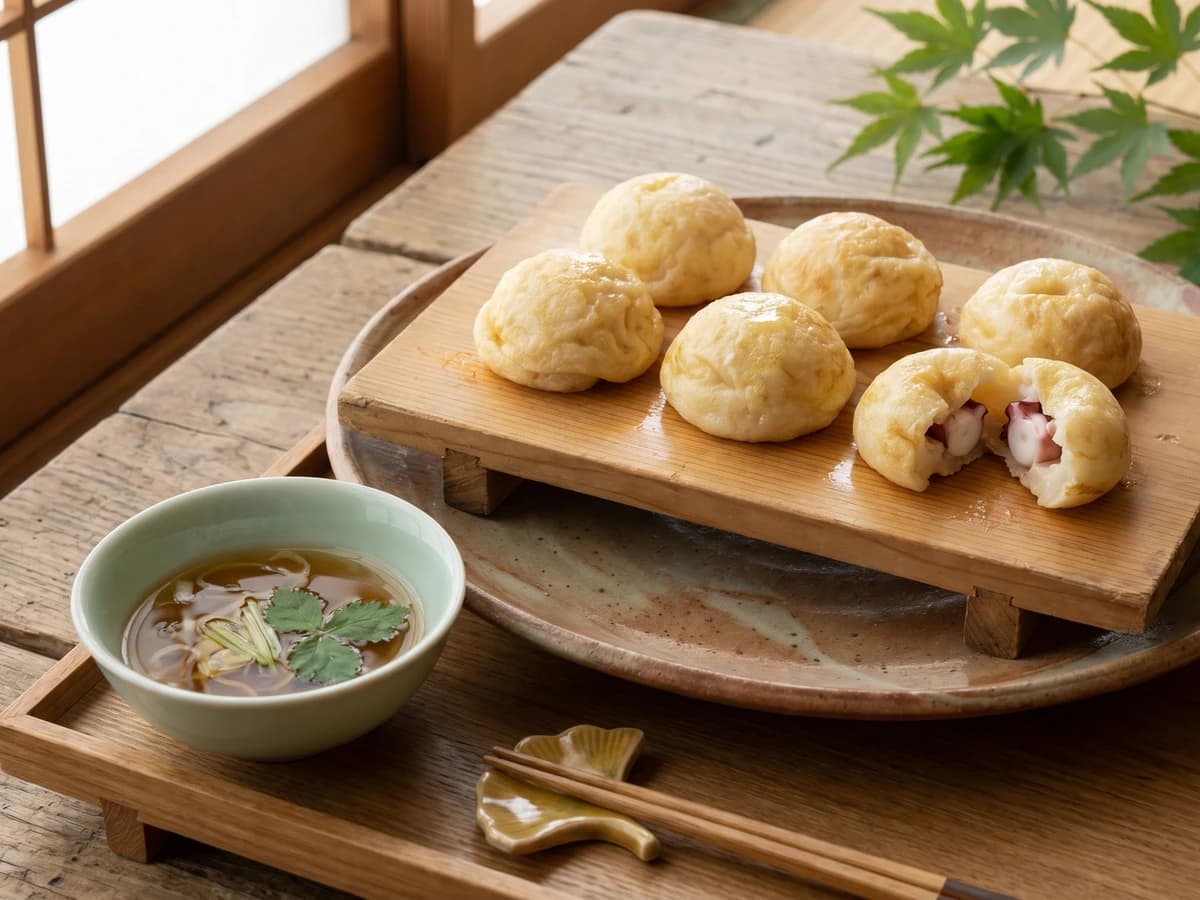
Akashi-yaki is not sauced takoyaki. It is egg-rich batter, tender octopus, and clear dashi, cooked pale and soft so each ball can be dipped like a small custard dumpling.

Chef Takumi
A whole anago looks like a test of nerve. It is mostly good sourcing, a dry skin, cold batter, and oil hot enough to leave the eel sweet under its lace.

Chef Takumi
Aomori's ika-menchi is thrift with a clean crackle: chopped squid, cabbage, and onion fried into small patties, sweet from the vegetables, springy from the squid, and honest beside rice.