
Chef Takumi
Aji Fry (アジフライ, panko-fried horse mackerel)
Aji fry is weeknight fish with no mystery: fresh horse mackerel opened cleanly, breaded lightly, and fried until the panko crackles while the flesh stays sweet.
A cooking platform built around craft, culture, and the stories behind what we eat.

Created by
Battera looks severe, all straight edges and polished fish, but the work is simple: cure good mackerel, season the rice while warm, then let the press make order.
Mackerel makes people nervous. It should. A tired one announces itself from across the room, and no vinegar bath will turn it noble. For battera, start with saba that is glistening fresh, firm, and clean-smelling, because this dish has nothing hidden. The vinegar sharpens the fish and firms it. It does not rescue it.
The first secret is the cure. Salt draws out water and tightens the flesh; rice vinegar then brightens it and leaves the cut face clean. Cure too long and the saba turns chalky. Cure too little and it tastes unfinished. You want the center still faintly pink, the outside silver and neat, a fish that tastes like itself with its edges made precise.
Then comes the Osaka part: pressed sushi, oshizushi, where a wooden frame does the quiet work your hands would only spoil. Warm vinegared rice goes in first, then shime-saba, then a translucent sheet of sweet white konbu. The press locks them together so every slice carries fish, rice, and kelp in one calm bite. It is picnic food, theater food, make-ahead food, but it is not casual in spirit. Leave it room, cut it cleanly, and let the little boat hold its shape.
Battera is an Osaka form of oshizushi, pressed sushi, that became popular in the Meiji period as a portable city food. Its name comes from Portuguese bateira, meaning a small boat, a reference to early boat-shaped versions said to have used konoshiro, gizzard shad, before mackerel became the standard fish. The thin white konbu laid over the top is now one of the dish's signatures, softening the vinegar and giving the surface its pale gloss.
Quantity
2 fillets (about 300g total)
pin bones removed
Quantity
2 tablespoons
Quantity
1 cup, plus more as needed
Quantity
1 tablespoon
for the curing vinegar
Quantity
1 teaspoon
for the curing vinegar
Quantity
2 pieces
trimmed to the mold
Quantity
2 cups
Quantity
3 tablespoons
for sushi vinegar
Quantity
1 1/2 tablespoons
for sushi vinegar
Quantity
1 teaspoon
for sushi vinegar
Quantity
for serving
Quantity
a little, for serving
| Ingredient | Quantity |
|---|---|
| very fresh mackerel filletspin bones removed | 2 fillets (about 300g total) |
| fine sea salt | 2 tablespoons |
| rice vinegar | 1 cup, plus more as needed |
| sugarfor the curing vinegar | 1 tablespoon |
| sea saltfor the curing vinegar | 1 teaspoon |
| shiraita konbu (white kelp sheet)trimmed to the mold | 2 pieces |
| freshly cooked short-grain Japanese rice | 2 cups |
| rice vinegarfor sushi vinegar | 3 tablespoons |
| sugarfor sushi vinegar | 1 1/2 tablespoons |
| sea saltfor sushi vinegar | 1 teaspoon |
| pickled ginger (optional) | for serving |
| soy sauce (optional) | a little, for serving |
Use mackerel that is firm, bright-skinned, and clean-smelling, with no sour or heavy fish smell. Battera is only as good as the fish you begin with. If the saba is tired, cook it instead; vinegar is a seasoning here, not a disguise.
Lay the fillets skin-side down on a tray and coat both sides evenly with the 2 tablespoons of salt. Refrigerate for 45 minutes. The salt draws out excess moisture, firms the flesh, and gives the vinegar something neat to work on. When beads of moisture show on the surface, the fish is ready for rinsing.
Rinse the salt from the fillets under cold water, then pat them very dry. Stir 1 cup rice vinegar with 1 tablespoon sugar and 1 teaspoon salt until dissolved, then lay the fillets in it, adding more vinegar if needed to cover. Refrigerate 25 to 35 minutes, depending on thickness. The outside should turn pale and firm while the center stays faintly pink.
Lift the saba from the vinegar and pat it dry. Starting at the head end, peel away the thin outer skin so the silver under-skin remains as much as possible. Trim uneven edges and shave down any thick belly ridge. A level piece presses evenly, and an even press gives you clean slices instead of a tilted little argument.
Mix 3 tablespoons rice vinegar, 1 1/2 tablespoons sugar, and 1 teaspoon salt until dissolved. Spread the hot cooked rice in a wide bowl and fold in the sushi vinegar with a cutting motion, fanning or turning gently until the grains look glossy and are warm, not hot. Warm rice drinks the seasoning; cold rice only wears it on the surface.
Trim the shiraita konbu to fit the mold. If it feels stiff, wipe it with a little rice vinegar and let it soften for a few minutes. It should bend without cracking. The konbu is not decoration; it rounds the sharpness of the cured fish and gives battera its quiet, pale finish.
Line a battera mold or small loaf pan with plastic wrap, leaving overhang. Lay the konbu in first, then the mackerel skin-side down, silver side against the konbu. Spread half the vinegared rice over the fish in an even layer, pressing lightly into the corners. Do not mash the grains. You want joined sushi, not rice paste.
Fold the plastic over the rice, set the lid or a flat board on top, and press firmly and evenly. Weight it with a small can or another pan and refrigerate for at least 3 hours, or up to overnight. The rest lets the rice, fish, and konbu settle into one body, so the knife meets a loaf rather than three loose layers.
Unmold the battera and set it konbu-side up. Use a sharp knife wiped with a damp cloth, cutting straight down into 6 pieces per loaf and wiping the blade between cuts. The clean cut is part of the taste here: each piece should show rice, fish, and konbu in a single, orderly bite.
Serve cool or at room temperature with pickled ginger. Soy sauce is optional and should be used lightly, if at all. The mackerel has already been seasoned by salt, vinegar, rice, and konbu. Let that work speak plainly.
1 serving (about 65g)
Culinary guides, cultural storytelling, and the editorial depth that makes cooking meaningful.
Discover Culinary ExplorerChef Takumi
Aji fry is weeknight fish with no mystery: fresh horse mackerel opened cleanly, breaded lightly, and fried until the panko crackles while the flesh stays sweet.
Chef Takumi
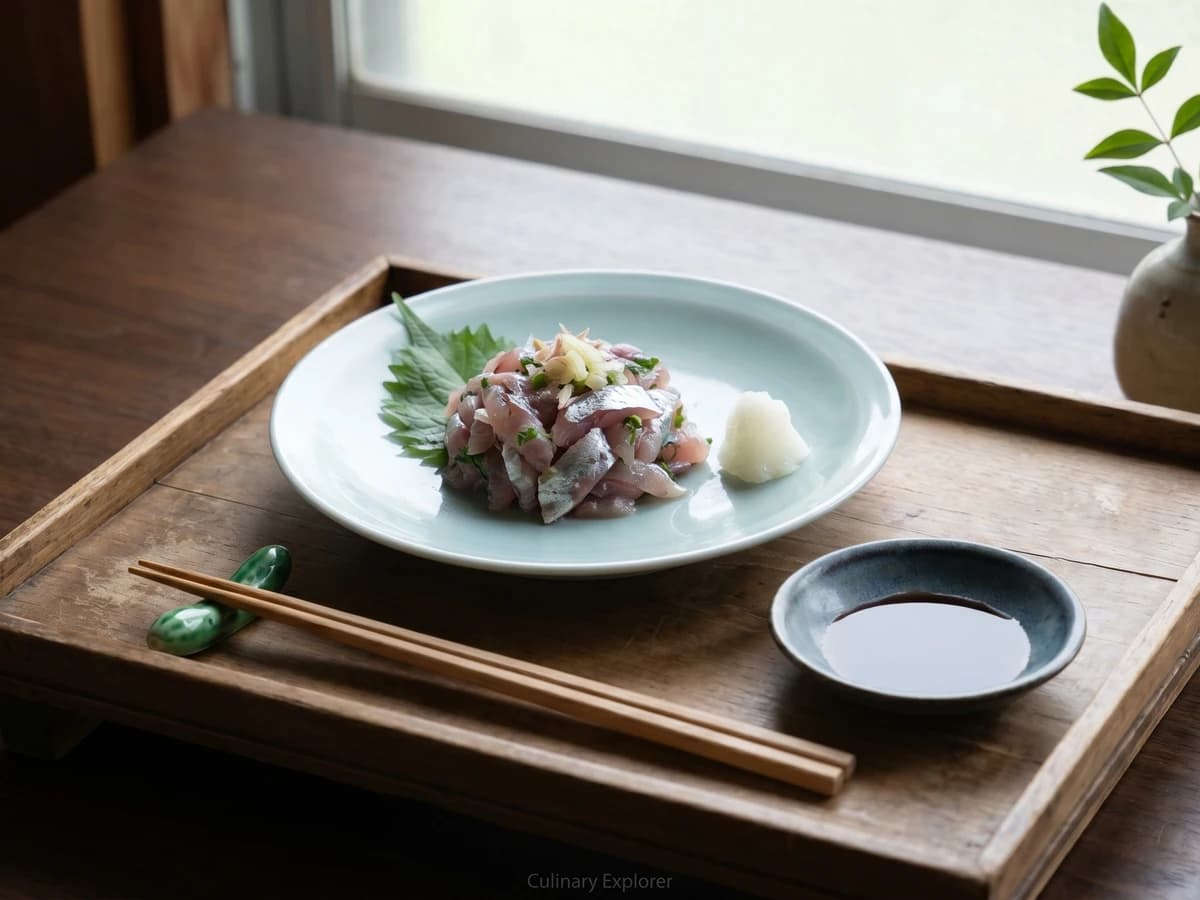
Summer horse mackerel, chopped just enough to catch ginger and scallion, becomes a cool, clean main dish with rice. The secret is fresh fish and a knife that does not bruise it.
Chef Takumi
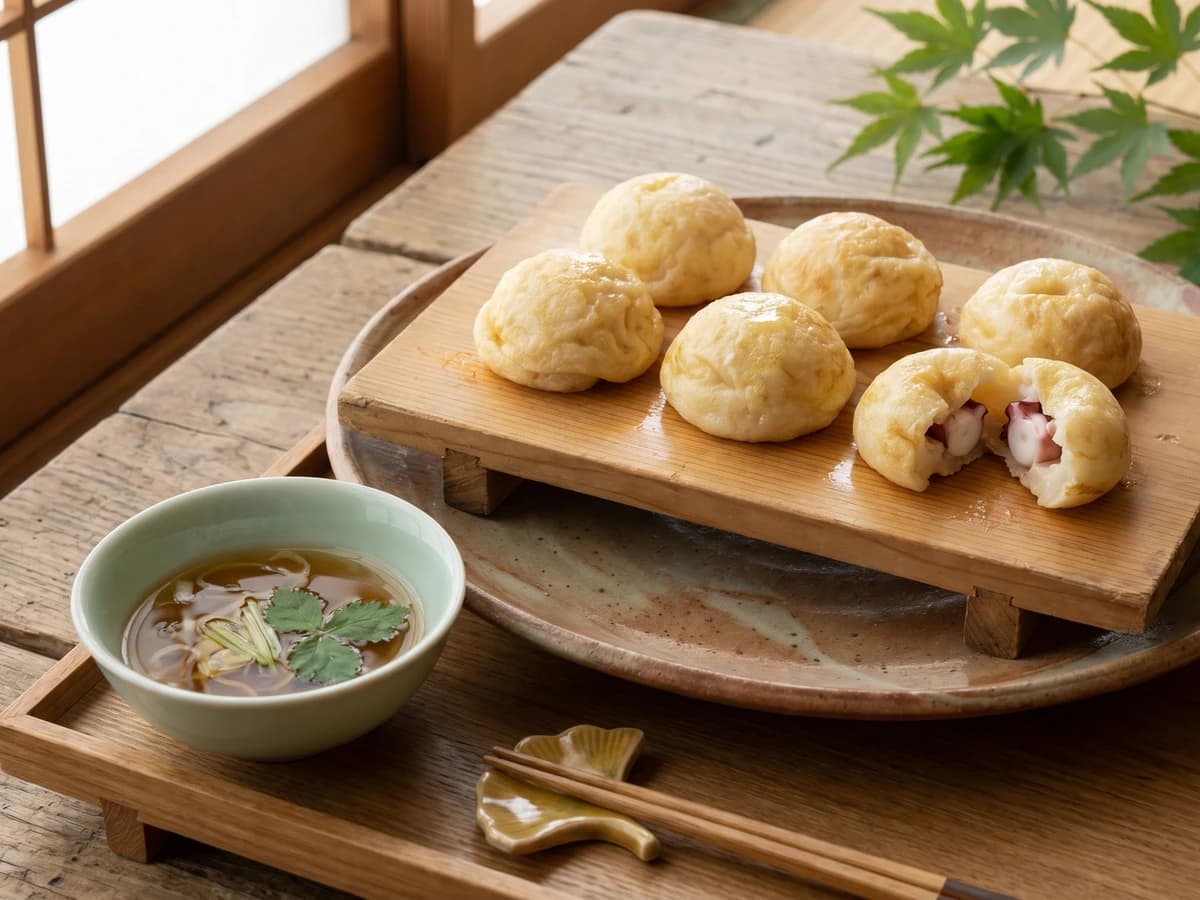
Akashi-yaki is not sauced takoyaki. It is egg-rich batter, tender octopus, and clear dashi, cooked pale and soft so each ball can be dipped like a small custard dumpling.

Chef Takumi
A whole anago looks like a test of nerve. It is mostly good sourcing, a dry skin, cold batter, and oil hot enough to leave the eel sweet under its lace.