
Chef Lesia
Makivnyk (маківник, poppy seed roll)
The black poppy filling is the point: dense, glossy, honeyed, almost mineral, rolled so tightly through soft dough that every slice looks like a winter night with a gold edge.
A cooking platform built around craft, culture, and the stories behind what we eat.
Created by
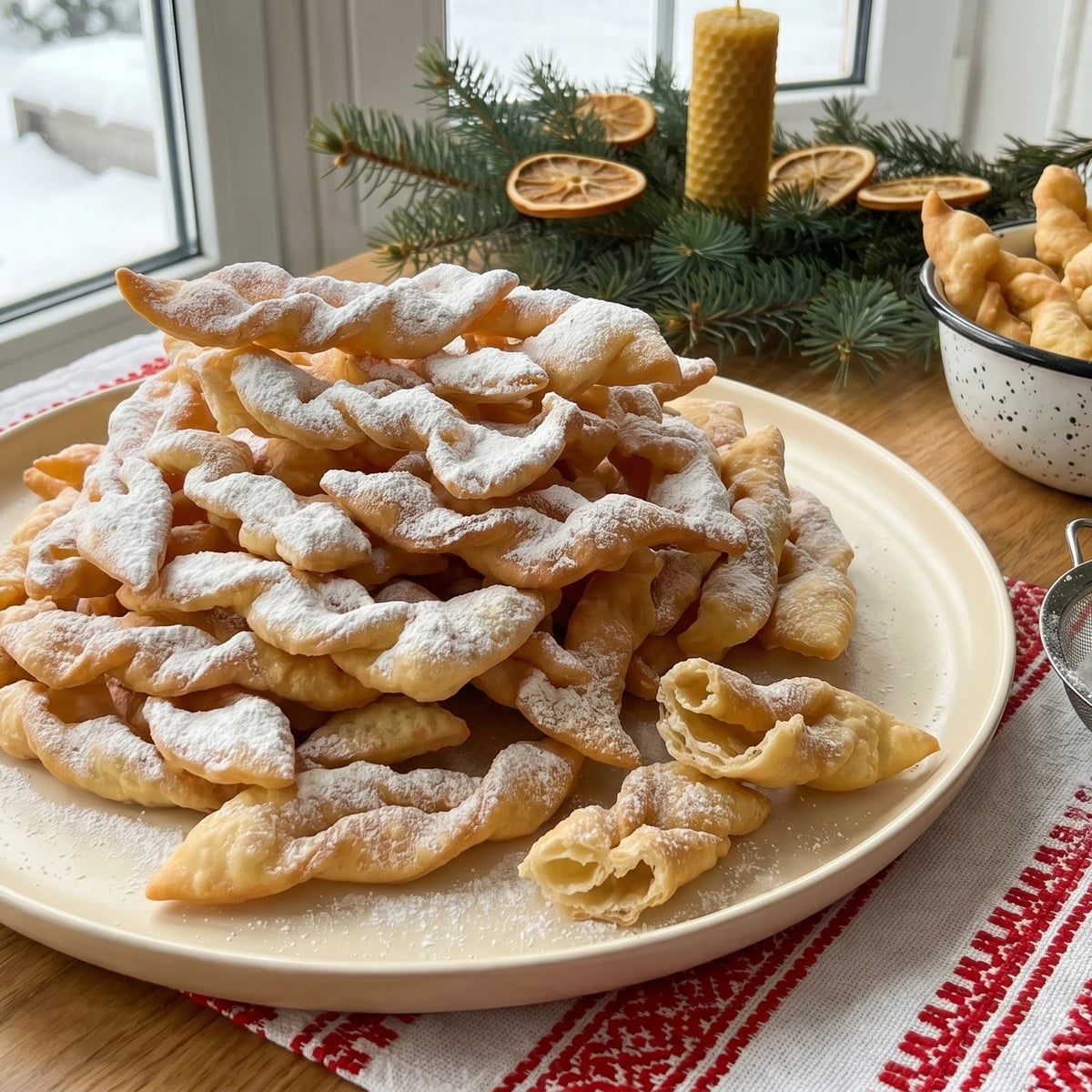
The twist is the trick: a plain strip of sour-cream dough slips through itself, hits the hot oil, and comes out crisp, blistered, golden, and ready for sugar.
Astrip of dough goes into the oil looking almost too plain to bother with, then it twists, blisters, and turns sunflower-gold before your eyes. That is the small theatre of verguny: flour, eggs, sour cream, a little sugar, rolled thin enough to feel delicate, cut, slit, pulled through itself, then fried until the oil stops shouting and starts singing.
Poltava knows this pastry well. These are not doughnuts, not buns, not anything that wants to rise slowly under a towel. Their lightness comes from the rolling and the twist. The dough must be rested so it stops fighting you, then rolled thin so the oil can catch it quickly and make those crisp little bubbles. Too thick and you get a hard chew. Thin is the kindness here.
Aunt Nadia once wrote only "fry until it sounds right," which is useful and also completely maddening until you hear it. At first the oil is busy and sharp around the dough; then the bubbling quiets, the color deepens, and the smell changes from raw flour to warm biscuit. Lift them then. Bury them in icing sugar while they are still faintly warm.
Make a bowlful. Verguny are for Christmas tables, nameday visits, children stealing from the tray, and the adult who says they only want one while already reaching for the second.
Verguny are especially associated with central Ukraine and Poltava household cooking, where sour cream or kefir enriched unleavened dough before it was rolled thin and fried for winter holidays and family feasts. Related fried pastries appear across Ukrainian regions under names such as khrusty, meaning crisp things, but the Poltava style is known for its delicate twist, pale-gold frying, and a snowfall of sugar rather than a heavy glaze.
Quantity
500g
plus extra for rolling
Quantity
3
Quantity
120g
Quantity
50g
Quantity
30g
melted and cooled
Quantity
1 tablespoon
for crispness
Quantity
1 teaspoon
Quantity
1 teaspoon vanilla sugar or 1/2 teaspoon extract
Quantity
1 to 1.25 litres
for frying
Quantity
generous amount
for dusting
| Ingredient | Quantity |
|---|---|
| plain flourplus extra for rolling | 500g |
| large eggs | 3 |
| sour cream or thick kefir | 120g |
| caster sugar | 50g |
| unsalted buttermelted and cooled | 30g |
| horilka or vodka (optional)for crispness | 1 tablespoon |
| fine sea salt | 1 teaspoon |
| vanilla sugar or vanilla extract (optional) | 1 teaspoon vanilla sugar or 1/2 teaspoon extract |
| refined sunflower oilfor frying | 1 to 1.25 litres |
| icing sugarfor dusting | generous amount |
Whisk the eggs, sour cream, sugar, melted butter, salt, and vanilla if using. Stir in the horilka if you want the crisper, drier bite, then add the flour and mix until you have a firm dough. It should feel smooth and a little stubborn, not sticky. If it smears onto your hands, add flour by the spoonful.
Knead the dough until it comes together cleanly and loses its rough edges, then cover it with a bowl or wrap and leave it to rest for at least half an hour. This rest is not decoration. It lets the flour drink and the gluten relax, so later the dough rolls thin instead of snapping back like a bad mood.
Divide the dough into four pieces and keep the rest covered while you work. Roll one piece on a lightly floured surface until it is thin, about the thickness of a postcard, and cut it into strips about 3cm wide and 10cm long. Cut a slit down the middle of each strip, leaving the ends intact.
Take one end of the strip, push it through the slit, and pull gently so the dough turns inside itself. That little fold is the whole charm. Don't tug it tight; leave the twist loose enough that the hot oil can move around it and puff the edges.
Pour the sunflower oil into a wide, heavy pot so it comes at least 5cm deep. Heat it until a scrap of dough drops in and rises at once with lively bubbles around it. The oil should sound bright, not angry. If the scrap darkens before you can count a few breaths, lower the heat.
Slip in a few twists at a time, without crowding the pot. They will sink for a moment, float, blister, and turn pale gold. Turn them once. Listen: when the fierce bubbling quiets and the smell changes from wet flour to warm biscuit, lift them out with a spider or slotted spoon.
Drain the verguny on a rack or paper towels, then sift icing sugar over them while they are still faintly warm. Be generous. They should look like a winter window after the first proper frost.
Pile them high in a wide bowl or on a large platter and serve the same day, when the edges are still crisp under the sugar. If they soften later, don't scold them. A few minutes in a low oven wakes them up again.
1 serving (about 15g)
Culinary guides, cultural storytelling, and the editorial depth that makes cooking meaningful.
Discover Culinary Explorer
Chef Lesia
The black poppy filling is the point: dense, glossy, honeyed, almost mineral, rolled so tightly through soft dough that every slice looks like a winter night with a gold edge.

Chef Lesia
Poppy seeds are the sound of Makoviy: toasted, crushed, and whispering under your teeth in small honey cookies baked when the heads ripen in the August heat.

Chef Lesia
The cherries fight back: tart July fruit cuts through sweet, oily poppy seed filling, staining the soft yeast crumb violet at the seams.

Chef Lesia
These little open cups carry their name like a road: mandryky, wanderers, with crumbly golden edges and sweet curd cheese sitting soft in the middle.