Culinary Explorer
A cooking platform built around craft, culture, and the stories behind what we eat.
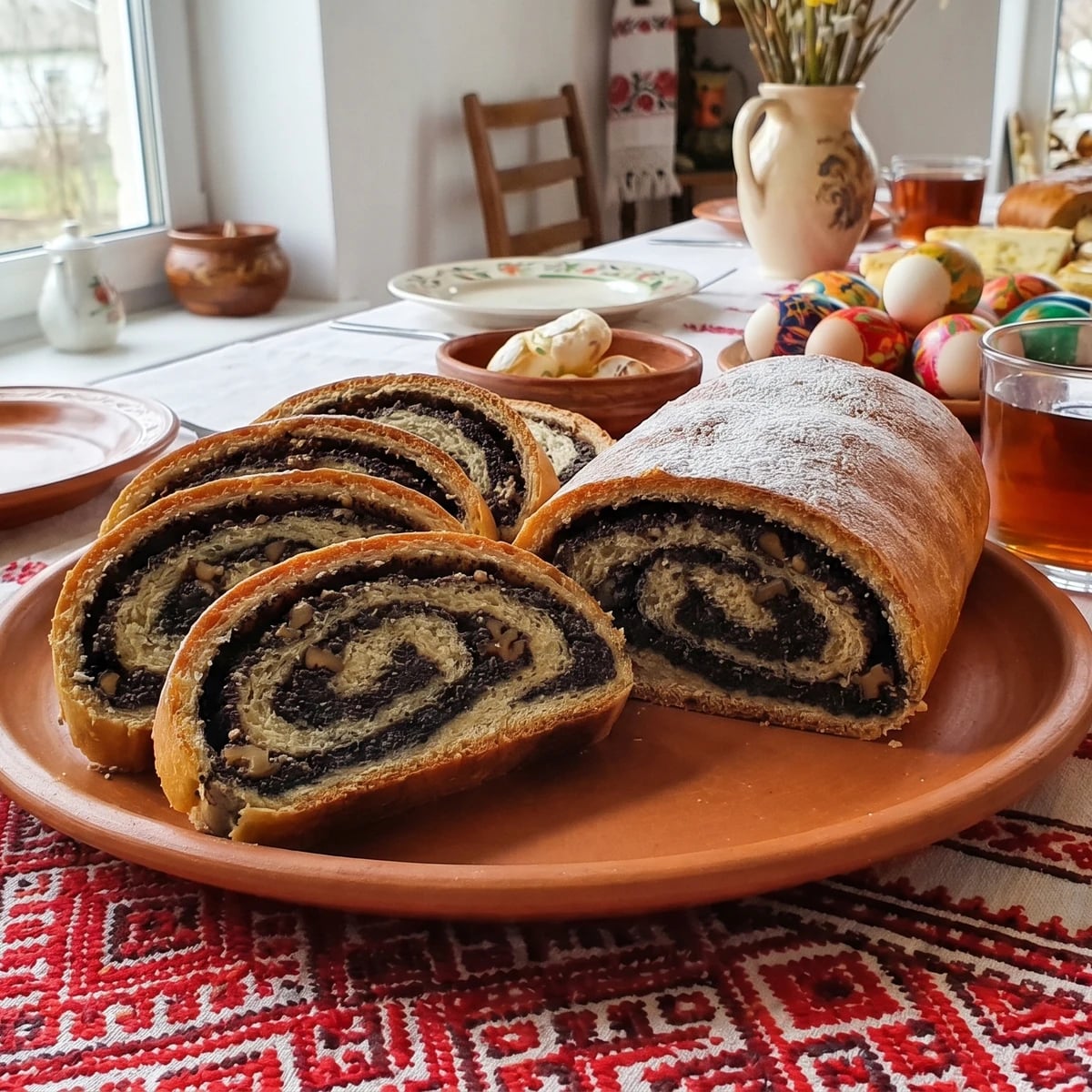
Makivnyk (маківник, poppy seed roll)
Created by Chef Lesia
The black poppy filling is the point: dense, glossy, honeyed, almost mineral, rolled so tightly through soft dough that every slice looks like a winter night with a gold edge.
Cut makivnyk and the room goes quiet for half a breath. That black spiral is not decoration. It is scalded poppy seed, ground until it gives up its milk, sweetened with honey, loosened with butter, and made fragrant with walnuts and citrus until the smell changes from dusty seed to something deep and festive.
This is a Galician holiday roll, the kind you meet at Christmas and Easter beside kutia, pampushky, eggs, candles, all the edible proof that a table can carry more memory than a book. The dough must be soft enough to bend but strong enough to hold the filling, because makivnyk is generous by nature. A thin smear is not the dish. The filling should sit thick under the spoon.
Aunt Nadia wrote only, "Grind the poppy well, until it sounds right," which is a wicked thing to write to a girl in London with a borrowed hand grinder and no patience. She was right, of course. Whole poppy seeds pass through you like sand; ground poppy becomes food, dark and sweet and faintly milky. That is the one why that decides the roll.
Ingredients
strong white flour
Quantity
500g
plus extra for dusting
dried yeast
Quantity
7g
sugar
Quantity
80g
| Ingredient | Quantity |
|---|---|
| strong white flourplus extra for dusting | 500g |
| dried yeast | 7g |
| sugar | 80g |
Where cooking meets culture.
Culinary guides, cultural storytelling, and the editorial depth that makes cooking meaningful.
Discover Culinary Explorer