
Chef Lesia
Makivnyk (маківник, poppy seed roll)
The black poppy filling is the point: dense, glossy, honeyed, almost mineral, rolled so tightly through soft dough that every slice looks like a winter night with a gold edge.
A cooking platform built around craft, culture, and the stories behind what we eat.
Created by
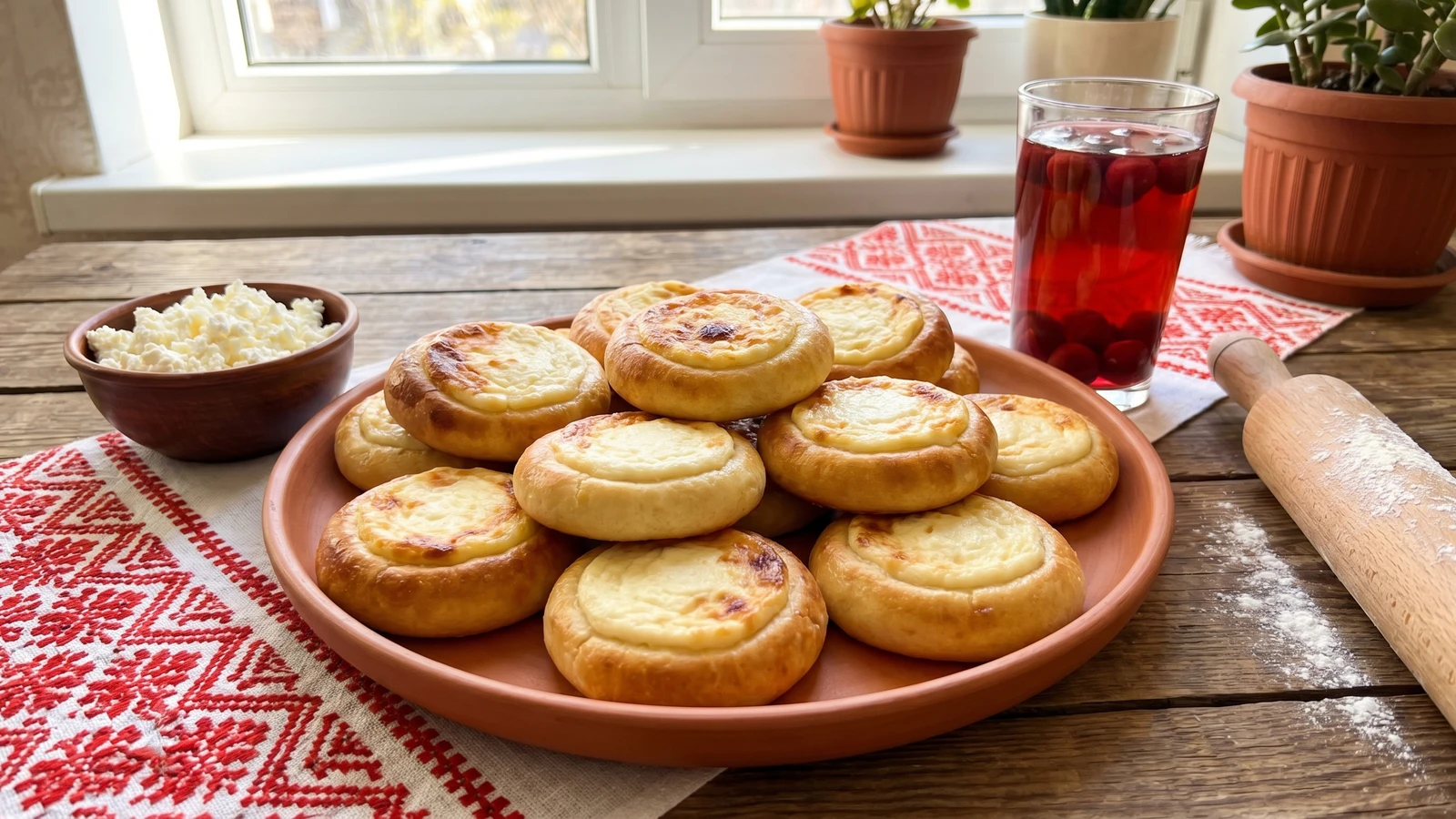
These little open cups carry their name like a road: mandryky, wanderers, with crumbly golden edges and sweet curd cheese sitting soft in the middle.
The most beautiful thing about mandryky is that they look half-finished on purpose: open little pastry cups, their crimped edges holding sweet curd cheese like something packed for a journey. The filling should not be smooth like a cake cream. It should keep a little grain, a little dairy tang, so your teeth know this began as farmer cheese and not pudding.
These belong to Polissia and to the feast of Saints Peter and Paul, after the Petriwka fast, when milk and eggs come back to the table with a sigh of relief. The name leans toward mandry, wandering, and that is how people explain them: food for travelers, for apostles on the road, for children running in and out of the yard with sugar on their fingers.
The one thing that decides the dish is the cheese. Drain it until it holds its shape in your palm, then sweeten it gently and bind it with egg, because wet curd makes the pastry sulk and slump. Aunt Nadia wrote only, "take good cheese, not tired cheese," which is not a measurement, but she was right.
Make more than you think. A plate of twelve looks generous for exactly seven minutes.
Mandryky are most closely tied to northern Ukrainian Polissia and the feast of Saints Peter and Paul, celebrated on 12 July in the modern calendar by many families. Folklore links their name to mandruvaty, to wander, and to the apostles' travels; another village tale says the cuckoo stops singing after Peter's Day because it choked on a mandryk. Like many ritual home pastries, they survived more in family kitchens and feast-day memory than in standardized Soviet cookbooks, where regional sweets were often flattened into one approved category of curd baking.
Quantity
250g
plus more for dusting
Quantity
120g
cubed
Quantity
1 tablespoon
Quantity
1/4 teaspoon
Quantity
1
Quantity
3 to 4 tablespoons
Quantity
450g
Quantity
1
Quantity
2 tablespoons, plus more to taste
Quantity
1 tablespoon
Quantity
1 teaspoon vanilla sugar or 1/2 teaspoon extract
Quantity
from 1/2 lemon
finely grated
Quantity
2 tablespoons
soaked and drained
Quantity
1 yolk mixed with 1 teaspoon milk
for glazing
| Ingredient | Quantity |
|---|---|
| plain flourplus more for dusting | 250g |
| cold unsalted buttercubed | 120g |
| sugar | 1 tablespoon |
| fine sea salt | 1/4 teaspoon |
| egg yolk | 1 |
| cold smetana or sour cream | 3 to 4 tablespoons |
| dry farmer cheese or tvoroh | 450g |
| large egg | 1 |
| sugar | 2 tablespoons, plus more to taste |
| smetana or sour cream | 1 tablespoon |
| vanilla sugar or vanilla extract | 1 teaspoon vanilla sugar or 1/2 teaspoon extract |
| lemon zest (optional)finely grated | from 1/2 lemon |
| raisins (optional)soaked and drained | 2 tablespoons |
| egg yolk and milkfor glazing | 1 yolk mixed with 1 teaspoon milk |
If your farmer cheese is damp, wrap it in clean cloth and leave it in a sieve while you make the pastry. It should hold in soft clumps when squeezed, not weep into your hand. This is the step that keeps the cups proud instead of soggy.
Mix the flour, sugar, and salt, then rub in the cold butter with your fingertips until it looks like uneven breadcrumbs, some sandy, some pea-sized. Stir in the egg yolk and enough cold smetana to bring it together. Stop as soon as it gathers; overworked pastry bakes tough, and mandryky should crumble at the edge.
Pat the dough into a flat round, cover it, and chill until it feels firm but not rock hard. The butter needs to quiet down again after your warm hands. When you roll it, the dough should move without smearing.
Mash the drained cheese with the egg, sugar, smetana, vanilla, and lemon zest if using. Leave a little texture. Taste it before the raw egg goes in if you want to judge the sweetness; after baking it will taste a touch less sweet, so let it be just brighter than you think.
Roll the pastry on a floured surface to about the thickness of a coin and cut twelve rounds, roughly 10cm across. Set each round into a shallow tart tin or muffin tin, or pinch the edges up by hand on a baking sheet to make open cups. Fill each with a spoonful of cheese, leaving the rim visible, then brush the pastry edges with the egg yolk glaze.
Bake at 190C until the rims are golden, the bottoms feel set when nudged, and the cheese filling has puffed slightly with a few toasted freckles on top. Go by smell as much as color: first butter, then warm curd, then that biscuit smell that tells you the flour is cooked.
Let the mandryky sit until the filling settles back into itself. Eat them warm or at room temperature, with tea, sour cherry kompot, or nothing at all. They keep their dignity for a day, but the crumb is best before the kitchen forgets they were baked.
1 serving (about 80g)
Culinary guides, cultural storytelling, and the editorial depth that makes cooking meaningful.
Discover Culinary ExplorerChef Lesia
The black poppy filling is the point: dense, glossy, honeyed, almost mineral, rolled so tightly through soft dough that every slice looks like a winter night with a gold edge.

Chef Lesia
Poppy seeds are the sound of Makoviy: toasted, crushed, and whispering under your teeth in small honey cookies baked when the heads ripen in the August heat.

Chef Lesia
The cherries fight back: tart July fruit cuts through sweet, oily poppy seed filling, staining the soft yeast crumb violet at the seams.

Chef Lesia
Thin honey layers go into the tin crisp and coppery, then spend a night drinking sour cream until the cake cuts clean and tender, almost custardy at the fork.