
Chef Lesia
Makivnyk (маківник, poppy seed roll)
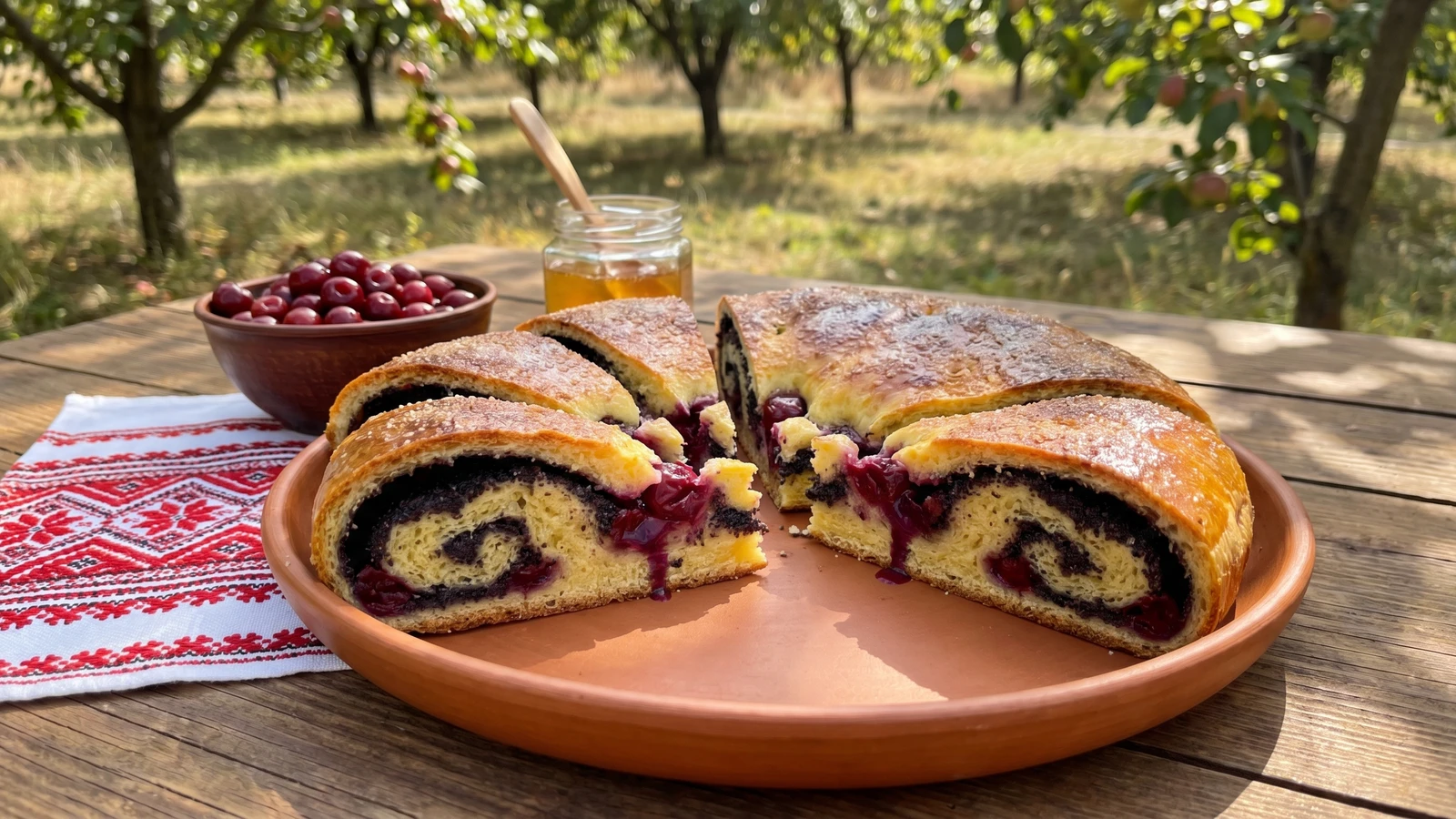
The black poppy filling is the point: dense, glossy, honeyed, almost mineral, rolled so tightly through soft dough that every slice looks like a winter night with a gold edge.
A cooking platform built around craft, culture, and the stories behind what we eat.
Created by
The cherries fight back: tart July fruit cuts through sweet, oily poppy seed filling, staining the soft yeast crumb violet at the seams.
The cherries fight back. That is the first thing you need to know. Against the sweet black poppy seed paste, heavy with honey and a little lemon, the sour cherries keep their nerve, bleeding violet juice into the golden crumb so every slice looks slightly unruly and alive.
This is a pyrih, a generous home pie, not a neat little pastry. In the south, where summer fruit arrives all at once and the litnya kuhnia, the summer kitchen, smells of yeast, sugar, hot metal, and jam pans, you bake big because people are always coming through the gate. Poppy seeds need respect: scald them, drain them, then grind until they darken and turn fragrant, until the smell changes from dusty to nutty. That grinding is the dish.
Aunt Nadia's letter only said, "mak do poky ne zaspivaye," poppy until it sings. Comedy, honestly. It took me three goes to understand that she meant the seeds should stop rattling dry and begin to move like a paste, shiny at the edges from their own oil. Once you hear that, the rest is kind: soft dough, tart cherries, a coil or a slab, and enough for eight guests or one hungry Ukrainian.
Poppy seed baking is threaded through Ukrainian festive cooking, especially Christmas and memorial tables, where mak, poppy, carries old associations with fertility, remembrance, and plenty. In the cherry-growing south and central regions, cooks fold that dark poppy filling into yeast pyrohy and rolls when sour cherries are in season, using the fruit's sharpness to cut the honeyed richness. Soviet-era baking books often standardized these into plain poppy rolls, but village and home kitchens kept the fruit-filled versions alive because summer never arrives politely.
Quantity
180ml
lukewarm
Quantity
2 1/4 teaspoons
Quantity
80g
divided for dough
Quantity
500g, plus more for dusting
Quantity
1 teaspoon
Quantity
2
at room temperature
Quantity
80g
melted and cooled
Quantity
1 tablespoon
for the bowl
Quantity
250g
Quantity
180ml
for scalding the poppy seeds
Quantity
90g
Quantity
50g
for the filling
Quantity
30g
softened
Quantity
1 teaspoon
finely grated
Quantity
1/2 teaspoon
Quantity
350g
pitted and well drained
Quantity
1 tablespoon
Quantity
1 yolk plus 1 tablespoon milk
for glazing
Quantity
1 tablespoon
for scattering
| Ingredient | Quantity |
|---|---|
| whole milklukewarm | 180ml |
| dried yeast | 2 1/4 teaspoons |
| sugardivided for dough | 80g |
| strong white flour | 500g, plus more for dusting |
| fine sea salt | 1 teaspoon |
| large eggsat room temperature | 2 |
| unsalted buttermelted and cooled | 80g |
| unrefined sunflower oilfor the bowl | 1 tablespoon |
| poppy seeds | 250g |
| boiling waterfor scalding the poppy seeds | 180ml |
| honey | 90g |
| sugarfor the filling | 50g |
| unsalted buttersoftened | 30g |
| lemon zestfinely grated | 1 teaspoon |
| vanilla (optional) | 1/2 teaspoon |
| sour cherriespitted and well drained | 350g |
| potato starch or cornflour | 1 tablespoon |
| egg yolk mixed with milkfor glazing | 1 yolk plus 1 tablespoon milk |
| sugarfor scattering | 1 tablespoon |
Stir the lukewarm milk with the yeast and a spoonful of the dough sugar. Leave it until the surface looks creamy and a little foamy. If it sits there flat and sulking, your yeast is tired; start again now, before it wastes your flour.
Put the flour, remaining dough sugar, and salt in a wide bowl. Add the eggs, melted butter, and the yeast milk, then mix until no dry flour remains. Knead until the dough turns smooth, elastic, and soft as an earlobe, adding only a dusting of flour if it clings badly to your hands.
Oil the bowl lightly with sunflower oil, turn the dough in it, cover, and leave it somewhere warm until it has puffed and feels full of air under your fingertips. Look for the dough, not the clock. A cool kitchen takes its time, and bread has no respect for your plans.
Pour the boiling water over the poppy seeds, cover, and let them swell until they smell warm and grassy rather than dusty. Drain very well through a fine sieve lined with muslin, then press out the extra water. Wet poppy filling makes a heavy stripe inside the pie, and nobody asked for that.
Grind the drained poppy seeds in a poppy seed mill, mortar, or food processor with the honey, filling sugar, softened butter, lemon zest, and vanilla if using. Keep going until the seeds break open and the mixture darkens, shines slightly, and smells nutty. It should move like a thick paste, not loose gravel.
Taste the cherries. If they are properly sour, smile and leave them alone. Toss them with the potato starch only when you are ready to fill the dough, so their juice thickens in the bake instead of flooding the board.
Roll the risen dough on a floured surface into a large rectangle, about the size of a tea towel. Spread the poppy filling over it, leaving a clean border, then scatter the cherries across the top. Roll it up from the long side and coil it into a buttered 26cm round tin, or lay it as a long roll in a deep baking tray if that is what you have.
Cover the shaped pyrih and leave it until it has relaxed into the tin and looks softly swollen. Brush with the egg yolk and milk, then scatter with sugar. If a cherry leaks at the edge, let it. That violet stain is not a mistake.
Bake at 180C until the top is deep golden, the sides feel set, and the tin gives a low hollow sound when tapped. The poppy will smell toasted and honeyed, and the cherry juices will bubble in small dark beads where they have escaped.
Let the pyrih cool in the tin until warm, then lift it out and wait a little longer before cutting. I know. But hot poppy filling smears and cherries run everywhere; warm slices hold their layers and still taste generous.
1 serving (about 145g)
Culinary guides, cultural storytelling, and the editorial depth that makes cooking meaningful.
Discover Culinary ExplorerChef Lesia
The black poppy filling is the point: dense, glossy, honeyed, almost mineral, rolled so tightly through soft dough that every slice looks like a winter night with a gold edge.

Chef Lesia
Poppy seeds are the sound of Makoviy: toasted, crushed, and whispering under your teeth in small honey cookies baked when the heads ripen in the August heat.
Chef Lesia
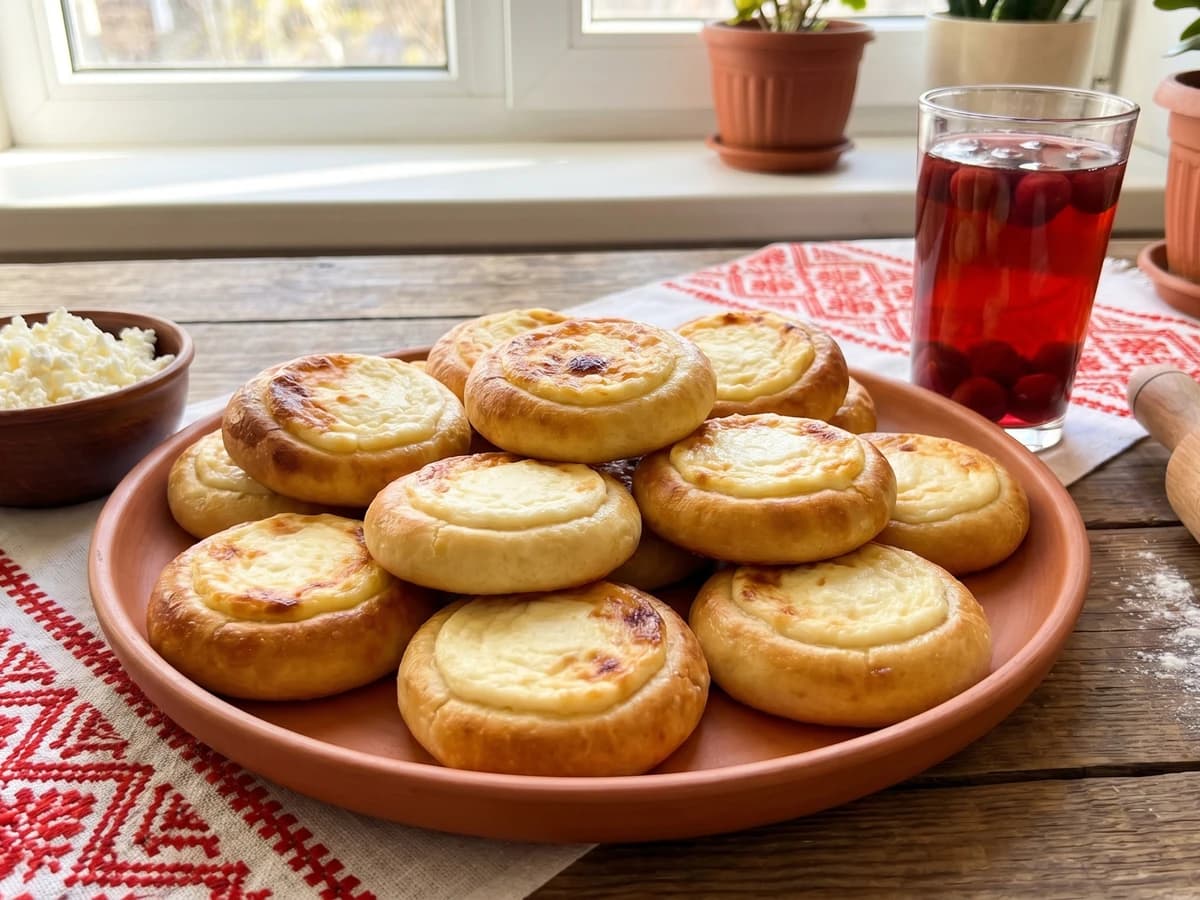
These little open cups carry their name like a road: mandryky, wanderers, with crumbly golden edges and sweet curd cheese sitting soft in the middle.

Chef Lesia
Thin honey layers go into the tin crisp and coppery, then spend a night drinking sour cream until the cake cuts clean and tender, almost custardy at the fork.