Chef Juliette
Omelette à l’Écossaise
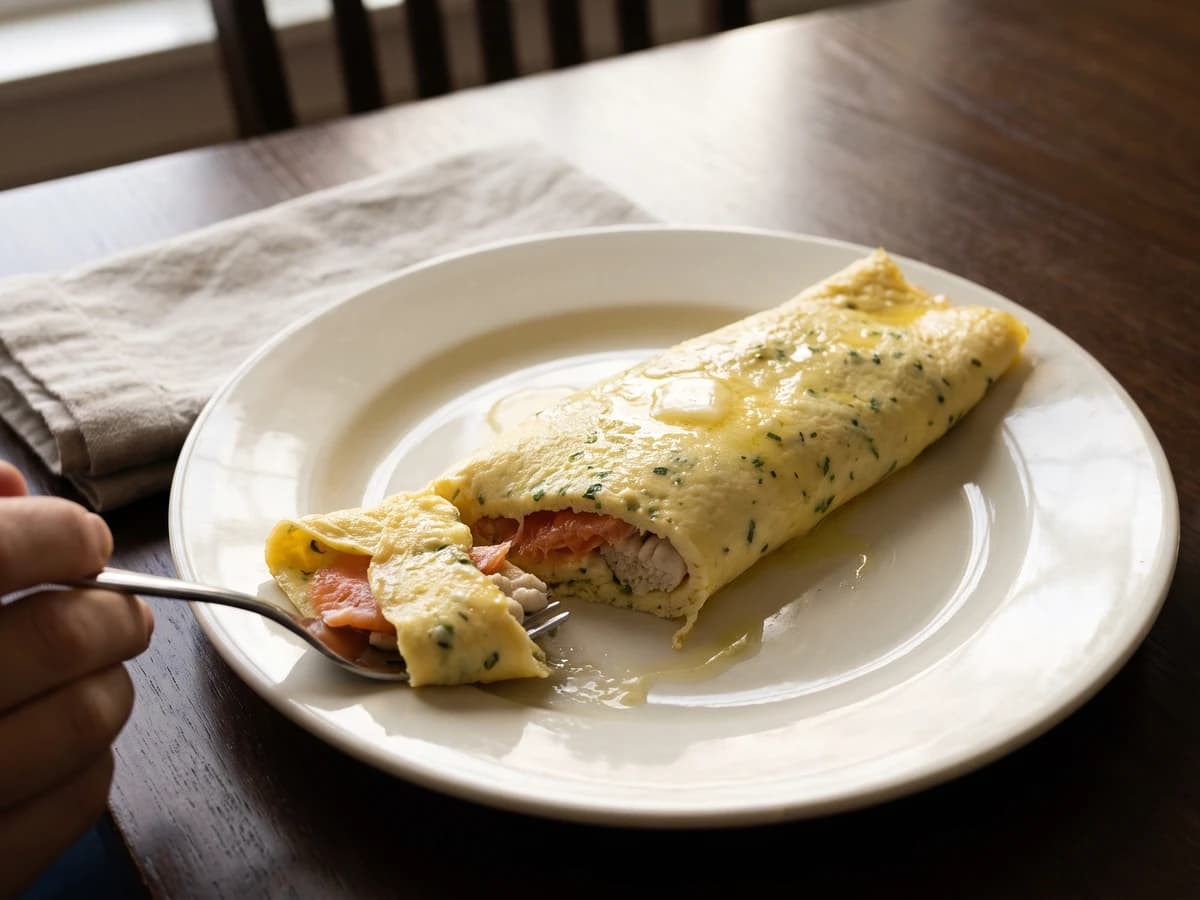
A creamy omelette aux fines herbes closes around smoked-salmon-wrapped herring milts, gently poached in butter. Have the filling ready, then roll the eggs while they still shine.
A cooking platform built around craft, culture, and the stories behind what we eat.
Created by
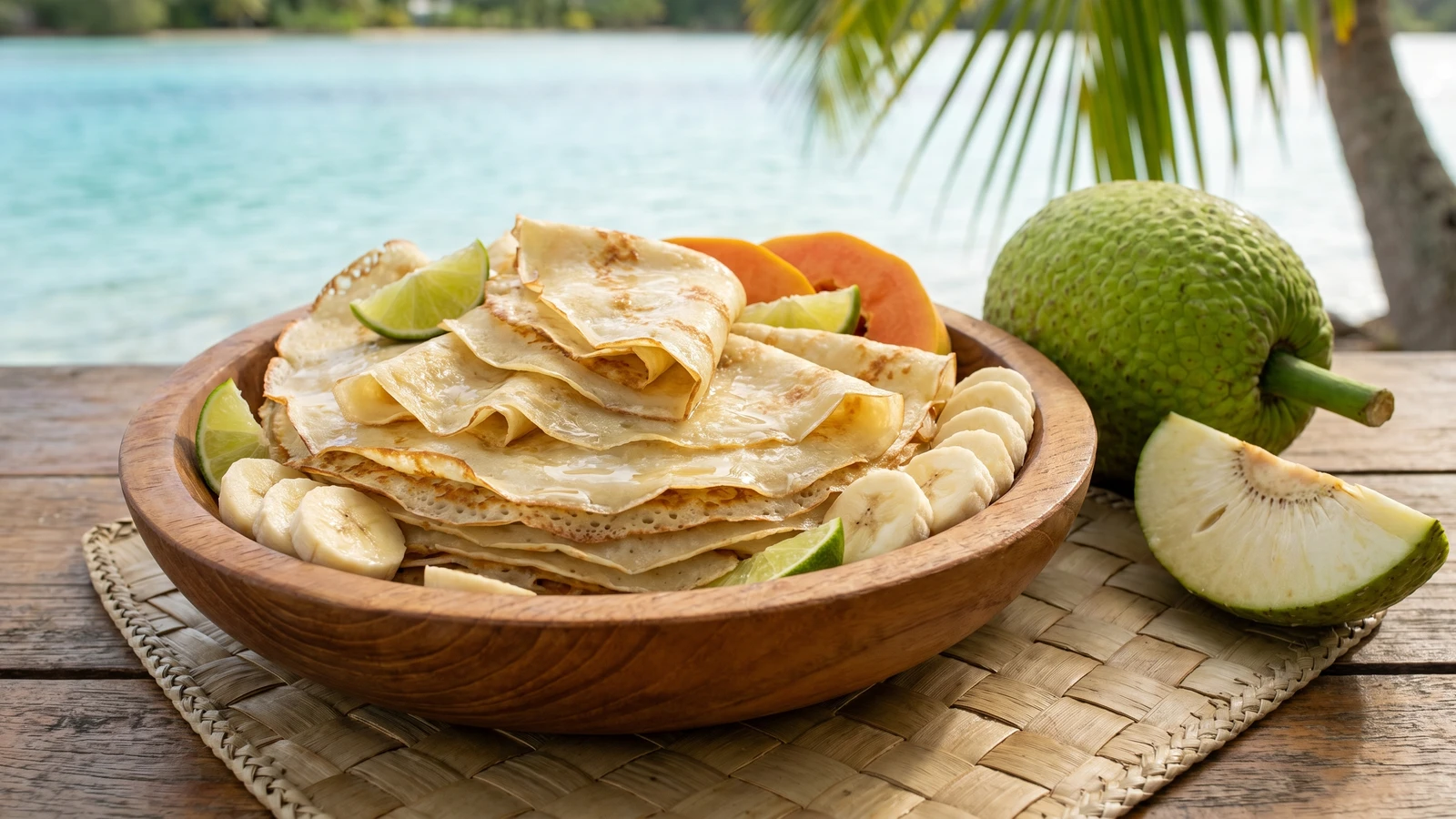
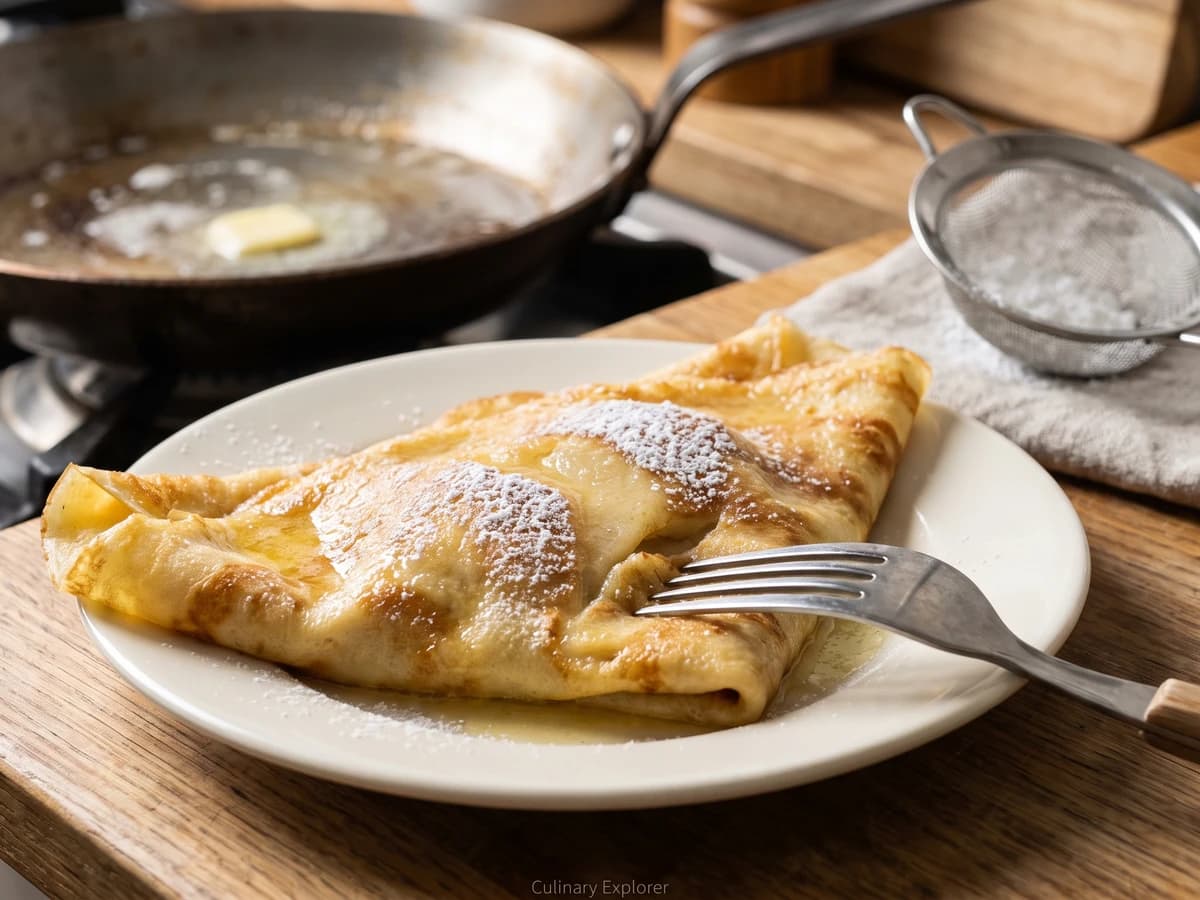
Tender Tahitian crêpes made with ʻuru, breadfruit flour, coconut milk, and eggs. The old canoe crop comes forward as breakfast flour, soft in the pan and easy at the table.
The canoe carried the tree before it carried the craving. That is how I think about ʻuru, breadfruit, in Tahiti: not as pantry flour first, but as a living ancestor crop standing in the fenua, the land, feeding a family before any bag from any store showed up.
This is Tahitian in its hand, ʻuru dried and ground into flour, then cooked in the thin crêpe style that sits naturally in French Polynesia now. Old crop, newer pan. No shame in that. The islands eat in the present too, and good food survives because people keep finding a way to cook it on a Tuesday morning.
Across the Triangle the cousins know this tree by their own names: ʻulu in Hawaiʻi, ʻuru in Tahiti and the Cooks, mei in parts of the west. Sāmoa and Tonga know the same breadfruit abundance alongside talo and coconut; Hawaiʻi bakes and steams ʻulu; the atoll people keep breadfruit by fermenting it when fresh food is scarce. One ocean, one canoe, one root, though breadfruit is a tree and not a root at all. You know what I mean.
For these crêpes, don't beat the batter angry. Let the flour drink. Breadfruit flour thickens as it sits, quiet but serious, so you loosen it until it runs like thin cream. The pan should whisper when the batter hits, not roar. Cook them soft, stack them warm, and feed somebody before you feed yourself.
Breadfruit was one of the great Polynesian canoe crops, carried by voyagers through the Society Islands and beyond because one tree could feed a village for generations. In Tahiti, ʻuru remained a staple of the fenua long before imported wheat flour became common, and drying or processing breadfruit into flour is part of the modern sovereignty work of turning island starch back into everyday food. These crêpes show that meeting place: an old Pacific breadbasket crop cooked through the French Polynesian home table, not frozen in the past.
Quantity
1 cup
Quantity
2 tablespoons
Quantity
1 tablespoon
Quantity
1/4 teaspoon
Quantity
3
Quantity
1 cup
well stirred
Quantity
3/4 cup
plus more as needed
Quantity
2 tablespoons
plus more for the pan
Quantity
1 teaspoon
Quantity
for serving
Quantity
for serving
Quantity
for serving
| Ingredient | Quantity |
|---|---|
| ʻuru flour (Tahitian breadfruit flour) | 1 cup |
| tapioca starch or cornstarch | 2 tablespoons |
| sugar (optional) | 1 tablespoon |
| fine sea salt | 1/4 teaspoon |
| large eggs | 3 |
| coconut milkwell stirred | 1 cup |
| waterplus more as needed | 3/4 cup |
| melted coconut oil or unsalted butterplus more for the pan | 2 tablespoons |
| vanilla extract (optional) | 1 teaspoon |
| lime wedges (optional) | for serving |
| fresh banana, papaya, or mango (optional) | for serving |
| coconut syrup or honey (optional) | for serving |
Whisk the ʻuru flour, tapioca starch, sugar if using, and salt in a wide bowl. Break up every little lump now, while the flour is dry. Breadfruit flour carries a nutty, green-bread aroma, gentle and earthy, and that smell should be clean.
In another bowl, beat the eggs, coconut milk, water, melted coconut oil, and vanilla if using until smooth. The coconut milk should look even, not separated into thick white islands and clear water. Stir it back together first. Eat what you have, but make it honest.
Pour the wet mixture into the dry and whisk until the batter runs smooth. Let it sit 10 minutes so the ʻuru flour can drink. It will thicken as it rests; loosen it with a tablespoon or two of water until it pours like thin cream, coating the spoon but running off easily.
Heat a 10-inch nonstick or seasoned crêpe pan over medium heat and brush it lightly with coconut oil or butter. The pan is ready when a drop of batter sets at the edge right away but does not brown hard on contact. We want tender, not tough.
Pour in about 1/4 cup batter, lift the pan, and swirl so it spreads thin from edge to edge. Cook 60 to 90 seconds, until the top loses its wet shine and the edge lifts with a pale-gold rim. Flip and cook 20 to 30 seconds more, just enough to set the second side.
Move the crêpe to a plate and cover with a clean towel while you cook the rest, brushing the pan lightly only when it asks. Serve the stack warm with lime, fresh fruit, and a little coconut syrup or honey. The ʻuru should taste quietly sweet and nutty, with the coconut sitting behind it, not covering it.
1 serving (about 75g)
Culinary guides, cultural storytelling, and the editorial depth that makes cooking meaningful.
Discover Culinary ExplorerChef Juliette
A creamy omelette aux fines herbes closes around smoked-salmon-wrapped herring milts, gently poached in butter. Have the filling ready, then roll the eggs while they still shine.
Chef Juliette
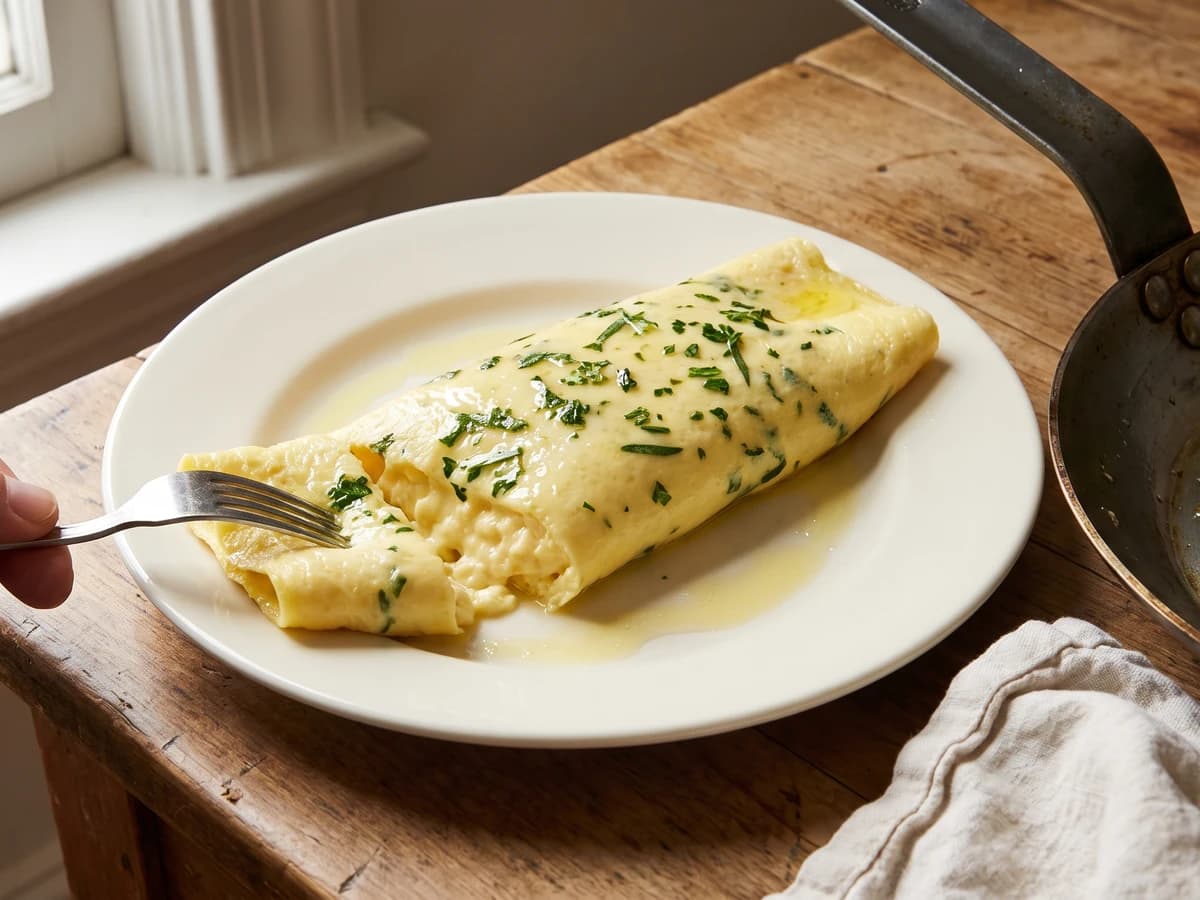
Four tender herbs, hot butter, and two eggs per pan: this rolled omelette teaches the quick hand and good judgment that keep the outside pale and the center creamy.
Chef Juliette
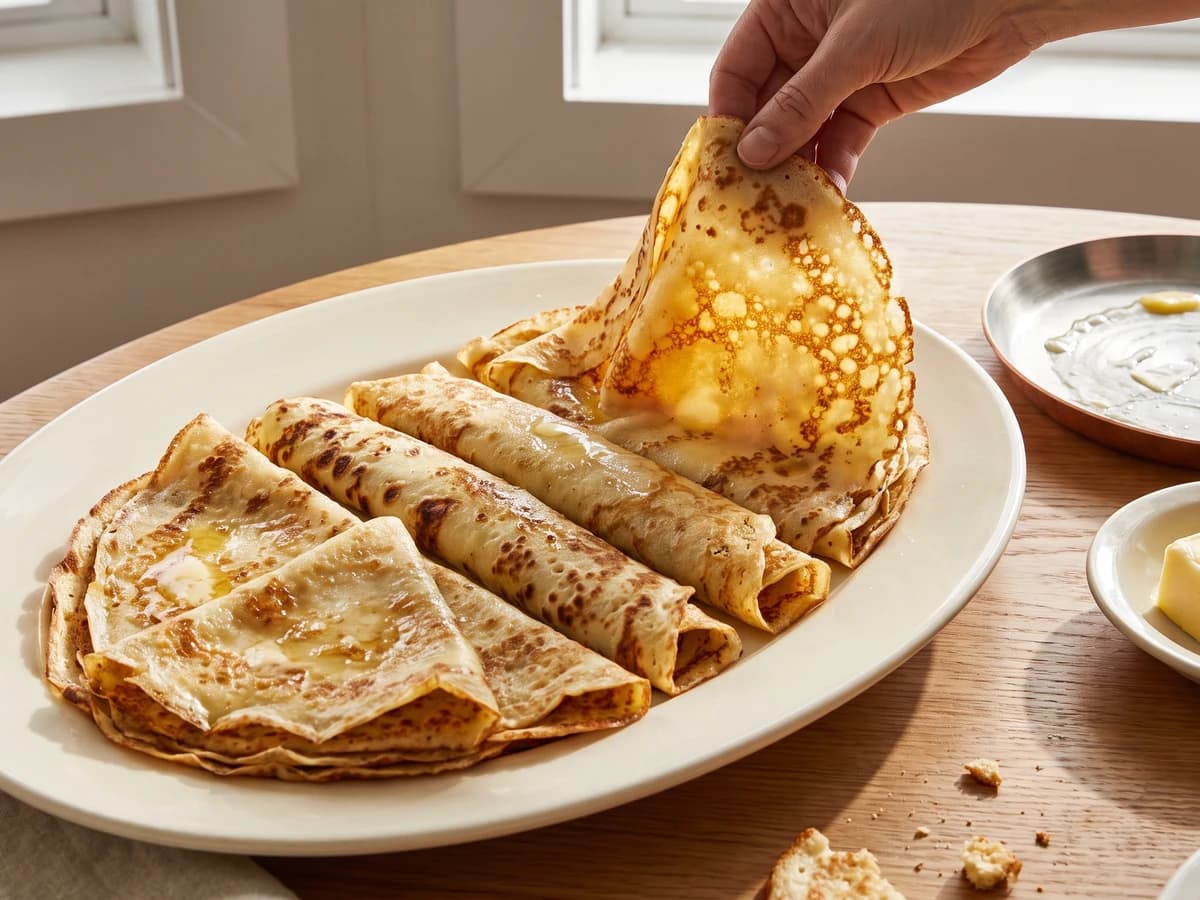
Four batters, one lesson: let the flour drink deeply before cooking, then spread the batter thinly in butter for crêpes and pannequets that bend without becoming tough.
Chef Juliette
Crêpes au Couvent trap ripe Williams pear dice between two thin pours of sweet batter, then turn in one clean toss and reach the table butter-gold, powdered, and burning hot.