Chef Makoa
Chinese Almond Cookies (Hawaiʻi Local Red-Dot Cookies)
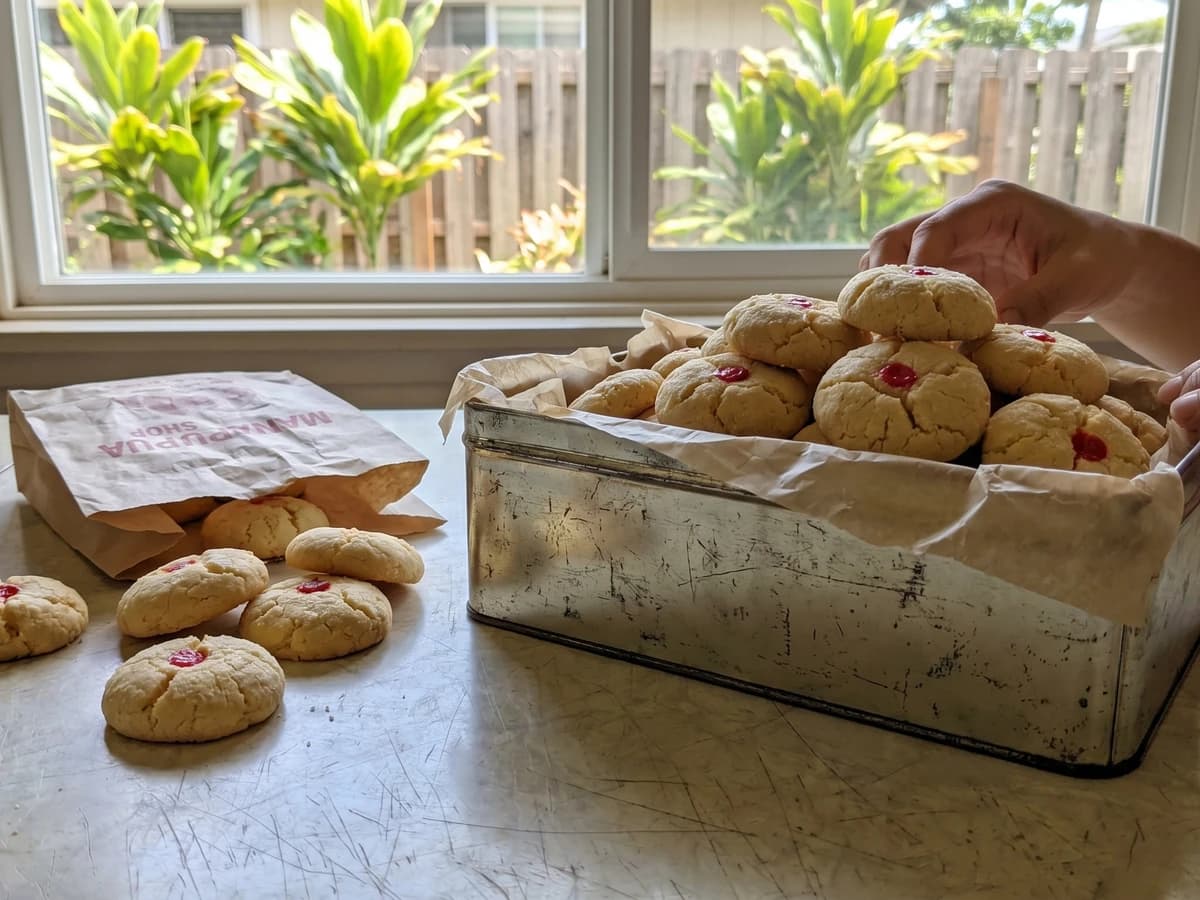
Buttery, sandy Chinese almond cookies from Hawaiʻi's Local table, marked with the lucky red dot, the kind you found in a bakery case, a manapua man's box, or a holiday tin.
A cooking platform built around craft, culture, and the stories behind what we eat.
Created by
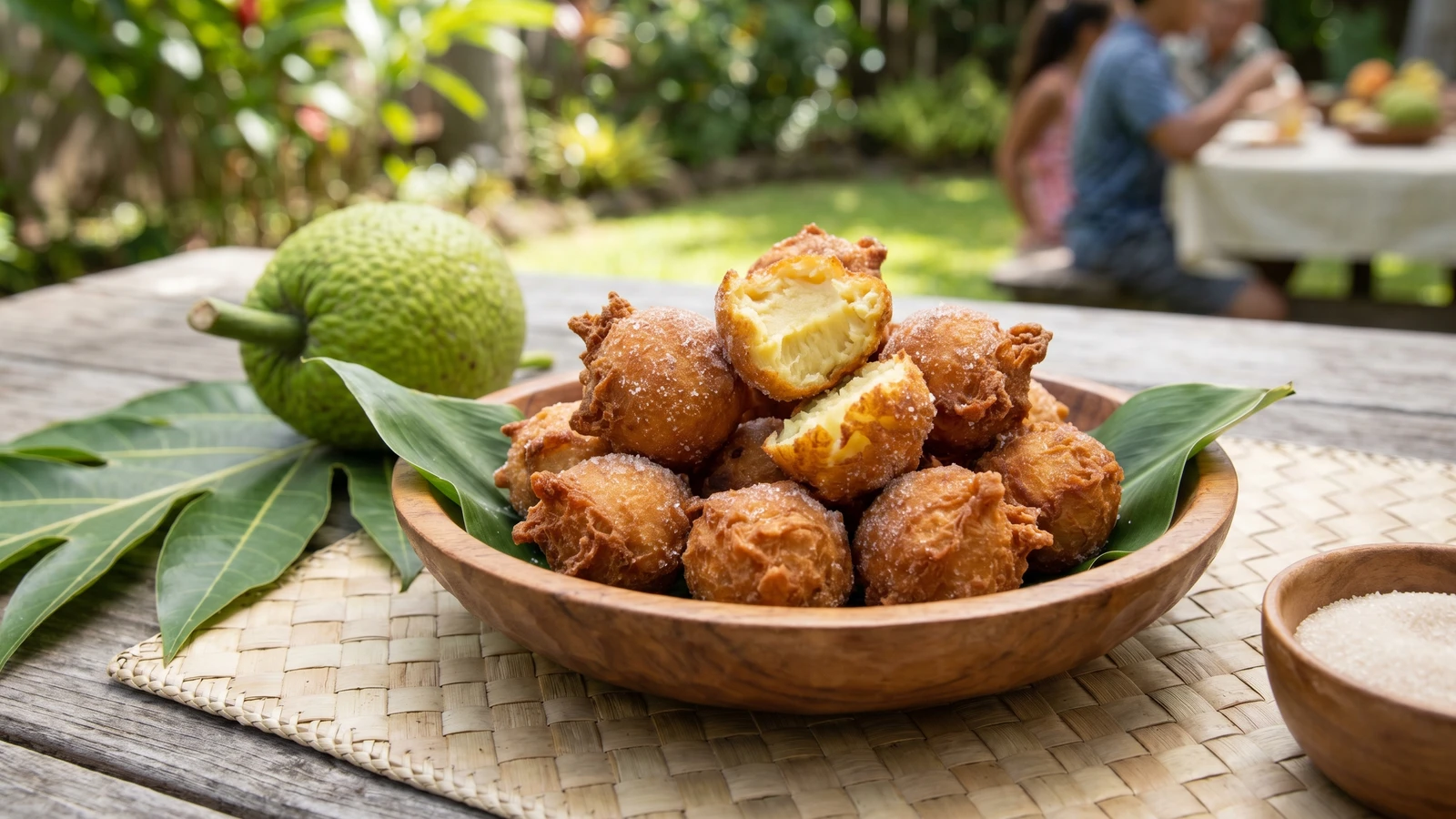
Sweet ripe ʻulu from Hawaiʻi, mashed with mochiko and fried into chewy-crisp little rounds, the old canoe crop meeting island mochi at a Kalihi table.
The canoe carried the ʻulu, the breadfruit, before it ever carried our hunger. In Hawaiʻi we call it ʻulu, Tahiti says ʻuru, the Marquesas know mei, and across the Triangle that tree fed people because the old navigators were thinking past themselves. One ocean, one canoe, one root, yeah, even when the root grows on a tree.
This fried ʻulu mochi belongs to Hawaiʻi, and more narrowly to the Honolulu table, the Kalihi kind of table where old canoe crops sit right next to plantation rice, saimin, manapua, Spam, and every sweet the neighborhood made its own. I like that. Deep food doesn't have to stand far away from everyday food like it's too proud. The ʻulu stays kin, and the mochiko, the sweet rice flour that Japanese families brought into Hawaiʻi, gives it that chew we all know from butter mochi and New Year mochi.
Use ʻulu that's fully cooked and ripe enough to mash smooth, yellow and sweet with no fight left in it. Green ʻulu will feed you like potato, but this one wants the fruitier side, soft under the spoon. Mix it gently, fry it small, and roll it while warm so the sugar grabs the crisp edges. No need make it precious. Put a pile on the table, and watch the aunties check if you made enough.
Breadfruit is one of the great canoe crops of Polynesia, carried and planted from island to island because a single mature tree could feed whole families through hard seasons. Fried ʻulu mochi is a modern Hawaiian sweet remembered in Honolulu as a Kalihi invention, where ripe breadfruit met mochiko, the glutinous rice flour Japanese immigrants brought into Hawaiʻi's plantation-era kitchens. That meeting is Hawaiʻi food, not only ancient deep food and not only plantation food, but the living table where the canoe crop kept walking forward.
Quantity
2 cups
peeled, cored, and mashed smooth
Quantity
1 1/2 cups
Quantity
1/2 cup
Quantity
1/4 cup
packed
Quantity
1 teaspoon
Quantity
1/2 teaspoon
Quantity
1/2 cup
plus more as needed
Quantity
1
lightly beaten
Quantity
1 teaspoon
Quantity
for frying
Quantity
1/2 cup
for rolling
Quantity
1/2 teaspoon
for rolling
| Ingredient | Quantity |
|---|---|
| cooked ripe ʻulu (breadfruit)peeled, cored, and mashed smooth | 2 cups |
| mochiko (sweet rice flour) | 1 1/2 cups |
| granulated sugar | 1/2 cup |
| brown sugarpacked | 1/4 cup |
| baking powder | 1 teaspoon |
| fine sea salt | 1/2 teaspoon |
| coconut milkplus more as needed | 1/2 cup |
| large egglightly beaten | 1 |
| vanilla extract | 1 teaspoon |
| neutral oil | for frying |
| granulated sugarfor rolling | 1/2 cup |
| ground cinnamon (optional)for rolling | 1/2 teaspoon |
Mash the cooked ripe ʻulu until mostly smooth, with only small soft bits left. It should smell sweet and warm, a little like bread and banana meeting each other. If the ʻulu is dry, work in a spoonful of coconut milk. If it's watery, let it sit a few minutes so the mash tightens.
In a wide bowl, stir together the mochiko, granulated sugar, brown sugar, baking powder, and salt. Add the mashed ʻulu, coconut milk, egg, and vanilla, then fold until a sticky dough forms. It should be thicker than cake batter and softer than bread dough, able to hold on a spoon without running away.
Rest the dough for 10 minutes while the mochiko drinks in the moisture from the ʻulu. This little pause matters. The outside fries more evenly, and the middle turns chewy instead of gummy. No rush the canoe crop.
Pour 2 inches of neutral oil into a heavy pot and heat to 340F to 350F. Keep the fire steady. Too cool and the mochi drinks oil; too hot and the outside browns before the center cooks through. Set a rack or paper towel-lined tray nearby.
Scoop heaping tablespoons of dough and slide them carefully into the oil, frying 5 or 6 at a time so the pot doesn't crowd. Turn them as they puff and brown, 3 to 4 minutes total, until the outside is deep golden and lightly crisp, and the inside feels springy when pressed.
Stir the rolling sugar with cinnamon if you're using it. While the mochi is still warm and glossy from the fryer, roll each piece through the sugar so it catches on the crisp little edges. Eat the first one standing up. That's how you know what the rest need.
Pile the fried ʻulu mochi on a ti leaf or banana leaf and serve warm, family-style, with coffee, tea, or whatever is on the table. The outside should give a small crisp bite, then pull chewy and soft in the middle, sweet with the ʻulu still speaking underneath.
1 serving (about 40g)
Culinary guides, cultural storytelling, and the editorial depth that makes cooking meaningful.
Discover Culinary ExplorerChef Makoa
Buttery, sandy Chinese almond cookies from Hawaiʻi's Local table, marked with the lucky red dot, the kind you found in a bakery case, a manapua man's box, or a holiday tin.

Chef Makoa
A Hawaiʻi Local bakery pie from Oʻahu: firm coconut haupia over chocolate cream in a flaky shell, chilled clean, topped with soft whipped cream.

Chef Makoa
Honolulu bakery-case comfort: crisp choux puffs filled with soft chocolate pudding and capped with Hawaiʻi-style Chantilly, the buttery cooked frosting that belongs to Oʻahu birthdays, office boxes, and after-school hands.

Chef Makoa
The Oʻahu home-tin cookie, buttery and crackly with cornflakes and rice cereal, baked by aunties for Christmas exchanges, church potlucks, and one more cousin reaching across the table.