
Chef Makoa
Baked ʻUala (Hawaiian Sweet Potato in the Embers)
Whole Hawaiian ʻuala baked in embers or a hot oven until the skins char and the flesh goes honey-soft, finished plain with paʻakai so the canoe crop tastes like itself.
A cooking platform built around craft, culture, and the stories behind what we eat.
Created by
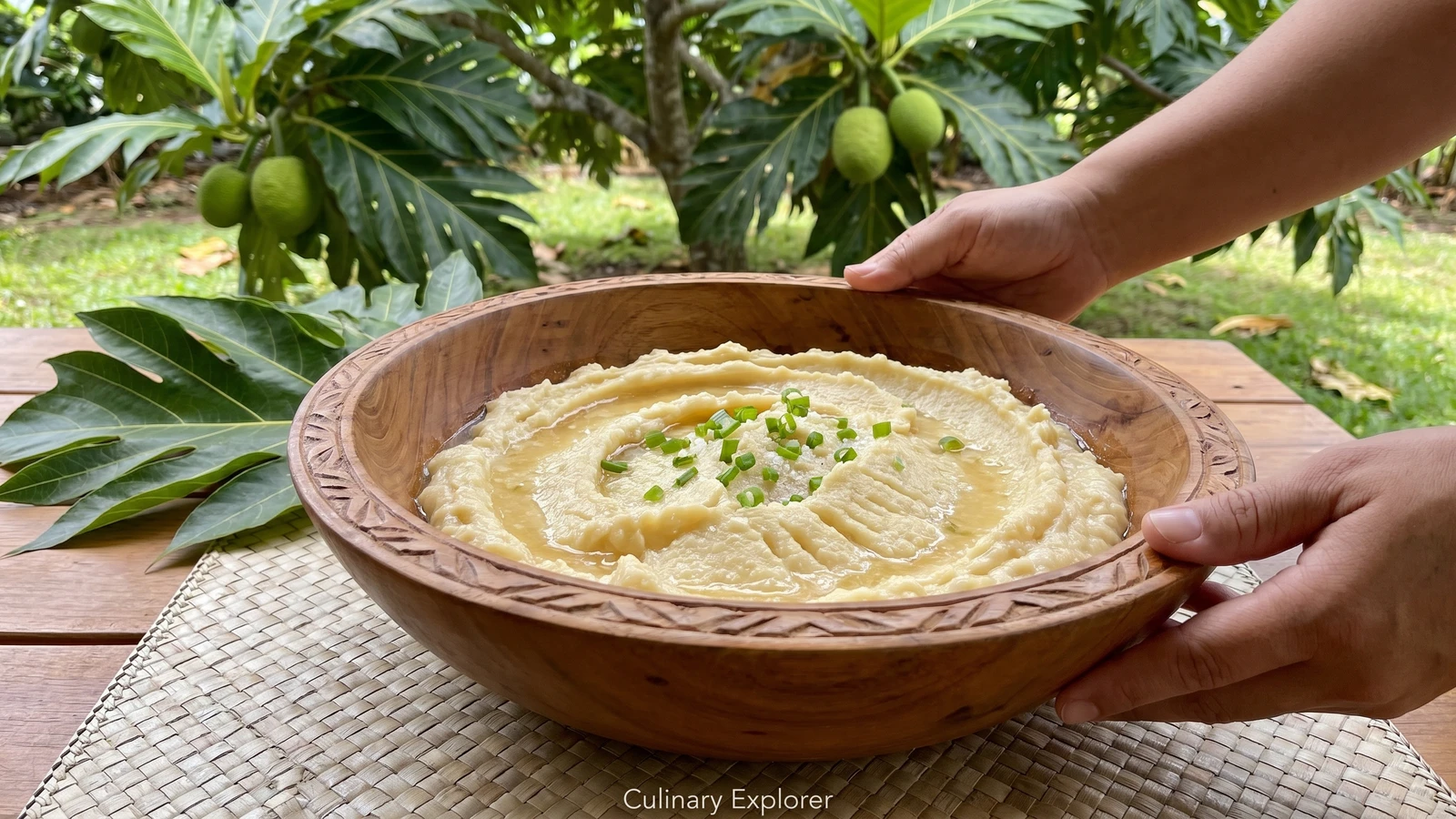
Mature Hawaiian ʻulu boiled until it gives, then mashed with warm broth, paʻakai, and a little fat if you want it. Soft, humble, and real weeknight food.
The canoe carried more than people. It carried relatives. In Hawaiʻi, ʻulu, the breadfruit, came in the old migrations with kalo, ʻuala, niu, and the other canoe plants, and when that tree takes hold on the ʻāina, the land, it feeds you like an auntie who never makes a speech about it.
This is Hawaiian ʻulu mash, not a nameless Polynesian side. Back home we boil the mature starchy fruit until it gives, then mash it with broth and paʻakai, Hawaiian sea salt, until it eats soft and humble like mashed potato. Across the Triangle the cousins keep breadfruit too: ʻuru in Tahiti, mei in the Marquesas, and the long-keeping fermented traditions like popoi and masi in the atoll and eastern islands. One ocean, one canoe, one root, but every island has its own hand.
The why is simple. Mature ʻulu is dry and generous, so it wants warm liquid added slowly, not dumped in all at once. Mash while it is warm, taste as you go, and don't make it precious. This is weeknight food, plate-lunch food, food next to fish or pork or vegetables, old knowledge sitting easy in a pot on your stove.
Papa Kainoa used to say, Eat what you have. Same law here. If you have good broth, use it. If you saved kālua drippings, use a spoon. If all you have is salted cooking water, no shame. No blame the ʻulu. Feed the people.
Breadfruit is one of the great Polynesian canoe crops, carried by voyagers and planted from the western islands through Tahiti, Hawaiʻi, the Marquesas, and beyond because one tree could feed a household for generations. In Hawaiʻi, ʻulu was never just a substitute starch; in districts such as Kona and Puna it became part of an agroforestry system where breadfruit, coconut, banana, and other crops fed people from the same living canopy. Modern ʻulu revival work in Hawaiʻi connects that old abundance to food sovereignty today, bringing the fresh cooked fruit back beside poi, rice, and the everyday plate.
Quantity
1 (about 2 1/2 to 3 pounds)
Quantity
1 tablespoon
for the knife and hands
Quantity
1 1/2 teaspoons
plus more to taste
Quantity
1 to 1 1/2 cups
Quantity
2 tablespoons
Quantity
2 tablespoons
thinly sliced
| Ingredient | Quantity |
|---|---|
| mature firm ʻulu (breadfruit) | 1 (about 2 1/2 to 3 pounds) |
| neutral oilfor the knife and hands | 1 tablespoon |
| paʻakai (Hawaiian sea salt)plus more to taste | 1 1/2 teaspoons |
| warm chicken broth, vegetable broth, or salted cooking water | 1 to 1 1/2 cups |
| butter, coconut oil, or rendered pork drippings (optional) | 2 tablespoons |
| green onion (optional)thinly sliced | 2 tablespoons |
Use mature firm ʻulu, the Hawaiian breadfruit, green to yellow-green with the bumps filled out and heavy in the hand. It should smell clean and faintly sweet, not fermented. If it is soft and ripe, save it for dessert cooking, not this mash.
Rub a little oil on your knife and hands because ʻulu gives off sticky white sap. Cut off the stem end, quarter the fruit, and leave the skin on for boiling. Trim out the spongy core if it pulls away easily, or wait until after cooking when it gives up cleaner.
Set the quarters in a large pot, cover with water by an inch, add a good pinch of paʻakai, and simmer 25 to 35 minutes. The ʻulu is ready when a fork slides through the thickest part with no fight and the flesh looks creamy instead of chalky.
Drain, saving a cup of the cooking water if you want to use it for the mash. When the pieces are cool enough to handle, pull away the skin and any remaining core. Work while it is still warm, because cold ʻulu stiffens up on you.
Put the warm ʻulu flesh back in the pot and mash it with paʻakai. Pour in warm broth a little at a time, mashing and folding until it eats soft like mashed potato, thick but not dry. Add the butter, coconut oil, or pork drippings if you want that everyday richness.
Taste for salt and loosen with more warm broth if the mash tightens. Spoon it into a wooden bowl, smooth the top in broad strokes, and scatter green onion only if that is the table you are setting. Serve warm beside fish, kālua puaʻa, stew, or whatever dinner already has going.
1 serving (about 230g)
Culinary guides, cultural storytelling, and the editorial depth that makes cooking meaningful.
Discover Culinary ExplorerChef Makoa
Whole Hawaiian ʻuala baked in embers or a hot oven until the skins char and the flesh goes honey-soft, finished plain with paʻakai so the canoe crop tastes like itself.
Chef Makoa
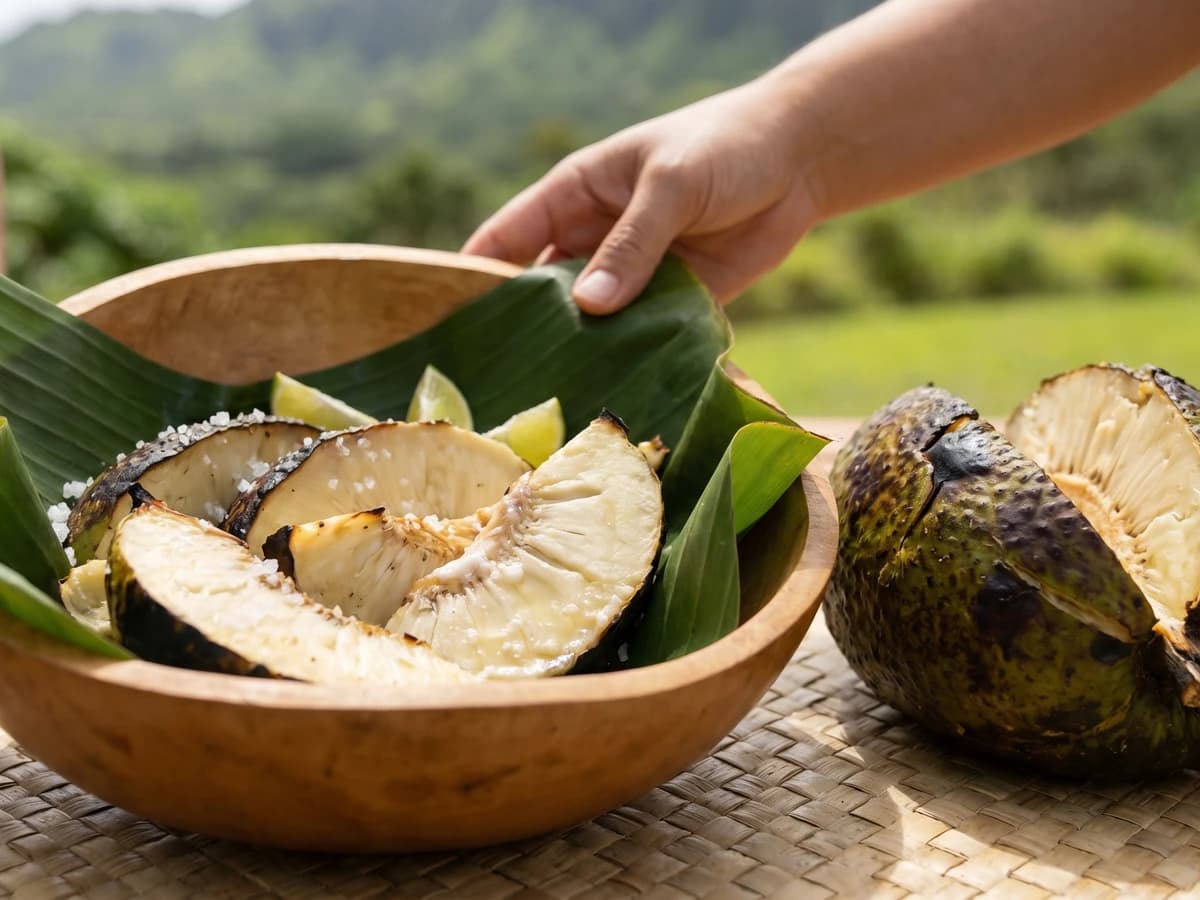
Hawaiʻi's ʻulu, breadfruit, roasted whole until the skin blackens and the inside turns soft and bread-like, the old canoe crop made real for a weeknight oven.
Chef Makoa
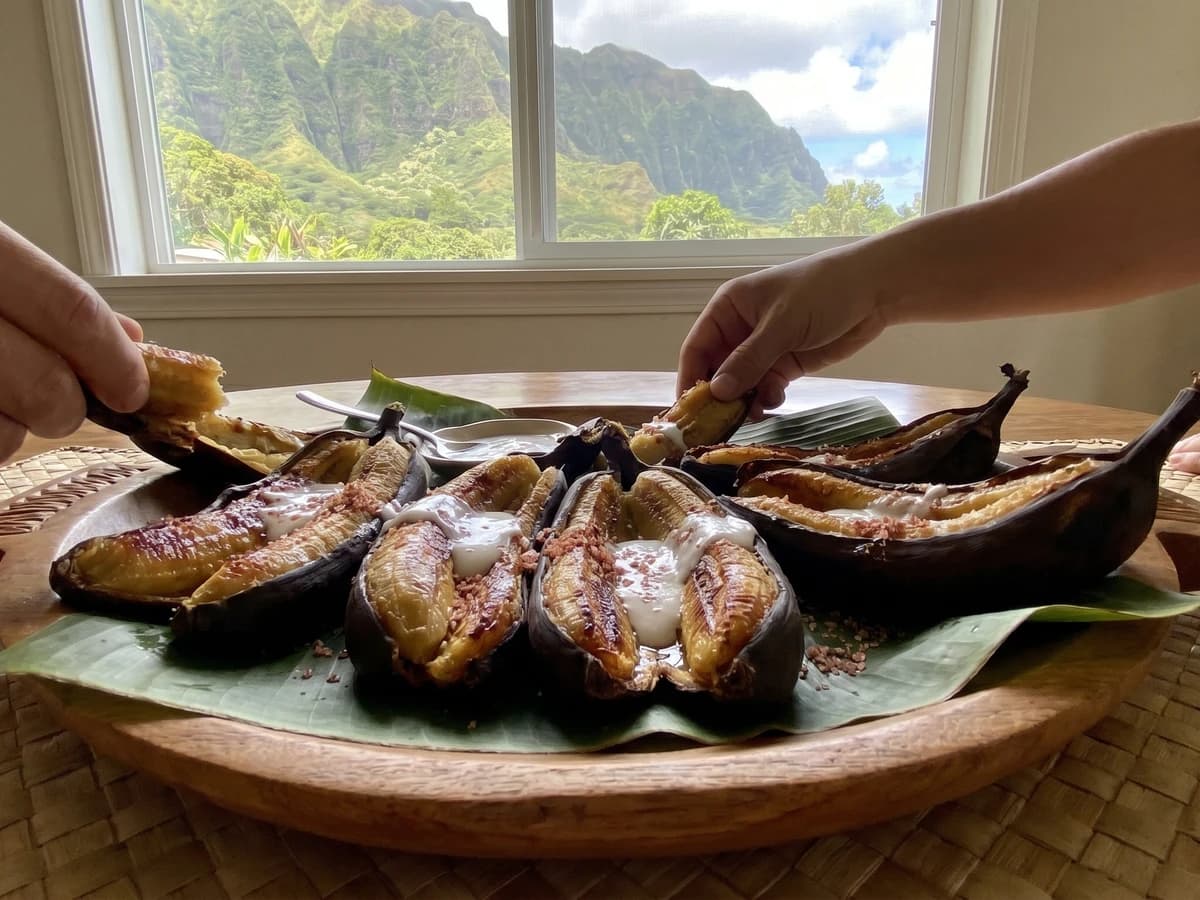
Firm Hawaiian maiʻa baked in its own skin until the starch relaxes into quiet sweetness, split open with coconut cream and paʻakai, a canoe-crop side for weeknight rice or a lūʻau table.
Chef Makoa
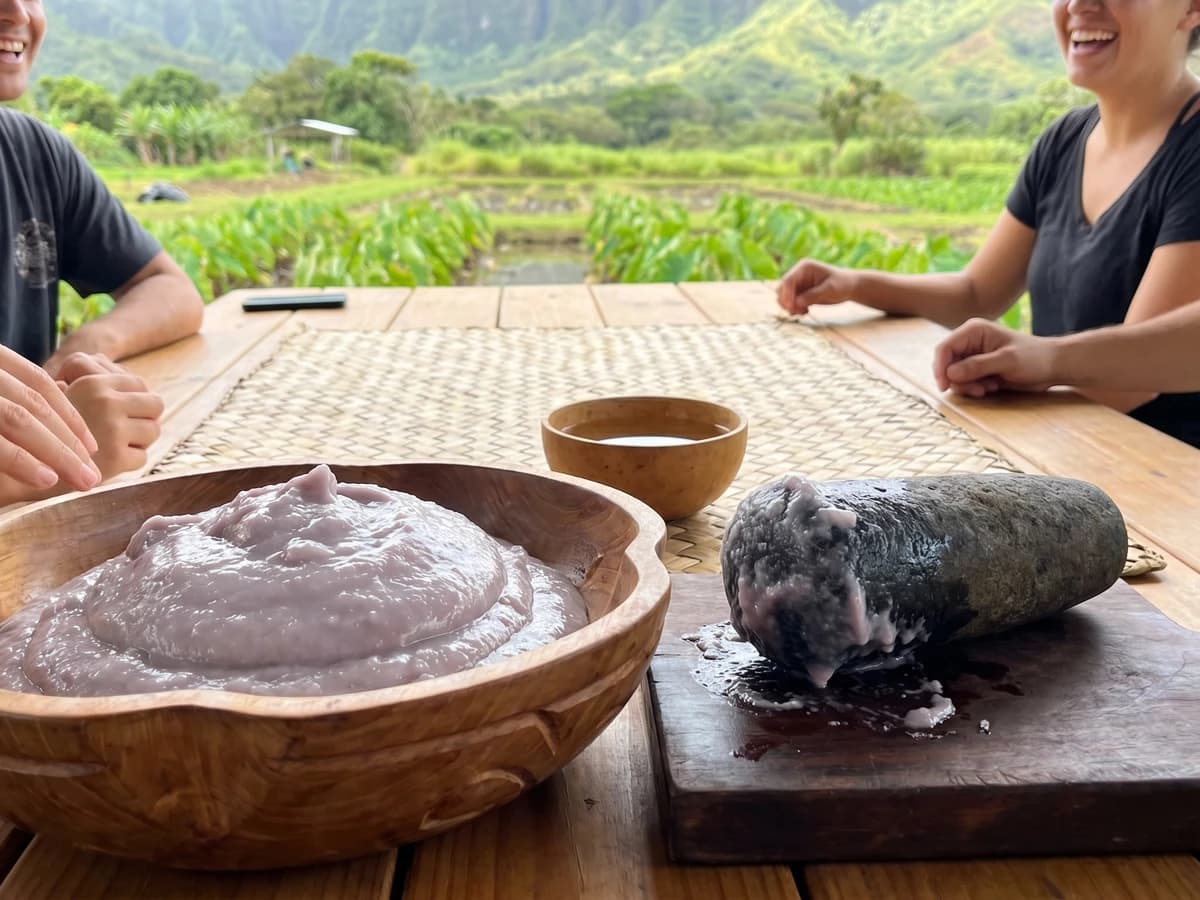
Hawaiian paʻiʻai is kalo steamed soft, cleaned, and pounded by hand until it shines, thick enough to lift from the stone, ready to eat as is or loosen into poi.