Culinary Explorer

A cooking platform built around craft, culture, and the stories behind what we eat.
Discover Culinary Explorer
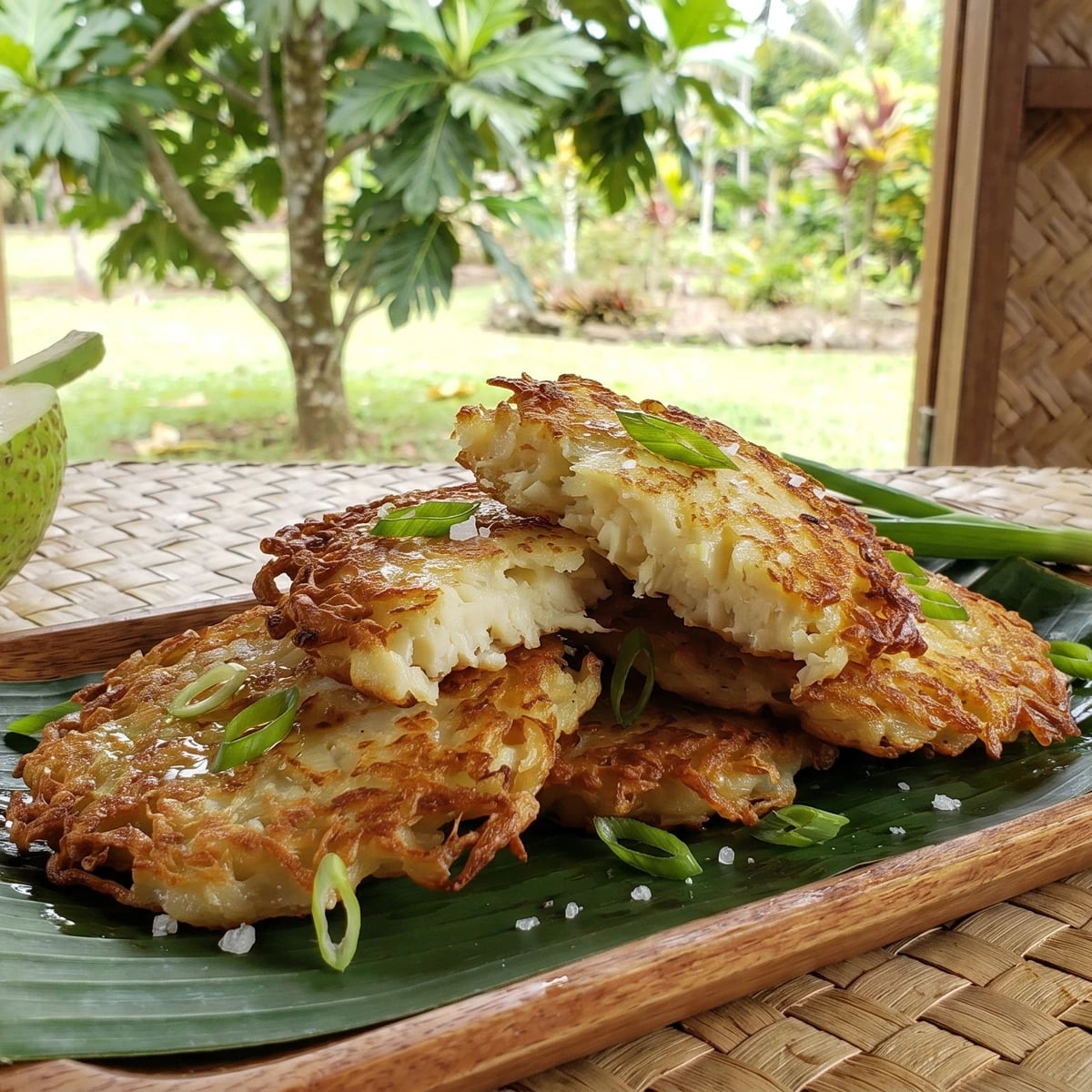
ʻUlu Hash Browns (Sāmoan Pan-Fried Breadfruit Patties)

ʻUlu Hash Browns (Sāmoan Pan-Fried Breadfruit Patties)

Created by

Firm Sāmoan ʻulu grated coarse, squeezed dry, and fried in coconut oil until the edges crisp and the middle turns soft, breakfast food from the canoe crop, easy enough for Tuesday.

Side Dishes
Polynesian, Samoan
Comfort Food
Weeknight
Quick Meal
25 min
Active Time
20 min cook45 min total
Yield4 to 6 servings

The canoe didn't carry pantry items. It carried relatives. In Sāmoa, ʻulu, breadfruit, grows over the fanua, the land, and feeds the ʻāiga, the family, from the yard and the umu, the above-ground hot-stone oven. This hash brown is Sāmoa's everyday hand on that old tree: grate the firm fruit, salt it, press it flat, fry it until the edges talk back under your teeth.

A Sāmoan auntie once put a grater in my hands before she put a lecture in my ear, which is the better order, yeah? The lesson was simple. Don't treat ʻulu like a novelty. Treat it like food that has carried people. It can sit beside eggs on a weekday, beside tinned fish or corned beef and rice, beside palusami when the table is bigger. Deep food and everyday food are not enemies. That's how the islands actually eat.

Across the Triangle the names shift and the kinship stays. Hawaiʻi keeps ʻulu too, Tahiti says ʻuru, Tonga and the Marquesas say mei, and the Cook Islands say kuru, where the tree will bear and the people know its shade. One ocean, one canoe, one root. For Sāmoa's deeper umu work and the keeping traditions like masi, fermented breadfruit, go sit with Sāmoan elders and aunties who carry that line. This skillet version is the fresh-and-cooked table, warm, crisp, unfussy, and still tied to the tree.

Breadfruit, Artocarpus altilis, was one of the great canoe crops moved by Polynesian voyagers long before European ships made it famous through the 1789 Bounty story. In Sāmoa, ʻulu fed homes from the umu, the pot, and the preserving pit, with masi keeping breadfruit edible through lean seasons. Grated skillet hash browns are a newer house-kitchen face of the same crop, shaped by iron pans, weekday breakfasts, and the living habit of making old food fit the day in front of you.

The technique, the tradition, and the story behind every dish.

Discover Culinary Explorer

Ingredients

mature-firm green breadfruit (ʻulu)

Quantity

1 medium, 2 to 2 1/2 pounds

peeled, cored, and coarsely grated

onion

Quantity

1/2 small

finely grated or minced

green onions

Quantity

2

thinly sliced, plus more for finishing

fine sea salt

Quantity

1 teaspoon

plus more to finish

freshly ground black pepper

Quantity

1/2 teaspoon

cornstarch or all-purpose flour (optional)

Quantity

2 tablespoons

coconut oil or neutral oil

Quantity

1/4 cup

for pan-frying

Equipment Needed

  • Box grater or food processor with coarse shredding disk
  • Clean kitchen towel for squeezing
  • Heavy 12-inch cast-iron skillet
  • Thin fish spatula

Instructions

  1. 1

    Choose the ʻulu

    Use mature-firm green ʻulu, breadfruit, with skin that has filled out but flesh that is still starchy, not soft and sweet. Oil your knife lightly if the latex is sticky, then quarter the fruit, cut away the spongy core, and peel off the skin. If the fruit is dripping milk, rinse the pieces and pat them dry. Eat what you have, but the ripe soft one belongs in dessert, not hash browns.

    A good frying ʻulu feels heavy for its size and cuts like a firm potato. If it smells fruity and gives under your thumb, save it for another day.
  2. 2

    Grate and squeeze

    Coarsely grate the peeled ʻulu on the big holes of a box grater or with a food processor shredding disk. Gather it in a clean towel and squeeze hard until the shreds feel damp but not wet. This is where the crisp edge starts, before the pan ever sees it.

  3. 3

    Season the shreds

    Toss the grated ʻulu with the onion, green onions, salt, and pepper. Pick up a handful and squeeze it. If it holds together, leave it alone. If it crumbles dry, sprinkle in the cornstarch or flour a tablespoon at a time, just enough to help the patties hold. No need make it precious.

  4. 4

    Fry the patties

    Heat a heavy skillet over medium heat and film it with coconut oil. Drop in loose 1/3-cup mounds of the ʻulu mixture and press them into patties about 1/2 inch thick. Cook without fussing for 4 to 5 minutes, until the bottom is deep golden and the edges look crisp and lacy. Flip, lower the heat a touch, and cook 4 to 5 minutes more, until the center turns tender and creamy, with no chalky bite.

  5. 5

    Salt and share

    Move the hash browns to a rack or banana-leaf-lined platter and salt them while their surface still has that oil sheen. Scatter a little green onion over the top if you like. Serve them beside eggs, grilled fish, tinned fish, corned beef and rice, or whatever the morning table has. Sāmoa's hand, today's kitchen.

Chef Tips

  • Sourcing first, always. If you can buy ʻulu from a Pacific market or somebody's tree, ask whether it is firm-mature or ripe. Firm-mature fries crisp. Ripe turns sweet and soft, and no blame the ʻulu if you picked the wrong stage.
  • Breadfruit latex is sticky, not dangerous, just stubborn. Oil the knife, wipe as you go, and keep the cut pieces from sitting around too long.
  • Don't crowd the skillet. Too many patties cool the oil and the ʻulu turns heavy before it turns golden.
  • Frozen cooked breadfruit can work in a pinch, but it won't grate the same. Thaw it, crumble or chop it rough, bind with a spoonful of flour if needed, and fry smaller patties.
  • These belong on a real breakfast plate. Eggs, rice, tinned fish, palusami leftovers, sapasui from the night before, all welcome. Keeper, not gatekeeper.

Advance Preparation

  • The ʻulu can be peeled and held in cool water for up to 2 hours before grating. Dry it well before it hits the grater.
  • Do not grate the ʻulu the night before; it browns and weeps, and the patties lose their crisp edge.
  • Cooked hash browns reheat best in a dry skillet or toaster oven until the outside crisps again.

Frequently Asked Questions

Nutrition Information

1 serving (about 170g)

Calories
265 calories
Total Fat
9 g
Saturated Fat
7 g
Trans Fat
0 g
Unsaturated Fat
1 g
Cholesterol
0 mg
Sodium
530 mg
Total Carbohydrates
50 g
Dietary Fiber
9 g
Sugars
19 g
Protein
2 g

Note: Chef personas and recipes are created with AI assistance. Cook with care: follow safe food-handling practices, check doneness with a thermometer when needed, and adapt for allergies and your kitchen.

Where cooking meets culture.

Culinary guides, cultural storytelling, and the editorial depth that makes cooking meaningful.

Discover Culinary Explorer

More from Breadfruit: The Canoe Crop

Browse the full collection