
Chef Juliette
Various Almond Preparations
Five almond preparations, one discipline: remove the skins cleanly, dry every kernel through, then cut, toast, or cloak it in pale caramel without letting its fragrant oils escape.
A cooking platform built around craft, culture, and the stories behind what we eat.
Created by
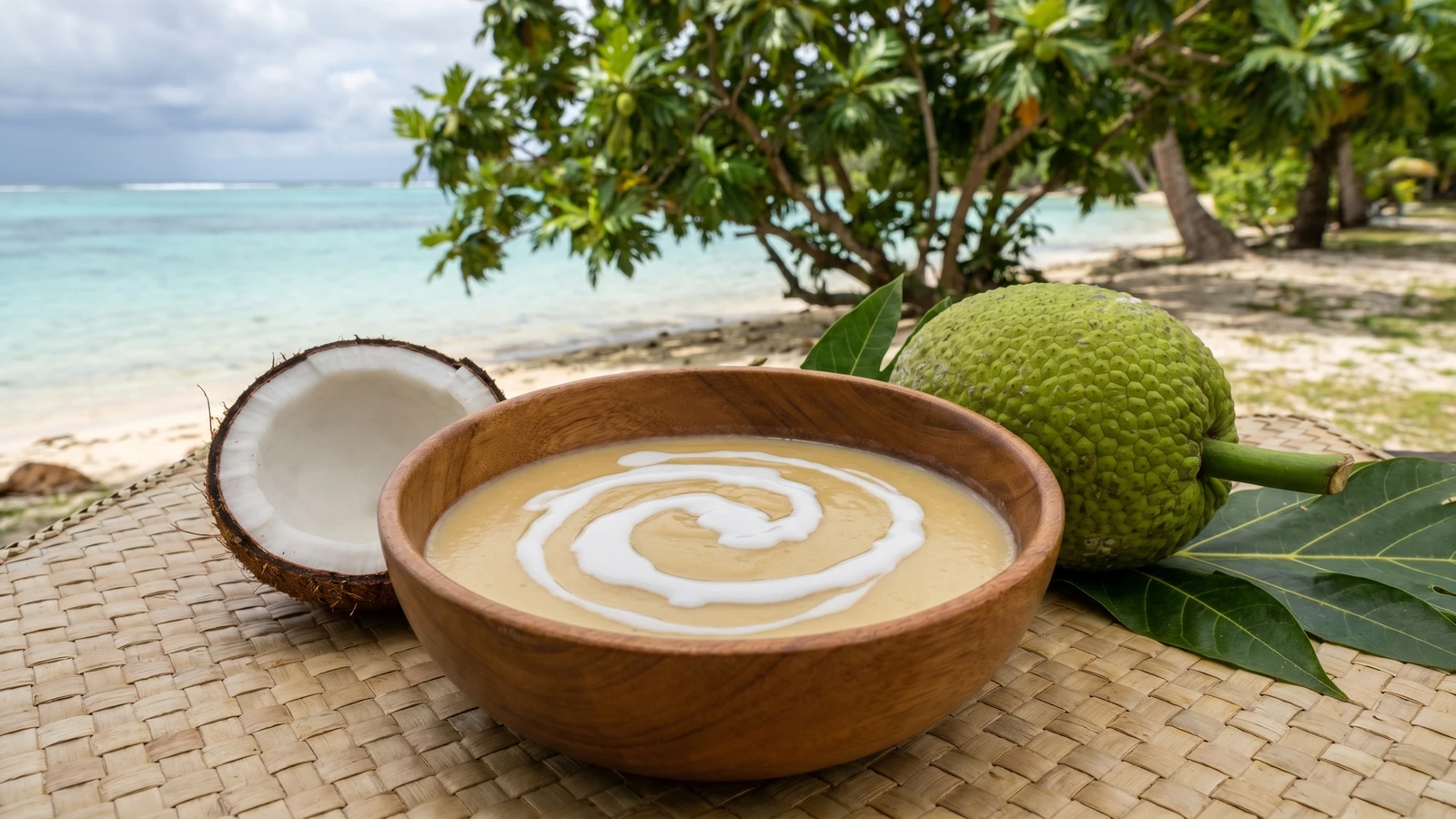
Cooked mei, the breadfruit of Tuvalu, mashed warm with fresh coconut cream until it turns soft, glossy, and sweet, a coral-atoll pudding where dessert and survival sit in the same bowl.
The canoe didn't carry dessert like a little luxury. It carried relatives: mei, breadfruit in gagana Tuvalu, the Tuvaluan language, and niu, coconut, living food for a fenua, an island home, where the ground is coral and the wind keeps salt on everything. This poi belongs to Tuvalu, to the low atolls and reef islands, Funafuti, Nanumea, Nukufetau, Vaitupu, and the rest of that chain, where breadfruit can be comfort, celebration, and plain survival in the same day.
In Hawaiʻi my hands know kalo at the board, and they know ʻulu in the imu, so I keep my humility with this Tuvaluan bowl. Tuvalu says mei; Sāmoa says ʻulu, Tahiti says ʻuru, the Cook Islands say kuru, and back home we say ʻulu. One ocean, one canoe, one root stock, but no nameless bowl. This is Tuvalu's hand: cooked breadfruit mashed while warm, fed with coconut cream until it turns smooth, glossy, and sweet.
The why is patience. Breadfruit that isn't cooked all the way through stays chalky and mean. No blame the mei if you rushed it; no amount of coconut cream can fix that. Let it soften, mash it slow, then add the cream in stages so the starch drinks instead of swimming. Fresh coconut cream is best, a can will do on a weeknight, and for the deeper Tuvalu ways around masi and the old keeping work, sit with a Tuvaluan elder. They should tell their own story. I just keep this bowl open.
Long before the British called the chain the Ellice Islands and before Tuvalu became independent on October 1, 1978, Polynesian voyagers had already carried breadfruit, coconut, pandanus, and taro through these low fenua, island homes. On coral atolls, people dug pulaka, swamp taro, pits down toward the freshwater lens and built food security from trees, reef, and careful storage, because deep soil was never there to lean on. Fresh mashed breadfruit with coconut cream sits on the sweet table, while masi, fermented breadfruit in Tuvalu, and related popoi traditions elsewhere kept fruiting-season abundance for harder months.
Quantity
2 medium, about 3 to 3 1/2 pounds total
green-yellow and just yielding
Quantity
2 coconuts or 1 can (13.5 ounces)
grated and squeezed for 1 3/4 cups thick cream
Quantity
2 to 4 tablespoons
to taste
Quantity
1/2 teaspoon
Quantity
up to 1/2 cup
as needed
| Ingredient | Quantity |
|---|---|
| mature breadfruit (mei)green-yellow and just yielding | 2 medium, about 3 to 3 1/2 pounds total |
| mature coconuts (niu), or thick canned coconut creamgrated and squeezed for 1 3/4 cups thick cream | 2 coconuts or 1 can (13.5 ounces) |
| sugar (optional)to taste | 2 to 4 tablespoons |
| fine sea salt | 1/2 teaspoon |
| warm wateras needed | up to 1/2 cup |
If you're working from whole coconuts, grate the mature niu, the coconut, wet it with a few spoonfuls of warm water, and squeeze hard through a clean cloth for a thick first cream. If you're using canned coconut cream, stir it smooth and save it for the gentle warming later. Eat what you have, but know the fresh squeeze is where the old hand lives.
Oil your knife lightly if the breadfruit is sticky with white sap, then cut away the stem end and split the mei, breadfruit, into quarters. Trim out the center core and leave the skin on for cooking. Rinse off any heavy latex, but don't scrub the life out of it. That one came off a tree, yeah?
Set the wedges skin-side down in a large covered steamer over simmering water and cook 30 to 40 minutes, until a fork slides cleanly through to the skin and the flesh breaks open creamy instead of dry. No rush this part. Breadfruit that isn't cooked all the way through stays chalky and mean. No blame the mei if you hurried it.
When the wedges are cool enough to handle but still warm, scoop the flesh away from the skin and put it in a wide bowl. Add the salt and 2 tablespoons sugar, then mash with a heavy masher, pestle, or wooden spoon. First it breaks into flakes, then heavy crumbs, then it starts moving together. Keep going until the lumps give up.
Warm 1 1/2 cups of the coconut cream gently, just enough to make it fluid, and stir in more sugar only if the breadfruit wants it. Pour the cream into the warm mash in stages, beating and folding after each pour, until the poi turns thick, smooth, and glossy like a soft pudding. If it tightens too much, loosen it with a spoonful of warm water or more coconut cream.
Let the poi sit 10 minutes so the breadfruit finishes drinking the coconut. Spoon it into a low bowl, run the reserved coconut cream over the top, and serve warm, room temperature, or chilled. This is Tuvalu's fresh-cooked table, not the fermented keeping food, so keep it simple and generous. Enough for one more.
1 serving (about 230g)
Culinary guides, cultural storytelling, and the editorial depth that makes cooking meaningful.
Discover Culinary ExplorerChef Juliette
Five almond preparations, one discipline: remove the skins cleanly, dry every kernel through, then cut, toast, or cloak it in pale caramel without letting its fragrant oils escape.

Chef Juliette
A pastry pantry lesson in one tray: filberts warmed only until their red skins release, rubbed clean, cooled, and chopped into a fragrant mise-en-place for cakes, creams, pralines, and petits fours.

Chef Juliette
The smallest pâtisserie discipline decides whether a cake leaves its mould intact: clarified butter in every corner, followed by the lightest veil of dry flour or fécule.

Chef Juliette
Four whites, one spotless bowl, and a patient change of speed: whisk gently until loosened, then briskly to glossy stiffness, with powdered sugar waiting if the foam begins to granulate.