
Chef Lesia
Hrechka z Hrybamy (гречка з грибами, mushroom buckwheat)
Buckwheat is the color people mistake for dull until the mushrooms give it their black forest juices, the onion turns sweet, and every grain starts shining with green sunflower oil.
A cooking platform built around craft, culture, and the stories behind what we eat.
Created by
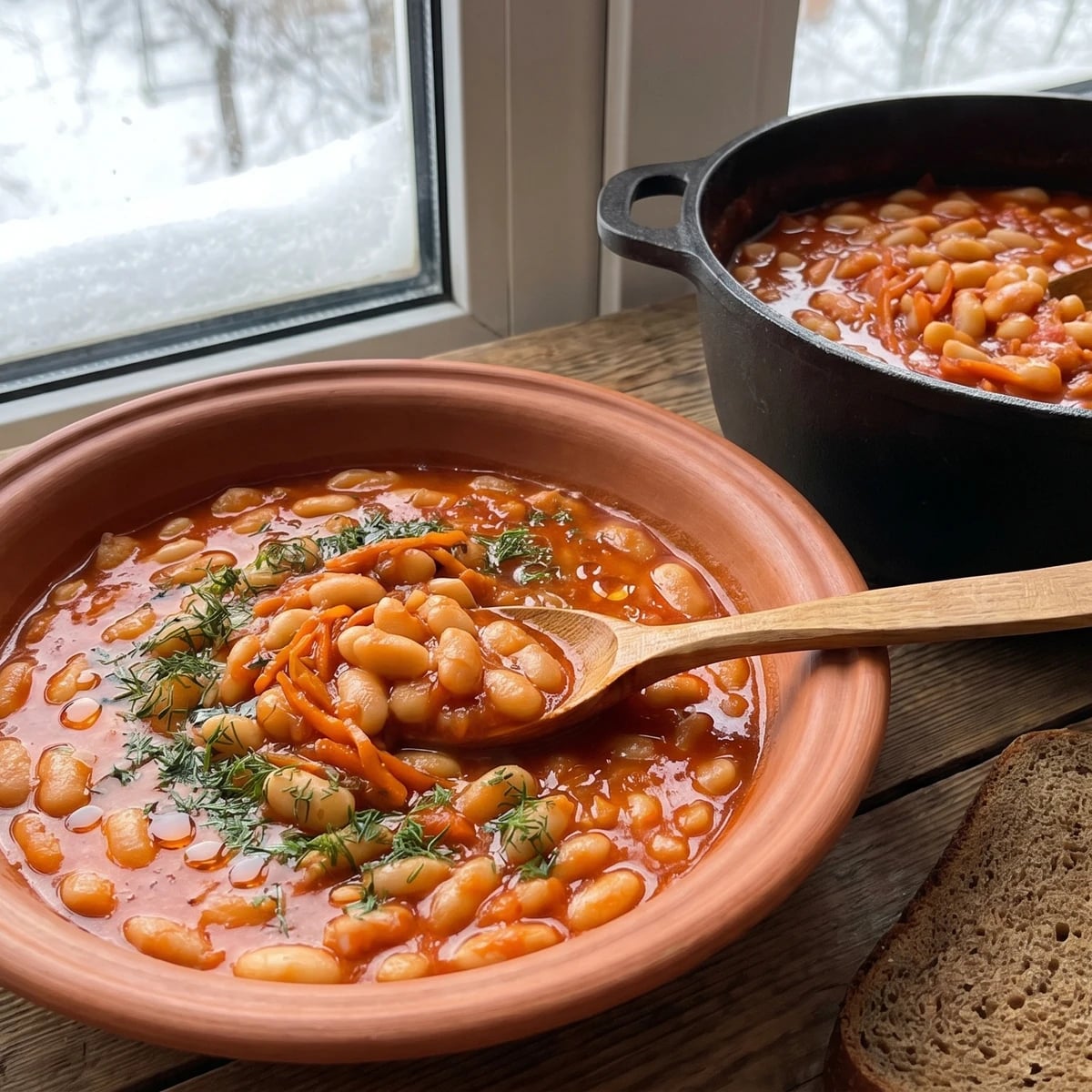
Beans are not a poor table when the onions go sweet, the tomato darkens, and the sunflower oil shines orange around the spoon.
The clever thing about beans is how little they ask before they become generous. A dry handful swells overnight, then slowly gives itself up to the pot, soft at the centre, creamy at the edges, ready to take on tomato, garlic, dill, and the green-gold shine of unrefined sunflower oil. This is food that feeds a full table without needing meat to prove anything.
For my southern steppe version, the beans cook first, plain and patient, with bay and a whole onion if I have one. The zasmazhka, our slow-sweated flavour base of onion and carrot, comes at the end with tomato paste or thick tomato mors from the jar. That is the one why that decides the dish: add it late and its sweetness sits brightly on the beans; add it early and it disappears into the cooking water, useful but quiet.
Aunt Nadia wrote only, "cook until it sounds right," which is comedy if you are thirteen in London and furious at a saucepan. Now I know what she meant. The hard rattle of beans softens into a low, thick burble, the tomato loses its raw sharpness, and the spoon starts leaving a track through the pot.
Make a big one. It is better tomorrow, better still with rye bread, and excellent cold from the fridge when nobody is watching.
Common beans reached Ukrainian kitchens after the Columbian exchange and were absorbed so completely that kvasolia became one of the dependable Lenten foods, especially for Christmas Eve tables where meat and dairy were absent. Western regions often pair beans with dried mushrooms, cabbage, or prunes, while the southern steppe leans into tomato, garlic, dill, and unrefined sunflower oil from the same preservation culture that kept whole tomatoes, aubergines, and watermelons through winter. Soviet canteens flattened bean dishes into plain institutional sides, but village and home versions kept their regional character in the zasmazhka, the souring, and the oil.
Quantity
500g
soaked overnight
Quantity
1 large
halved for the bean pot
Quantity
2
Quantity
1 teaspoon, plus more to taste
Quantity
3 tablespoons
Quantity
2 medium
finely diced
Quantity
2 medium
coarsely grated
Quantity
3 cloves
finely grated or crushed
Quantity
3 tablespoons
Quantity
250ml
Quantity
1 teaspoon
Quantity
1/2 teaspoon
Quantity
1 teaspoon
Quantity
1 to 2 teaspoons
Quantity
small bunch
chopped
Quantity
to serve
| Ingredient | Quantity |
|---|---|
| dried white beanssoaked overnight | 500g |
| onionhalved for the bean pot | 1 large |
| bay leaves | 2 |
| sea salt | 1 teaspoon, plus more to taste |
| unrefined sunflower oil | 3 tablespoons |
| onionsfinely diced | 2 medium |
| carrotscoarsely grated | 2 medium |
| garlicfinely grated or crushed | 3 cloves |
| tomato paste | 3 tablespoons |
| thick tomato passata, crushed tomatoes, or fermented tomato mors | 250ml |
| sweet paprika | 1 teaspoon |
| black pepper | 1/2 teaspoon |
| sugar or honey (optional) | 1 teaspoon |
| apple cider vinegar or tomato brine (optional) | 1 to 2 teaspoons |
| dillchopped | small bunch |
| smetana (sour cream) (optional) | to serve |
Cover the beans with plenty of cold water and leave them overnight. They should swell and wrinkle their skins a little, like they have taken a long bath. Drain them before cooking.
Put the drained beans in a wide pot with the halved onion, bay leaves, and enough fresh water to cover by a few fingers. Bring to a lively boil, then lower to a gentle simmer and cook until the beans are tender all the way through. Salt them when they are nearly soft. Keep a mug of the bean cooking liquid before you drain anything; that cloudy water is body for the stew.
Warm the sunflower oil in a wide pan and add the diced onions with a pinch of salt. Let them soften slowly until glossy and sweet-smelling, then add the grated carrots. Cook until the oil turns orange and the carrot has collapsed into the onion. This is zasmazhka, the slow-sweated flavour base, and it should smell sweet before the tomato goes in.
Stir in the garlic, tomato paste, paprika, and black pepper. Cook until the tomato paste darkens from bright red to brick red and the smell changes from sharp to round. Add the passata or tomato mors and let it bubble until thick enough that a spoon dragged through leaves a clear path for a moment.
Fold the cooked beans into the tomato zasmazhka with enough reserved bean liquid to make it loose but not soupy. Simmer gently until the beans drink in the sauce and the pot sounds thick, not watery. Taste for salt, then balance the tomato with a little sugar if it is harsh or a splash of tomato brine or vinegar if it needs lifting.
Turn off the heat and stir in most of the dill. Let the pot sit until the sauce settles and clings to the beans. Serve warm with more dill, a thread of sunflower oil, and smetana if you like it. The spoon should stand up straight enough to make a point.
1 serving (about 310g)
Culinary guides, cultural storytelling, and the editorial depth that makes cooking meaningful.
Discover Culinary Explorer
Chef Lesia
Buckwheat is the color people mistake for dull until the mushrooms give it their black forest juices, the onion turns sweet, and every grain starts shining with green sunflower oil.

Chef Lesia
Buckwheat is never grey if you treat it properly: toast it until it smells nutty, then fold it through onions gone sweet and glossy in green sunflower oil.

Chef Lesia
The trick is not the potato, it's the cracked edge: rough wedges roast until golden, then drink garlic, dill, and unrefined sunflower oil while still hot.

Chef Lesia
Flour and warm water sit overnight until the bowl smells like rye bread and orchard fruit, then the batter cooks into a glossy sweet-sour pudding. Almost nobody makes it now. We will.