Culinary Explorer

A cooking platform built around craft, culture, and the stories behind what we eat.
Discover Culinary Explorer
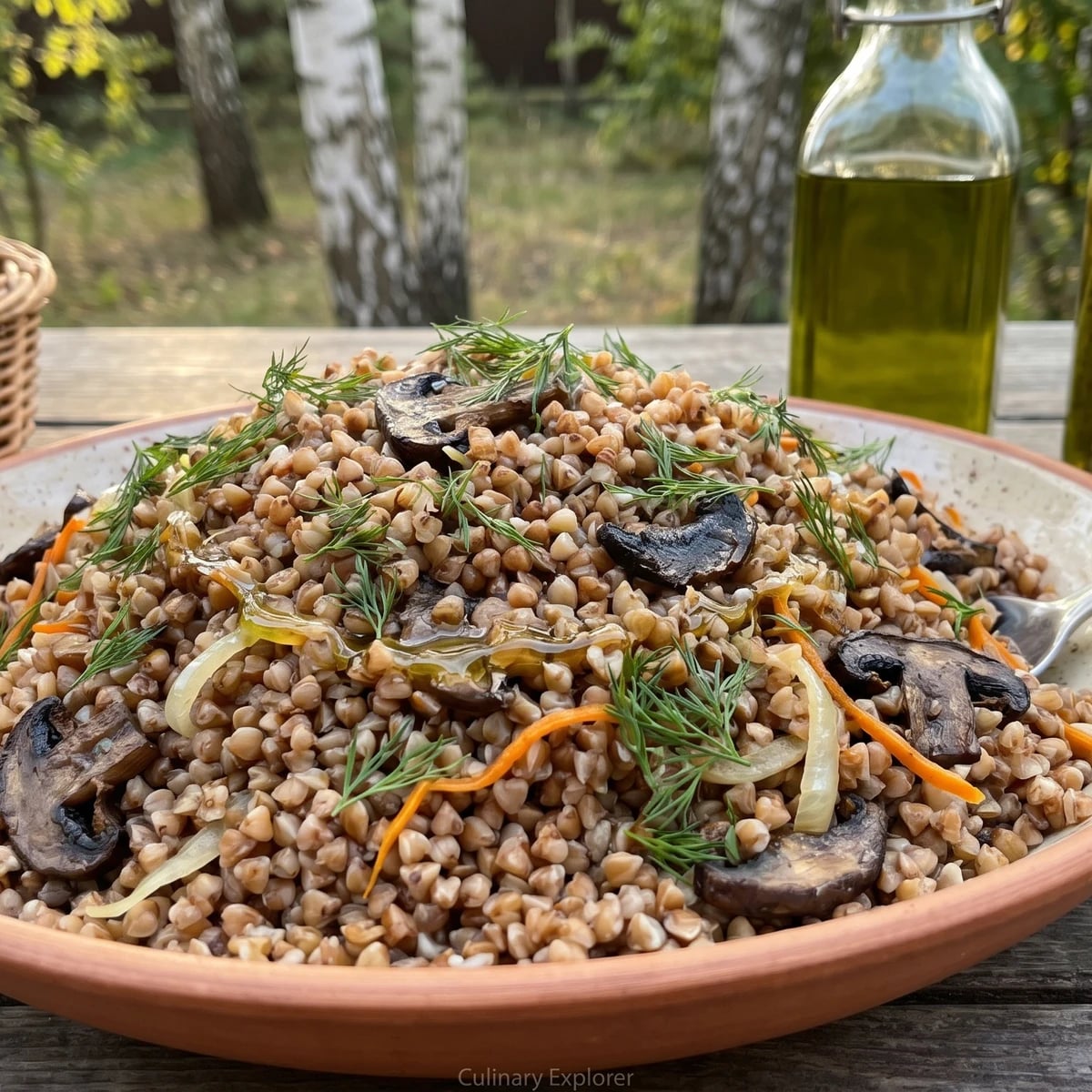
Hrechka z Hrybamy (гречка з грибами, mushroom buckwheat)

Hrechka z Hrybamy (гречка з грибами, mushroom buckwheat)

Created by

Buckwheat is the color people mistake for dull until the mushrooms give it their black forest juices, the onion turns sweet, and every grain starts shining with green sunflower oil.

Side Dishes
Ukrainian
Comfort Food
Meal Prep
Budget Friendly
20 min
Active Time
35 min cook55 min total
Yield6 servings as a side, 4 as a main

Brown is not a small color when it smells like the forest after rain. Tip roasted hrechka into a hot dry pot and it wakes up nutty, then the mushrooms collapse into their own dark juices, onion goes sweet at the edges, and the whole thing turns glossy with unrefined sunflower oil, Ukraine in a bottle of oil.

On a Polesian table this is a side until it is supper. With a fermented cucumber, a spoon of smetana if it's not a fast day, and a fistful of dill, it feeds six politely or four who came in cold. Aunt Nadia once wrote only "mushrooms until it sounds right," which sounds maddening until you hear the pan: first wet and hissing, then quiet, then the sharper scrape of frying. That's when they are ready.

The trick is not to boil the life out of the mushrooms with the grain. Cook the buckwheat gently until the kernels open but keep their corners, build the zasmazhka, the slow-sweated onion, carrot, and mushrooms, beside it, then fold them together at the end so the sweetness and dark mushroom oil cling to the grains instead of vanishing into the pot. Make more than you think. Hrechka reheats like it was waiting for tomorrow.

Hrechka carries the old Slavic association with "Greek grain," though buckwheat itself travelled west from Asia and settled deeply into Ukrainian fields by the early modern period, especially in Polissia, where short seasons and acidic forest soils suited it. Forest mushrooms, fresh in autumn and dried for winter, turned the grain into a fasting-day meal when meat and dairy left the table. Soviet canteens later made buckwheat a plain scoop, but village and home cooks kept this darker woodland version alive with porcini, onions, and sunflower oil.

The technique, the tradition, and the story behind every dish.

Discover Culinary Explorer

Ingredients

dried porcini or other dried wild mushrooms

Quantity

30g

just-boiled water

Quantity

500ml

for soaking

roasted buckwheat groats (hrechka)

Quantity

300g

picked over

water or vegetable stock

Quantity

250 to 350ml

enough to make 750ml total liquid after soaking

bay leaf

Quantity

1

fine sea salt

Quantity

1 1/2 teaspoons, plus more to taste

unrefined sunflower oil

Quantity

4 tablespoons, divided, plus more to finish

onions

Quantity

2 large

finely diced

carrot

Quantity

1 medium

coarsely grated

fresh mushrooms

Quantity

500g

sliced thickly

garlic cloves

Quantity

2

finely grated or smashed

freshly ground black pepper

Quantity

to taste

butter (optional)

Quantity

30g

optional, if not cooking for a fast day

dill

Quantity

1 small bunch

finely chopped

smetana (sour cream) (optional)

Quantity

to serve

fermented cucumbers (optional)

Quantity

to serve

Equipment Needed

  • A medium lidded pot for the buckwheat
  • A wide heavy pan for the mushroom zasmazhka
  • A fine sieve or piece of muslin for the mushroom soaking liquid
  • A wooden spoon

Instructions

  1. 1

    Wake the mushrooms

    Put the dried mushrooms in a bowl and pour over the just-boiled water. Press them under with a spoon and leave them until they soften and the water turns dark as tea. Lift the mushrooms out with your fingers, rubbing away any grit, then chop them. Strain the soaking liquid through a fine sieve or cloth and top it up with water or stock to make 750ml.

    Do not pour the last muddy spoonful from the bowl into the pot. Dried forest mushrooms are generous, but they bring the forest floor with them.
  2. 2

    Toast the hrechka

    Tip the buckwheat into a dry lidded pot and warm it over a medium flame, shaking the pot, until the smell changes from dusty to nutty and the kernels start to tick lightly against the metal. If your buckwheat is already deeply roasted, this only wakes it up; if it is pale green, keep going until it darkens and smells like toasted crust.

    Roasted brown buckwheat is what you want for this dish. Raw green buckwheat is a bit more modern and softer; toast it well or it will cook up paste-like.
  3. 3

    Cook the grain

    Add the 750ml mushroom liquid, bay leaf, and salt to the toasted buckwheat. Bring it to a gentle bubble, cover tightly, and lower the heat until the pot is barely murmuring. Cook until the liquid has disappeared, the kernels have opened, and the bottom gives a faint dry crackle instead of a wet slosh. Pull it off the heat and let it sit covered while you make the mushrooms.

  4. 4

    Sweat the onions

    Warm 3 tablespoons of sunflower oil in a wide pan. Add the onions with a pinch of salt and cook them slowly until they turn translucent, soft, and sweet-smelling, then add the grated carrot and keep going until the oil is stained gold. You are not chasing hard brown edges here. This is zasmazhka, the quiet base that makes the grain taste cooked by someone who cared.

  5. 5

    Fry the mushrooms

    Add the fresh mushrooms to the wide pan, in two batches if they crowd each other, and leave them alone long enough to give up their water. The pan will hiss wetly first. When that sound fades and the mushrooms begin to fry, add the chopped soaked mushrooms and garlic. Cook until the edges darken, the juices turn syrupy, and the pan smells deep and woodland, not raw. Swirl in the butter now if you are using it, or add another spoon of sunflower oil.

    This is the step that decides the dish. If the mushrooms only simmer, the buckwheat tastes damp; if they fry after their water leaves, every grain gets coated in dark mushroom oil.
  6. 6

    Fold and rest

    Remove the bay leaf from the buckwheat and fluff the grains with a fork or wooden spoon. Fold the mushroom zasmazhka through the pot, scraping in every shiny bit from the pan. Cover and let it sit off the heat until the grains drink the oil and the smells come together. If it looks dry, add a small splash of hot water or mushroom liquid; if it looks wet, leave the lid off for a few minutes.

  7. 7

    Finish with dill

    Stir through most of the dill, black pepper, and a final thread of unrefined sunflower oil. Taste for salt. Serve with the rest of the dill scattered over, fermented cucumbers on the table, and smetana if the day allows it. Enough for six guests or one hungry Ukrainian over two days.

Chef Tips

  • A small handful of dried porcini makes ordinary supermarket mushrooms taste like the woods. This is the budget trick, not a luxury one.
  • Do not rinse roasted buckwheat for ages under the tap. Pick it over, rinse briefly only if dusty, and drain hard; too much water on the grain makes it sulk.
  • For a fasting table, keep it all sunflower oil. Butter is lovely at the end, but it is not the soul of the dish.
  • The chopping forgives you. Crowding the mushroom pan does not. Use the widest pan you own, or cook the mushrooms in batches until they fry properly.
  • Leftovers are not a problem. Fry them the next day in a little oil until the bottom crisps in patches, then add fresh dill after the heat.

Advance Preparation

  • The dried mushrooms can soak overnight in cold water for an even cleaner, darker liquid. Strain before using.
  • The buckwheat can be cooked a day ahead, then folded with freshly fried mushrooms before serving.
  • The finished dish keeps well for 4 days in the fridge. Reheat in a pan with a splash of water and add fresh dill at the end.

Frequently Asked Questions

Nutrition Information

1 serving (about 245g)

Calories
300 calories
Total Fat
11 g
Saturated Fat
1 g
Trans Fat
0 g
Unsaturated Fat
9 g
Cholesterol
0 mg
Sodium
580 mg
Total Carbohydrates
44 g
Dietary Fiber
8 g
Sugars
4 g
Protein
10 g

Note: Chef personas and recipes are created with AI assistance. Cook with care: follow safe food-handling practices, check doneness with a thermometer when needed, and adapt for allergies and your kitchen.

Where cooking meets culture.

Culinary guides, cultural storytelling, and the editorial depth that makes cooking meaningful.

Discover Culinary Explorer

More from Kasha, Potato & Garden Sides

Browse the full collection