Culinary Explorer
A cooking platform built around craft, culture, and the stories behind what we eat.
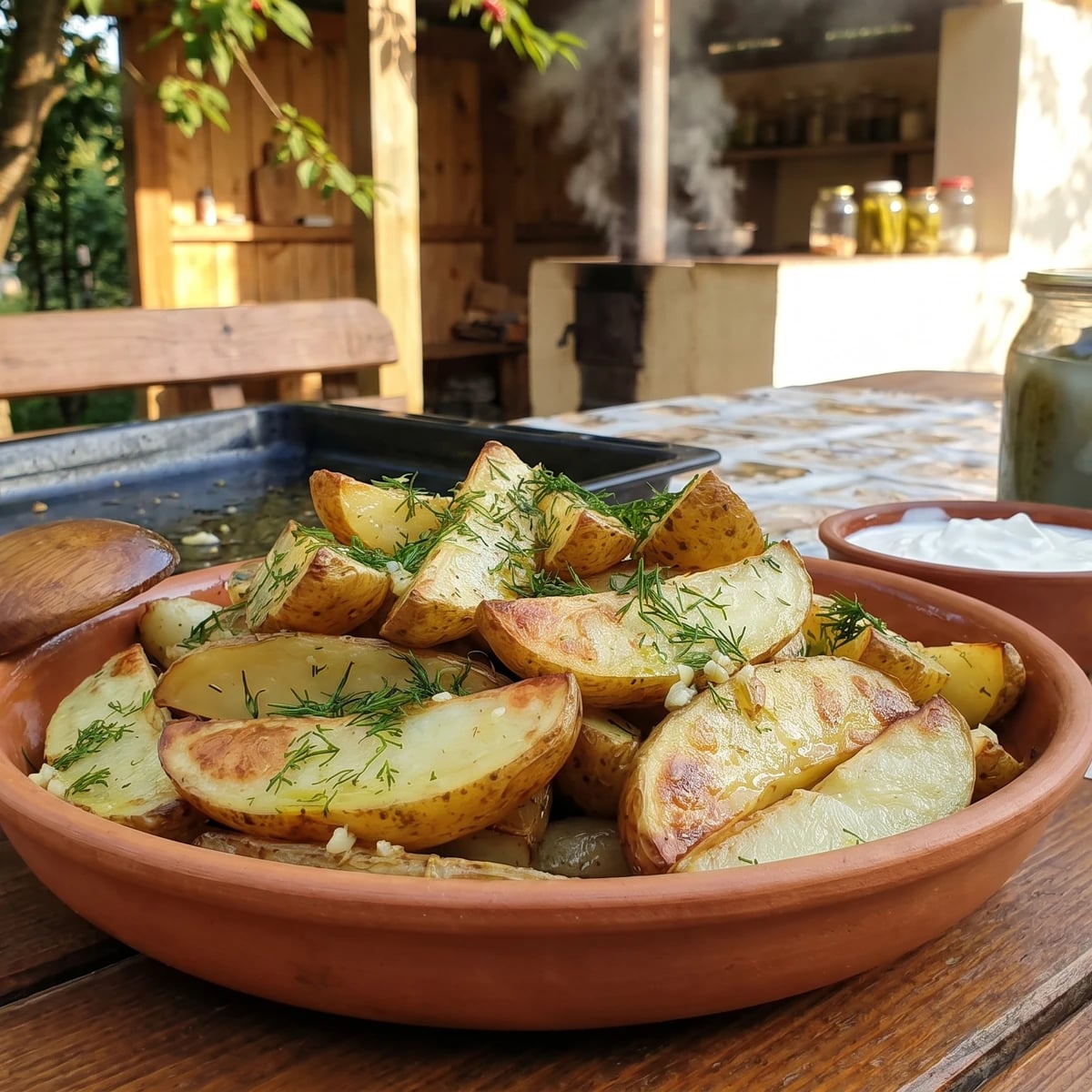
Kartoplia po-Selyansky (картопля по-селянськи, country potatoes)
Created by Chef Lesia
The trick is not the potato, it's the cracked edge: rough wedges roast until golden, then drink garlic, dill, and unrefined sunflower oil while still hot.
A potato looks like nothing until its cut edges turn rough and gold. Then the garlic hits the hot pan, the dill goes green against the crust, and suddenly this is not a filler dish at all. It's the thing everyone reaches for first, fingers too impatient for forks.
Kartoplia po-Selyansky means country potatoes, from selo, the village. At our steppe table they belonged beside pickles, tomatoes, a bowl of smetana, maybe herring if someone had thought ahead. The method matters more than the clock: cut the wedges uneven enough to catch oil, roast them until they sound dry and scratchy when you shake the tray, then dress them while they're still hot so the garlic oil sinks into the cracks.
Aunt Nadia wrote only, "cook until it smells hungry." Comedy, yes, but also correct. The smell changes from raw starch to nuts and earth, and that's when you know. Make a full tray. There is no sensible reason to roast six potatoes when twelve will disappear just as fast.
Ingredients
potatoes
Quantity
1.5 kg
scrubbed, skins left on, cut into thick wedges
unrefined sunflower oil
Quantity
4 tablespoons, plus 1 tablespoon
for roasting and finishing
fine sea salt
Quantity
1 teaspoon
| Ingredient | Quantity |
|---|---|
| potatoesscrubbed, skins left on, cut into thick wedges | 1.5 kg |
| unrefined sunflower oilfor roasting and finishing | 4 tablespoons, plus 1 tablespoon |
| fine sea salt | 1 teaspoon |
Where cooking meets culture.
Culinary guides, cultural storytelling, and the editorial depth that makes cooking meaningful.
Discover Culinary Explorer