
Chef Takumi
Ago Dashi (あごだし, grilled flying fish stock)
Ago dashi is quiet luxury: roasted flying fish, konbu, and patient water. Steep it slowly and you get a clear stock that tastes sweet, clean, and full without heaviness.
A cooking platform built around craft, culture, and the stories behind what we eat.

Created by
Bettarazuke is a winter-white daikon pickle from Tokyo, first salted to draw out water, then tucked into sweet rice kōji until it turns pale, sticky, and quietly fragrant.
Daikon in late autumn has a clean snap and a sweetness hiding under its peppery edge. That is the one you want here. Bettarazuke looks like a pickle that belongs to a specialist, sticky with kōji and tied to an old Tokyo fair, but the work is plain: salt first, sweetness second, wait with some patience.
The first salting decides the dish. Daikon carries a great deal of water, and if you put it straight into the sweet kōji bed, that water thins the pickle and leaves the flavor vague. Salt draws the water out, firms the flesh, and makes room for the amazake-like sweetness to enter. Nothing hidden. The daikon must still taste like daikon.
Kōji is rice inoculated with a useful mold, and in this pickle it does a gentle piece of labor. It lends sweetness, soft aroma, and a pale sticky coating without turning the vegetable heavy. We serve bettarazuke as tsukemono, a small pickle beside rice, often at a celebration table where one crisp, bright slice wakes the mouth between richer dishes. Leave it room on the plate. A pickle crowded into a heap becomes kitchen storage, not moritsuke.
Bettarazuke is closely associated with Nihonbashi in Tokyo, where the Bettara-ichi pickle fair is held every October 19 and 20 near Takarada Ebisu Shrine. The name is said to come from bettara, meaning sticky, after the sweet kōji paste that clings to the daikon and, in old street-fair joking, might stick to a kimono sleeve. The fair grew from the Edo-period custom of selling offerings and good-luck goods before the Ebisu festival, with bettarazuke becoming its best-known food.
Quantity
1 large (about 1kg)
peeled and cut lengthwise into quarters
Quantity
30g
about 3% of the daikon weight
Quantity
300g
Quantity
150g
warm, not hot
Quantity
120ml
warmed to about 60°C
Quantity
80g
Quantity
2 tablespoons
Quantity
1 teaspoon
for the kōji bed
Quantity
5cm piece
wiped clean
Quantity
1 small
seeds removed
| Ingredient | Quantity |
|---|---|
| daikonpeeled and cut lengthwise into quarters | 1 large (about 1kg) |
| sea saltabout 3% of the daikon weight | 30g |
| dried rice kōji | 300g |
| cooked short-grain ricewarm, not hot | 150g |
| waterwarmed to about 60°C | 120ml |
| sugar | 80g |
| mirin | 2 tablespoons |
| sea saltfor the kōji bed | 1 teaspoon |
| dried konbuwiped clean | 5cm piece |
| dried red chile (optional)seeds removed | 1 small |
Choose a heavy, straight daikon with taut skin and no spongy patches. Late autumn to winter is its shun, when the flesh is sweet, juicy, and firm enough to pickle cleanly. If the daikon feels light for its size, save it for simmering instead; this pickle has nowhere to hide a tired root.
Peel the daikon and cut it lengthwise into quarters, or into halves if your jar is wide. Rub the pieces evenly with the 30g salt, set them in a nonreactive container, and weight them lightly with a plate and a clean jar of water. Leave at cool room temperature for 12 to 24 hours, until a pool of liquid gathers and the daikon bends slightly without snapping.
Break up the dried rice kōji with clean hands. Mix it with the warm cooked rice and the 60°C water, then cover and hold it in a warm place for 2 to 3 hours, stirring once or twice, until the grains soften and smell faintly sweet. Don't use boiling water, which dulls the enzymes that make kōji useful.
Stir the sugar, mirin, and 1 teaspoon salt into the softened kōji. It should look like a thick, pale porridge, sticky enough to cling to a spoon. Slip in the konbu and the chile if using. The konbu gives quiet depth, and the chile keeps the sweetness from feeling flat.
Lift the daikon from its brine. Rinse it quickly under cold water, then pat it very dry with a clean towel. Do not soak it. A quick rinse removes harsh surface salt; soaking would put back the water you just worked to draw out.
Spread a little kōji mixture in the bottom of a clean glass or enamel container. Lay in the daikon, packing kōji between and over every piece so no bare patches remain. Press plastic wrap or a piece of clean parchment directly onto the surface, then cover the container. The close contact keeps the daikon evenly seasoned and limits drying at the edges.
Refrigerate for 3 to 5 days, turning the daikon once a day with clean hands or tongs. The pickle is ready when the flesh is pale ivory, lightly flexible, and sweet-salty through the center with a clean daikon bite still present. If the kōji smells sharply alcoholic or sour, you have let warmth do too much talking.
Wipe off most of the kōji paste, leaving only a thin sheen. Slice the daikon crosswise into pieces about 5mm thick and arrange three, five, or seven slices in a small dish. Serve cold or cool beside rice, grilled fish, or a celebration meal. It should be crisp under the teeth, sweet at first, then cleanly salty.
1 serving (about 125g)
Culinary guides, cultural storytelling, and the editorial depth that makes cooking meaningful.
Discover Culinary ExplorerChef Takumi
Ago dashi is quiet luxury: roasted flying fish, konbu, and patient water. Steep it slowly and you get a clear stock that tastes sweet, clean, and full without heaviness.
Chef Takumi
Akamiso dengaku-miso is plain work: bean miso, sweetness, sake, and patient stirring until the glaze turns dark, glossy, and thick enough to cling to the grill.
Chef Takumi
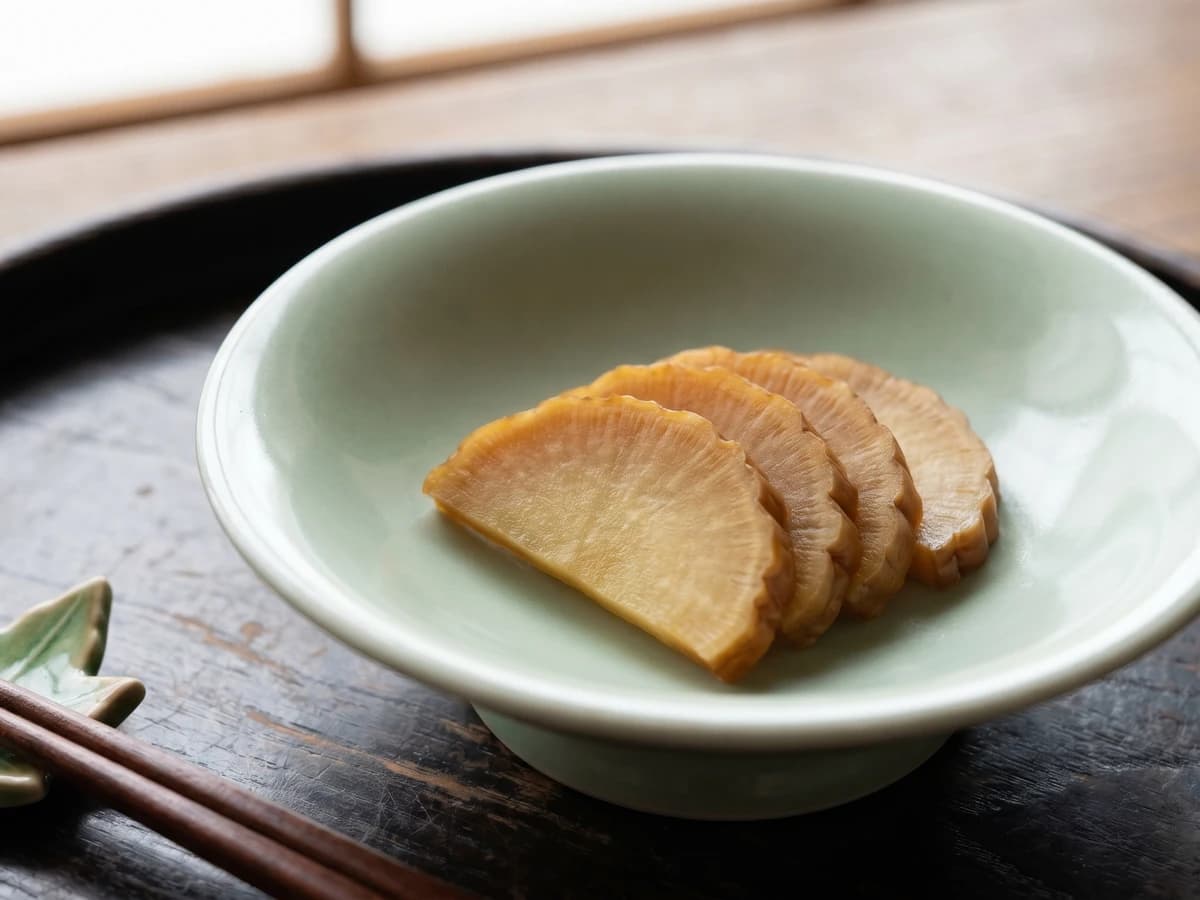
Snow-country takuan begins with smoke. Hang the daikon, dry it gently, then let rice bran, salt, and time turn it into Akita's amber pickle.

Chef Takumi
Aso takanazuke is spring caught in salt: sharp mustard greens pressed until they soften, fermented until their edge turns round, then fried briefly with sesame for rice.