
Chef Takumi
Ago Dashi (あごだし, grilled flying fish stock)
Ago dashi is quiet luxury: roasted flying fish, konbu, and patient water. Steep it slowly and you get a clear stock that tastes sweet, clean, and full without heaviness.
A cooking platform built around craft, culture, and the stories behind what we eat.

Created by
Snow-country takuan begins with smoke. Hang the daikon, dry it gently, then let rice bran, salt, and time turn it into Akita's amber pickle.
Daikon usually wants the winter sun. In Akita, where snow closes the sky early, the radish found another road: it was hung over the household fire until the skin tightened and the flesh took on smoke. Then it went into rice bran. Practical food often has the best manners.
Iburigakko looks like a project, but the work is plain. First you dry and smoke the daikon without cooking it. That matters because water is the enemy of a crisp pickle, and heat would soften the radish before the bran can do its quiet work. The one detail that decides it is patience at the smoke: steady, cool smoke until the daikon bends slightly and turns pale amber, never hot enough to roast.
After that, the nuka, rice bran, takes over with salt and a little sweetness. Pack it firmly so there are no air pockets, weight it, and wait. Slice it thin, five or seven pieces, and leave it room beside rice, soup, and a grilled fish. This is tsukemono as snow-country wisdom: nothing hidden, nothing hurried, honmono made by weather, smoke, and restraint.
Iburigakko is associated especially with inland Akita, where daikon could not always be dried outdoors before winter snow arrived. The name combines iburi, from ibusu, meaning to smoke, with gakko, an Akita dialect word for pickles. Its method belongs to the old irori hearth culture, where radishes hung above the indoor fire before being buried in rice bran for preservation.
Quantity
2 medium (about 1.8kg total)
washed, leaves trimmed to short stems
Quantity
180g
divided
Quantity
1kg
Quantity
300g
Quantity
40g
Quantity
2 pieces, about 5cm each
wiped clean
Quantity
as needed
cherry, oak, or beech preferred
| Ingredient | Quantity |
|---|---|
| daikonwashed, leaves trimmed to short stems | 2 medium (about 1.8kg total) |
| coarse sea saltdivided | 180g |
| roasted rice bran (iri-nuka) | 1kg |
| raw sugar or zarame sugar | 300g |
| dried red chile (optional) | 40g |
| konbu (dried kelp)wiped clean | 2 pieces, about 5cm each |
| hardwood chipscherry, oak, or beech preferred | as needed |
Choose firm winter daikon with smooth skin, heavy for their size and without spongy shoulders. This is shun, the radish at its prime, and it matters more than clever handling. A tired daikon turns hollow and woolly after smoking, and no amount of bran will make it crisp again.
Scrub the daikon clean but do not peel them. Rub all over with 60g of the salt, working it especially around the stem end. The skin protects the flesh through smoke and pickling, while the first salting draws surface moisture so the smoke can cling instead of sliding off wet skin.
Set the salted daikon on a rack over a tray and leave them uncovered in a cool place overnight. Turn them once. By morning they should feel slightly tacky, not wet. That tacky surface is useful; it catches smoke cleanly and begins the drying that gives iburigakko its bite.
Set up a cold smoker, or a covered grill arranged so the daikon sit far from the heat, and keep the chamber below 30C. Smoke the daikon for 6 to 8 hours, turning them every hour, until the skins are amber, lightly wrinkled, and the roots bend a little without cracking. You are smoking and drying, not cooking. If the chamber gets hot, the radish softens and the finished pickle loses the clean snap that makes the dish.
Lay the smoked daikon on a clean rack until fully cool and dry to the touch. Do not pack them warm. Warmth trapped inside the bran makes damp pockets, and damp pockets invite sourness in the wrong direction.
In a clean bowl, mix the roasted rice bran, remaining 120g salt, sugar, dried chile if using, and konbu. The bran should taste boldly salty and faintly sweet. It will season the daikon slowly, so it must be stronger than you would want to eat by itself.
Spread a thick layer of the nuka mixture in a clean crock or food-safe bucket. Lay in the daikon, cover every surface with more nuka, and press firmly so there are no air pockets. Air dries the outside unevenly and can invite mold where the bran should be touching the radish.
Cover with a clean inner lid or plate that fits inside the crock, then set a weight on top. Keep it in a cool place, ideally 5 to 12C, for 3 to 4 weeks. Check after the first week: the bran should smell smoky, salty, and pleasantly fermented, never rotten. If the surface looks dry, press it down again; if harmless white yeast appears, scrape it away and keep the daikon buried.
Brush off the bran and wipe the daikon with a barely damp cloth. Slice thinly across the grain, 3 to 4mm thick. Thin slices matter because iburigakko is dense and smoky; cut it too thick and the smoke shouts. Cut it thin and it sits properly beside rice, sake, or a bowl of miso soup.
1 serving (about 30g)
Culinary guides, cultural storytelling, and the editorial depth that makes cooking meaningful.
Discover Culinary ExplorerChef Takumi
Ago dashi is quiet luxury: roasted flying fish, konbu, and patient water. Steep it slowly and you get a clear stock that tastes sweet, clean, and full without heaviness.
Chef Takumi
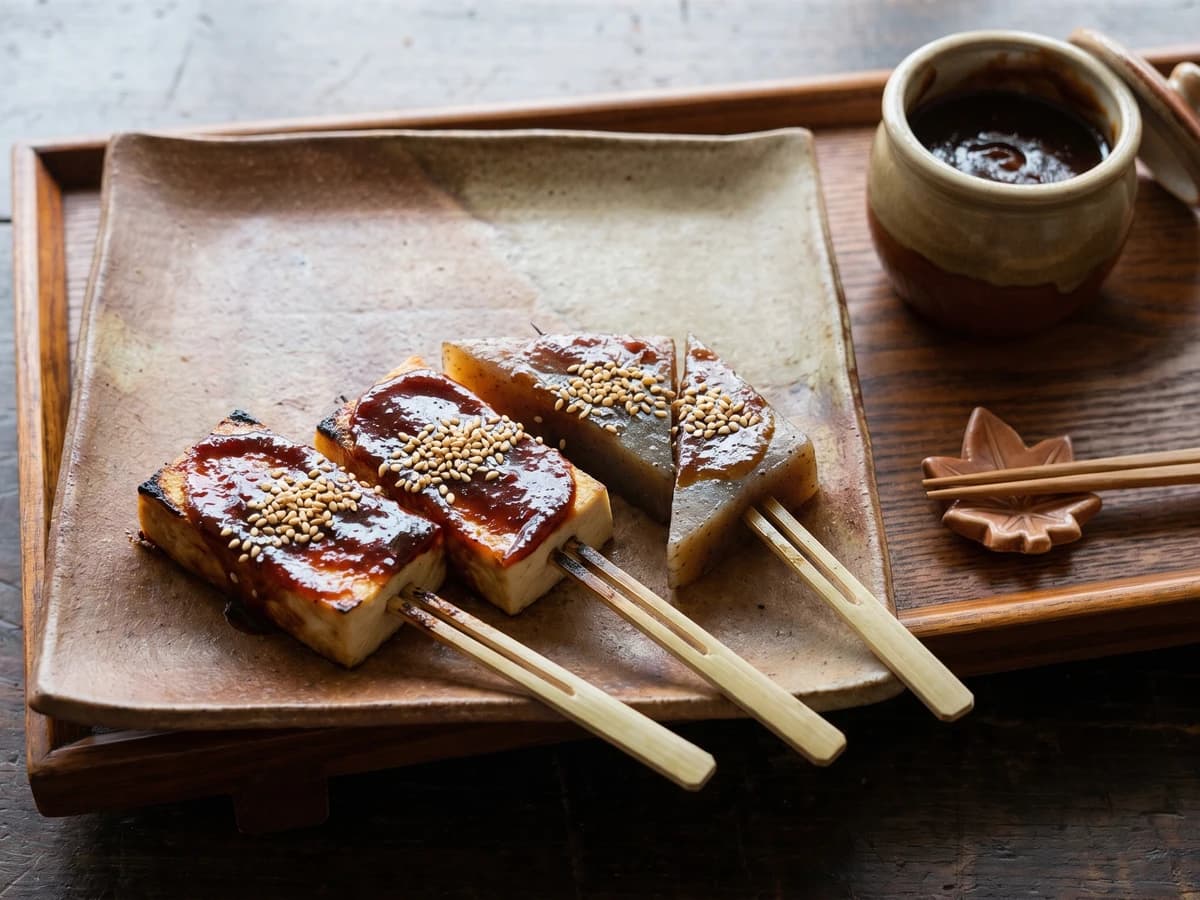
Akamiso dengaku-miso is plain work: bean miso, sweetness, sake, and patient stirring until the glaze turns dark, glossy, and thick enough to cling to the grill.

Chef Takumi
Aso takanazuke is spring caught in salt: sharp mustard greens pressed until they soften, fermented until their edge turns round, then fried briefly with sesame for rice.

Chef Takumi
A white daikon, a red chili, and a grater. Momiji oroshi looks like a small flourish, but it brings clean heat, fresh bite, and autumn color to the table.