
Chef Takumi
Ago Dashi (あごだし, grilled flying fish stock)
Ago dashi is quiet luxury: roasted flying fish, konbu, and patient water. Steep it slowly and you get a clear stock that tastes sweet, clean, and full without heaviness.
A cooking platform built around craft, culture, and the stories behind what we eat.

Created by
Aso takanazuke is spring caught in salt: sharp mustard greens pressed until they soften, fermented until their edge turns round, then fried briefly with sesame for rice.
Aso takana is a spring vegetable before it is a pickle. The leaves grow on the high plain around Mount Aso, where the air is cool and the stems stay slender, peppery, and alive. This is the part that decides the dish: use young mustard greens at their prime, not tired greens made respectable by salt. Nothing hidden.
The method is simpler than its reputation. Salt draws water out of the leaves, and pressure keeps them under their own brine. That brine is not waste, it is the little pond where the pickle protects itself and turns sour, sharp, and clean. If the greens are fully submerged, the work is mostly patience.
After the ferment, we chop the greens and fry them only briefly in sesame oil. Too much heat bullies the pickle flat. A quick turn in the pan wakes the mustard bite, dries the surface, and lets sesame cling to every piece. Spoon it over hot rice, tuck it beside grilled fish, or set a small mound among other tsukemono. Leave it room. A condiment this strong does not need to shout.
Aso takanazuke is a regional pickle from the Aso area of Kumamoto Prefecture, where takana mustard greens are harvested in early spring on the volcanic plateau. Local makers distinguish the fresher, shorter-pickled shinzuke from longer-aged honzuke, and both are commonly chopped for rice balls, fried rice, and bowls. The pickle became one of Aso's best-known foods in the twentieth century as railway travel and regional souvenirs carried it beyond Kumamoto.
Quantity
500g
washed, dried, root ends trimmed
Quantity
20g
about 4 percent of the greens' weight
Quantity
1 tablespoon
Quantity
1 teaspoon
Quantity
1 teaspoon
Quantity
1 teaspoon
Quantity
1 small
seeds removed and thinly sliced
| Ingredient | Quantity |
|---|---|
| young Aso takana or fresh mustard greenswashed, dried, root ends trimmed | 500g |
| fine sea saltabout 4 percent of the greens' weight | 20g |
| toasted sesame oil | 1 tablespoon |
| soy sauce | 1 teaspoon |
| mirin | 1 teaspoon |
| toasted white sesame seeds | 1 teaspoon |
| dried red chile (optional)seeds removed and thinly sliced | 1 small |
Wash the takana well in cold water, lifting the leaves so any grit falls away. Dry them thoroughly, especially near the stems. Salt should draw out the greens' own water, not be diluted by rinse water clinging to the leaves.
Weigh the greens, then use salt equal to 4 percent of that weight. Sprinkle the salt between the leaves and along the stems, then massage gently until the greens darken, soften, and begin to glisten. The salt opens the cells and pulls out moisture, which becomes the brine that carries the ferment.
Coil or fold the greens into a clean pickling crock, tsukemono-ki, or a nonreactive bowl. Press them down, cover with a clean plate or inner lid, and set a weight on top. Within a few hours, liquid should rise around the leaves. If the greens are not mostly submerged after 6 hours, add a light brine made from 1 cup water and 2 teaspoons salt, just enough to cover.
Leave the weighted greens at cool room temperature, ideally 18 to 21 C, for 2 to 3 days. Taste after the second day. They should smell fresh and mustardy, with a clean sour edge, not musty. For a sharper honzuke-style pickle, refrigerate after this point and let it mature another 5 to 7 days.
Lift the greens from the brine and squeeze firmly but not angrily. You want them moist, not dripping. Chop crosswise into small pieces, including the stems, because the stems carry the best snap. Taste before frying. If they are very salty, rinse quickly in cold water, then squeeze again.
Warm the sesame oil in a skillet over medium heat. Add the chile, if using, then the chopped greens. Stir-fry for 2 to 3 minutes, just until the surface looks glossy and the smell turns nutty. Add the soy sauce and mirin at the edge of the pan so they sizzle, then toss through. This brief heat rounds the pickle without cooking away its mustard bite.
Stir in the sesame seeds and spread the takanazuke on a plate to cool. Serve at room temperature in a small dish, or spoon over hot rice. Keep the portion restrained. It is a pickle, not a vegetable side trying to fill the bowl.
1 serving (about 40g)
Culinary guides, cultural storytelling, and the editorial depth that makes cooking meaningful.
Discover Culinary ExplorerChef Takumi
Ago dashi is quiet luxury: roasted flying fish, konbu, and patient water. Steep it slowly and you get a clear stock that tastes sweet, clean, and full without heaviness.
Chef Takumi
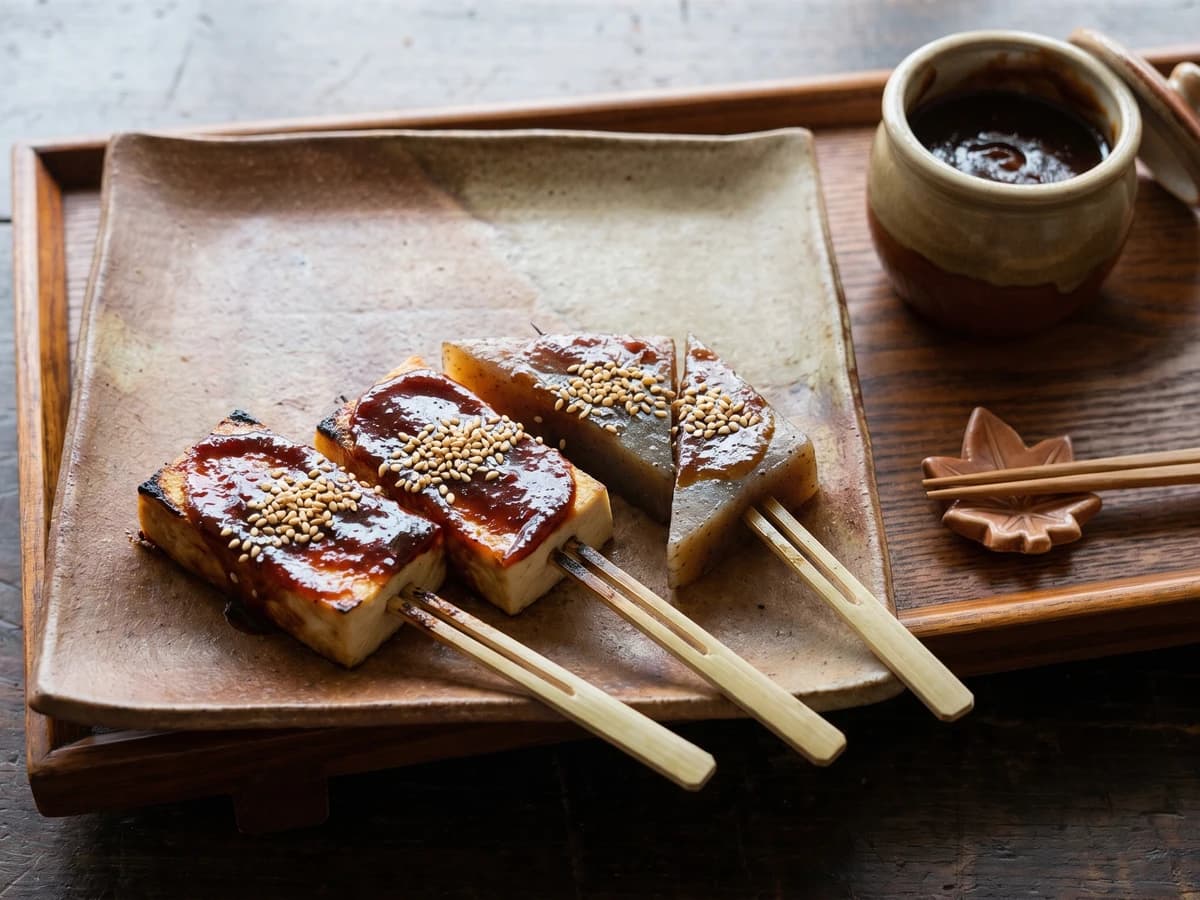
Akamiso dengaku-miso is plain work: bean miso, sweetness, sake, and patient stirring until the glaze turns dark, glossy, and thick enough to cling to the grill.
Chef Takumi
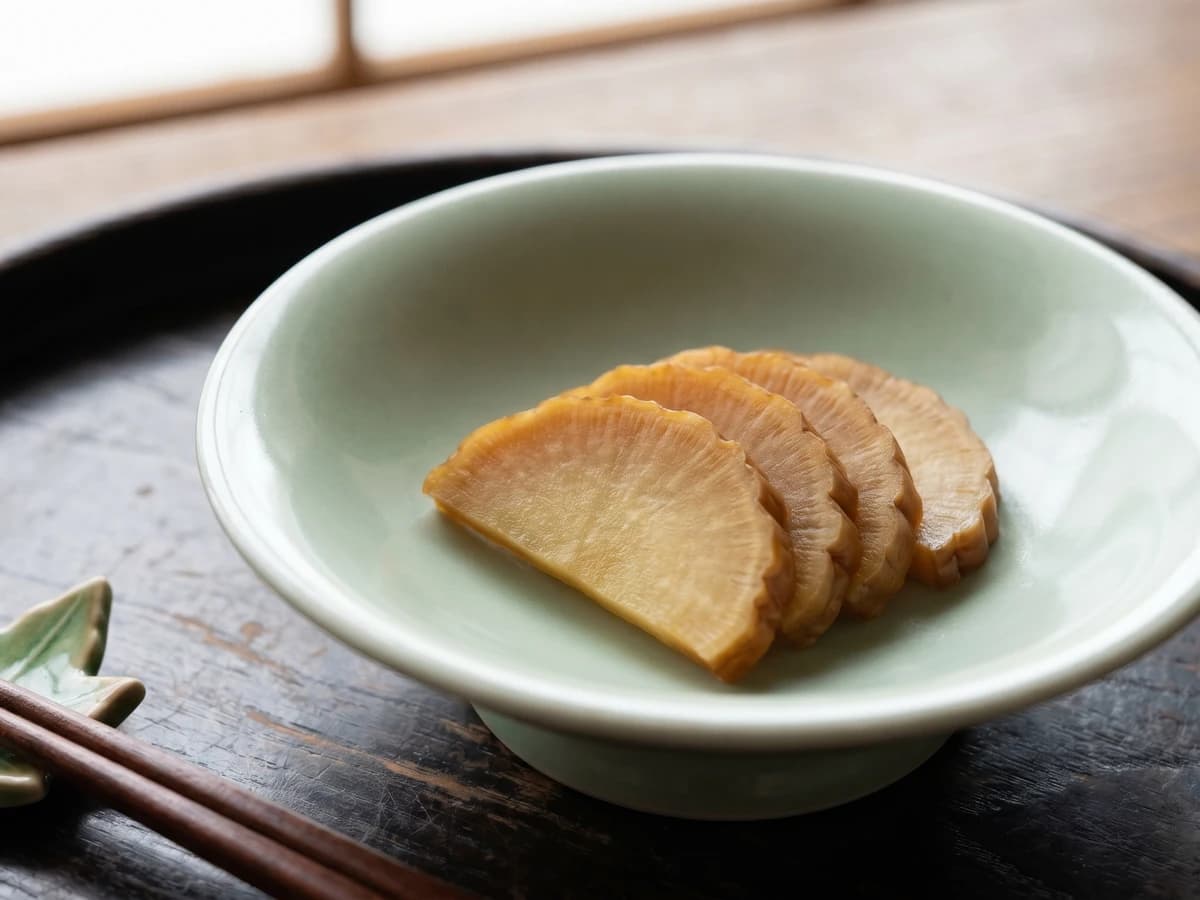
Snow-country takuan begins with smoke. Hang the daikon, dry it gently, then let rice bran, salt, and time turn it into Akita's amber pickle.

Chef Takumi
A white daikon, a red chili, and a grater. Momiji oroshi looks like a small flourish, but it brings clean heat, fresh bite, and autumn color to the table.