
Chef Takumi
Ago Dashi (あごだし, grilled flying fish stock)
Ago dashi is quiet luxury: roasted flying fish, konbu, and patient water. Steep it slowly and you get a clear stock that tastes sweet, clean, and full without heaviness.
A cooking platform built around craft, culture, and the stories behind what we eat.
Created by
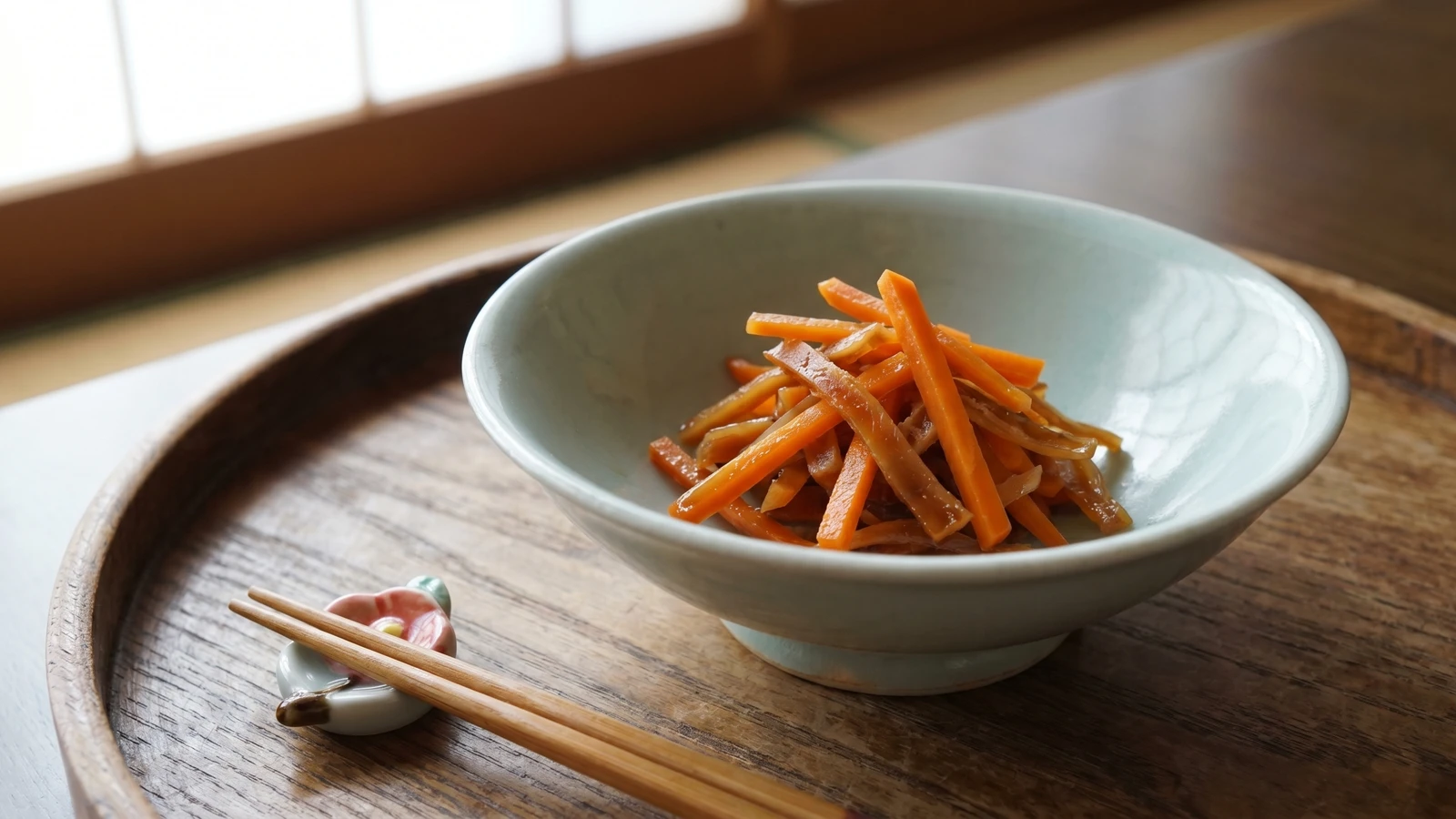
Dried squid, carrot, soy, and patience. Ika ninjin looks like a small dish, but on a Fukushima New Year table it carries the salt, sweetness, and cheer of winter.
Ika ninjin begins with two plain things: dried squid and carrot cut into matching strips. That may sound severe if you haven't cooked with surume, the dried squid sold for snacking, but it softens as it drinks the seasoning and gives the carrots a deep, sea-clean savor. The dish is not difficult. It only asks you to cut neatly and wait.
The one detail that decides it is the width of the cut. Slice the carrot too thick and it stays loud and raw; slice the squid too thin and it disappears into chew. Match them as closely as you can, slender but not hair-fine, so the marinade reaches both at the same pace. Here the knife is doing more than making things pretty. It sets the texture of the whole dish.
We make the seasoning with soy sauce, mirin, sake, and a little sugar, warmed just enough to dissolve and settle together. Pour it over the squid while still warm, not boiling, because warmth helps the dried squid open without cooking the carrot into sadness. By the next day the strips are glossy, sweet-salty, and firm under the teeth. This is tsukemono by temperament: a pickle, yes, but also a snack beside sake and a bright little companion to rice.
At New Year in Fukushima, ika ninjin sits among richer foods as a clean counterpoint. Nothing hidden, nothing heavy. Good carrot in winter has its own sweetness, and the squid supplies the sea without needing dashi. Leave it room in a small dish and let the orange and amber do their work.
Ika ninjin is a local dish of Fukushima Prefecture, especially associated with the New Year table in the northern part of the prefecture. It is commonly described as older than Hokkaido's Matsumae-zuke, which adds konbu and herring roe to a similar base of dried squid and soy seasoning. The dish reflects an inland winter economy: dried seafood could travel and keep, while carrots brought color and sweetness when fresh produce was limited.
Quantity
1 large (about 180g)
peeled and cut into fine matchsticks
Quantity
25g
cut into thin strips
Quantity
3 tablespoons
Quantity
2 tablespoons
Quantity
1 tablespoon
Quantity
1 teaspoon
Quantity
1 small piece
seeds removed
| Ingredient | Quantity |
|---|---|
| carrotpeeled and cut into fine matchsticks | 1 large (about 180g) |
| dried squid (surume)cut into thin strips | 25g |
| soy sauce | 3 tablespoons |
| mirin | 2 tablespoons |
| sake | 1 tablespoon |
| sugar | 1 teaspoon |
| dried red chile (optional)seeds removed | 1 small piece |
If the dried squid is very stiff, wipe it with a barely damp cloth and let it rest for five minutes. Don't soak it. A little surface moisture helps the knife, but a true soak steals the clean dried flavor that makes this dish what it is. Cut the squid into strips about 3 mm wide, trimming away any hard beak or tough edge.
Cut the carrot into matchsticks close to the same width as the squid. Work lengthwise first into thin slabs, then into strips. Matching the cut is not decoration here. It keeps the carrot crisp while letting it season at the same pace as the squid.
Put the soy sauce, mirin, sake, sugar, and chile if using into a small saucepan. Warm over low heat just until the sugar dissolves and the edge of the liquid begins to shine, then take it off the heat. Boiling drives off the fragrance of the mirin and sake too harshly; you only need enough warmth to make the seasoning even.
Put the squid and carrot in a clean nonreactive container and pour the warm seasoning over them. Turn everything well so the strips are coated. Set a small piece of parchment directly on the surface, then place a light weight or small plate on top. This keeps the upper strips in contact with the seasoning without crushing the carrot.
Cover and refrigerate for at least 12 hours, preferably 24. Turn the mixture once or twice if you pass the refrigerator and remember it. The squid will soften, the carrot will bend without losing its bite, and the liquid will turn amber and savory.
Lift out a small portion with clean chopsticks, letting excess seasoning drip back into the container. Mound it lightly in a kobachi or small saucer, with the strips running in the same general direction and a little height at the center. Serve chilled or at cool room temperature.
1 serving (about 75g)
Culinary guides, cultural storytelling, and the editorial depth that makes cooking meaningful.
Discover Culinary ExplorerChef Takumi
Ago dashi is quiet luxury: roasted flying fish, konbu, and patient water. Steep it slowly and you get a clear stock that tastes sweet, clean, and full without heaviness.
Chef Takumi
Akamiso dengaku-miso is plain work: bean miso, sweetness, sake, and patient stirring until the glaze turns dark, glossy, and thick enough to cling to the grill.
Chef Takumi
Snow-country takuan begins with smoke. Hang the daikon, dry it gently, then let rice bran, salt, and time turn it into Akita's amber pickle.

Chef Takumi
Aso takanazuke is spring caught in salt: sharp mustard greens pressed until they soften, fermented until their edge turns round, then fried briefly with sesame for rice.