
Chef Takumi
Ago Dashi (あごだし, grilled flying fish stock)
Ago dashi is quiet luxury: roasted flying fish, konbu, and patient water. Steep it slowly and you get a clear stock that tastes sweet, clean, and full without heaviness.
A cooking platform built around craft, culture, and the stories behind what we eat.
Created by
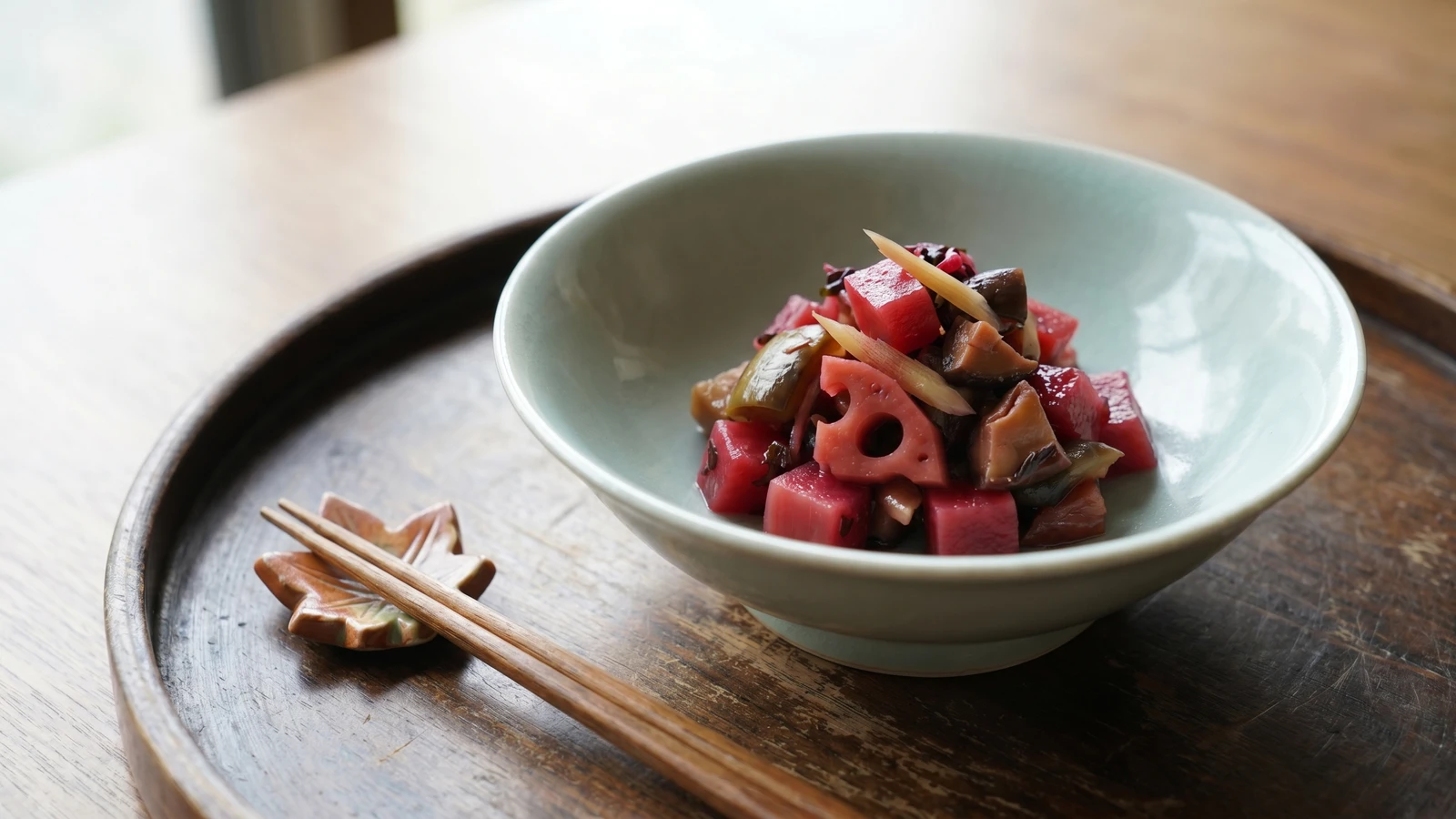
Fukujinzuke is curry rice's small red punctuation: chopped vegetables salted, squeezed dry, and set in sweet soy until they stay crisp beside the rice. The cut decides it more than the stove.
The little red mound beside Japanese curry looks like an afterthought. It isn't. Fukujinzuke keeps the plate from becoming only soft rice and thick sauce: sharp, sweet, salty, and crisp enough to wake the next bite.
People make pickles sound like a monastery project. This one asks for a knife, salt, a saucepan, and the patience to wait overnight. The one detail that decides it is water. Salt pulls it out, your hands squeeze it away, and then the sweet soy brine stays clean instead of turning thin by morning.
The cut matters just as much. Keep the vegetables small and even, about five millimeters where you can, so the seasoning reaches the center while each piece still has a little bite. Too large and the brine only dresses the outside. Too fine and you lose the crunch, which is half the pleasure.
There's no dashi here, and that's not a lapse. A pickle meant to keep in the refrigerator wants shōyu, sugar, vinegar, and restraint; dashi would shorten its life and soften the edge. Use akajiso umezu, red shiso plum vinegar, for the quiet red color of the curry table. If you can't find it, let the pickle go soy-brown rather than chase a louder color. Honmono is the balance and bite, not a fluorescent suit.
Fukujinzuke is a Meiji-period Tokyo pickle, with the best-known origin story placing it in the 1880s around Ueno's pickle shops. The name means Seven Lucky Gods pickle, linking the chopped mixture of several vegetables, often seven, to Shichifukujin, the seven deities of good fortune. Its bond with curry rice grew as Japanese curry spread through modern institutions and dining rooms; the sweet soy pickle served the role that chutney had beside British-style curry, but in the language of Japanese tsukemono.
Quantity
3
Quantity
1/2 cup
for soaking the shiitake
Quantity
250g
peeled and cut into 5 mm dice
Quantity
2 small (about 180g)
cut into 5 mm dice
Quantity
1 small (about 100g)
seeded if watery and cut into 5 mm dice
Quantity
120g
peeled, quartered lengthwise, and thinly sliced
Quantity
30g
peeled and cut into fine matchsticks
Quantity
2 teaspoons
Quantity
1/2 cup
Quantity
1/3 cup
Quantity
1/4 cup
Quantity
1/4 cup
Quantity
2 tablespoons
Quantity
4 leaves
rinsed and finely sliced
| Ingredient | Quantity |
|---|---|
| dried shiitake mushrooms | 3 |
| warm waterfor soaking the shiitake | 1/2 cup |
| daikonpeeled and cut into 5 mm dice | 250g |
| Japanese eggplantscut into 5 mm dice | 2 small (about 180g) |
| Japanese or Persian cucumberseeded if watery and cut into 5 mm dice | 1 small (about 100g) |
| lotus rootpeeled, quartered lengthwise, and thinly sliced | 120g |
| fresh gingerpeeled and cut into fine matchsticks | 30g |
| fine sea salt | 2 teaspoons |
| koikuchi shōyu (Japanese dark soy sauce) | 1/2 cup |
| sugar | 1/3 cup |
| mirin | 1/4 cup |
| rice vinegar | 1/4 cup |
| akajiso umezu (red shiso plum vinegar) | 2 tablespoons |
| salted red shiso leaves (optional)rinsed and finely sliced | 4 leaves |
Put the dried shiitake in the warm water and set a small saucer on top to keep them submerged. Soak for 30 minutes, until the caps are pliable. Lift them out, squeeze them gently, cut away the hard stems, and dice the caps. Strain and save the soaking liquid; it gives the brine a quiet mushroom depth without turning this into a stock.
Cut the daikon, eggplant, and cucumber into small, even dice, about 5 mm. Slice the lotus root thinner, about 3 mm, so its crunch stays delicate rather than woody. Cut the ginger into fine matchsticks. This pickle is won on the board: small enough to season through, large enough to bite.
Bring a small pot of water to a boil and blanch the lotus root for 60 seconds, then drain well. The quick blanch washes away surface starch and the raw edge while keeping the pale crunch. Don't cook it soft; lotus root should still answer back under the teeth.
Toss the daikon, eggplant, cucumber, and blanched lotus root with the salt. Set a plate directly on the vegetables and add a light weight, then leave them for 2 hours. Rinse once under cold water, drain, and squeeze firmly in a clean cloth until the vegetables are only damp.
Measure 1/2 cup of the strained shiitake soaking liquid, topping up with water if needed. Combine it in a saucepan with the shōyu, sugar, mirin, rice vinegar, and akajiso umezu. Bring it to a simmer and stir until the sugar dissolves. Add the diced shiitake, ginger, and red shiso leaves if using, and simmer for 2 minutes to settle their flavors into the brine.
Add the squeezed vegetables to the simmering brine and stir for 60 to 90 seconds, just until everything looks glossy and stained red-brown at the edges. Lift the solids into a clean jar with a slotted spoon. Boil the brine for 3 to 4 minutes, until it looks slightly thicker, then pour it over the vegetables to cover.
Let the jar cool until no longer hot, then cover and refrigerate at least 8 hours, preferably 24. Stir once if the top pieces are not fully submerged. Serve a small spoonful beside Japanese curry rice, or with plain rice and grilled fish. Keep refrigerated and use a clean spoon each time.
1 serving (about 60g)
Culinary guides, cultural storytelling, and the editorial depth that makes cooking meaningful.
Discover Culinary ExplorerChef Takumi
Ago dashi is quiet luxury: roasted flying fish, konbu, and patient water. Steep it slowly and you get a clear stock that tastes sweet, clean, and full without heaviness.
Chef Takumi
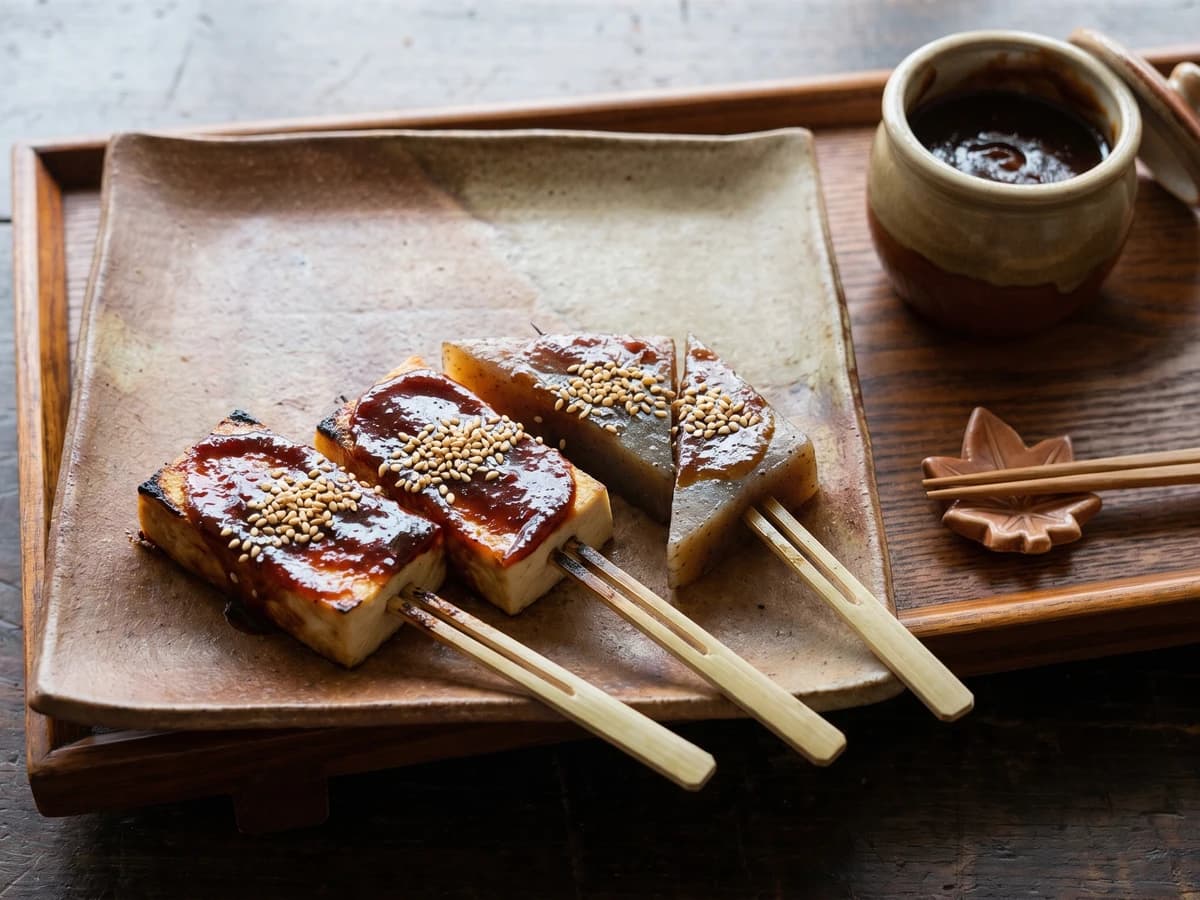
Akamiso dengaku-miso is plain work: bean miso, sweetness, sake, and patient stirring until the glaze turns dark, glossy, and thick enough to cling to the grill.
Chef Takumi
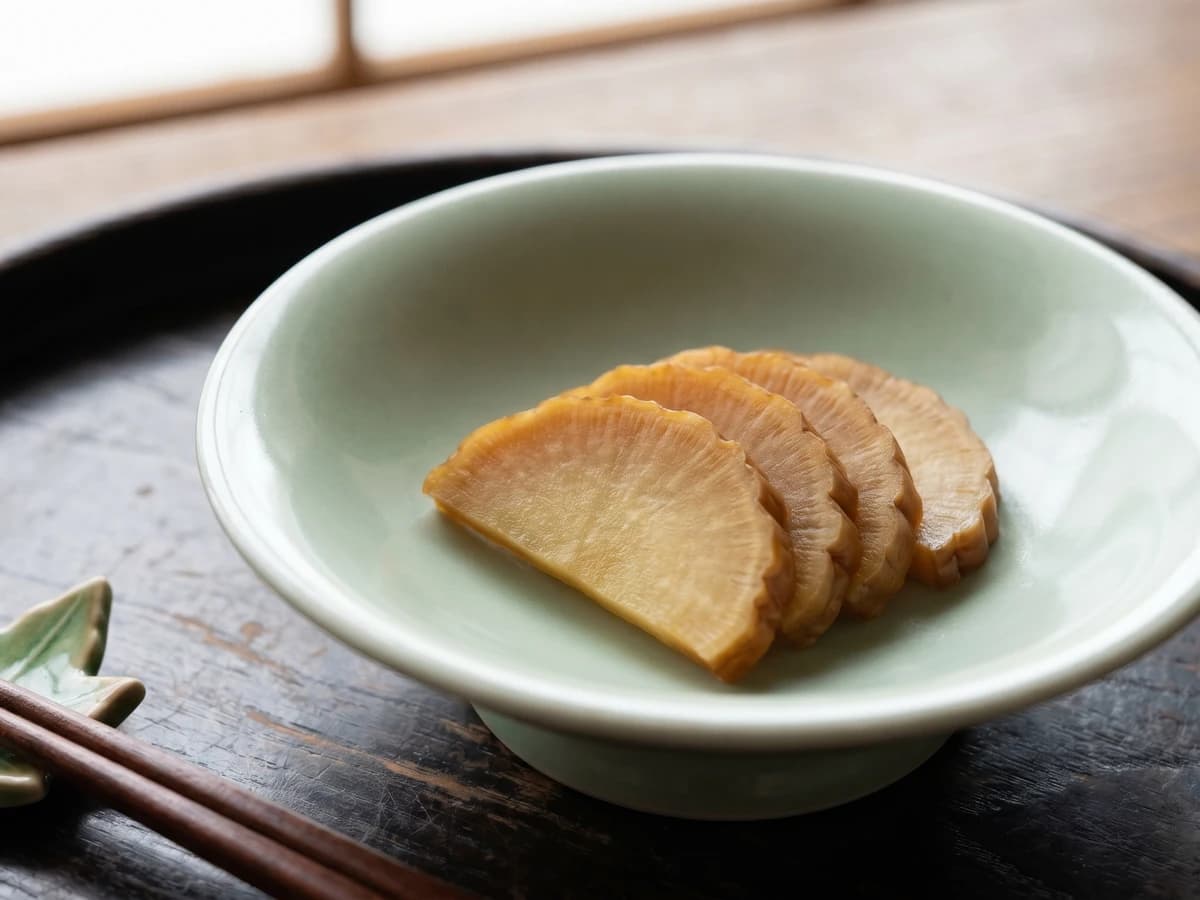
Snow-country takuan begins with smoke. Hang the daikon, dry it gently, then let rice bran, salt, and time turn it into Akita's amber pickle.

Chef Takumi
Aso takanazuke is spring caught in salt: sharp mustard greens pressed until they soften, fermented until their edge turns round, then fried briefly with sesame for rice.