
Chef Takumi
Ago Dashi (あごだし, grilled flying fish stock)
Ago dashi is quiet luxury: roasted flying fish, konbu, and patient water. Steep it slowly and you get a clear stock that tastes sweet, clean, and full without heaviness.
A cooking platform built around craft, culture, and the stories behind what we eat.

Created by
Gari is young ginger, sliced thin, briefly blanched, then left in sweet rice vinegar until it turns crisp, pale, and quietly pink on its own.
Gari begins with the ginger, not the vinegar. Use young ginger, shin-shōga, while it is at its prime: pale-skinned, tender, and tipped with a blush of pink. That color matters. In the real thing, the pickle's faint pink comes from the ginger itself meeting vinegar, not from a bottle of dye pretending to be helpful.
The dish looks like a small extra beside sushi, so people treat it casually. We shouldn't. Gari clears the mouth between pieces, especially when moving from lean fish to richer fish, or from one seasoning to another. It isn't there to cover bad fish. Nothing hidden. It is a clean pause, sharp and sweet enough to reset the tongue.
The one detail that decides it is thin slicing. Cut the ginger so thin it bends without breaking, and the vinegar reaches it quickly while the bite stays crisp. A brief blanch tames the raw fire without cooking away its snap. Then the amazu, sweet rice vinegar, does the quiet work while you leave it alone. Difficult? No. Only unfamiliar, and the jar will teach you by morning.
Gari is part of the sushi counter's practical grammar: it is eaten between pieces to clear the palate, not placed on top of sushi as a garnish. Its pink color comes most readily from young ginger, whose reddish tips contain pigments that react in the acidic vinegar. The use of ginger with sushi also reflects an older concern with freshness and digestion, since ginger's sharpness was valued alongside vinegared rice and raw fish in Edo-period sushi culture.
Quantity
250g
scraped clean and sliced very thin
Quantity
2 teaspoons
divided
Quantity
1 cup
Quantity
1/2 cup
Quantity
1/4 cup
| Ingredient | Quantity |
|---|---|
| young ginger (shin-shōga)scraped clean and sliced very thin | 250g |
| fine sea saltdivided | 2 teaspoons |
| rice vinegar | 1 cup |
| sugar | 1/2 cup |
| water | 1/4 cup |
Scrape the young ginger with the edge of a spoon, removing only the thin skin and any dry spots. Keep the pink tips if you have them. They help give gari its natural blush, and cutting them away is like throwing out the season.
Slice the ginger across the grain as thinly as you can, using a sharp knife or mandoline. The slices should bend and look almost translucent at the edges. Thin slices pickle evenly and stay crisp; thick ones keep a raw, woody bite in the middle.
Toss the sliced ginger with 1 teaspoon of the salt and let it stand for 10 minutes. The salt draws out a little harsh moisture and firms the slices, so the finished pickle tastes clean rather than hot for its own sake.
Bring a small pot of water to a boil. Add the salted ginger and blanch for 30 to 60 seconds, just until the slices turn slightly more supple and the raw edge softens. Drain well. You are not cooking the ginger tender; you are calming it enough for the vinegar to do the rest.
Press the drained ginger gently in a clean towel to remove excess water, then pack it loosely into a clean heatproof jar. Don't squeeze it dry like laundry. A gentle press keeps the slices neat and lets the pickle stay bright.
Combine the rice vinegar, sugar, water, and remaining 1 teaspoon salt in a small saucepan. Warm just until the sugar and salt dissolve, stirring once or twice. Do not boil it hard. A quiet heat keeps the vinegar fresh and sharp, which is exactly what gari needs.
Pour the hot amazu over the ginger until the slices are covered. Tap the jar gently to release trapped air, then let it cool, cover, and refrigerate. The ginger will begin to blush within hours if it is young enough, and it is best after 24 hours, when the sweetness and bite have settled into each other.
1 serving (about 30g)
Culinary guides, cultural storytelling, and the editorial depth that makes cooking meaningful.
Discover Culinary ExplorerChef Takumi
Ago dashi is quiet luxury: roasted flying fish, konbu, and patient water. Steep it slowly and you get a clear stock that tastes sweet, clean, and full without heaviness.
Chef Takumi
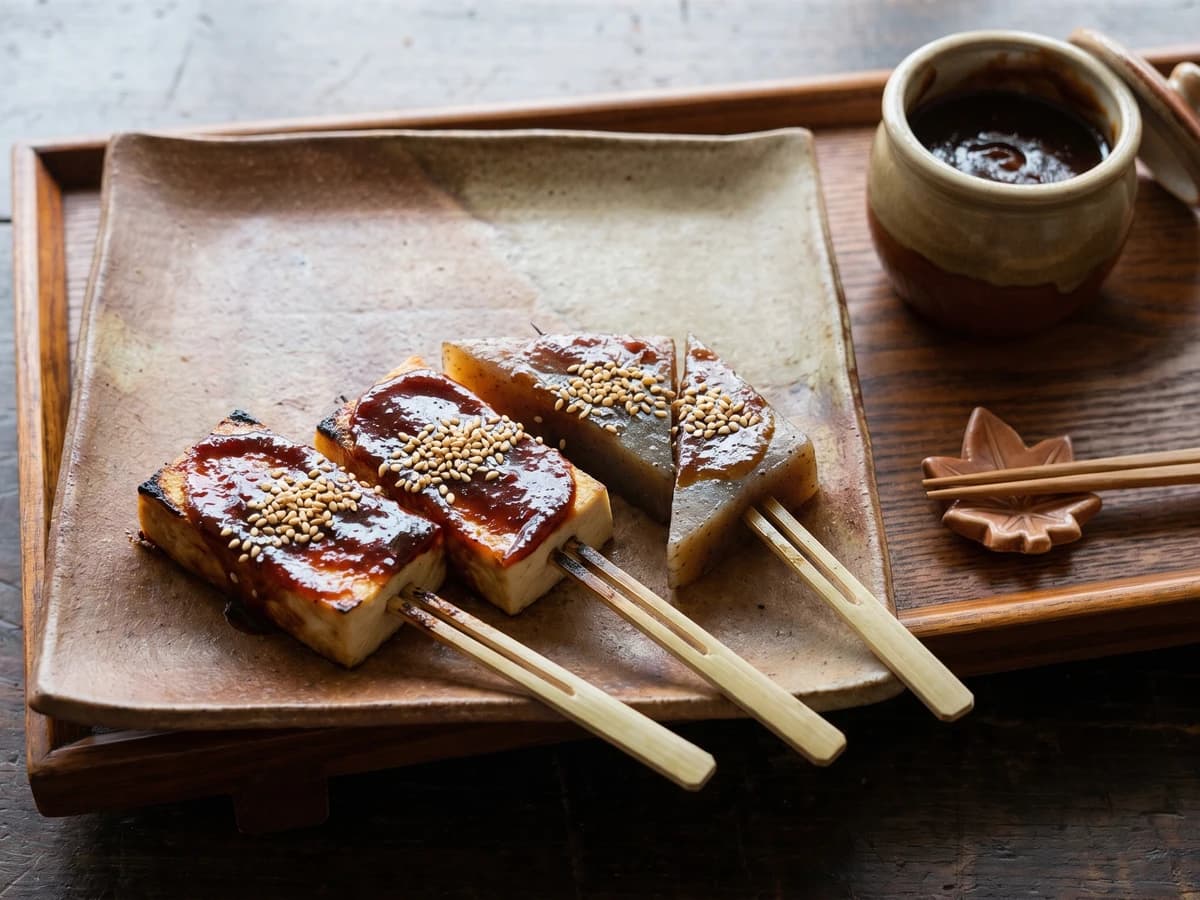
Akamiso dengaku-miso is plain work: bean miso, sweetness, sake, and patient stirring until the glaze turns dark, glossy, and thick enough to cling to the grill.
Chef Takumi
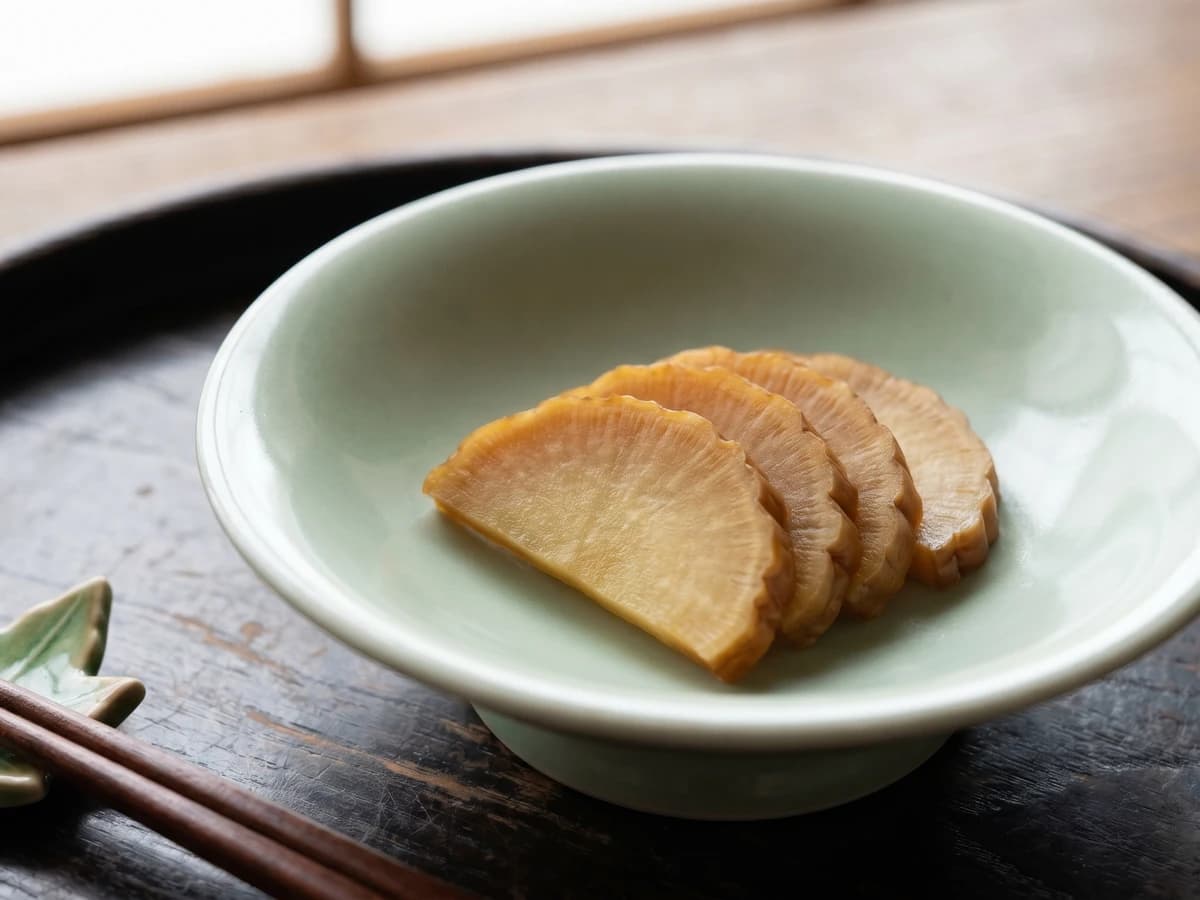
Snow-country takuan begins with smoke. Hang the daikon, dry it gently, then let rice bran, salt, and time turn it into Akita's amber pickle.

Chef Takumi
Aso takanazuke is spring caught in salt: sharp mustard greens pressed until they soften, fermented until their edge turns round, then fried briefly with sesame for rice.