
Chef Takumi
Aji Fry (アジフライ, panko-fried horse mackerel)
Aji fry is weeknight fish with no mystery: fresh horse mackerel opened cleanly, breaded lightly, and fried until the panko crackles while the flesh stays sweet.
A cooking platform built around craft, culture, and the stories behind what we eat.

Created by
A thin roll asks for almost nothing: seasoned rice, crisp nori, lean tuna, and a little wasabi. Keep the fish cold and the rice gentle, and six clean pieces follow.
Tekkamaki looks like a test of nerve because sushi has been made to look like a ceremony of tiny mistakes. It isn't. This is a hosomaki, a thin roll: half a sheet of nori, a small handful of seasoned rice, one clean strip of lean tuna, and a touch of wasabi. No theater. No hiding.
First choose the tuna. Ask for akami, the lean red meat, cut for eating raw that day, cold and glistening fresh. If it smells strong, don't make tekkamaki. Choose another supper and keep your dignity intact. The knife matters next. Cut one straight bar so the tuna sits through the center of the roll, not as scraps buried in rice. Let the knife do the quiet seasoning.
The detail that decides the roll is restraint. Spread the rice thinly enough that you can still sense the nori beneath your fingers, and leave a bare strip at the far edge. Too much rice makes a swollen roll that splits and hides the fish, which is an expensive way to make rice wear a coat. Tuck once, press gently, and let the nori close around the filling.
We eat thin rolls for their plainness. In a sushi meal they often come near the end, after the flashier pieces have had their say, and their job is to be clean, direct, and easy to understand. Six pieces from one roll, fish in the center, rice around it, seaweed outside. Honmono does not need to make a speech.
Tekkamaki belongs to hosomaki, the thin-roll branch of makizushi, and is closely tied to Edo, the city that made vinegar-seasoned sushi a quick urban food. One common account connects tekka to tekkaba, gambling rooms where a narrow tuna roll could be eaten one-handed without staining the fingers; another reads the word as red-hot iron, a reference to the color of lean tuna. The rival explanations preserve the same form: half a sheet of nori, one filling, and a roll small enough to finish in six bites.
Quantity
1 rice-cooker cup (180ml, about 150g)
Quantity
190ml
plus more for rinsing
Quantity
2 tablespoons
Quantity
1 tablespoon
Quantity
3/4 teaspoon
Quantity
2 full sheets
cut in half to make four 19 x 10cm half sheets
Quantity
120g
sold for raw eating, cut into four long 1cm-square strips
Quantity
1 teaspoon
freshly grated, or prepared wasabi as a stand-in
Quantity
1/2 cup water mixed with 1 tablespoon rice vinegar
Quantity
for serving
Quantity
for serving
| Ingredient | Quantity |
|---|---|
| Japanese short-grain rice | 1 rice-cooker cup (180ml, about 150g) |
| cold waterplus more for rinsing | 190ml |
| rice vinegar | 2 tablespoons |
| sugar | 1 tablespoon |
| fine sea salt | 3/4 teaspoon |
| toasted noricut in half to make four 19 x 10cm half sheets | 2 full sheets |
| lean tuna (akami)sold for raw eating, cut into four long 1cm-square strips | 120g |
| wasabifreshly grated, or prepared wasabi as a stand-in | 1 teaspoon |
| tezu hand water | 1/2 cup water mixed with 1 tablespoon rice vinegar |
| shōyu (Japanese soy sauce) | for serving |
| pickled ginger (gari) (optional) | for serving |
Put the rice in a bowl, cover with cold water, swirl with your fingers, and pour the cloudy water away. Repeat until the water is only faintly cloudy, then drain well for ten minutes. Rinsing takes off loose surface starch, so the finished grains cling to each other without turning pasty.
Combine the drained rice and 190ml water in a rice cooker and cook on the regular white-rice setting. For a pot, bring it to a boil covered, lower the heat to very low for 12 minutes, then rest off the heat for 10 minutes without lifting the lid. The rest finishes the center of each grain by its own heat, which is why impatient peeking gives you hard cores.
Warm the rice vinegar, sugar, and salt just until dissolved. Turn the hot rice into a hangiri, the wooden sushi tub, or a wide nonreactive bowl. Sprinkle the vinegar mixture over it and fold with a rice paddle, cutting through the rice instead of mashing it, until the grains look glossy. Fan briefly and cover with a damp cloth until the rice is skin-warm.
Keep the tuna chilled until the moment you cut it. Trim away sinew, then use a yanagiba or a long sharp knife to cut four straight bars about 1cm square and as long as the nori half sheet. Pull the knife in one clean stroke. Sawing roughens the cut face and makes the fish taste dull before it even reaches the rice.
Lay one half sheet of nori on the makisu, shiny side down, with the long edge running left to right. Wet your fingers lightly in the vinegar water and shake off the excess. Spread about 80g seasoned rice in a thin, even layer, leaving a bare strip about 1cm wide along the far edge. The rough side of the nori grips the rice, and the bare strip gives the roll somewhere to seal.
Smear a very thin line of wasabi across the center of the rice, then lay one tuna strip on top. Wasabi belongs against the fish, where it sharpens the clean sweetness of the akami. Use too much and you've stopped tasting tuna, which rather defeats the exercise.
Lift the near edge of the mat and carry the nori over the tuna, tucking the edge of the rice just beyond the filling. Pull the mat back so it doesn't roll inside, then press gently along the length to set the shape. Roll forward to close the bare strip of nori around the seam, and rest the roll seam-side down for 30 seconds. Firm enough to hold, gentle enough that the rice still has air between the grains.
Wet a sharp knife, wipe it clean, and cut the roll in half. Put the halves side by side and cut each into thirds, wiping the blade between cuts. A clean blade moves through rice and nori without dragging, so the tuna stays centered and the cut face stays neat. Set the six pieces cut-side up and serve at once with shōyu and gari.
1 serving (about 120g)
Culinary guides, cultural storytelling, and the editorial depth that makes cooking meaningful.
Discover Culinary ExplorerChef Takumi
Aji fry is weeknight fish with no mystery: fresh horse mackerel opened cleanly, breaded lightly, and fried until the panko crackles while the flesh stays sweet.
Chef Takumi
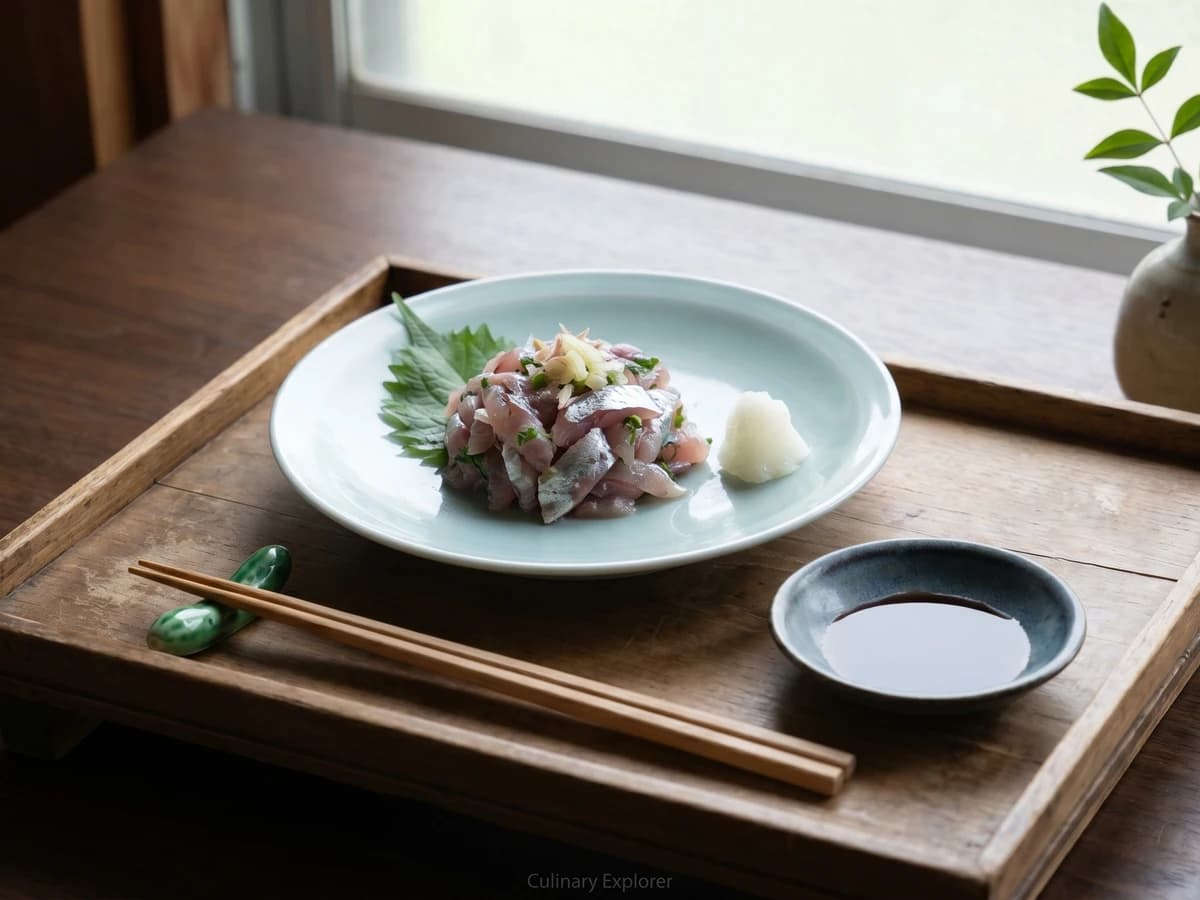
Summer horse mackerel, chopped just enough to catch ginger and scallion, becomes a cool, clean main dish with rice. The secret is fresh fish and a knife that does not bruise it.
Chef Takumi
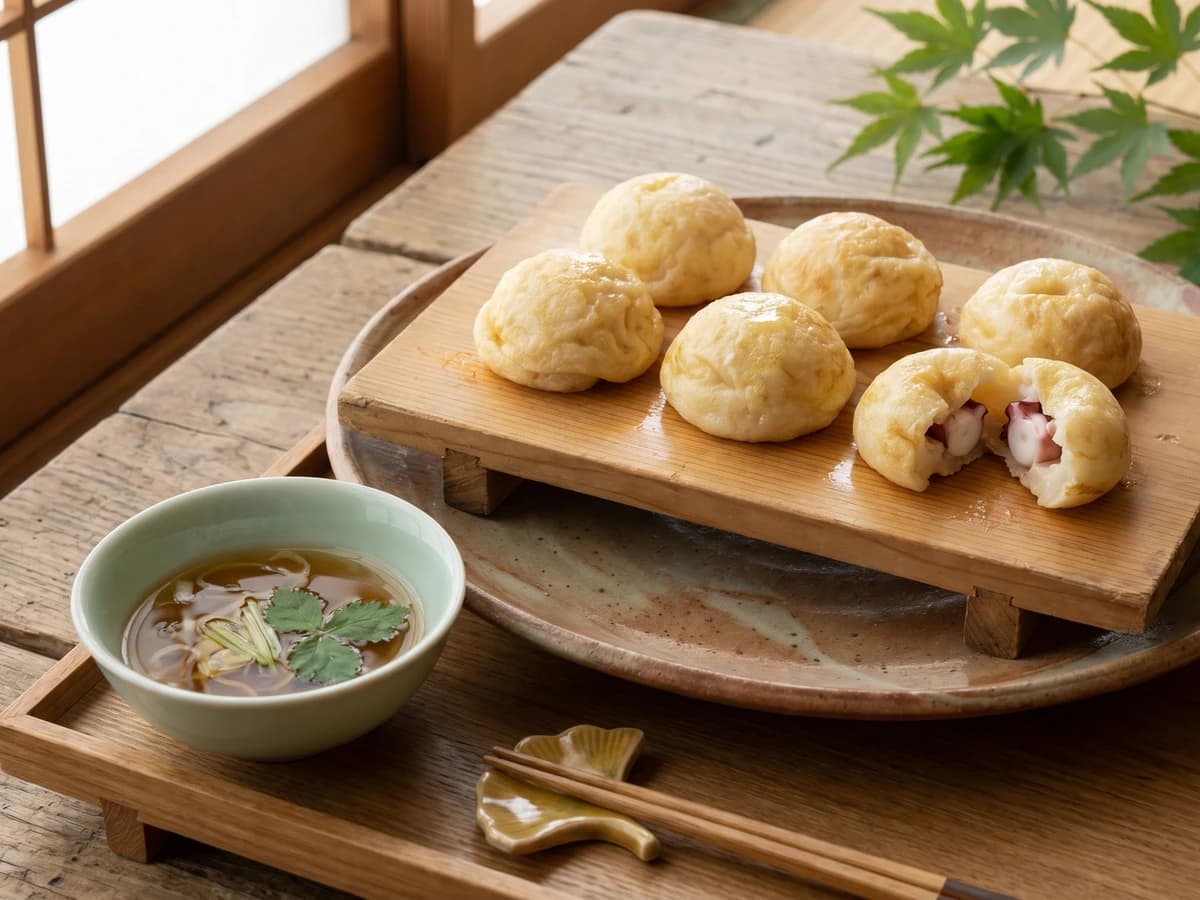
Akashi-yaki is not sauced takoyaki. It is egg-rich batter, tender octopus, and clear dashi, cooked pale and soft so each ball can be dipped like a small custard dumpling.

Chef Takumi
A whole anago looks like a test of nerve. It is mostly good sourcing, a dry skin, cold batter, and oil hot enough to leave the eel sweet under its lace.