
Chef Joost
Acar Ketimun (Indo-Dutch Cucumber Pickle)
Acar means pickle, ketimun means cucumber, and this little bowl of sweet vinegar, chilli, and crunch is the cool note that lets an Indo-Dutch rijsttafel keep its balance.
A cooking platform built around craft, culture, and the stories behind what we eat.
Created by
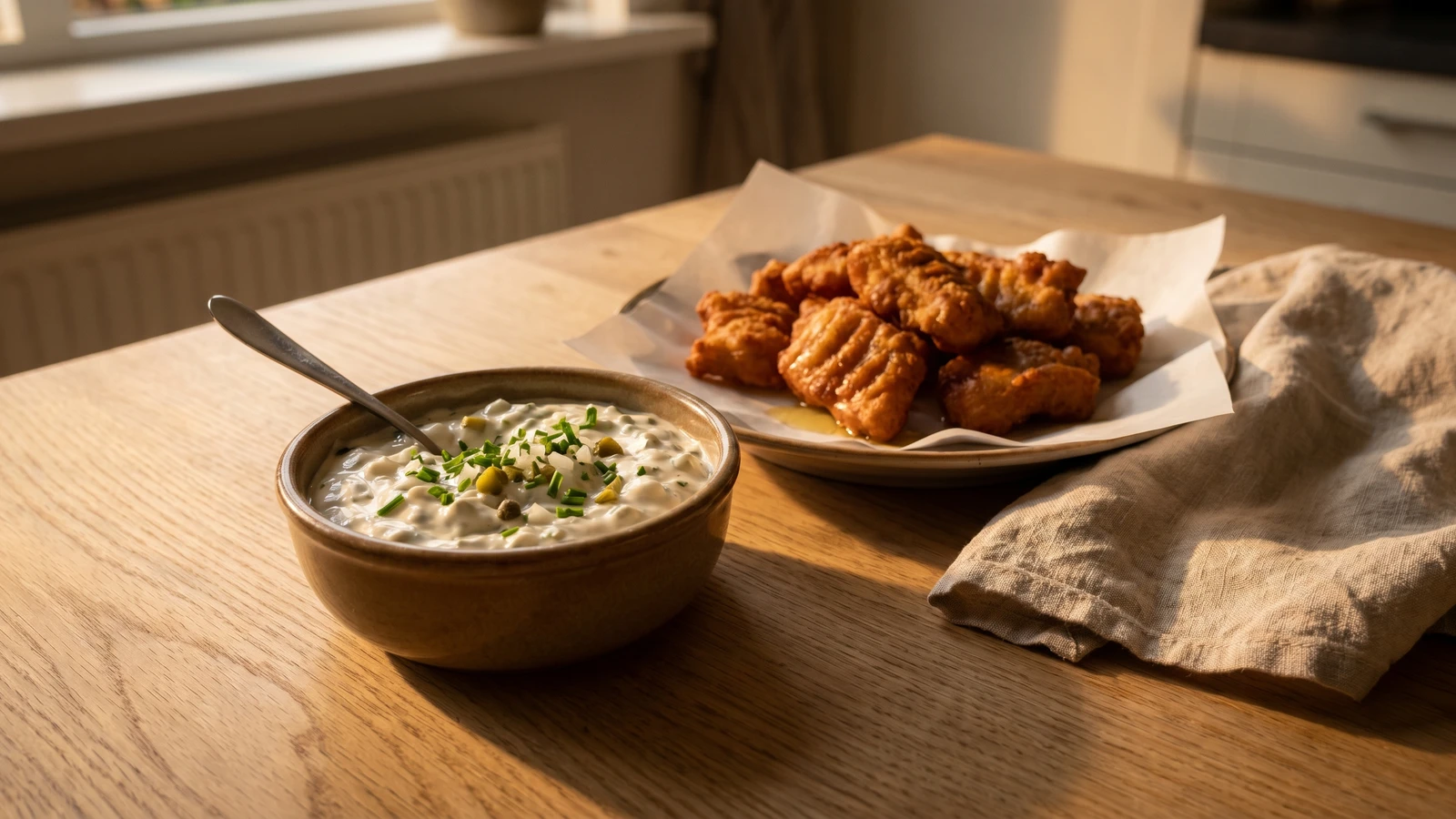
The thick white spoonful beside kibbeling carries a French name, a fish-market soul, and the Dutch gift for making one cold sauce do honest work.
At the fish stall, nobody speaks grandly about sauce. The fryer hisses, the paper cones fill with kibbeling, the counter smells of cod, hot oil, salt, and North Sea weather dragged in on coats. Then comes the little white tub. Tartaarsaus. The quiet companion. Without it, fried fish is good; with it, the whole thing suddenly knows where it is going.
The name already tells you this sauce has travelled. Tartaarsaus comes to Dutch through French sauce tartare, one of those nineteenth-century kitchen names that points eastward with more imagination than certainty. The Tatars themselves did not send us a mayonnaise bowl by courier, for obvious reasons. What mattered in Dutch hands was the useful idea: a cold, sharp sauce, thick enough to cling to fried fish, cut with pickle, caper, onion, and herbs so the fat has something bright to answer to.
But let me tell you a secret. The sauce is not there to decorate the fish. It is there to argue with it. Mayonnaise gives richness, augurk, Dutch gherkin, gives sweet-sour crunch, capers give a little briny snap, and onion gives the bite that keeps the whole bowl awake. Hou het altijd simpel, always keep it simple: chop small, stir gently, let it rest. Ten minutes in the refrigerator does more good than ten clever additions.
Tartaarsaus reached the Dutch table through the French sauce tartare tradition, a mayonnaise-based cold sauce recorded in nineteenth-century European cookery alongside related sauces built with pickles, capers, herbs, and sometimes egg. In the Netherlands it became most visible not in formal dining rooms but at the viskraam, the fish stall, where fried fish such as kibbeling and lekkerbek needed a thick, sharp sauce that could survive paper trays and cold weather. Its modern Dutch form is practical rather than fixed: mayonnaise, augurk, onion, capers, parsley or chives, and enough lemon or pickle brine to keep the fried fish honest.
Quantity
200g
Quantity
2 medium
finely diced
Quantity
1 tablespoon
drained and chopped
Quantity
1 small shallot or 1/2 small onion
very finely diced
Quantity
1 tablespoon
finely chopped
Quantity
1 tablespoon
finely chopped
Quantity
1 teaspoon
Quantity
1 teaspoon
Quantity
1 to 2 teaspoons
to taste
Quantity
to taste
Quantity
only if needed
| Ingredient | Quantity |
|---|---|
| good mayonnaise | 200g |
| augurken (Dutch gherkins)finely diced | 2 medium |
| capersdrained and chopped | 1 tablespoon |
| shallot or small onionvery finely diced | 1 small shallot or 1/2 small onion |
| flat-leaf parsleyfinely chopped | 1 tablespoon |
| chivesfinely chopped | 1 tablespoon |
| Dijon mustard | 1 teaspoon |
| lemon juice | 1 teaspoon |
| pickle brineto taste | 1 to 2 teaspoons |
| freshly ground white pepper | to taste |
| salt (optional) | only if needed |
Dice the augurken and shallot very small, then chop the capers. This is not fussiness. Large chunks fall off the fish and leave you with plain mayonnaise on one bite and a whole pickle on the next. Tartaarsaus should be uneven enough to feel homemade, but even enough to behave.
Put the mayonnaise in a bowl and stir in the mustard, lemon juice, and one teaspoon of pickle brine. The sauce should loosen slightly but still sit proudly on a spoon. If it runs, it will abandon the kibbeling, and that is poor companionship.
Fold in the diced augurken, capers, shallot, parsley, and chives. Use a spoon, not a whisk; you want the bits suspended through the sauce, not beaten into a pale green paste. Taste before adding salt, because capers, pickles, and mayonnaise may already have done the work.
Cover the bowl and refrigerate for at least ten minutes, thirty if you have it. The onion softens its sharp edge, the caper brine moves through the mayonnaise, and the sauce becomes one thing instead of several chopped things in a bowl. Serve cold with kibbeling, lekkerbek, fried mussels, boiled eggs, or cold potatoes.
1 serving (about 65g)
Culinary guides, cultural storytelling, and the editorial depth that makes cooking meaningful.
Discover Culinary ExplorerChef Joost
Acar means pickle, ketimun means cucumber, and this little bowl of sweet vinegar, chilli, and crunch is the cool note that lets an Indo-Dutch rijsttafel keep its balance.

Chef Joost
Appelcompote is the apple left with its dignity: soft enough to spoon beside pork or potatoes, still chunky enough to remind you autumn did the real work.

Chef Joost
The little bowl beside the plate is never decoration: appelmoes is the Dutch treaty between sweet and savoury, spooned beside sausage, potatoes, pancakes, and childhood itself.

Chef Joost
Appelstroop is the orchard made patient: apples, pears, and beet syrup boiled down until morning bread, farmhouse cheese, and zuurvlees taste of Limburg in autumn.