
Chef Joost
Acar Ketimun (Indo-Dutch Cucumber Pickle)
Acar means pickle, ketimun means cucumber, and this little bowl of sweet vinegar, chilli, and crunch is the cool note that lets an Indo-Dutch rijsttafel keep its balance.
A cooking platform built around craft, culture, and the stories behind what we eat.
Created by
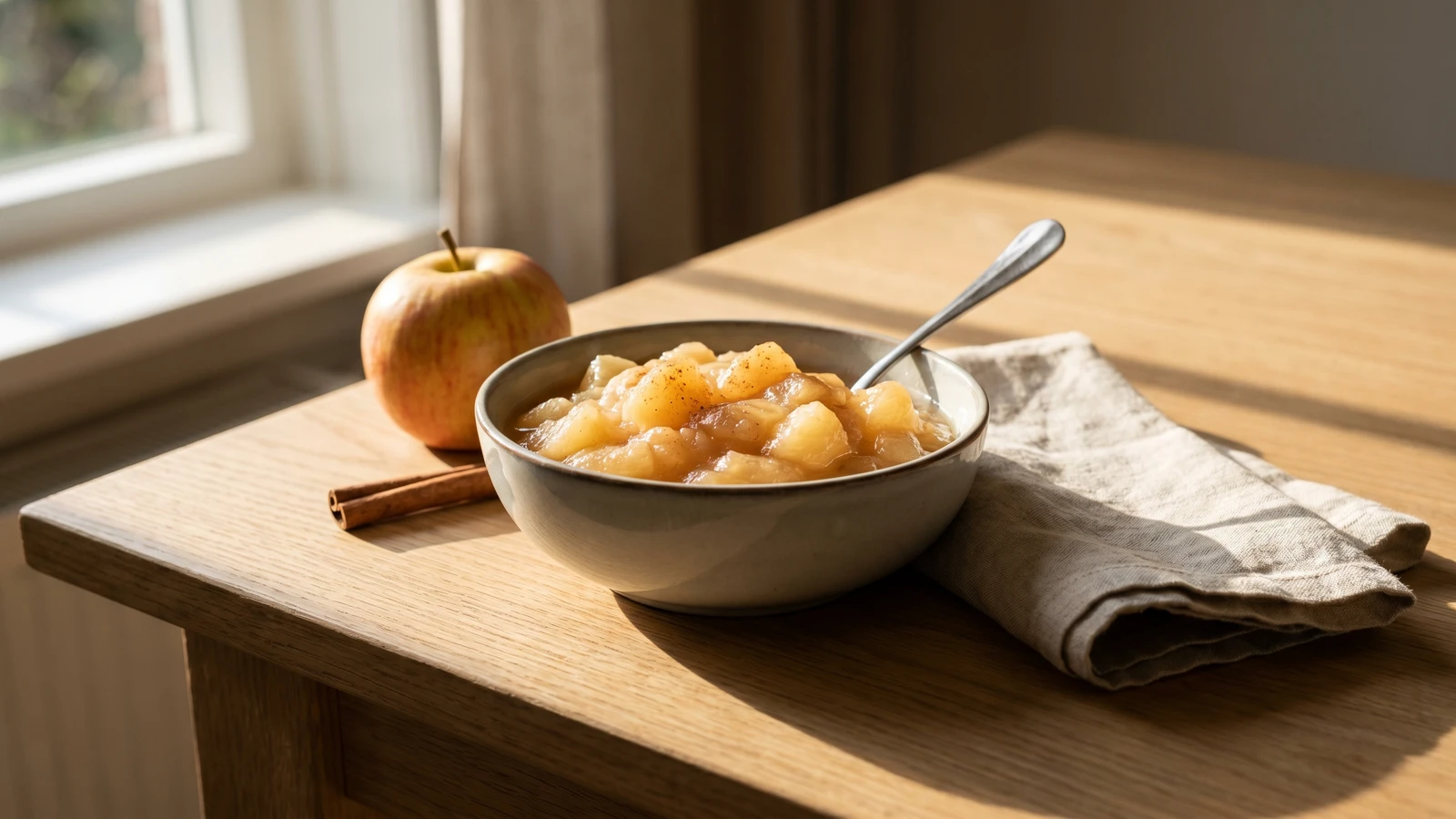
Appelcompote is the apple left with its dignity: soft enough to spoon beside pork or potatoes, still chunky enough to remind you autumn did the real work.
In my grandmother's second notebook, apples appear when the garden had stopped being generous and started being serious. Windfalls first, then the keeping apples, wrapped in newspaper or lined in wooden crates, each one inspected as if it were a small pension. Nothing wasted. The bruised ones became appelcompote, which is to say: not quite jam, not quite sauce, and much more useful than either on a Dutch weeknight table.
But let me tell you a secret. The difference between appelmoes, apple puree, and appelcompote is not snobbery. It is texture. Moes is smooth and obedient, the thing children love beside fries and chicken. Compote keeps pieces of apple intact, and the name already tells you a little: from French compote, a mixture, with older Latin roots in things put together. A modest word, but a precise one.
Here the cooking must be gentle because the apple is the whole dish. A tart apple gives you backbone, a little sugar rounds the edges, cinnamon brings the old Dutch cupboard into the pan. Hou het altijd simpel, always keep it simple. Stop before the fruit vanishes. You want collapse at the edges and soft chunks in the spoon, because that is where this humble dish earns its place beside roast pork, gehaktballen, or a plate of potatoes on a wet Tuesday.
Apple sauces and stewed apple dishes appear throughout Dutch household cookery from the early modern period, when orchard fruit was stored through autumn and winter and cooked with imported spices once cinnamon became a familiar cupboard ingredient through trade. Appelcompote differs from appelmoes by texture rather than status: moes is mashed smooth, while compote preserves pieces of fruit and reflects the French kitchen vocabulary that entered Dutch domestic cookbooks in the eighteenth and nineteenth centuries. Its steady place beside meat and potatoes shows a Dutch habit older than modern menus: fruit was not only for dessert, but for balancing fat, salt, and starch at the main meal.
Quantity
1kg
peeled, cored, and cut into 2cm chunks
Quantity
75ml
Quantity
40g
plus more to taste
Quantity
1 tablespoon
Quantity
1 stick or 1/2 teaspoon
Quantity
pinch
| Ingredient | Quantity |
|---|---|
| tart applespeeled, cored, and cut into 2cm chunks | 1kg |
| water | 75ml |
| granulated sugarplus more to taste | 40g |
| lemon juice | 1 tablespoon |
| cinnamon stick or ground cinnamon | 1 stick or 1/2 teaspoon |
| fine salt | pinch |
Peel, core, and cut the apples into chunks about two centimetres wide. Keep them uneven enough to look homemade, but not so large that the outside collapses while the middle stays hard. If the apples are very tart, smile first, then cook; tartness is what keeps this from tasting flat.
Put the apples in a heavy saucepan with the water, sugar, lemon juice, cinnamon, and salt. Set the pan over medium-low heat and stir once so the sugar touches the fruit. The water is only there to prevent catching at the beginning; the apples will soon give up their own juice.
Cover the pan and cook for 12 to 15 minutes, stirring gently every few minutes, until the apple pieces soften and the edges begin to slump. Do not beat it smooth. Appelcompote should hold soft pieces in a light syrup, with a few collapsed bits thickening the pan around them.
Remove the cinnamon stick if you used one, then taste while the compote is still warm. Add a little more sugar only if the sharpness bites too hard; the best appelcompote keeps a clean apple edge. Serve warm beside meat and potatoes, or cool it and keep it for the week.
1 serving (about 250g)
Culinary guides, cultural storytelling, and the editorial depth that makes cooking meaningful.
Discover Culinary ExplorerChef Joost
Acar means pickle, ketimun means cucumber, and this little bowl of sweet vinegar, chilli, and crunch is the cool note that lets an Indo-Dutch rijsttafel keep its balance.

Chef Joost
The little bowl beside the plate is never decoration: appelmoes is the Dutch treaty between sweet and savoury, spooned beside sausage, potatoes, pancakes, and childhood itself.

Chef Joost
Appelstroop is the orchard made patient: apples, pears, and beet syrup boiled down until morning bread, farmhouse cheese, and zuurvlees taste of Limburg in autumn.

Chef Joost
Spring on a Dutch plate: the gentle butter-and-egg sauce that catches the first white asparagus, carries a whisper of nutmeg, and makes dinner feel properly seasonal.