
Chef Joost
Acar Ketimun (Indo-Dutch Cucumber Pickle)
Acar means pickle, ketimun means cucumber, and this little bowl of sweet vinegar, chilli, and crunch is the cool note that lets an Indo-Dutch rijsttafel keep its balance.
A cooking platform built around craft, culture, and the stories behind what we eat.
Created by
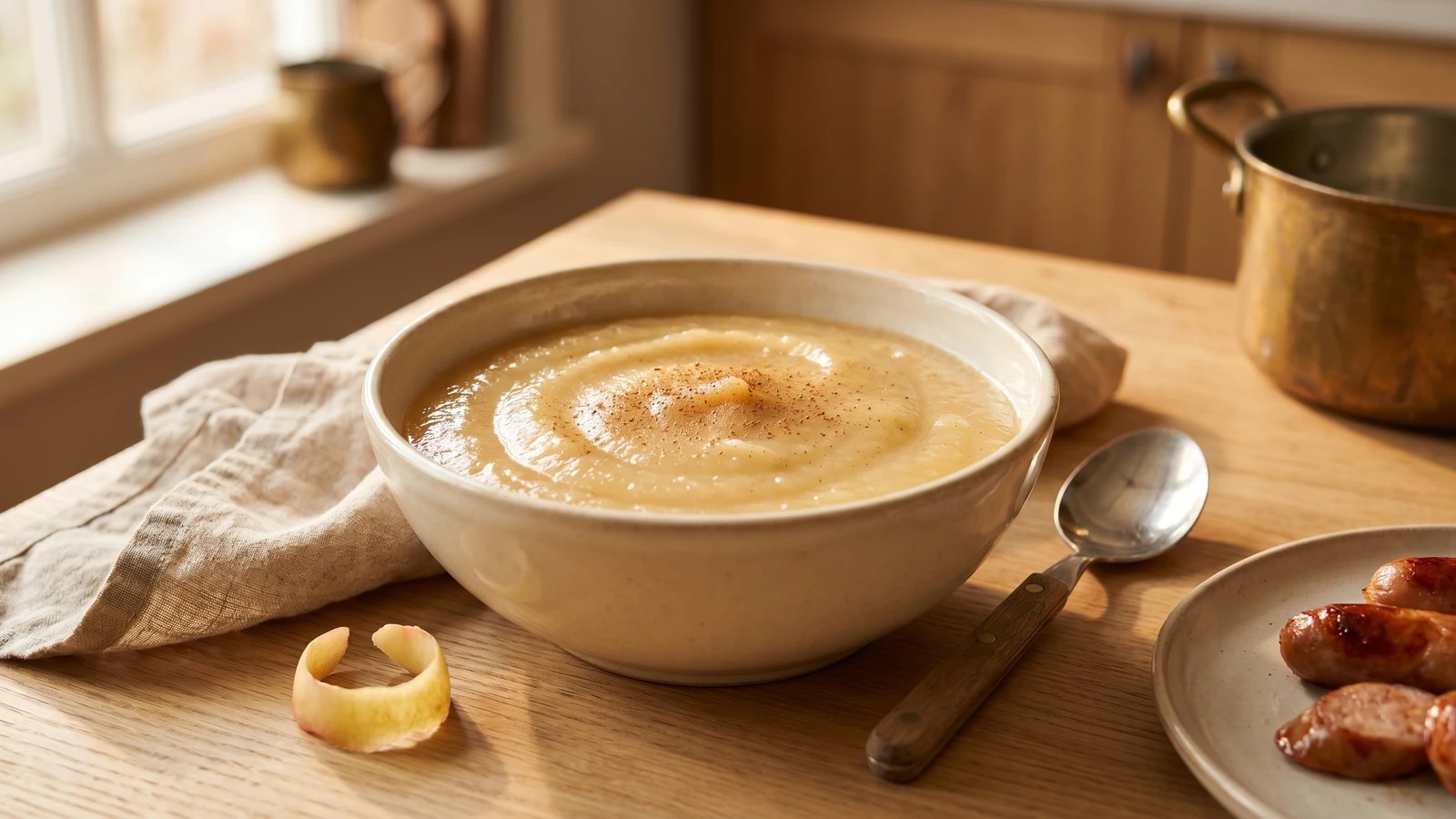
The little bowl beside the plate is never decoration: appelmoes is the Dutch treaty between sweet and savoury, spooned beside sausage, potatoes, pancakes, and childhood itself.
In my grandmother's second notebook, appelmoes never had its own grand page. It lived in the margins, beside pork cutlets, beside boiled potatoes, beside pancakes for a Friday when money was behaving badly. That tells you exactly what it is. Not a dessert pretending to be useful, and not a sauce trying to become important. It is the quiet spoonful that makes the plate behave.
The name already tells you enough: appel is apple, moes is mash or pulp, the same old Dutch family of soft things crushed into usefulness. But let me tell you a secret. Foreigners often meet Dutch appelmoes with bafflement because we put it beside meat, fries, or schnitzel and think nothing strange has happened. We are right. The tart apple cuts fat, the sugar softens the apple's edge, and the cinnamon reminds you that even weekday cooking in this frugal country has long kept a spice drawer with opinions.
Use apples that collapse, and do not be too proud to mix varieties. A firm eating apple gives you cubes floating in syrup, which is not the dish. You want the fruit to surrender into a smooth, pale sauce with a little body left in it. Hou het altijd simpel, always keep it simple: apples, a splash of water, a little sugar, cinnamon if the table expects it, and patience enough to let the pan do the work. Serve it warm beside sausage or cold from the refrigerator the next day, when children will eat it by the spoon and pretend nobody saw.
Apple sauces and fruit mashes appear throughout early modern Dutch cookery, especially in household books where orchard fruit was preserved, dried, stewed, or turned into moes for everyday meals. The Dutch habit of serving appelmoes beside savoury dishes reflects an older northern European taste for sweet-sour accompaniments with pork, sausage, potatoes, and fried foods, rather than a modern children's-menu invention. Cinnamon became an ordinary Dutch kitchen spice through seventeenth-century trade, which is why even a budget sauce can carry a trace of the VOC spice cupboard.
Quantity
1 kg
peeled, cored, and chopped
Quantity
75 ml
Quantity
30 g
plus more to taste
Quantity
1 teaspoon
Quantity
1 teaspoon
Quantity
1 pinch
| Ingredient | Quantity |
|---|---|
| tart apples, such as Goudreinette, Jonagold, Elstar, or a mixpeeled, cored, and chopped | 1 kg |
| water | 75 ml |
| sugarplus more to taste | 30 g |
| ground cinnamon (optional) | 1 teaspoon |
| lemon juice (optional) | 1 teaspoon |
| salt | 1 pinch |
Peel, core, and chop the apples into rough pieces of about two centimetres. Do not fuss over perfect cubes; the best pieces are the ones that give up quickly. If your apples brown while you work, leave them alone. They are going into a pan, not a museum case.
Put the apples, water, sugar, salt, and cinnamon if using into a medium saucepan. Set it over medium heat and stir once so the sugar touches the fruit. The water is only there to prevent catching at the start; the apples will soon release their own juice, which is where the flavour lives.
Cover the pan and let the apples cook gently for 12 to 15 minutes, stirring now and then, until the pieces slump when pressed with a spoon. If the bottom looks dry before the apples soften, add another tablespoon of water. Hurry the heat and you brown the fruit; keep it gentle and you get the pale, clean sauce Dutch tables expect.
Take the pan off the heat and mash the apples with a potato masher for a loose home texture, or pass them through a food mill for a smoother sauce. Taste now. Add lemon juice if the sauce needs brightness, or a little more sugar if the apples were stern. The right taste is not candy. It should make pork, sausage, or fried potatoes feel lighter.
Serve the appelmoes warm beside sausages, schnitzel, or boiled potatoes, or spoon it into a bowl and chill it for later. It thickens as it cools, so stir in a spoonful of water if you want it looser the next day. At the Dutch table, this is often passed in a small bowl, because generosity does not always need a serving platter.
1 serving (about 250g)
Culinary guides, cultural storytelling, and the editorial depth that makes cooking meaningful.
Discover Culinary ExplorerChef Joost
Acar means pickle, ketimun means cucumber, and this little bowl of sweet vinegar, chilli, and crunch is the cool note that lets an Indo-Dutch rijsttafel keep its balance.

Chef Joost
Appelcompote is the apple left with its dignity: soft enough to spoon beside pork or potatoes, still chunky enough to remind you autumn did the real work.

Chef Joost
Appelstroop is the orchard made patient: apples, pears, and beet syrup boiled down until morning bread, farmhouse cheese, and zuurvlees taste of Limburg in autumn.

Chef Joost
Spring on a Dutch plate: the gentle butter-and-egg sauce that catches the first white asparagus, carries a whisper of nutmeg, and makes dinner feel properly seasonal.