
Chef Joost
Acar Ketimun (Indo-Dutch Cucumber Pickle)
Acar means pickle, ketimun means cucumber, and this little bowl of sweet vinegar, chilli, and crunch is the cool note that lets an Indo-Dutch rijsttafel keep its balance.
A cooking platform built around craft, culture, and the stories behind what we eat.
Created by
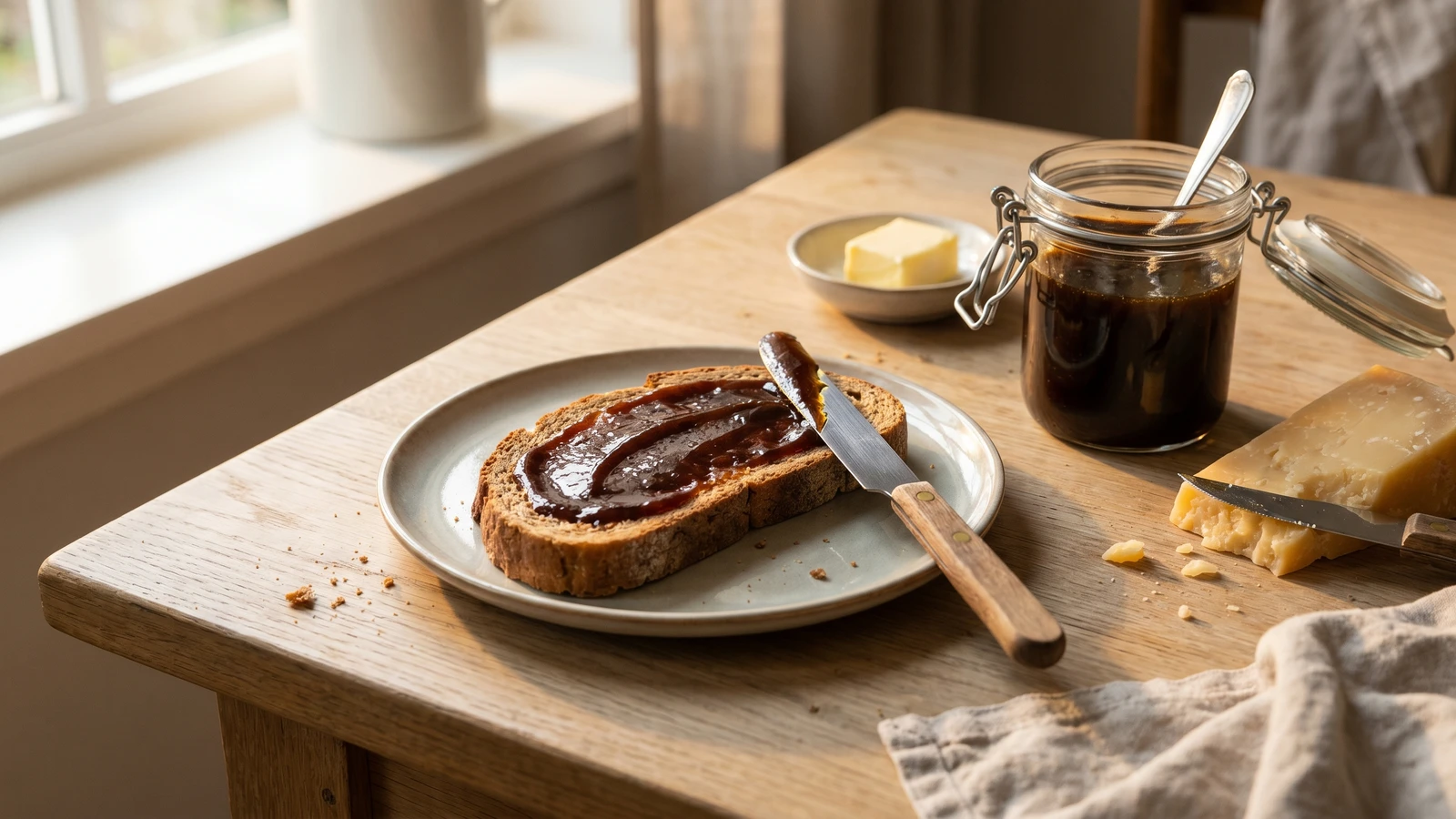
Appelstroop is the orchard made patient: apples, pears, and beet syrup boiled down until morning bread, farmhouse cheese, and zuurvlees taste of Limburg in autumn.
In my grandmother's second notebook, the recipes that mattered most were often the shortest. Not because they were careless. Because the real work had already happened in the field, the orchard, the cellar, and the long afternoon when somebody stood by the pan and let water leave the fruit. Appelstroop belongs to that honest family of foods. Nothing grand. Everything concentrated.
The name already tells you most of it: appel is apple, stroop is syrup. But let me tell you a secret. The best Dutch apple syrup is not a polite golden drizzle. In Limburg it is near-black, glossy, dense enough to hold the mark of a spoon, with the tartness of orchard fruit and the deep earth-sweetness of sugar beet. This is not jam. Jam keeps pieces of fruit. Stroop keeps the season itself, boiled down until October can sit on bread in February.
The method asks for patience, not performance. You cook the fruit gently until it gives up its juice, strain without bullying it cloudy, then reduce that juice with beet syrup until it darkens and thickens. Hou het altijd simpel, always keep it simple. The test is the chilled plate: a drop should wrinkle and drag under your finger. Then it is ready for roggebrood, for old cheese, for pancakes, or for a spoonful stirred into Limburg zuurvlees, where sweet and sour have been arguing happily for generations.
Appelstroop is especially tied to Dutch and Belgian Limburg, where mixed orchards of apples and pears made fruit syrup a practical way to preserve autumn harvests before refrigeration. In the nineteenth and twentieth centuries, Limburg and the neighboring Meuse region developed small stroopfabrieken, syrup factories, that reduced orchard fruit and later often combined it with sugar beet syrup, a crop that became important in the Low Countries after Napoleon-era disruptions to cane sugar. Its use in zuurvlees, the sweet-sour Limburg beef stew, shows how a breakfast spread also became a regional seasoning.
Quantity
2kg
washed and roughly chopped, cores included
Quantity
1kg
washed and roughly chopped, cores included
Quantity
500ml
Quantity
250g
Quantity
1 tablespoon
Quantity
1 small pinch
| Ingredient | Quantity |
|---|---|
| tart appleswashed and roughly chopped, cores included | 2kg |
| ripe pearswashed and roughly chopped, cores included | 1kg |
| water | 500ml |
| sugar beet syrup | 250g |
| lemon juice | 1 tablespoon |
| salt | 1 small pinch |
Put the chopped apples, pears, and water into a large heavy pot. Bring to a gentle simmer, cover, and cook for 45 to 60 minutes, stirring now and then, until the fruit has collapsed into a soft mash. Cores and skins stay in for now; they bring pectin, and pectin helps the syrup set its shoulders.
Tip the fruit into a jelly bag, clean muslin, or a fine sieve lined with cloth, set over a deep bowl. Let it drip for at least 1 hour, longer if you have the patience. Do not press hard unless you accept a cloudier stroop. A little cloud is home cooking; a lot of squeezing gives you fruit mud.
Measure the strained juice and pour it back into the clean pot. Add the beet syrup, lemon juice, and salt. Bring to a steady simmer, uncovered, and let it reduce slowly, stirring more often as it darkens. The pan will look too full at first, then suddenly too empty. That is the whole point.
After 2 to 3 hours of reducing, start testing. Drop a little syrup onto a cold plate and wait 30 seconds. Push it with your finger: it should drag, wrinkle slightly, and leave a slow glossy trail. If it runs like honey, keep cooking. If it stands like tar, you have gone too far, though bread will forgive you.
Pour the hot appelstroop into clean warm jars and seal. Let it cool completely before judging the texture. It should be dark brown to almost black, glossy, and thick enough to spread with a knife. Eat it on buttered bread, with old cheese, or stirred by the spoonful into zuurvlees.
1 serving (about 20g)
Culinary guides, cultural storytelling, and the editorial depth that makes cooking meaningful.
Discover Culinary ExplorerChef Joost
Acar means pickle, ketimun means cucumber, and this little bowl of sweet vinegar, chilli, and crunch is the cool note that lets an Indo-Dutch rijsttafel keep its balance.

Chef Joost
Appelcompote is the apple left with its dignity: soft enough to spoon beside pork or potatoes, still chunky enough to remind you autumn did the real work.

Chef Joost
The little bowl beside the plate is never decoration: appelmoes is the Dutch treaty between sweet and savoury, spooned beside sausage, potatoes, pancakes, and childhood itself.

Chef Joost
Spring on a Dutch plate: the gentle butter-and-egg sauce that catches the first white asparagus, carries a whisper of nutmeg, and makes dinner feel properly seasonal.