Chef Lupita
Acúmara Tatemada al Comal
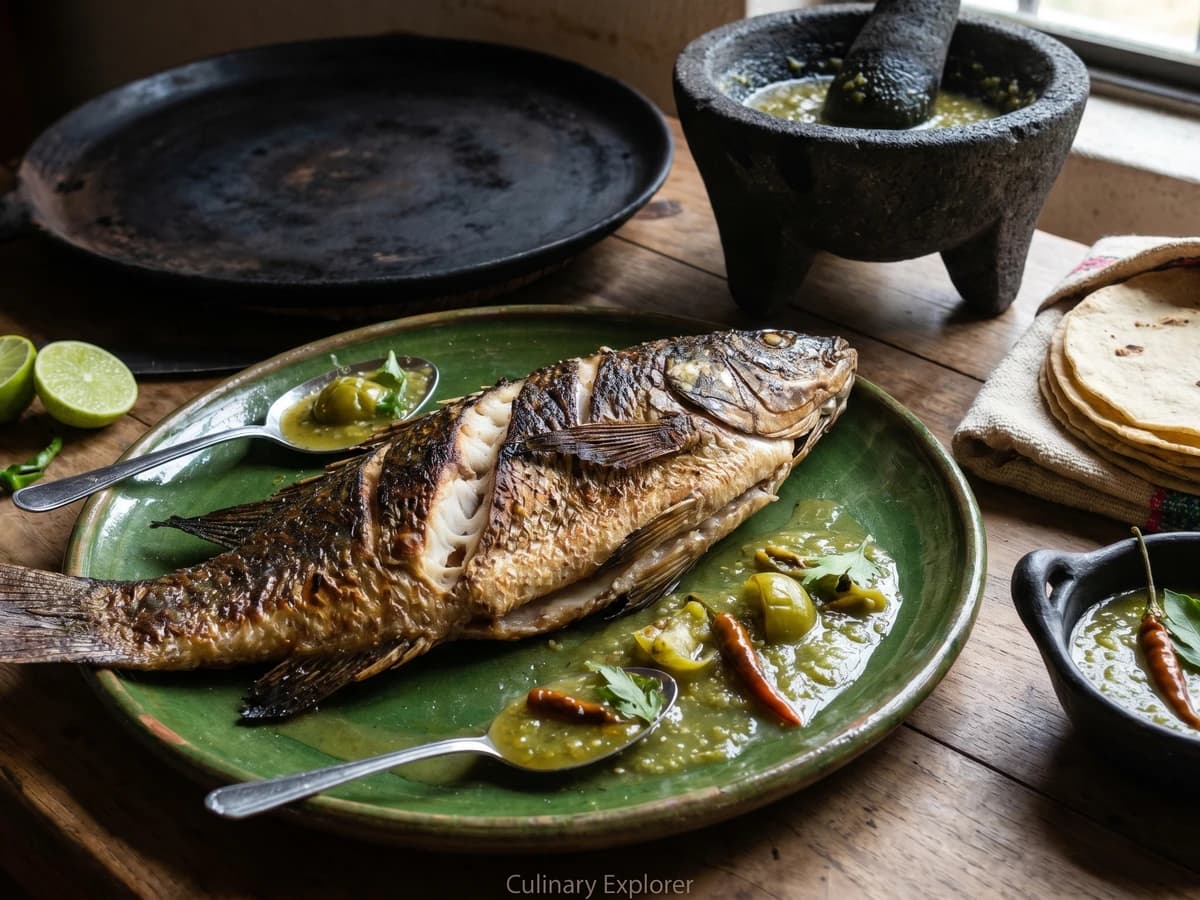
Michoacán's Lake Pátzcuaro acúmara, a whole kurucha from the lago tatemada on a comal de leña and served with chile perón atápakua, corn tortillas, and P'urhépecha discipline.
A cooking platform built around craft, culture, and the stories behind what we eat.
Created by
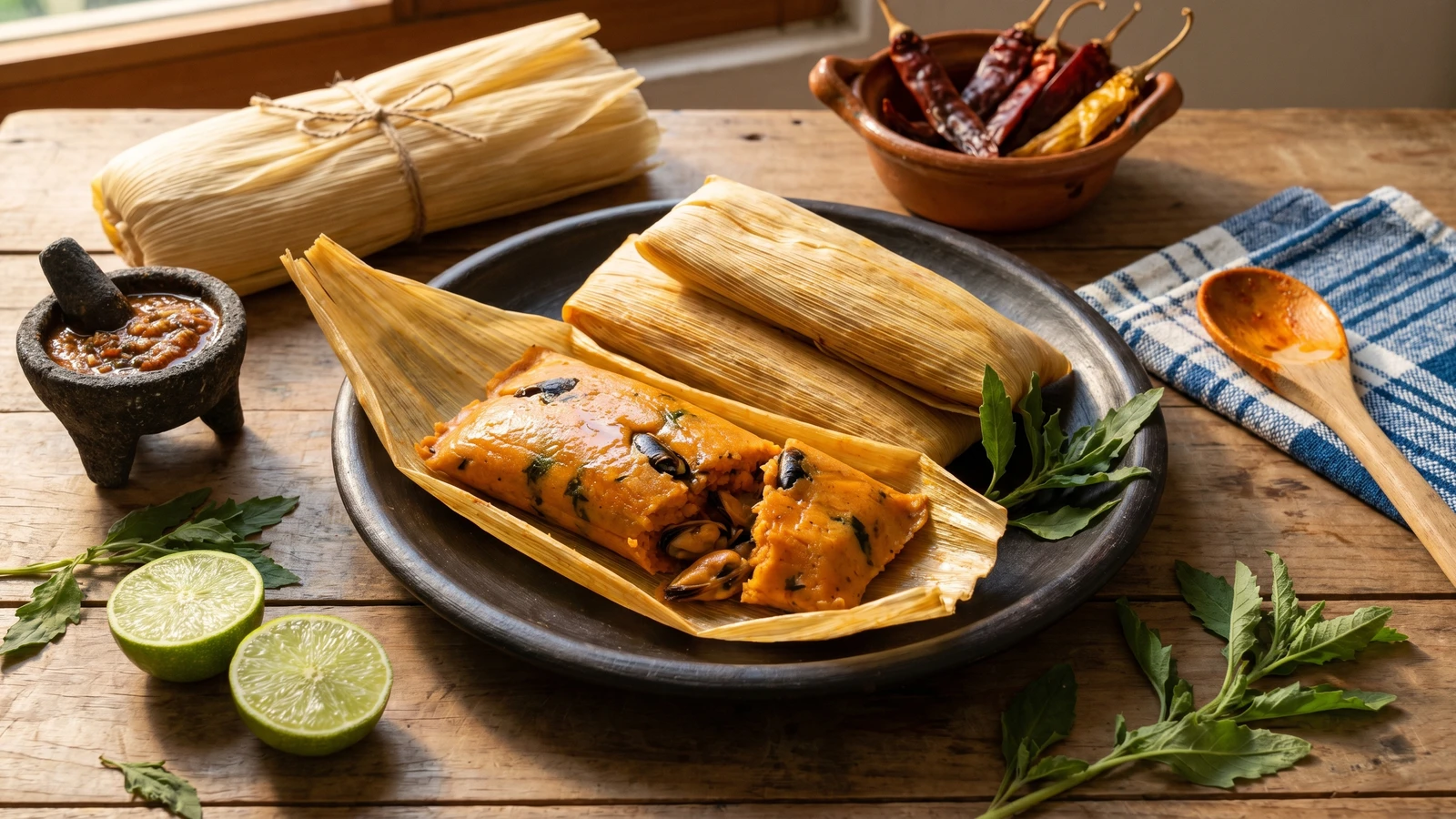
Oaxaca's Costa Chica tamal of tichinda mussels steamed whole in their shells inside a costeno masa, a coastal dish from the lagoons of Pinotepa Nacional that survives because the women who make it refuse to let it disappear.
This is from the Costa Chica of Oaxaca. Not the valleys, not the sierra, the coast. Specifically the stretch from Pinotepa Nacional down to the border with Guerrero, where the Afro-Mexican and Mixtec communities have been gathering tichindas from the mangrove lagoons for centuries. If you ask in Mexico City what a tichinda is, most people will not know. That is the problem this recipe exists to address.
The tichinda is a small black-shelled mussel, native to the brackish estuaries of the Pacific coast. The women of Pinotepa wade into the lagoons at low tide, fill their baskets, and sell them at the Sunday tianguis still wet. The genius of this tamal is that the mussels go in whole, in the shell, and steam open inside the masa. The brine that pours out of them seasons the dough from the inside. You cannot replicate that with shucked mussels. You cannot replicate it with frozen ones. The shell is the recipe.
The masa is stained with chile costeno, the chile of this coast, thin-skinned and bright, with a flavor that leans more citric than smoky. Costeno rojo for depth, costeno amarillo for color. Folded with epazote, beaten with lard, wrapped in corn husk or banana leaf depending on the town. My notebook has three versions of this tamal, collected from three women in three coastal villages, and they argue about whether to use husk or leaf. I will give you husk because that is what I learned first, from a senora named Dona Felicitas in Cuajinicuilapa who told me that the leaf is for the tamales of the istmo, not the costa.
This is a dish that exists because the women of the Costa Chica decided it would. Saber cocinar es saber vivir, and on this coast, knowing how to cook is also knowing how to keep a culture alive that the rest of Mexico forgets about.
The tichinda (Mytella strigata) is a small mangrove mussel native to the Pacific lagoons of Oaxaca and Guerrero, harvested by hand in the brackish estuaries of the Costa Chica region for at least a thousand years. Tamales de tichinda are documented in colonial-era accounts of the Mixtec coast and have remained a signature dish of the Afro-Mexican and Mixtec communities of Pinotepa Nacional, Jamiltepec, and Cuajinicuilapa, where they are prepared for Day of the Dead, Easter Week, and the patron saint festivals of each town. The combination of chile costeno (a regional varietal grown almost exclusively along this coast and unrelated to the more widely cultivated guajillo) with native mussels represents one of the few surviving pre-Hispanic seafood preparations in which the shellfish is cooked whole inside a corn vehicle, a technique that predates the introduction of European shucking knives.
Quantity
2 pounds
scrubbed clean (smallest live mussels on the Pacific coast if tichinda is unavailable)
Quantity
2 pounds
coarse-ground; or 4 cups masa harina mixed with 3 cups warm water
Quantity
1 cup
Quantity
1 1/2 teaspoons, plus more to taste
Quantity
12
stemmed and seeded
Quantity
4
stemmed and seeded
Quantity
3
unpeeled
Quantity
1/2 small
Quantity
1 large bunch
leaves stripped from the stems
Quantity
2 cups
Quantity
40 to 50
soaked if dried, or cut into squares if banana leaves
Quantity
for serving
Quantity
for serving
| Ingredient | Quantity |
|---|---|
| fresh tichinda mussels in the shellscrubbed clean (smallest live mussels on the Pacific coast if tichinda is unavailable) | 2 pounds |
| fresh masa for tamales (masa martajada)coarse-ground; or 4 cups masa harina mixed with 3 cups warm water | 2 pounds |
| pork lard (manteca de cerdo) | 1 cup |
| kosher salt | 1 1/2 teaspoons, plus more to taste |
| dried chile costeno rojostemmed and seeded | 12 |
| dried chile costeno amarillostemmed and seeded | 4 |
| garlic clovesunpeeled | 3 |
| white onion | 1/2 small |
| fresh epazoteleaves stripped from the stems | 1 large bunch |
| warm seafood stock or mussel cooking water | 2 cups |
| fresh corn husks (hojas de maiz) or banana leavessoaked if dried, or cut into squares if banana leaves | 40 to 50 |
| salsa de chile costeno (optional) | for serving |
| lime halves (optional) | for serving |
Scrub the mussels under cold running water with a stiff brush. Pull off any beards. Discard any shell that is broken or that does not close when you tap it. The tichinda is small, smaller than a Mediterranean mussel, with a thin black shell and a sharp briny meat. The shell is the point of this tamal. It opens in the masa as it steams and releases the brine into the dough. If you cannot find tichindas, use the smallest live mussels your fishmonger has, never frozen, never shucked.
If you are using dried corn husks, place them in a deep bowl and cover with hot tap water. Weight them down with a plate so they stay submerged. Soak for at least 30 minutes, until soft and pliable. Fresh corn husks need only a quick rinse. Banana leaves should be passed briefly over a flame on both sides to soften them, then cut into squares about eight inches across.
Heat a dry comal over medium. Toast the chile costeno rojo and chile costeno amarillo separately, about 20 seconds per side. The costeno is thin-skinned and burns faster than guajillo, so keep your eyes on the comal. They should puff and turn fragrant, never blacken. The costeno is the chile of the Oaxacan coast. Do not substitute guajillo here. The flavor is brighter and more citric. If you cannot find costeno, find a Oaxacan vendor online before you compromise.
On the same comal, roast the unpeeled garlic and the half onion until charred in spots and softened, about five minutes. Peel the garlic. Place the toasted chiles in a heatproof bowl, cover with hot tap water (not boiling), and soak for 15 minutes until pliable. Drain, reserving a half cup of the soaking liquid.
Combine the soaked chiles, charred garlic, charred onion, half teaspoon of salt, and the reserved chile water in the blender. Blend until completely smooth. Strain through a fine-mesh sieve, pressing on the solids. You want a clean orange-red puree with no skins. This is the color and the soul of the masa.
In a stand mixer with the paddle attachment, or by hand in a wide bowl, beat the lard with the remaining teaspoon of salt for five minutes until it is light and fluffy and pale. La manteca es el sabor and beating it gives the tamal its tender crumb. Skip this step and you will get a heavy, dense tamal. Add the masa in three additions, beating well after each. Pour in the strained chile puree and beat until the masa turns the color of a Pacific sunset. Stream in the warm seafood stock a little at a time until the masa is the texture of thick cake batter, soft enough to spread but not runny. Test it: drop a small piece into a glass of cold water. If it floats, the masa is ready. If it sinks, beat for two more minutes.
Roughly chop the epazote leaves. You should have about a packed cup. Fold most of the epazote into the masa, reserving a small handful for layering. Epazote is not optional in this tamal. It is the herb that cuts the brine of the mussel and ties the masa to the coast. Do not substitute cilantro. Different plant, different dish.
Lay a soaked corn husk on the counter, smooth side up, narrow end pointing toward you. Spread about three tablespoons of masa across the wide center of the husk in a rectangle, leaving the edges bare. Place three or four tichindas in their shells in the center of the masa. Scatter a few epazote leaves over the mussels. Fold the long sides of the husk over the filling so the masa wraps around the mussels. Fold the narrow bottom up. Leave the top open if using corn husks (steam needs a way in to open the shells). For banana leaves, fold all four sides over and tie with a strip of banana leaf or kitchen string.
Line the bottom of a tamalera or a deep stockpot fitted with a steamer rack with the leftover corn husks. Pour in enough water to come just below the rack. Stand the tamales upright in the pot, open ends up, packed snugly but not crushed. Drop a coin into the water at the bottom. When the coin stops rattling, the water has run dry and you need to add more. Cover the tamales with more husks and a damp kitchen towel, then the lid.
Bring the water to a boil over medium-high heat, then reduce to medium so it steams steadily without boiling violently. Cook for one hour and 30 minutes. Do not lift the lid in the first hour. The tamales need uninterrupted steam to set the masa and to coax the mussel shells open inside the dough. After 90 minutes, pull one out, let it rest for two minutes, and unwrap. The husk should peel away cleanly from the masa. The shells should be open inside, the brine absorbed into the dough. If the masa sticks to the husk, steam for 15 more minutes.
Let the tamales rest in the covered pot for 15 minutes off the heat. This is when the masa firms up and finishes setting. Serve in their husks with a bowl of salsa de chile costeno and lime halves on the side. The diner unwraps each tamal at the table, picks the meat from the open shells, and eats the masa scented with the brine that ran out of them. Asi se hace y punto.
1 serving (about 118g)
Culinary guides, cultural storytelling, and the editorial depth that makes cooking meaningful.
Discover Culinary ExplorerChef Lupita
Michoacán's Lake Pátzcuaro acúmara, a whole kurucha from the lago tatemada on a comal de leña and served with chile perón atápakua, corn tortillas, and P'urhépecha discipline.

Chef Lupita
Puebla's weekday adobo of pork shoulder braised in a thick guajillo and ancho sauce sharpened with vinegar, cumin, and clove. The deep red of a market spice stall, the dish a poblana cooks without thinking.

Chef Lupita
Loreto's pit-roasted clams, planted hinge-up in beach sand and tatemadas under a fast fire of dried romerillo brush, the resinous Baja desert shrub that gives this dish its smoke.

Chef Lupita
Oaxaca's eighth mole, the silky, almond-and-cinnamon almendrado, served over poached chicken. Mild, sweet, restrained, and a quiet rebuttal to anyone who thinks Mexican food has to be hot to be Mexican.