Chef Lupita
Acúmara Tatemada al Comal
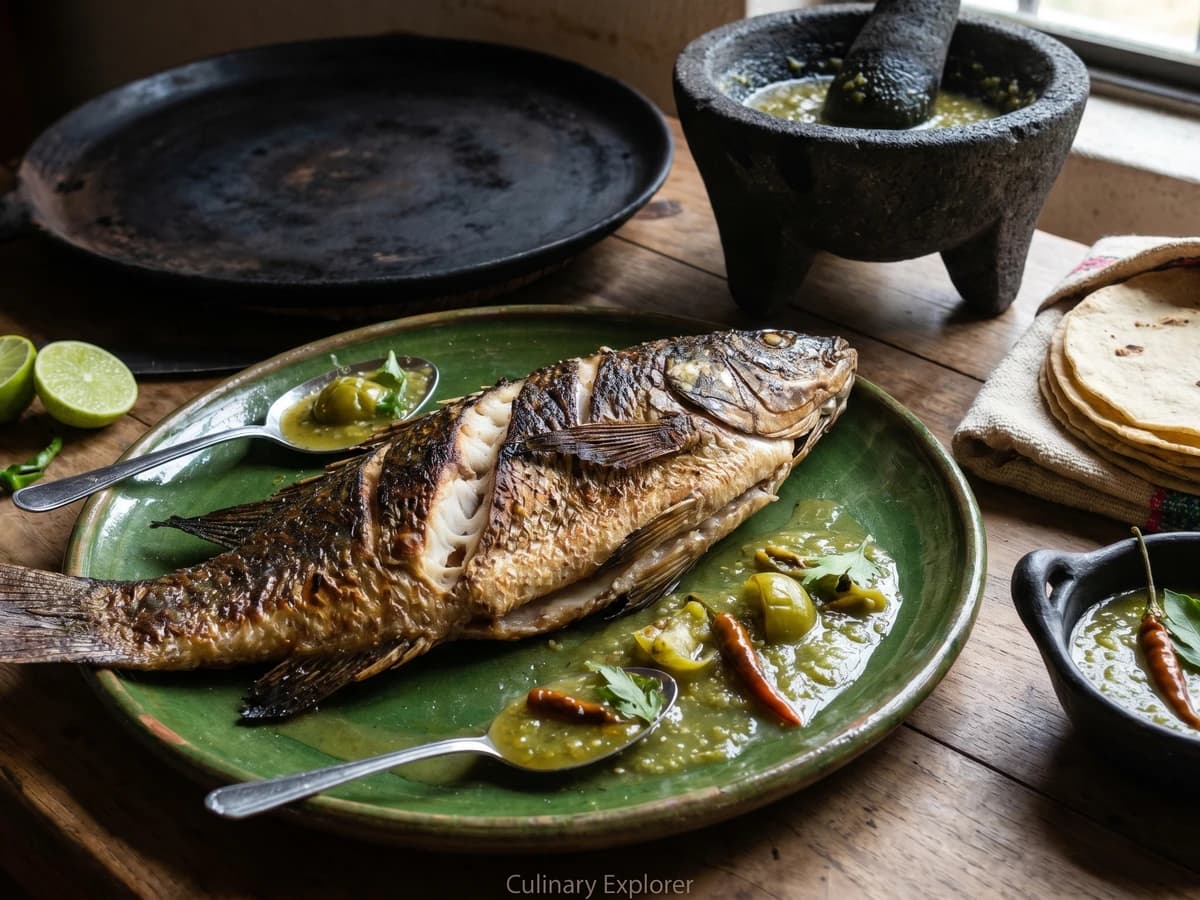
Michoacán's Lake Pátzcuaro acúmara, a whole kurucha from the lago tatemada on a comal de leña and served with chile perón atápakua, corn tortillas, and P'urhépecha discipline.
A cooking platform built around craft, culture, and the stories behind what we eat.

Created by
Oaxaca's Sunday barbacoa from the Tlacolula valley, goat rubbed in chilhuacle and guajillo, wrapped in maguey leaves, and slow-cooked for eight hours over a pot of garbanzos and rice that becomes the consome.
This is from Oaxaca. From the Valles Centrales, specifically from Tlacolula de Matamoros, where the Sunday tianguis is the oldest continuously running market in the Americas and the barbacoa de chivo stalls open before sunrise.
The defining ingredient is not the goat. It is the maguey. The fresh agave leaf, passed over a flame until pliable, then wrapped around the meat, perfumes the barbacoa with a green, mineral, faintly sweet flavor that nothing else can give. Banana leaf is for tamales oaxaquenos and cochinita pibil. Maguey is for barbacoa. Cada estado, su propia cocina, and within Oaxaca, cada region tiene su propia barbacoa. The version from the Mixteca uses chile costeno. The version from the Sierra Norte sometimes uses lamb. This is the Tlacolula version: goat, chilhuacle, guajillo, pasilla oaxaqueno, and the broth below catching the fat all day long.
The broth is not an afterthought. In Oaxaca, the consome is half the meal. Garbanzos, rice, epazote, and the rendered juices of the goat. You serve the broth first, in clay cups, with diced onion and cilantro and lime. Then the meat, on the maguey, with hand-pressed tortillas and salsa borracha. That is the order. That is the ritual.
My notebook from the 2007 trip to Tlacolula has a page where the senora at the puesto, Dona Lucina, drew me a diagram of how she banks the pit, where the stones go, where the clay olla of broth sits, where the maguey-wrapped meat rests above. She would not let me photograph it. She made me draw it myself so I would remember. Recetas probadas y garantizadas, but only if you respect the architecture of the dish.
Barbacoa derives from the Taino word 'barbacoa,' a wooden frame for cooking meat over a fire pit, a method the Spanish encountered in the Caribbean and carried inland during the conquest. In central and southern Mexico the technique fused with pre-Columbian pit-cooking traditions practiced by the Zapotec and Mixtec peoples of the Oaxaca valleys, who already cooked deer, peccary, and turkey in earth ovens lined with hot stones and wrapped in maguey leaves long before goat arrived. Goat itself is a colonial introduction: Spanish settlers brought caprine herds to the dry hills of Oaxaca in the 16th century where they thrived on agave and cactus, and over generations the animal replaced game in the regional barbacoa tradition. The Tlacolula market, where this dish is most identified today, has operated continuously since pre-Columbian times and is one of the oldest tianguis in the Americas.
Quantity
6 pounds
cut into 4-inch pieces
Quantity
8
stemmed and seeded
Quantity
4
stemmed and seeded
Quantity
3
stemmed and seeded (or 3 more guajillo plus 1 pasilla oaxaqueno)
Quantity
2
stemmed and seeded
Quantity
1
cloves separated and peeled
Quantity
1 medium
quartered
Quantity
2 tablespoons
Quantity
1 tablespoon
Quantity
6
Quantity
1 stick, about 2 inches
Quantity
2 tablespoons
Quantity
4
Quantity
1/4 cup
Quantity
2 tablespoons, plus more to taste
Quantity
3 large
passed over an open flame until pliable
Quantity
8 cups
Quantity
1 cup
soaked overnight and drained
Quantity
1 cup
rinsed
Quantity
1 large
charred on a comal
Quantity
1 sprig
Quantity
for serving
Quantity
for serving
Quantity
for serving
Quantity
for serving
Quantity
for serving
| Ingredient | Quantity |
|---|---|
| bone-in goat, mixed cuts (shoulder, leg, ribs)cut into 4-inch pieces | 6 pounds |
| dried chile guajillostemmed and seeded | 8 |
| dried chile anchostemmed and seeded | 4 |
| dried chile chilhuacle rojostemmed and seeded (or 3 more guajillo plus 1 pasilla oaxaqueno) | 3 |
| dried chile pasilla oaxaquenostemmed and seeded | 2 |
| head of garliccloves separated and peeled | 1 |
| white onionquartered | 1 medium |
| whole cumin seed | 2 tablespoons |
| whole black peppercorns | 1 tablespoon |
| whole cloves | 6 |
| Mexican cinnamon (canela) | 1 stick, about 2 inches |
| dried Mexican oregano (oregano oaxaqueno preferred) | 2 tablespoons |
| bay leaves (hojas de aguacate preferred, use 8 if available) | 4 |
| white vinegar | 1/4 cup |
| kosher salt | 2 tablespoons, plus more to taste |
| fresh maguey (agave) leavespassed over an open flame until pliable | 3 large |
| water or light goat broth | 8 cups |
| dried garbanzossoaked overnight and drained | 1 cup |
| long-grain white ricerinsed | 1 cup |
| ripe tomatocharred on a comal | 1 large |
| fresh epazote | 1 sprig |
| diced white onion (optional) | for serving |
| chopped cilantro (optional) | for serving |
| lime wedges (optional) | for serving |
| salsa borracha (pasilla oaxaqueno and pulque) (optional) | for serving |
| hand-pressed corn tortillas (optional) | for serving |
Place the goat pieces in a large bowl. Add the vinegar, one tablespoon of salt, and enough cold water to cover. Soak for 30 minutes. The vinegar pulls the gaminess off the meat without stripping its character. This is what they do at the puestos in Tlacolula on Saturday night, ahead of the Sunday market. Drain and pat the pieces dry.
Heat a dry comal over medium. Toast the guajillo, ancho, chilhuacle, and pasilla oaxaqueno separately, about 30 seconds per side. The skin should puff and the kitchen should smell like the chile passages of the Tlacolula market on a Sunday morning. The chilhuacle and pasilla oaxaqueno burn faster than the guajillo. Watch them. In the same comal, toast the cumin, peppercorns, cloves, and cinnamon for one minute, until fragrant.
On the same comal, char the quartered onion and the unpeeled garlic cloves until blackened in spots. Char the tomato until the skin blisters and splits. This is the Oaxacan habit: nothing goes into the adobo raw. The smoke from the comal is part of the seasoning.
Place the toasted chiles in a heatproof bowl and cover with hot tap water. Hot, not boiling. Let them soften for 20 minutes. Drain and transfer to a blender with the charred onion, garlic, tomato, the toasted spices, the oregano, two of the bay leaves, the remaining tablespoon of salt, and one cup of fresh water. Blend until completely smooth. Strain through a fine-mesh sieve into a bowl, pressing on the solids. The strained adobo should be the color of dark brick and coat the back of a spoon.
Pour the adobo over the drained goat. Use your hands. Work the paste into every piece, into the bones, between the ribs. Cover and refrigerate for at least four hours, ideally overnight. La cocina no es decoracion, es trabajo. Do not skip the rest. The chiles need time to penetrate the meat.
Pass each maguey leaf carefully over an open gas flame, turning it until the surface darkens and the leaf softens enough to fold without cracking. Wipe off any ash with a damp cloth. The maguey is what makes this barbacoa Oaxacan. The leaf perfumes the meat with a green, mineral, slightly sweet flavor that no banana leaf can replicate. No me vengas con atajos. If you cannot find maguey, do not call this Oaxacan barbacoa. Call it something else.
Pour 8 cups of water or light goat broth into the bottom of a heavy 8-quart slow cooker, Dutch oven, or pressure-cooker pot. Add the soaked garbanzos, the rinsed rice, the remaining bay leaves, and the epazote. Set a steamer rack inside so the meat sits above the broth, not in it. The broth below catches every drop of fat and adobo that drips down. That broth becomes the consome. In Oaxaca, the consome is half the meal.
Line the steamer rack with overlapping maguey leaves, letting the ends hang over the sides of the pot. Pile the marinated goat in the center, scraping every bit of adobo from the bowl onto the meat. Fold the maguey leaves over the top, sealing the meat in a green package. Cover with the pot lid. If steam wants to escape, weight the lid down with a heavy ceramic plate.
Set the slow cooker on low and cook for 8 hours. If using a Dutch oven in a 275F oven, the same time. The meat is ready when it falls off the bone with no resistance and the bones slide clean when you tug them. The broth below will be deep red, fragrant, and floating with rendered fat. Asi se hace y punto.
Open the maguey package at the table if you can. Lift the meat onto a warm platter and shred it with two forks, returning any bones and gristle to the broth for one more pass. Strain the consome below into bowls, dividing the garbanzos and rice between them. Taste for salt. Serve the goat alongside with diced onion, cilantro, lime, salsa borracha, and a stack of hand-pressed corn tortillas. The first bowl is the consome. The second plate is the taco. That is the Oaxacan order. Saber cocinar es saber vivir.
1 serving (about 285g)
Culinary guides, cultural storytelling, and the editorial depth that makes cooking meaningful.
Discover Culinary ExplorerChef Lupita
Michoacán's Lake Pátzcuaro acúmara, a whole kurucha from the lago tatemada on a comal de leña and served with chile perón atápakua, corn tortillas, and P'urhépecha discipline.

Chef Lupita
Puebla's weekday adobo of pork shoulder braised in a thick guajillo and ancho sauce sharpened with vinegar, cumin, and clove. The deep red of a market spice stall, the dish a poblana cooks without thinking.

Chef Lupita
Loreto's pit-roasted clams, planted hinge-up in beach sand and tatemadas under a fast fire of dried romerillo brush, the resinous Baja desert shrub that gives this dish its smoke.

Chef Lupita
Oaxaca's eighth mole, the silky, almond-and-cinnamon almendrado, served over poached chicken. Mild, sweet, restrained, and a quiet rebuttal to anyone who thinks Mexican food has to be hot to be Mexican.