Chef Lupita
Acúmara Tatemada al Comal
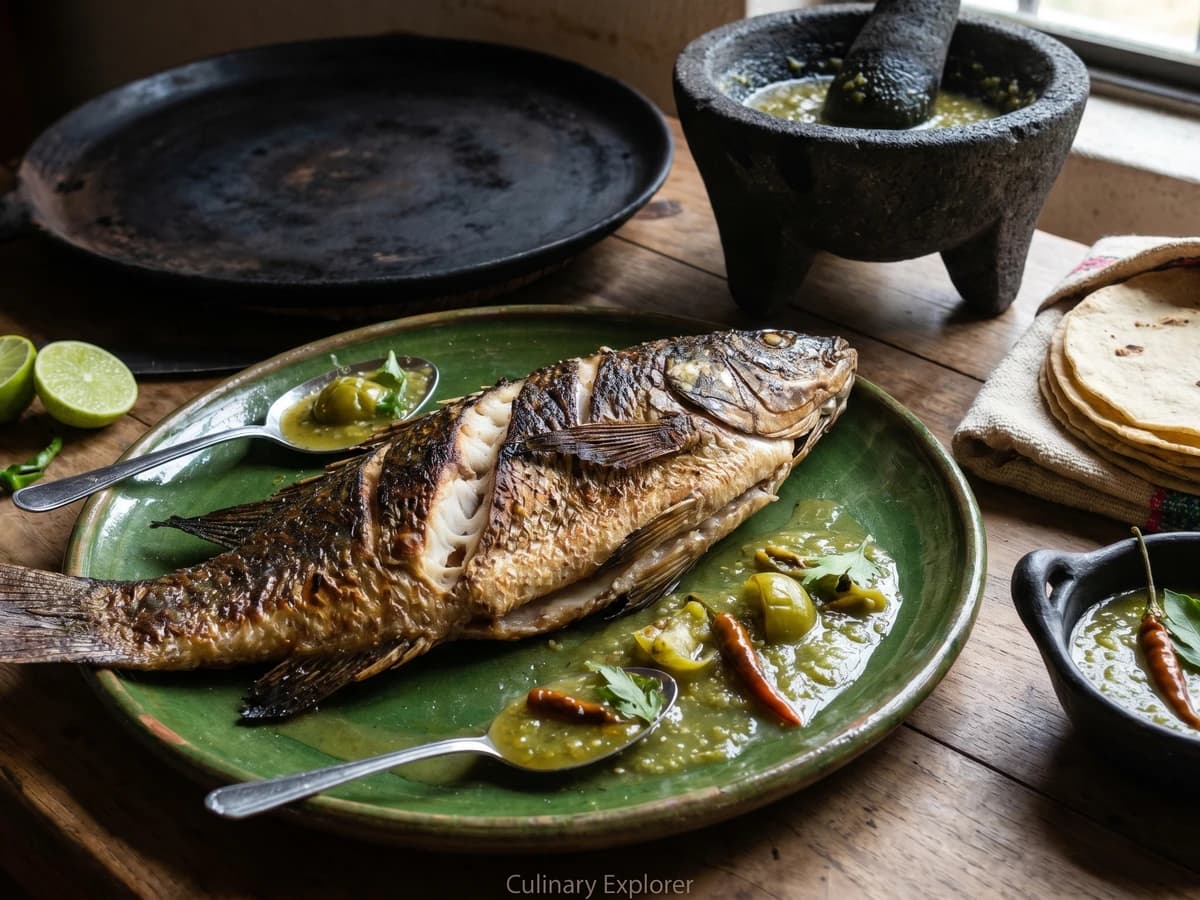
Michoacán's Lake Pátzcuaro acúmara, a whole kurucha from the lago tatemada on a comal de leña and served with chile perón atápakua, corn tortillas, and P'urhépecha discipline.
A cooking platform built around craft, culture, and the stories behind what we eat.

Created by
Oaxaca's eighth mole, the silky, almond-and-cinnamon almendrado, served over poached chicken. Mild, sweet, restrained, and a quiet rebuttal to anyone who thinks Mexican food has to be hot to be Mexican.
Oaxaca calls itself the land of the seven moles. Negro, rojo, coloradito, amarillo, verde, chichilo, manchamanteles. That is the official count. But ask the senoras in the Mercado de la Merced de Oaxaca, ask the cooks in Teotitlan del Valle, and they will tell you about the eighth: almendrado. The mole the tourist guides forget. The one the home cooks have not.
Almendrado is the quiet one. A single chile ancho, no more. Toasted almonds, raisins, charred tomato, canela, cloves, peppercorns, and a slice of stale bolillo to give the sauce its body. That is the whole frame. The result is silky, the color of wet adobe, mildly sweet, gently spiced, and so far from the picante stereotype of Mexican food that it should be required eating for anyone who still thinks chile is a synonym for heat. Not all Mexican food is spicy. Almendrado is the proof.
My mother was from Jalisco and did not make Oaxacan food. I learned this dish from a senora named Doña Eufemia in Tlacolula, who served it on her saint's day. She told me the trick was to toast the almonds with the skin on, never blanched, because the skin gives the mole its color and a little tannic edge that keeps the sweetness honest. I wrote that in the margin of my notebook in 2009 and I have not changed the recipe since. No me vengas con atajos. Almendrado is restrained, not lazy. The restraint is the work.
Almendrado descends from the colonial encounter between Oaxaca's pre-Columbian thickened sauces, built on toasted seeds, ground chiles, and tomato, and the Spanish convent kitchens of the 17th and 18th centuries, which introduced almonds, cinnamon, raisins, and bread as thickening and flavoring agents. While the seven-mole canon was codified in the 20th century as a tourism and cultural identity device, regional cooks have long counted almendrado, pasilla mixe, and several other lesser-known sauces among Oaxaca's full mole repertoire. The dish's near-white-to-pale-russet color and its restrained chile content reflect the same Mediterranean-influenced lineage as Puebla's manchamanteles and the Spanish-Andalusian almond-thickened sauces brought to New Spain by Carmelite and Dominican nuns.
Quantity
1 (about 4 pounds)
cut into 8 pieces, skin on, bone in
Quantity
1 medium
halved
Quantity
1
halved crosswise, plus 4 cloves reserved
Quantity
2
Quantity
1 sprig
Quantity
1 tablespoon, plus more to taste
Quantity
2
stemmed and seeded
Quantity
1 cup
Quantity
1/2 cup
Quantity
1/3 cup
Quantity
2 medium
Quantity
1
quartered
Quantity
3
Quantity
6
Quantity
1 stick (3 inches)
Quantity
2 slices
Quantity
1/4 cup
Quantity
1 tablespoon
for garnish
Quantity
for serving
Quantity
for serving
| Ingredient | Quantity |
|---|---|
| whole chickencut into 8 pieces, skin on, bone in | 1 (about 4 pounds) |
| white onionhalved | 1 medium |
| head of garlichalved crosswise, plus 4 cloves reserved | 1 |
| bay leaves | 2 |
| fresh thyme | 1 sprig |
| kosher salt | 1 tablespoon, plus more to taste |
| dried chile anchostemmed and seeded | 2 |
| whole raw almonds with skin | 1 cup |
| raisins | 1/2 cup |
| blanched almonds (for finishing) | 1/3 cup |
| ripe tomatoes | 2 medium |
| small white onionquartered | 1 |
| whole cloves | 3 |
| black peppercorns | 6 |
| Mexican canela | 1 stick (3 inches) |
| day-old bolillo or French bread | 2 slices |
| pork lard (manteca de cerdo) | 1/4 cup |
| sesame seedsfor garnish | 1 tablespoon |
| hand-pressed corn tortillas (optional) | for serving |
| white rice (optional) | for serving |
Place the chicken pieces in a wide pot. Cover with cold water by two inches. Add the halved onion, halved head of garlic, bay leaves, thyme, and salt. Bring to a gentle simmer over medium heat. Skim the foam that rises in the first ten minutes. Cook at the lowest possible bubble for 30 minutes, until the chicken is cooked through but still tender. Lift the pieces out and set them aside. Strain the broth and reserve four cups. You will need it to build the mole.
Heat a dry comal or heavy skillet over medium. Open each ancho flat and press it onto the comal for about 15 seconds per side. The skin will puff and the kitchen will smell like dried fruit and tobacco. Do not let it blacken. Burned ancho is bitter and there is no recovering from it. Transfer to a heatproof bowl and cover with hot tap water, not boiling. Let it soften for 20 minutes.
On the same comal, toast the whole almonds with their skins on, stirring constantly, for about five minutes, until they smell like the inside of a panaderia and the skins darken. Set aside. Toast the sesame seeds in a small dry pan for one minute, until pale gold, and reserve them for the garnish. Char the tomatoes, the quartered onion, and the four reserved garlic cloves directly on the comal until blackened in patches and softened, about ten minutes. The char is the seasoning. Asi se hace y punto.
In a small dry skillet over low heat, toast the cloves, peppercorns, and canela for about 30 seconds, until fragrant. Pull them out before they smoke. In the same skillet, melt one tablespoon of the lard and fry the bread slices on both sides until deep golden. The bread thickens the mole and gives it the rounded body that almendrado is known for. Skip the bread and the sauce will run thin.
Drain the soaked ancho. In a high-powered blender, combine the ancho, the toasted whole almonds, the raisins, the charred tomatoes, onion, and garlic, the bloomed spices, the fried bread broken into pieces, and one and a half cups of the reserved chicken broth. Blend on high for at least three minutes, until completely smooth. The paste should be the color of wet adobe and should coat the back of a spoon. Strain through a medium-mesh sieve, pressing on the solids. Discard the bits that do not go through.
Melt the remaining three tablespoons of lard in a wide cazuela or heavy pot over medium heat. La manteca es el sabor. When it shimmers, pour in the strained paste. It will sputter. Stir constantly with a wooden spoon for about ten minutes. The paste will darken half a shade and the fat will start to separate around the edges. That separation is the signal that the mole is ready to take the broth.
Pour in the remaining two and a half cups of reserved chicken broth, whisking as you go. The mole should thicken slowly and coat the spoon without sliding off. Reduce the heat to low. Simmer uncovered for 25 minutes, stirring every few minutes so the bottom does not catch. Taste for salt. Almendrado is mild and slightly sweet on purpose. It is not chile-forward. It is not chocolate. It is not picante. This is the eighth mole and it is restrained on purpose.
Slide the cooked chicken pieces back into the cazuela, spooning the mole over them so each piece is coated. Simmer together for ten more minutes so the chicken takes on the sauce. Meanwhile, toast the blanched almonds in a dry pan and slice them lengthwise into slivers. Serve the chicken in shallow bowls or on a clay platter, ladle generous mole over the top, and scatter the toasted almond slivers and sesame seeds across the surface. Bring warm tortillas and white rice to the table. Saber cocinar es saber vivir.
1 serving (about 260g)
Culinary guides, cultural storytelling, and the editorial depth that makes cooking meaningful.
Discover Culinary ExplorerChef Lupita
Michoacán's Lake Pátzcuaro acúmara, a whole kurucha from the lago tatemada on a comal de leña and served with chile perón atápakua, corn tortillas, and P'urhépecha discipline.

Chef Lupita
Puebla's weekday adobo of pork shoulder braised in a thick guajillo and ancho sauce sharpened with vinegar, cumin, and clove. The deep red of a market spice stall, the dish a poblana cooks without thinking.

Chef Lupita
Loreto's pit-roasted clams, planted hinge-up in beach sand and tatemadas under a fast fire of dried romerillo brush, the resinous Baja desert shrub that gives this dish its smoke.

Chef Lupita
Guanajuato's Apaseo el Grande carnitas, pork shoulder and skin cooked slowly in manteca de cerdo with orange, salt, and milk, then torn and crisped on the comal for celebration tacos.