
Chef Lupita
Almendrado Oaxaqueño con Pollo
Oaxaca's eighth mole, the silky, almond-and-cinnamon almendrado, served over poached chicken. Mild, sweet, restrained, and a quiet rebuttal to anyone who thinks Mexican food has to be hot to be Mexican.
A cooking platform built around craft, culture, and the stories behind what we eat.
Created by
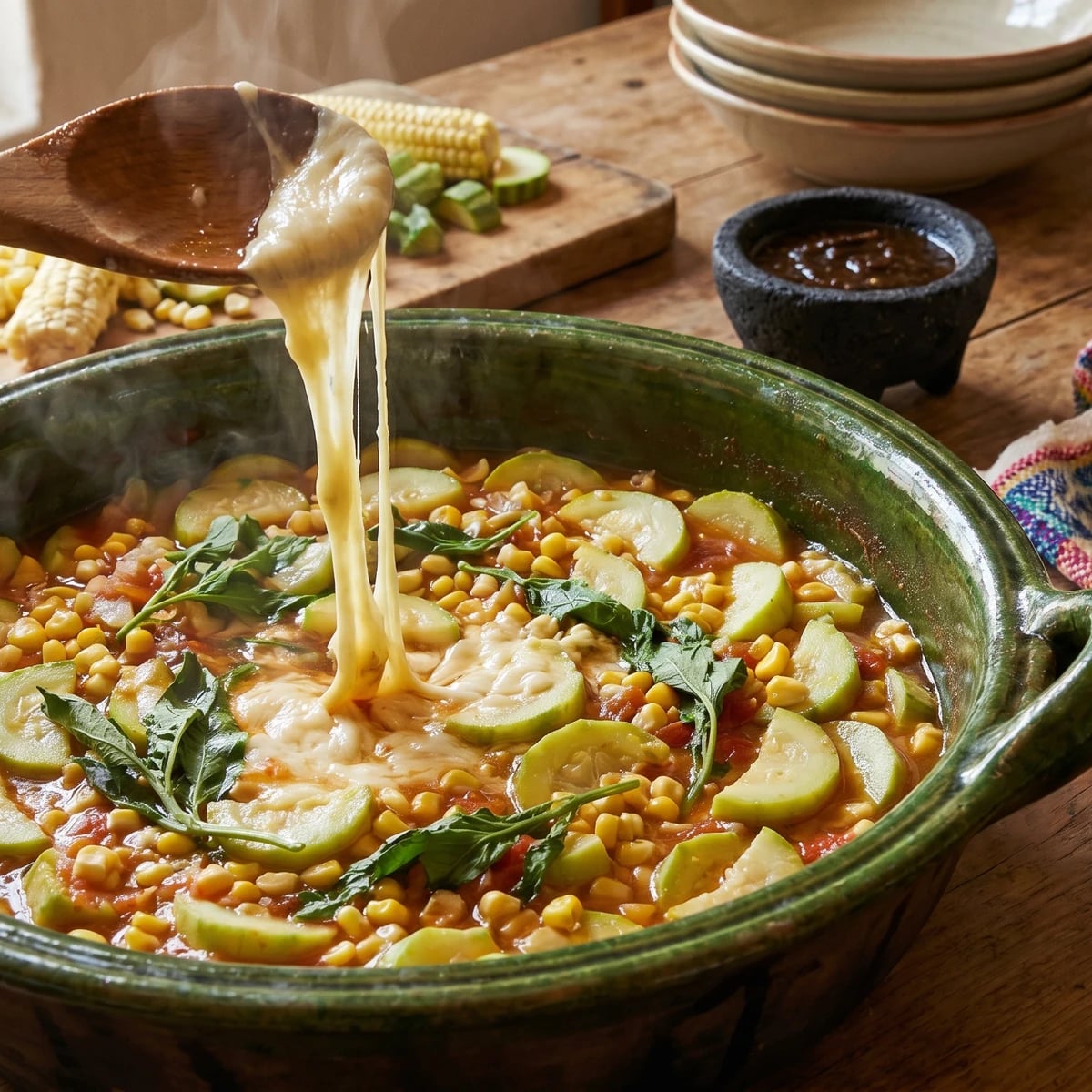
Oaxaca's everyday squash stew, calabacita and sweet corn cooked down with tomato and epazote, finished with quesillo melted into the pot in long stringy ribbons. The weeknight dinner of the Valles Centrales.
This is an Oaxacan dish. Specifically, it belongs to the home kitchens of the Valles Centrales, the valleys around Oaxaca de Juarez where calabacita criolla grows in nearly every milpa and quesillo is pulled by hand in markets like Etla and Tlacolula. Other states cook calabacitas. Only Oaxaca finishes the pot with quesillo melted into long stringy ribbons that drape across the spoon. That is what makes this dish Oaxacan and not generic.
The milpa is the answer to why this dish exists. Squash, corn, beans, and chile have grown together in Mexican fields for thousands of years because they support each other in the soil. When you cook calabacita with corn and tomato, you are eating the milpa. When you add epazote, you are using the herb that pre-Columbian cooks have used with squash and beans since long before any Spaniard set foot in Oaxaca. This is not a vegetable side dish dressed up to feel important. This is a complete meal with deep roots.
My mother did not cook calabacitas this way. Hers was the Jalisciense version, no cheese, more onion, finished with crema. The first time I ate them with quesillo was in a comedor inside the Mercado 20 de Noviembre, served by a senora named Dona Filomena who told me, without my asking, that calabacitas without quesillo was just half a dish. She was right. The cheese is not a topping. It is part of the cooking. Pull it off the cazuela in long ribbons or you have made something less.
This is a weeknight dish in Oaxacan kitchens. Forty minutes from start to plate, mostly hands-off, fed easily on what the mercado is selling that morning. Recetas probadas y garantizadas, but only when the calabacita is firm and the epazote is fresh. If the squash at your store is bendy and the epazote dried out in plastic, wait. Mexican grandmothers cook with what is in front of them today, not what is on a Pinterest board.
Calabacita, the Cucurbita pepo native to Mesoamerica, was domesticated in southern Mexico over 8,000 years ago and is one of the three sister crops of the milpa system alongside corn and beans. Quesillo, the stretched-curd cheese known outside Oaxaca as queso Oaxaca, originated in the town of Reyes Etla in the Valles Centrales in the late 19th century, when local cheesemakers adapted the Italian pasta filata technique brought by a young cook who reportedly stretched cooled curd to save a batch that had over-acidified. The combination of milpa vegetables with melted quesillo is a 20th-century home-kitchen development that joined two distinct Oaxacan food traditions, the indigenous agricultural triad and the post-colonial dairy tradition, into a dish that now reads as quintessentially Oaxacan.
Quantity
2 tablespoons
Quantity
1 medium
finely chopped
Quantity
3
finely chopped
Quantity
1
finely chopped (or 2 if you want more heat)
Quantity
3 medium
chopped
Quantity
2 pounds
cut into 1/2-inch half-moons
Quantity
2 cups (from about 3 ears)
Quantity
1 teaspoon, plus more to taste
Quantity
1/2 cup
Quantity
2 large sprigs
Quantity
8 ounces
pulled into thin strands
Quantity
for serving
warmed
| Ingredient | Quantity |
|---|---|
| manteca de cerdo (pork lard) | 2 tablespoons |
| white onionfinely chopped | 1 medium |
| garlic clovesfinely chopped | 3 |
| fresh chile serranofinely chopped (or 2 if you want more heat) | 1 |
| ripe Roma tomatoeschopped | 3 medium |
| calabacita (Mexican grey squash or zucchini)cut into 1/2-inch half-moons | 2 pounds |
| fresh corn kernels | 2 cups (from about 3 ears) |
| kosher salt | 1 teaspoon, plus more to taste |
| water or light chicken broth | 1/2 cup |
| fresh epazote | 2 large sprigs |
| quesillo de Oaxacapulled into thin strands | 8 ounces |
| hand-pressed corn tortillas (optional)warmed | for serving |
Trim the ends and slice the calabacita into 1/2-inch half-moons. Not thinner. Thin slices collapse into mush and you lose the texture that makes this dish what it is. Calabacita tierna means tender squash, not dissolved squash. The cut matters.
Melt the lard in a wide cazuela or heavy 4-quart pot over medium heat. Add the onion and a pinch of salt and cook for four or five minutes, until translucent and just turning gold at the edges. Add the garlic and the serrano. Cook one more minute, until you can smell the chile waking up. La manteca es el sabor. Use the lard. Olive oil tastes wrong here.
Add the chopped tomato. Raise the heat to medium-high. Cook for six to eight minutes, stirring now and then, until the tomato breaks down and the liquid reduces into a loose, slightly jammy sofrito. You want the raw tomato edge gone. If it still tastes acidic, give it another two minutes. The base of the dish is set here.
Add the calabacita and the corn kernels. Stir to coat in the sofrito. Pour in the water or broth, just enough to keep things moving, not enough to boil the squash. Add the salt. Tear the epazote sprigs in half and tuck them into the pot. Epazote is not optional. It is the herb that anchors this dish to Oaxaca and central Mexico. No me vengas con atajos. Dried epazote is a poor substitute and parsley is not a substitute at all.
Cover the pot and reduce heat to medium-low. Cook for eight to ten minutes, stirring once or twice. The calabacita should be tender when pierced with a knife but still hold its shape. The corn should taste cooked but still sweet. Taste for salt now. The squash releases water as it cooks, so the salt may need a small adjustment.
Pull the heat off entirely. Pull the quesillo into thin strands with your fingers and scatter it across the top of the squash. Cover the pot and let it sit, off the heat, for two minutes. The residual heat melts the cheese into long stringy ribbons that drape across the spoon when you serve it. This is the Oaxacan signature. Quesillo, not mozzarella, not Monterey jack. The flavor is different and the pull is different. Asi se hace y punto.
Bring the cazuela to the table. Spoon generous helpings into shallow bowls, making sure each portion gets the cheese pulled across it. Serve with warm hand-pressed corn tortillas. Each diner uses the tortilla as both fork and plate, scooping the calabacita and folding it into bites. That is the dinner. Saber cocinar es saber vivir.
1 serving (about 380g)
Culinary guides, cultural storytelling, and the editorial depth that makes cooking meaningful.
Discover Culinary Explorer
Chef Lupita
Oaxaca's eighth mole, the silky, almond-and-cinnamon almendrado, served over poached chicken. Mild, sweet, restrained, and a quiet rebuttal to anyone who thinks Mexican food has to be hot to be Mexican.

Chef Lupita
Oaxaca's everyday rice, fried in lard and steamed with chepil, the wild legume herb that grows in the Sierra and shows up in the markets only when the rains come.

Chef Lupita
Oaxaca's Sunday barbacoa from the Tlacolula valley, goat rubbed in chilhuacle and guajillo, wrapped in maguey leaves, and slow-cooked for eight hours over a pot of garbanzos and rice that becomes the consome.

Chef Lupita
Oaxaca's Pacific coast cooks shrimp in a thick paste of toasted guajillo, a whole head of charred garlic, and a quiet hit of cumin. Served straight from the cazuela with white rice and warm tortillas.