Chef Lupita
Acúmara Tatemada al Comal
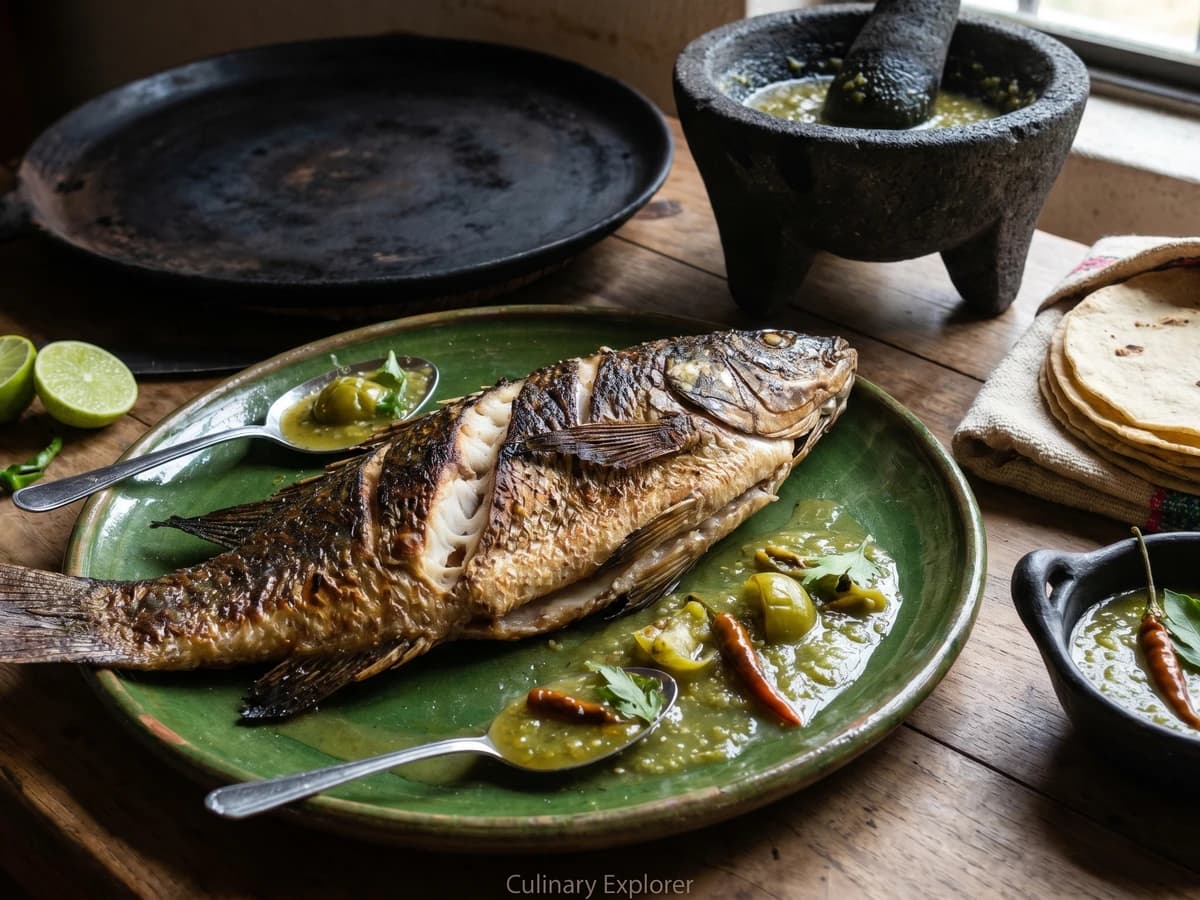
Michoacán's Lake Pátzcuaro acúmara, a whole kurucha from the lago tatemada on a comal de leña and served with chile perón atápakua, corn tortillas, and P'urhépecha discipline.
A cooking platform built around craft, culture, and the stories behind what we eat.

Created by
Oaxaca's Pacific coast cooks shrimp in a thick paste of toasted guajillo, a whole head of charred garlic, and a quiet hit of cumin. Served straight from the cazuela with white rice and warm tortillas.
This is from the costa de Oaxaca. Specifically the costa chica, the stretch of Pacific coast between Puerto Escondido and Pinotepa Nacional where the cooking has nothing to do with the seven moles of the Valles Centrales. Most people who think they know Oaxacan food know the highlands. The coast is its own cuisine, with its own chiles, its own techniques, its own sense of itself. Esto no es comida de un solo Mexico. It is not even comida de un solo Oaxaca.
Chileajo means chile and garlic, and the name tells you the recipe. A whole head of garlic, charred on a comal until it is soft and spotted black. Guajillo for the body. Ancho for the sweetness. A costeño rojo, if you can find one, for the dry, slightly smoky note that marks the dish as coastal. Cumin and clove in small, careful amounts. Vinegar to lift it. Lard to fry it. Then shrimp, the freshest you can get, slipped in at the very end.
The shrimp are not the recipe. The chileajo is. The shrimp are the vehicle. I learned this version from a senora named Doña Reyna in a fishing village outside Puerto Escondido, who cooked it in a clay cazuela over a wood fire with shrimp her son had pulled from a boat that morning. She told me the paste should be thick enough to hold the mark of a spoon. If it runs off, it is not chileajo, it is sopa. Cada estado, su propia cocina, and on the Oaxaca coast, the cooks know exactly what theirs looks like.
Chileajo as a category of dishes, a thick paste built on dried chiles, garlic, and spices, predates the conquest in technique, descending from the pre-Columbian practice of grinding toasted chiles with garlic-adjacent alliums on the metate. The Spanish introduction of garlic, vinegar, cumin, and clove in the 16th century reshaped the formula into the version that survives along the Costa Chica today, where Afro-Mexican and indigenous Mixtec cooks codified it as a regional staple distinct from the moles of the Oaxacan highlands. Chileajo is also prepared with pork or chicken in the Mixteca region inland, but the shrimp version belongs unambiguously to the coast, where the proximity of the Pacific dictates the protein.
Quantity
1 1/2 pounds
peeled and deveined, tails left on
Quantity
10
stemmed and seeded
Quantity
2
stemmed and seeded
Quantity
1
stemmed and seeded
Quantity
1
cloves separated and peeled
Quantity
1 teaspoon
Quantity
1 teaspoon
Quantity
4
Quantity
2
Quantity
1 1/2 teaspoons, plus more to taste
Quantity
2 tablespoons
Quantity
3 tablespoons
Quantity
1 cup
Quantity
1
halved
Quantity
for serving
Quantity
for serving
warmed
Quantity
for serving
Quantity
for serving
| Ingredient | Quantity |
|---|---|
| large fresh shrimppeeled and deveined, tails left on | 1 1/2 pounds |
| dried chile guajillostemmed and seeded | 10 |
| dried chile anchostemmed and seeded | 2 |
| dried chile costeño rojo (optional)stemmed and seeded | 1 |
| whole head of garliccloves separated and peeled | 1 |
| whole cumin seeds | 1 teaspoon |
| dried Mexican oregano | 1 teaspoon |
| whole black peppercorns | 4 |
| whole cloves | 2 |
| kosher salt | 1 1/2 teaspoons, plus more to taste |
| apple cider vinegar | 2 tablespoons |
| manteca de cerdo (pork lard) | 3 tablespoons |
| shrimp stock or water | 1 cup |
| limehalved | 1 |
| cooked white rice (optional) | for serving |
| hand-pressed corn tortillas (optional)warmed | for serving |
| lime wedges (optional) | for serving |
| sliced raw white onion (optional) | for serving |
Heat a dry comal or heavy skillet over medium. Toast the guajillo, ancho, and costeño chiles separately, about 20 to 30 seconds per side. Press them flat against the comal with a spatula. The skin should puff and the kitchen should smell like the chile aisle of the Mercado de Abastos in Oaxaca. That smell is the oils releasing. Skip this and the chileajo will taste flat and raw.
Transfer the toasted chiles to a heatproof bowl. Cover with hot tap water, not boiling. Boiling water cooks the skin and turns the salsa bitter. Let them soften for 15 minutes, weighing them down with a small plate so they stay submerged. Drain and reserve a half cup of the soaking liquid in case the blender needs help.
On the same comal, toast the cumin seeds, peppercorns, and cloves for about a minute, until fragrant. Tip them onto a plate. Now toast the peeled garlic cloves directly on the comal, turning them, until they are charred in spots and softened, about five minutes. The black spots are the flavor. This is what gives chileajo the deep, almost smoky garlic backbone that distinguishes it from any other coastal salsa.
In a blender, combine the drained chiles, the toasted garlic, the toasted spices, the oregano, the salt, and the apple cider vinegar. Add about a third of a cup of the soaking liquid to start. Blend on high until you have a thick, smooth paste, the color of dried clay. Add more soaking liquid only if the blender struggles. You want a paste, not a sauce. The thickness is what makes it chileajo and not a thin guisado.
Melt the lard in a wide cazuela or heavy skillet over medium heat. When it shimmers, add the chileajo paste. It will sputter. Step back. Cook for six to eight minutes, stirring constantly with a wooden spoon, until the paste darkens, the fat starts to separate around the edges, and the kitchen smells deeply of toasted chile and garlic. La manteca es el sabor. This step is not optional. A raw chileajo paste tastes harsh.
Pour in the shrimp stock or water and stir until the paste loosens into a thick, glossy sauce that coats the back of a spoon. Let it bubble gently for two minutes so the flavors marry. Taste for salt now. The shrimp will release a little water and dilute the seasoning, so the sauce should taste assertive at this stage.
Pat the shrimp dry. Slide them into the simmering chileajo in a single layer. Stir gently to coat each one. Cook for two minutes, turn them once, and cook for one to two minutes more, until the shrimp turn opaque and curl into loose Cs. Do not walk away. Overcooked shrimp turn rubbery in seconds and there is no recovering from it. Squeeze the lime over the cazuela the moment you pull it from the heat.
Bring the cazuela straight to the table. Set a bowl of white rice, a basket of warm tortillas, lime wedges, and a small dish of sliced raw white onion alongside. Each person spoons shrimp and sauce over the rice or pulls them into a tortilla. The thick paste is meant to cling. Asi se hace y punto.
1 serving (about 410g)
Culinary guides, cultural storytelling, and the editorial depth that makes cooking meaningful.
Discover Culinary ExplorerChef Lupita
Michoacán's Lake Pátzcuaro acúmara, a whole kurucha from the lago tatemada on a comal de leña and served with chile perón atápakua, corn tortillas, and P'urhépecha discipline.

Chef Lupita
Puebla's weekday adobo of pork shoulder braised in a thick guajillo and ancho sauce sharpened with vinegar, cumin, and clove. The deep red of a market spice stall, the dish a poblana cooks without thinking.

Chef Lupita
Loreto's pit-roasted clams, planted hinge-up in beach sand and tatemadas under a fast fire of dried romerillo brush, the resinous Baja desert shrub that gives this dish its smoke.

Chef Lupita
Oaxaca's eighth mole, the silky, almond-and-cinnamon almendrado, served over poached chicken. Mild, sweet, restrained, and a quiet rebuttal to anyone who thinks Mexican food has to be hot to be Mexican.