Chef Lupita
Acúmara Tatemada al Comal
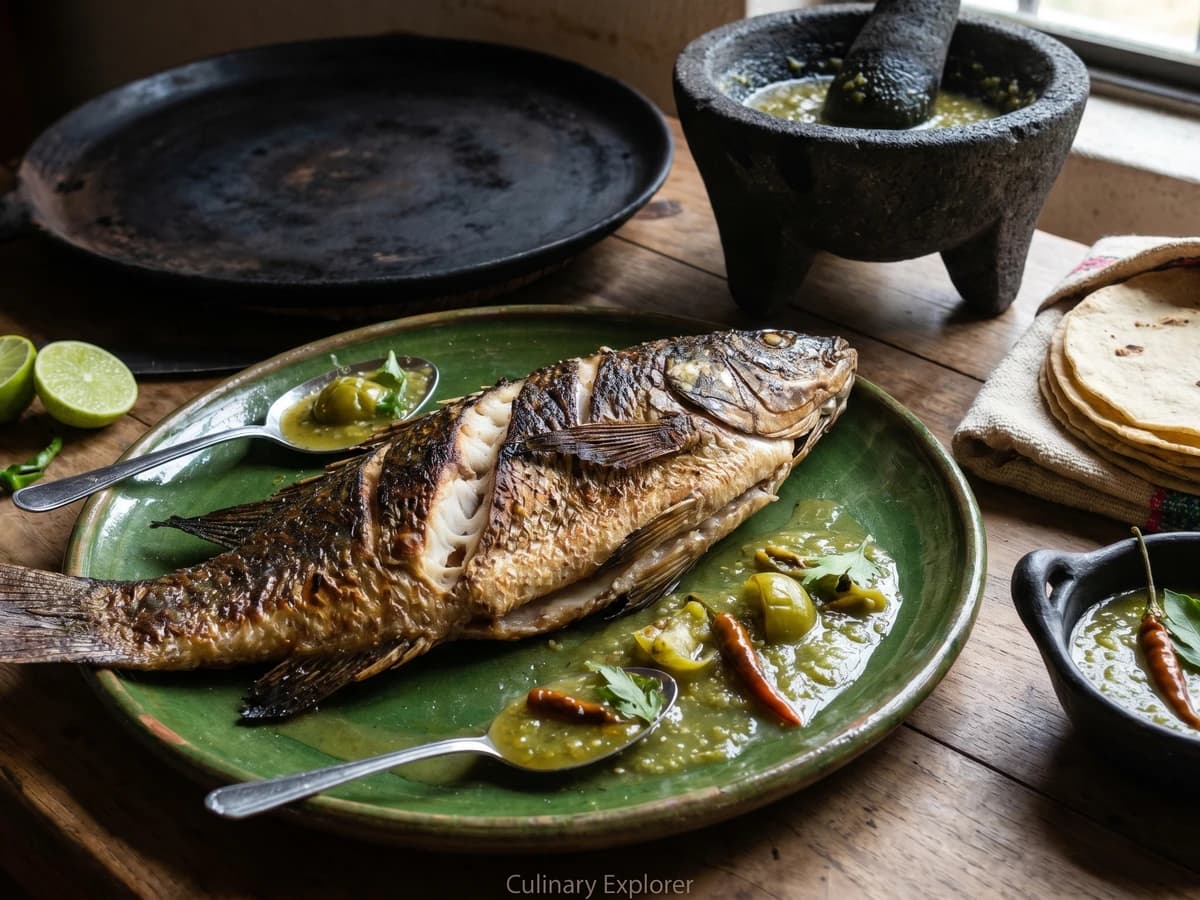
Michoacán's Lake Pátzcuaro acúmara, a whole kurucha from the lago tatemada on a comal de leña and served with chile perón atápakua, corn tortillas, and P'urhépecha discipline.
A cooking platform built around craft, culture, and the stories behind what we eat.

Created by
Oaxaca's everyday rice, fried in lard and steamed with chepil, the wild legume herb that grows in the Sierra and shows up in the markets only when the rains come.
This is from Oaxaca. Specifically from the Valles Centrales and the Sierra Norte, where chepil grows wild after the first rains and where the women at the Mercado de Abastos sell it in bunches tied with a strip of banana leaf. If you have not smelled fresh chepil before, the closest thing I can tell you is that it smells like a green field after rain, faintly grassy, faintly nutty, with something herbaceous that does not quite map to anything else.
Chepil is a small wild legume, Crotalaria longirostrata, and it is a Oaxacan ingredient in the way that hoja santa is a Veracruz ingredient. It is in the soup, it is in the tamales, and it is in this rice. The rest of Mexico cooks rice with tomato. Oaxaca cooks rice with chepil. Cada estado, su propia cocina.
This is not a fancy dish. It is the rice you eat on a Tuesday next to a pot of black beans and a stack of tortillas. That is the entire dinner. It is what working families across Oaxaca have eaten for generations because chepil is cheap when it is in season and rice and beans together make a complete protein. Saber cocinar es saber vivir, and a Oaxacan cook will tell you this rice is proof.
If chepil is not at your market, do not substitute spinach and call it arroz con chepil. It is not the same dish. Wait until you find chepil, dried or fresh, or cook a different rice. No me vengas con atajos.
Chepil (Crotalaria longirostrata), also called chipilin in Chiapas and Guatemala, is a perennial legume domesticated in Mesoamerica well before the Spanish conquest, valued by indigenous communities for both its high protein content and its ability to fix nitrogen into the soil. Oaxacan and Chiapanecan cuisines preserved chepil's culinary use into the modern era while much of central Mexico abandoned it, which is why the herb today reads as a regional marker of southern Mexico's pre-Hispanic foodways. The dish arroz con chepil itself is a colonial-era construction, joining a New World herb with rice introduced by the Spanish from Asia, and it stands as a quiet example of how Oaxacan cooks absorbed imported ingredients without surrendering their own.
Quantity
2 cups
Quantity
1 cup
stripped from the stems, about 2 generous handfuls
Quantity
3 1/2 cups
Quantity
3 tablespoons
Quantity
1/4 medium piece, plus 2 tablespoons finely chopped
Quantity
2
peeled
Quantity
1 1/2 teaspoons, plus more to taste
Quantity
1 sprig
Quantity
for serving
Quantity
for serving
sliced
Quantity
for serving
Quantity
for serving
| Ingredient | Quantity |
|---|---|
| long-grain white rice | 2 cups |
| fresh chepil leavesstripped from the stems, about 2 generous handfuls | 1 cup |
| hot water or light chicken broth | 3 1/2 cups |
| manteca de cerdo (pork lard) | 3 tablespoons |
| white onion | 1/4 medium piece, plus 2 tablespoons finely chopped |
| garlic clovespeeled | 2 |
| kosher salt | 1 1/2 teaspoons, plus more to taste |
| fresh epazote (optional) | 1 sprig |
| frijoles de la olla (optional) | for serving |
| fresh chile serrano (optional)sliced | for serving |
| lime wedges (optional) | for serving |
| hand-pressed corn tortillas (optional) | for serving |
Place the rice in a fine-mesh strainer and rinse under cold running water until the water runs almost clear. This pulls off the surface starch that turns rice gummy. Shake out the strainer well and let the rice sit for ten minutes. You want it damp, not wet. In Oaxacan kitchens this step is not skipped. Wet rice steams instead of frying and you lose the base of the dish before you start.
Hold each chepil sprig by the top and run your fingers down the stem to strip the small oval leaves. Discard the woody stems. The leaves are what carry the flavor, that grassy, faintly nutty smell that tells you immediately you are eating a Oaxacan dish and not anything else. You should have about one packed cup of leaves.
Melt the manteca in a heavy 3-quart cazuela or pot with a tight-fitting lid over medium heat. Add the drained rice and stir to coat every grain. Fry for five to seven minutes, stirring often, until the rice turns from translucent white to chalky white and a few grains start to take on the faintest gold color. La manteca es el sabor. Vegetable oil will get you cooked rice. Lard will get you Oaxacan rice.
Push the rice to the sides of the pot and drop the quarter onion and the two garlic cloves into the cleared center. Let them sizzle in the lard for one minute, just until fragrant. Stir everything together. The onion and garlic perfume the fat without dominating. They will be lifted out at the end. This is not a sofrito-heavy dish. The chepil is the flavor.
Pour in the hot water or chicken broth all at once. The pot will hiss. Add the salt and the epazote sprig if using. Stir once to even out the rice. Scatter the chepil leaves across the surface. Do not stir them in. They will settle as the rice cooks and they should sit near the top where the steam pulls their flavor down through the grains. Bring everything to a gentle boil.
When the liquid is at a steady boil and you can see the rice grains starting to peek through the surface, lower the heat to its lowest setting. Cover the pot tightly. If your lid is loose, lay a clean kitchen towel between the pot and the lid. Cook for eighteen minutes. Do not lift the lid. Do not stir. The rice is steaming and any escaped vapor is flavor you lose.
Turn off the heat and let the pot sit, still covered, for ten minutes. This is the step most home cooks skip and it is the difference between rice that is fluffy and rice that is mushy. The grains finish cooking in their own retained heat and the chepil settles into the rice.
Lift out and discard the onion quarter, the garlic cloves, and the epazote sprig. Fluff the rice gently with a fork, lifting from the bottom so the chepil distributes through the grains. Taste for salt. Serve hot in a clay cazuela alongside frijoles de la olla, a small dish of sliced serrano, and warm corn tortillas. Asi se hace y punto.
1 serving (about 215g)
Culinary guides, cultural storytelling, and the editorial depth that makes cooking meaningful.
Discover Culinary ExplorerChef Lupita
Michoacán's Lake Pátzcuaro acúmara, a whole kurucha from the lago tatemada on a comal de leña and served with chile perón atápakua, corn tortillas, and P'urhépecha discipline.

Chef Lupita
Puebla's weekday adobo of pork shoulder braised in a thick guajillo and ancho sauce sharpened with vinegar, cumin, and clove. The deep red of a market spice stall, the dish a poblana cooks without thinking.

Chef Lupita
Loreto's pit-roasted clams, planted hinge-up in beach sand and tatemadas under a fast fire of dried romerillo brush, the resinous Baja desert shrub that gives this dish its smoke.

Chef Lupita
Oaxaca's eighth mole, the silky, almond-and-cinnamon almendrado, served over poached chicken. Mild, sweet, restrained, and a quiet rebuttal to anyone who thinks Mexican food has to be hot to be Mexican.