
Chef Margarida
Caracóis à Portuguesa
Há caracóis! The signs appear in May and all of Lisbon knows summer has arrived. Tiny snails in spiced broth, sucked from shells at plastic tables, washed down with imperial after imperial.
A cooking platform built around craft, culture, and the stories behind what we eat.
Created by
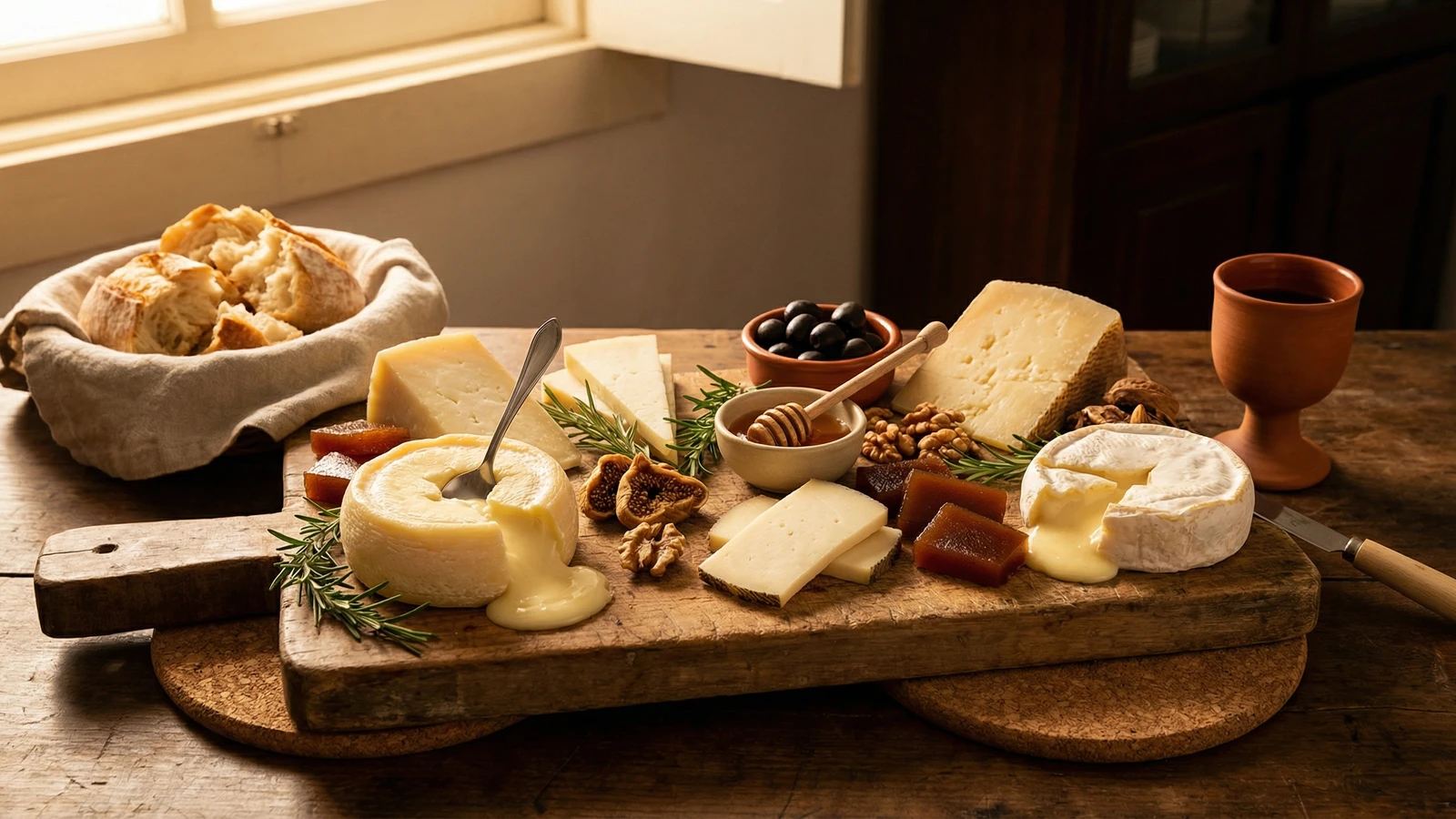
Four regions, four cheeses, four centuries of shepherd's wisdom arranged on a single board. This is how Portugal welcomes guests: with abundance, with stories, with the understanding that sitting together matters more than what's on the table.
When I started documenting recipes from grandmothers across Portugal, I expected to learn about stews and soups and the things that simmer for hours. What surprised me was how much they wanted to talk about cheese.
Every region has its queijo. The mountains, the plains, the islands. Each shaped by the grass the sheep eat, the wild thistle flowers used for rennet, the hands that press the curds. When you put four Portuguese cheeses on a board, you're not just offering food. You're offering a map.
Avó Leonor loved her queijo de Nisa, being from Alentejo. She'd eat it with bread for breakfast, with marmelada after dinner, crumbled into açorda when no one was watching. But when company came, she'd splurge on Serra da Estrela. "Isto é para as visitas," she'd say. This is for guests. It meant you mattered.
A proper tábua de queijos isn't about showing off how many varieties you can collect. It's about showing the range of what this small country produces: the liquid creaminess of Serra, the tang of Azeitão, the sharp bite of aged São Jorge, the earthy gentleness of Nisa. Each tells a different story. Together, they tell ours.
Portugal's sheep's milk cheese tradition dates back over two thousand years, with techniques passing from mother to daughter in mountain villages largely unchanged. The use of thistle rennet (cardo) rather than animal rennet makes Portuguese soft cheeses unique in Europe and gives them their distinctive slightly bitter, floral finish. Serra da Estrela received protected DOP status in 1996, but the methods are medieval.
Quantity
1 small wheel (about 500g)
at room temperature
Quantity
1 small wheel (about 250g)
at room temperature
Quantity
250g
aged 4-7 months, cut into wedges
Quantity
200g
at room temperature
Quantity
200g
sliced
Quantity
150g
Quantity
100g
Quantity
100g
Quantity
1 small bunch
Quantity
1 loaf
Quantity
2 tablespoons
Quantity
a few sprigs
| Ingredient | Quantity |
|---|---|
| Serra da Estrela DOPat room temperature | 1 small wheel (about 500g) |
| Queijo de Azeitão DOPat room temperature | 1 small wheel (about 250g) |
| São Jorge DOPaged 4-7 months, cut into wedges | 250g |
| Queijo de Nisa DOPat room temperature | 200g |
| marmelada (quince paste)sliced | 200g |
| dried figs | 150g |
| walnuts | 100g |
| Portuguese black olives | 100g |
| moscatel grapes or fresh figs (optional) | 1 small bunch |
| crusty bread | 1 loaf |
| honey | 2 tablespoons |
| fresh rosemary (optional) | a few sprigs |
Remove all cheeses from the refrigerator at least one hour before serving, two hours for the Serra da Estrela. Cold cheese is muted cheese. The soft varieties need time to reach that spoonable, almost liquid consistency that makes them extraordinary. This isn't optional. A cold Serra da Estrela is like hearing fado through a closed door.
For Serra da Estrela and Azeitão, the traditional way is to cut a circle from the top rind, like opening a lid. Inside, the cheese should be creamy, almost runny. You eat it with a spoon, scooping directly from the wheel. If your Serra is firm rather than flowing, it's either too young, too cold, or not the real thing. The paste should ooze slightly when you break the top.
Cut the São Jorge into thin wedges or rectangles that guests can pick up easily. This cheese should show its crystalline texture, those small crunchy bits that form as it ages. The Nisa gets similar treatment: wedges that reveal the ivory interior with its slight graininess. Each cut should be a single bite or two at most.
Use a large wooden board, a piece of cork, or a clean slate. Place the whole wheels of Serra and Azeitão where they won't be crowded. Arrange the cut cheeses nearby but not touching. The marmelada goes beside the soft cheeses (this pairing is sacred). Scatter the figs and walnuts to fill gaps. Place olives in a small bowl to contain the brine. Tear the bread roughly, don't slice it, and pile it in a basket alongside.
Drizzle honey into a small dish with a honey dipper if you have one. Add the grapes or fresh figs if using. Tuck rosemary sprigs around the edges for fragrance, not for eating. Step back and look: you should see abundance without chaos, variety without clutter. This is a board that invites hands, conversation, staying longer than planned.
Tell your guests the story. Point to the Serra and explain it's from shepherds in the highest mountains of mainland Portugal. Note that the Azeitão comes from just south of Lisbon. Mention that São Jorge has aged on an island in the middle of the Atlantic. Portuguese cheese carries geography in every bite. Share that, and you're sharing something beyond dinner.
1 serving (about 260g)
Culinary guides, cultural storytelling, and the editorial depth that makes cooking meaningful.
Discover Culinary ExplorerChef Margarida
Há caracóis! The signs appear in May and all of Lisbon knows summer has arrived. Tiny snails in spiced broth, sucked from shells at plastic tables, washed down with imperial after imperial.

Chef Margarida
Crispy triangles of spiced meat wrapped in golden pastry, carrying the flavors of Goa across the ocean to every Portuguese tasca and family gathering. Colonial history you can eat.
Chef Margarida
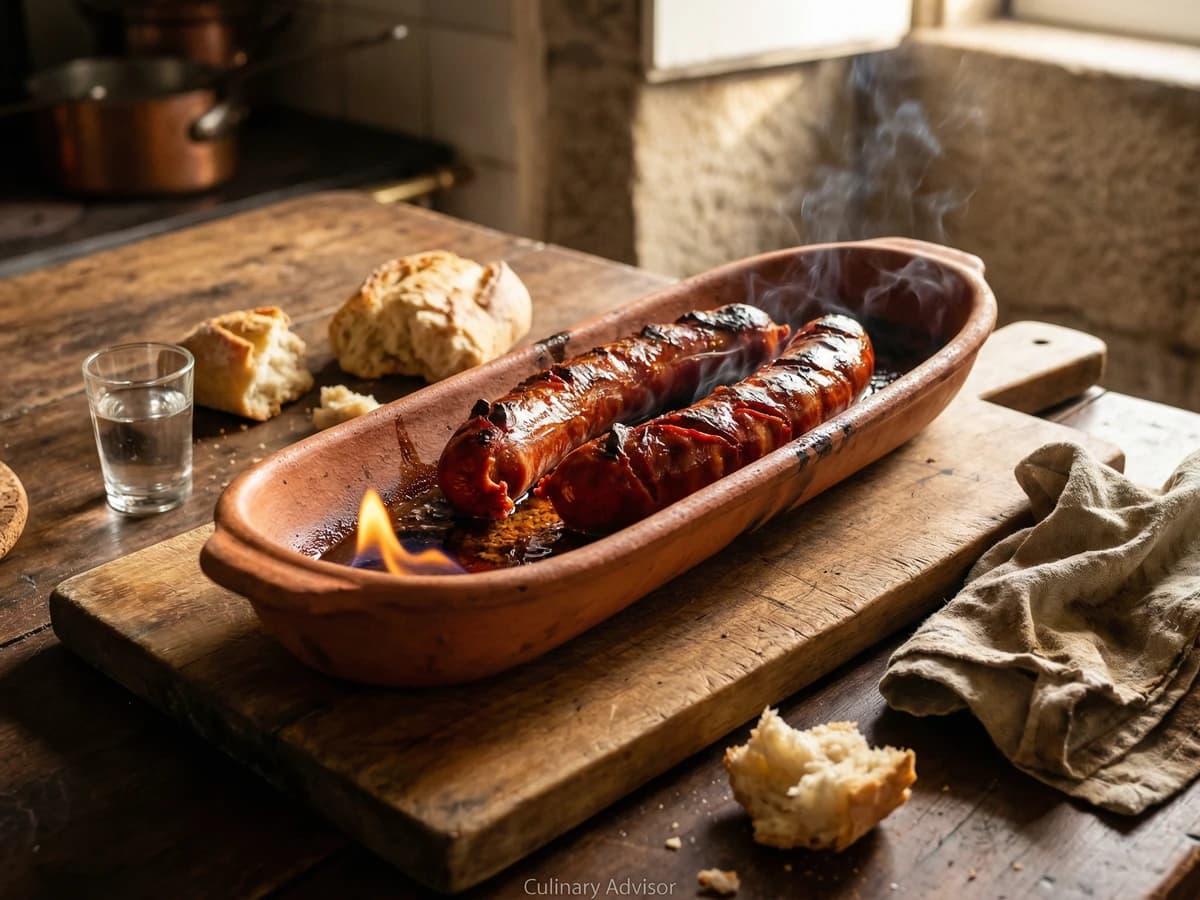
The theater of the tasca: chouriço set ablaze in its clay vessel, aguardente flames dancing blue and orange until the casing splits and the smoky fat runs. This is how we gather.

Chef Margarida
Mushrooms stuffed with chouriço and baked until the cheese bubbles and browns, the kind of petisco that disappears from the table before you've finished pouring the wine. Tasca food for your home.