
Chef Margarida
Caracóis à Portuguesa
Há caracóis! The signs appear in May and all of Lisbon knows summer has arrived. Tiny snails in spiced broth, sucked from shells at plastic tables, washed down with imperial after imperial.
A cooking platform built around craft, culture, and the stories behind what we eat.
Created by
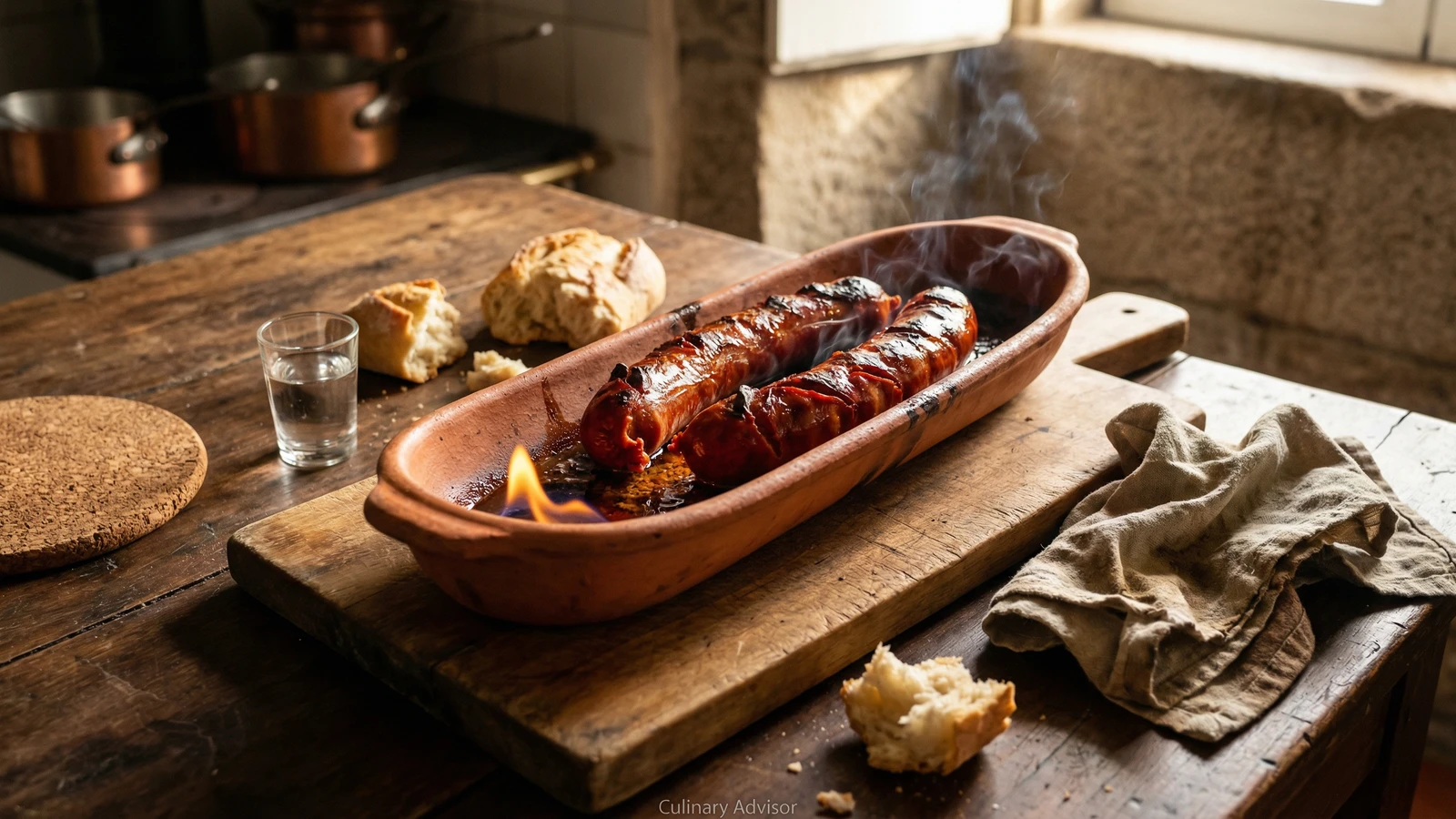
The theater of the tasca: chouriço set ablaze in its clay vessel, aguardente flames dancing blue and orange until the casing splits and the smoky fat runs. This is how we gather.
Every tasca in Portugal has one. The clay canoe. The bottle of aguardente tucked behind the counter. A chouriço waiting for its moment.
This isn't cooking. This is ritual. You set fire to something at the table, watch the flames dance, listen to the casing crackle and split, smell the smoke and paprika and rendered fat fill the air. Everyone leans in. Everyone watches. And when the flames die and the chouriço sits there, glistening and charred, you tear it apart with your hands and eat it with bread that soaks up every drop of smoky, spicy juice.
Avó Leonor kept an old clay assador on the top shelf of her pantry. "Para quando há festa," she'd say. For when there's celebration. It came down for birthdays, for saint's days, for when family arrived from Lisbon. The aguardente was her brother's, homemade, strong enough to make your eyes water. The chouriço was from the matança, the pig slaughter each winter.
At Mesa da Avó, I always serve this when I want to remind people that Portuguese food is not quiet. It's fire and fat and theater. It's gathering around something dramatic and sharing it. This is who we are.
Chouriço production dates to the medieval Portuguese matança, the annual pig slaughter that sustained families through winter. The tradition of flaming chouriço in clay vessels emerged from rural taverns where the spectacle drew customers and the method rendered excess fat while crisping the casing. Every region claims the best chouriço: Trás-os-Montes for its smoky intensity, Alentejo for its porco preto depth, Beira for its garlic-forward punch.
Quantity
2 (about 200g each)
traditional Portuguese, not Spanish chorizo
Quantity
1/4 cup
Quantity
for serving
| Ingredient | Quantity |
|---|---|
| chouriço sausagestraditional Portuguese, not Spanish chorizo | 2 (about 200g each) |
| aguardente | 1/4 cup |
| crusty bread | for serving |
Score the chouriço with a few shallow diagonal cuts along the length. This helps the fat render and the flames penetrate. Don't cut too deep or you'll lose the juices. Place the sausages in your clay assador or a small, flameproof terracotta dish.
Pour the aguardente into the dish around the chouriço. You want enough to create flames that will lick up the sides of the sausages but not so much that the fire burns forever. About 1/4 cup is right for two sausages.
Carefully light the aguardente with a long match or lighter. The flames will burn blue at first, then turn orange as they catch the fat. Watch the chouriço. Listen to it. You'll hear the casing crackle and split. The fat will bubble and sizzle. When the flames die down, about 3 to 4 minutes, add another splash of aguardente and relight. Repeat until the chouriço is charred on the outside, the casing split and caramelized, and the fat fully rendered.
When the flames die for the final time and the chouriço sits glistening and charred, let it rest for just a minute. Cut into thick diagonal slices right in the dish, letting the juices pool. Pass the bread around. Everyone tears bread, dips it in the smoky juices, and eats the chouriço with their hands. This is not a knife-and-fork situation.
1 serving (about 100g)
Culinary guides, cultural storytelling, and the editorial depth that makes cooking meaningful.
Discover Culinary ExplorerChef Margarida
Há caracóis! The signs appear in May and all of Lisbon knows summer has arrived. Tiny snails in spiced broth, sucked from shells at plastic tables, washed down with imperial after imperial.

Chef Margarida
Crispy triangles of spiced meat wrapped in golden pastry, carrying the flavors of Goa across the ocean to every Portuguese tasca and family gathering. Colonial history you can eat.

Chef Margarida
Mushrooms stuffed with chouriço and baked until the cheese bubbles and browns, the kind of petisco that disappears from the table before you've finished pouring the wine. Tasca food for your home.
Chef Margarida
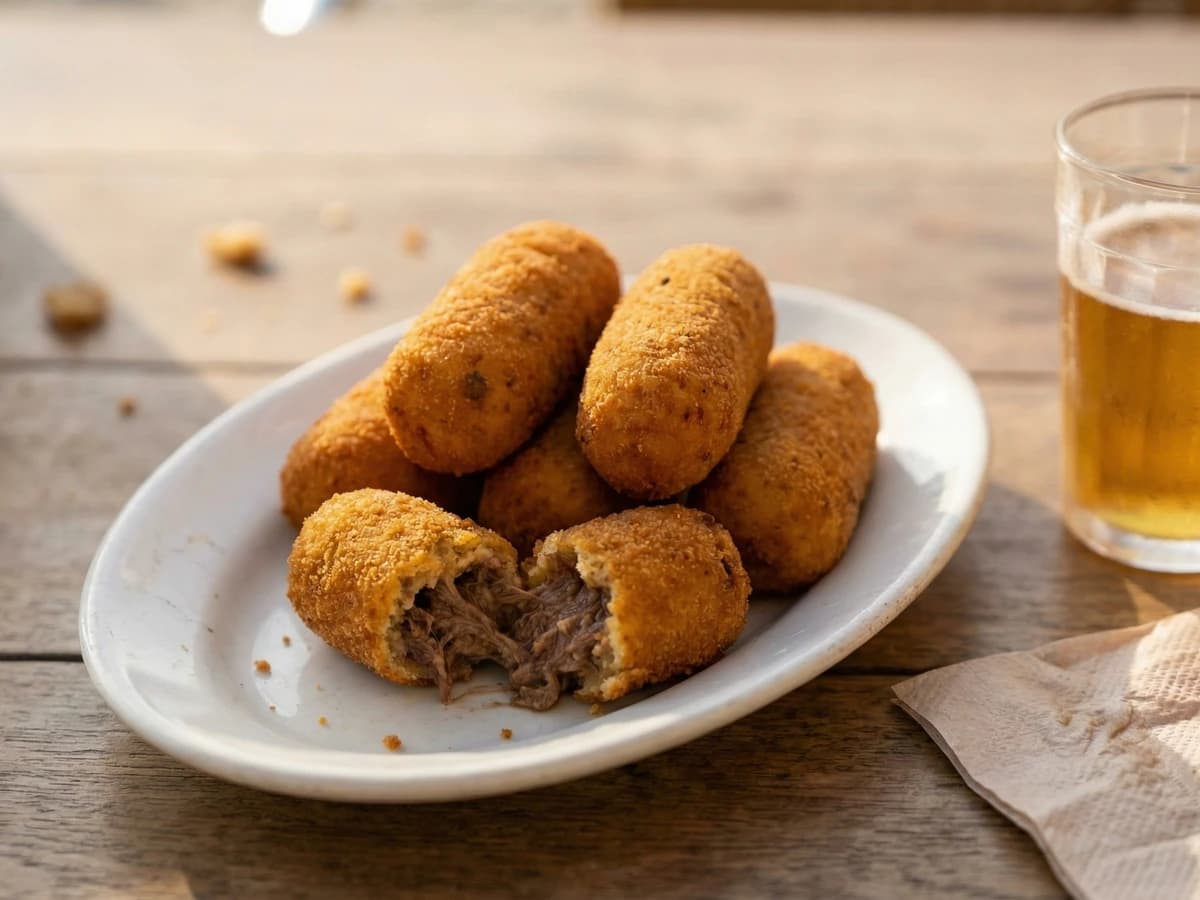
The cylinder-shaped beef croquettes on every café counter in Portugal, proof that the simplest foods done right become the ones you crave most. Crisp outside, soft inside, perfect with a cold imperial.