
Chef Margarida
Chamuças Portuguesas
Crispy triangles of spiced meat wrapped in golden pastry, carrying the flavors of Goa across the ocean to every Portuguese tasca and family gathering. Colonial history you can eat.
A cooking platform built around craft, culture, and the stories behind what we eat.

Created by
Há caracóis! The signs appear in May and all of Lisbon knows summer has arrived. Tiny snails in spiced broth, sucked from shells at plastic tables, washed down with imperial after imperial.
Every May, the signs go up. Há caracóis. There are snails. Three words that mean summer has officially arrived in Lisbon.
I didn't grow up eating caracóis in Alentejo. Avó Leonor thought they were city food, Lisbon nonsense. But when I moved to the capital for school, I understood immediately. You're sitting outside a tasca on a warm evening. The waiter brings a terra cotta bowl filled with tiny snails swimming in fragrant broth. You pick one up, suck it from the shell with a sharp intake of breath, and chase it with cold beer. Then another. Then another. Hours pass. The bowl empties. The conversation flows. This is what Portuguese summer tastes like.
The broth is everything. Garlic, so much garlic. Dried oregano from the hills. Bay leaves. A whisper of piri-piri for heat that builds slowly. You eat the snails first, picking through the shells with a toothpick when the sucking method fails you. Then you drink the broth, tipping the bowl to your lips, mopping it with bread. Nothing is wasted.
At Mesa da Avó, I serve caracóis at our summer pop-ups. Watching someone eat their first Portuguese snail is a joy. The hesitation, the first brave attempt, the moment they realize what they've been missing. As avós sabem. The grandmothers of Lisbon and the Ribatejo have known this for generations.
Caracóis have been eaten in Portugal since at least Roman times, when Lusitania was known for its land snails. The modern tasca tradition emerged in Lisbon and the Ribatejo region in the early 20th century, becoming a beloved summer ritual. The season runs strictly from May to September, when the small caracóis (Theba pisana) are at their best after feeding on wild herbs.
Quantity
1 kg
purged and cleaned
Quantity
2 liters
Quantity
1 head
cloves separated and lightly crushed
Quantity
3 tablespoons
Quantity
4
Quantity
1-2, or 1 teaspoon flakes
Quantity
1 tablespoon
Quantity
2 tablespoons
Quantity
1 small
quartered
Quantity
freshly ground, to taste
| Ingredient | Quantity |
|---|---|
| small snails (caracóis)purged and cleaned | 1 kg |
| water | 2 liters |
| garliccloves separated and lightly crushed | 1 head |
| dried oregano (orégãos) | 3 tablespoons |
| bay leaves | 4 |
| dried piri-piri chilis | 1-2, or 1 teaspoon flakes |
| coarse sea salt | 1 tablespoon |
| extra virgin olive oil | 2 tablespoons |
| onion (optional)quartered | 1 small |
| black pepper | freshly ground, to taste |
If your snails are fresh and not pre-purged, place them in a bucket or large container with cornmeal or semolina for 2 to 3 days, changing the meal daily. This cleans their digestive systems. Rinse thoroughly in several changes of cold water, rubbing the shells together to remove any remaining dirt. Discard any snails that don't retract when touched. They should be alive before cooking.
In a large pot, combine the water, crushed garlic cloves, oregano, bay leaves, piri-piri, salt, olive oil, and onion if using. Bring to a boil over high heat, then reduce to a simmer. Let the aromatics infuse for 10 minutes. The kitchen should smell like a Lisbon tasca in July.
Add the cleaned snails to the simmering broth. The water will cool briefly. Return to a gentle simmer and cook uncovered for 25 to 30 minutes. The snails are ready when they pull easily from their shells. Don't rush this. Undercooked snails are tough; properly cooked ones slide out with just a little suction.
Remove from heat and let the snails rest in their broth for 10 minutes. This allows them to absorb more flavor. Serve hot in deep bowls or the traditional terra cotta dish, snails and broth together. Provide an empty bowl for shells and plenty of napkins. Cold beer is not optional.
1 serving (about 100g)
Culinary guides, cultural storytelling, and the editorial depth that makes cooking meaningful.
Discover Culinary ExplorerChef Margarida
Crispy triangles of spiced meat wrapped in golden pastry, carrying the flavors of Goa across the ocean to every Portuguese tasca and family gathering. Colonial history you can eat.
Chef Margarida
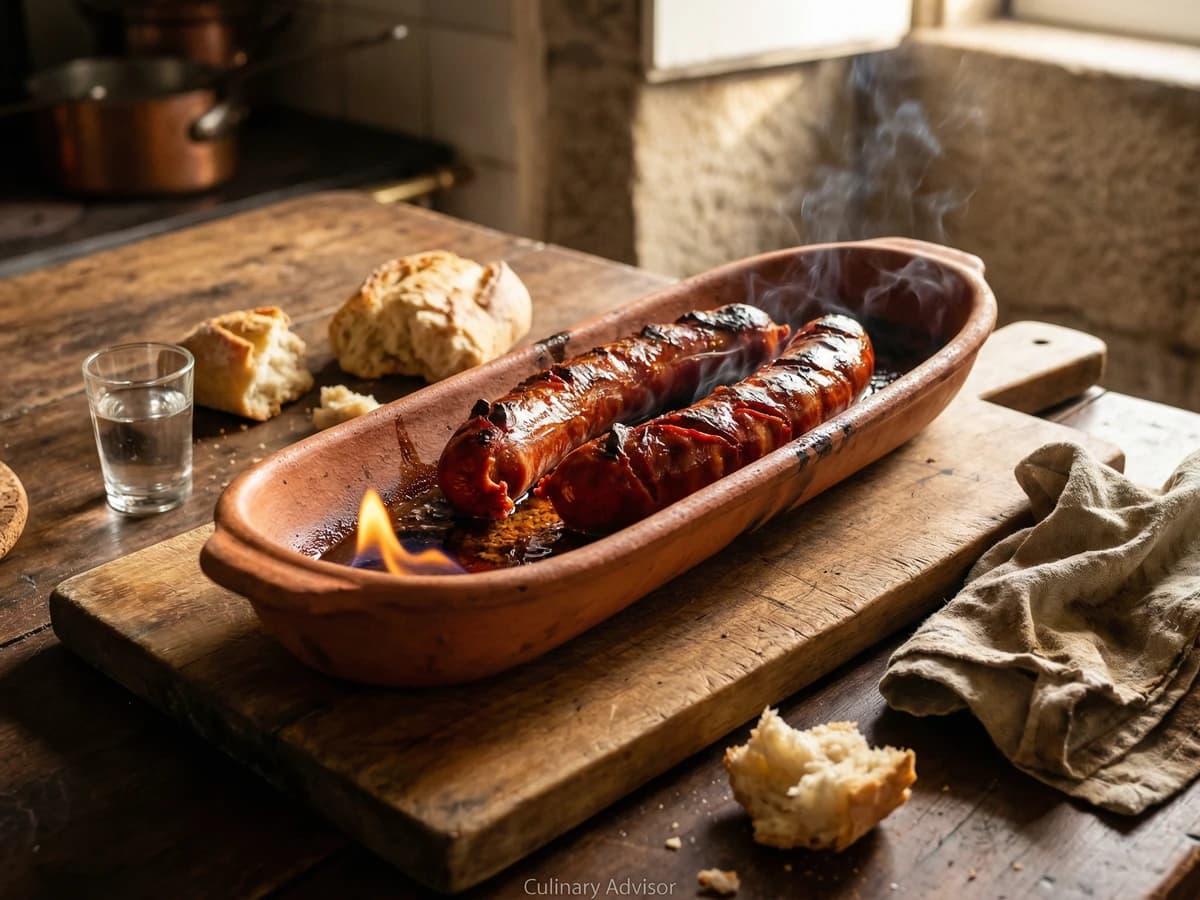
The theater of the tasca: chouriço set ablaze in its clay vessel, aguardente flames dancing blue and orange until the casing splits and the smoky fat runs. This is how we gather.

Chef Margarida
Mushrooms stuffed with chouriço and baked until the cheese bubbles and browns, the kind of petisco that disappears from the table before you've finished pouring the wine. Tasca food for your home.
Chef Margarida
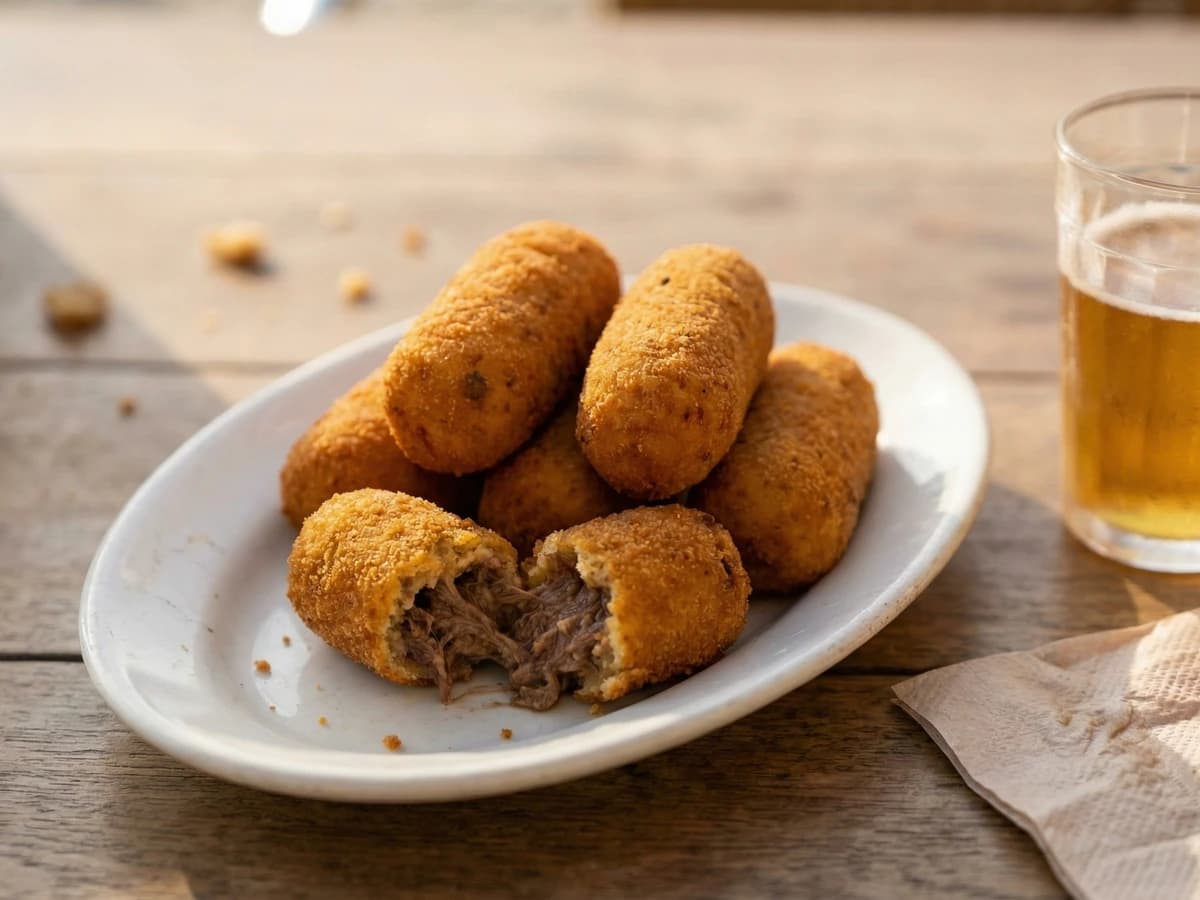
The cylinder-shaped beef croquettes on every café counter in Portugal, proof that the simplest foods done right become the ones you crave most. Crisp outside, soft inside, perfect with a cold imperial.