
Chef Margarida
Caracóis à Portuguesa
Há caracóis! The signs appear in May and all of Lisbon knows summer has arrived. Tiny snails in spiced broth, sucked from shells at plastic tables, washed down with imperial after imperial.
A cooking platform built around craft, culture, and the stories behind what we eat.

Created by
A board of Portugal's finest cured meats, each slice carrying centuries of mountain smoke and village tradition. No cooking required. Just respect for the craft, a sharp knife, and people worth sharing it with.
This isn't a recipe. It's an education.
Every region of Portugal has its enchidos, its cured meats, its fumeiro. The mountains of Trás-os-Montes, where winter cold and chestnut smoke preserve pork for months. The plains of Alentejo, where porco preto roams under cork oaks and becomes presunto so rich it melts on your tongue. Every village has its own chouriço recipe, its own blend of spices, its own way of smoking.
Avó Leonor kept enchidos hanging in the cool pantry off her kitchen. As a child, I thought they were decoration. She'd catch me staring and slice a piece of salpicão, handing it to me without a word. That was my first lesson: these are not fancy foods. These are survival foods, peasant ingenuity, the art of making pork last through winter. The fact that they taste extraordinary is almost accidental.
When I serve a tábua de enchidos at Mesa da Avó, I tell people where each meat comes from. The presunto from Barrancos, near the Spanish border. The chouriço de vinho from Beiras, made with wine instead of vinegar. The alheira from Mirandela, with its strange and beautiful history. A board of enchidos is a map of Portugal. Every slice tells you something about the land and the people who worked it.
This is not cooking. This is curation. Your job is to find good enchidos, slice them properly, and get out of the way.
Portuguese fumeiro (smoke-cured meats) dates to Roman times, when Iberian pigs were prized throughout the empire. The tradition of winter slaughter, the matança, persisted in rural Portugal until recently, with each family curing enough meat to last until spring. Trás-os-Montes remains the heartland of this tradition, its cold mountain climate perfect for the slow cure that transforms pork into presunto, chouriço, and salpicão.
Quantity
150g
sliced paper-thin
Quantity
150g
sliced thin on the bias
Quantity
100g
sliced into rounds
Quantity
100g
sliced into rounds
Quantity
100g
sliced thin
Quantity
100g
sliced into rounds
Quantity
200g
Quantity
1 loaf
torn or sliced
Quantity
for drizzling
Quantity
150g
cut into wedges
| Ingredient | Quantity |
|---|---|
| presunto (dry-cured ham)sliced paper-thin | 150g |
| chouriço de carnesliced thin on the bias | 150g |
| salpicãosliced into rounds | 100g |
| morcela (blood sausage)sliced into rounds | 100g |
| paio (smoked pork sausage)sliced thin | 100g |
| alheira (optional)sliced into rounds | 100g |
| mixed Portuguese olives | 200g |
| crusty breadtorn or sliced | 1 loaf |
| extra virgin olive oil (azeite) | for drizzling |
| queijo curado (cured sheep's cheese) (optional)cut into wedges | 150g |
Remove all enchidos from refrigeration at least 30 minutes before serving. Cold kills flavor. The fat in presunto and chouriço needs to soften slightly to release its full taste. This is not optional.
Using your sharpest knife, slice the presunto as thin as you possibly can. Paper-thin. You should almost see through it. Thick-cut presunto is a waste of good ham. The slices should drape, not stack. Lay them gently on the board, letting them fold naturally. Never flatten them.
Cut the chouriço on the bias, about 3mm thick, so each slice shows the marbled interior of fat and lean. Slice the salpicão into rounds, slightly thicker, to showcase its whole-muscle texture. The paio gets the same treatment as chouriço. For morcela, slice into rounds about 1cm thick. It's more delicate and needs the structure.
If using alheira, slice it gently into rounds. The texture is softer than other enchidos, almost crumbly. Some people prefer to serve it grilled or fried, but on a traditional tábua, it goes raw, letting you taste the bread and spice mixture unmasked. Handle with care.
Use a large wooden board or a clean cork surface. Arrange each meat in its own section, grouped by type, so guests can identify what they're eating. Place the presunto where it has room to breathe. Cluster the sausage slices in overlapping rows. Don't overthink the arrangement. Abundance is the aesthetic. This should look generous, not fussy.
Place a small bowl of olives on or beside the board. Add wedges of queijo curado if using. Tear the bread into rough pieces or slice it thickly, placing it in a basket or directly on the board. Set out a small dish of your best azeite for dipping bread.
Place the board at the center of the table where everyone can reach. Pour the wine. Tell your guests where each meat comes from. The presunto from Alentejo's black pigs. The salpicão from the mountains of Trás-os-Montes. The alheira, invented by Jews in Mirandela to disguise their faith during the Inquisition. A tábua de enchidos is a conversation, not just a course.
1 serving (about 185g)
Culinary guides, cultural storytelling, and the editorial depth that makes cooking meaningful.
Discover Culinary ExplorerChef Margarida
Há caracóis! The signs appear in May and all of Lisbon knows summer has arrived. Tiny snails in spiced broth, sucked from shells at plastic tables, washed down with imperial after imperial.

Chef Margarida
Crispy triangles of spiced meat wrapped in golden pastry, carrying the flavors of Goa across the ocean to every Portuguese tasca and family gathering. Colonial history you can eat.
Chef Margarida
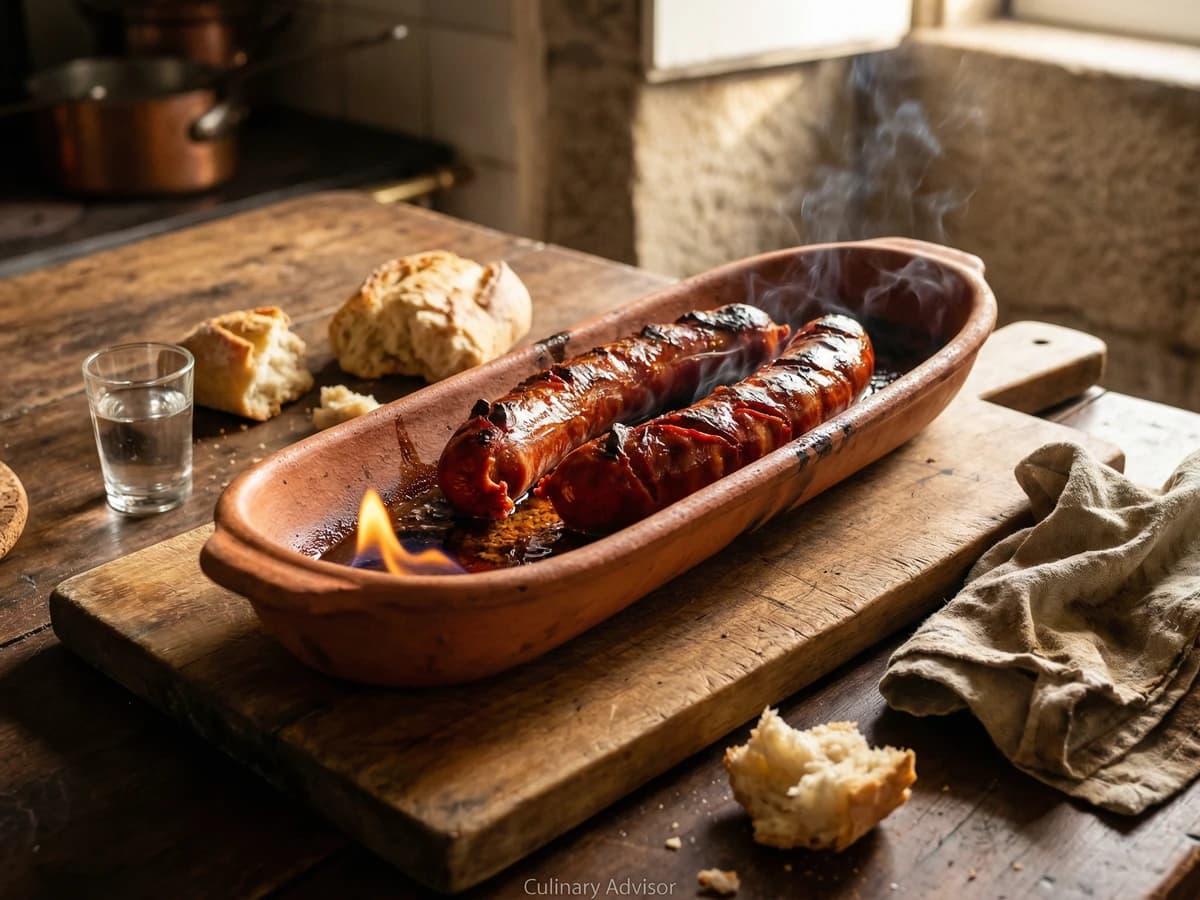
The theater of the tasca: chouriço set ablaze in its clay vessel, aguardente flames dancing blue and orange until the casing splits and the smoky fat runs. This is how we gather.

Chef Margarida
Mushrooms stuffed with chouriço and baked until the cheese bubbles and browns, the kind of petisco that disappears from the table before you've finished pouring the wine. Tasca food for your home.