Chef Lupita
Acúmara Tatemada al Comal
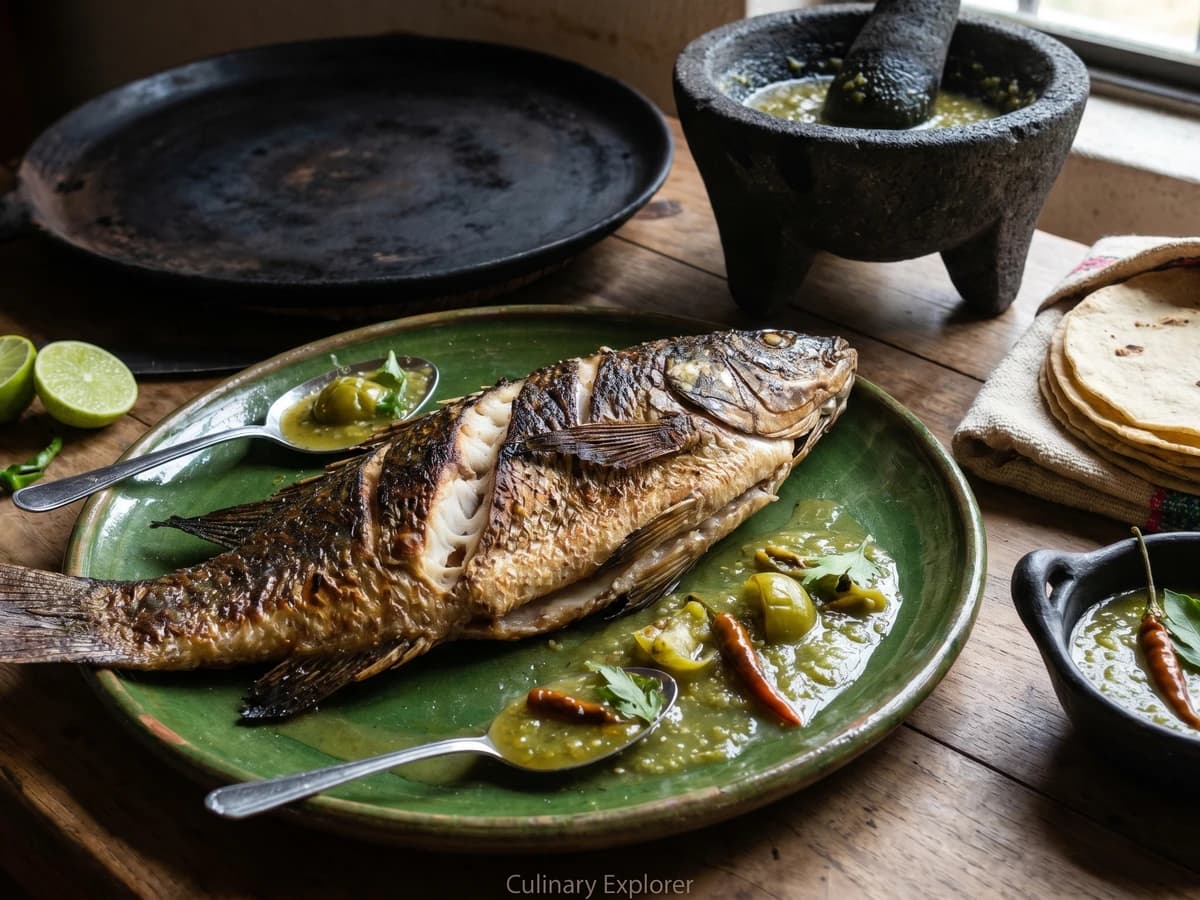
Michoacán's Lake Pátzcuaro acúmara, a whole kurucha from the lago tatemada on a comal de leña and served with chile perón atápakua, corn tortillas, and P'urhépecha discipline.
A cooking platform built around craft, culture, and the stories behind what we eat.

Created by
The Sierra Norte's Sunday casserole from the Zapotec villages above Oaxaca City. Pan de yema layered with smoky tomato caldillo, ripe plantain, raisins, almonds, and hard-boiled egg, baked in clay until the top turns crisp.
This is from the Sierra Norte de Oaxaca. The Zapotec villages perched in the pine forests above the valley, Ixtlan, Capulalpam, Guelatao, the towns where the air is thinner and Sundays are slower than in Oaxaca City. Down in the valley they have their seven moles. Up here, they have sopa de pan, and they make it for weddings, for fiestas patronales, for any Sunday that asks for a real table.
The bread is pan de yema. Not white bread, not French bread, not anything else. Pan de yema is the egg-yolk-rich bread of Oaxaca, sweet enough to balance the smoky chile broth and sturdy enough to hold its shape under the caldillo. Find it at a panaderia oaxaquena. If you cannot, a good challah will get you closer than a baguette ever will. The other anchors are equally fixed: very ripe plantain, almost black, so the sugars caramelize when they hit the lard. Raisins. Hard-boiled egg. Almonds. The whole layered structure baked in a clay cazuela so the edges crisp and the center turns into something between a soup and a savory bread pudding.
The caldillo is where the cook shows what she knows. Tomato charred on the comal, chile ancho and a single guajillo for color, clove and canela and pepper toasted whole, all of it blended smooth and fried in lard until the fat separates. That frying is not optional. It is the recipe. La manteca es el sabor.
My mother did not know this dish. She was from Jalisco. I learned it from a senora named Dona Eulalia in Capulalpam who served it to me on a Sunday in October, in a green-glazed clay bowl, with pickled jalapenos on the side and her grandchildren waiting their turn. She told me to write down the proportions and not to argue with them. I have not argued with them since. Cada estado, su propia cocina, and inside that, cada region tambien.
Sopa de pan belongs to the layered casserole tradition that Mexican cooks built from the Spanish capirotada, a Lenten bread pudding of medieval origin that arrived with the colonial period and was indigenized across the country in distinct regional forms. The Sierra Norte version, served savory rather than sweet and anchored in chile-tomato caldillo rather than piloncillo syrup, is a Zapotec elaboration tied to the patron saint feast days of the highland villages, where the dish is documented in 19th-century parish records as an essential offering at communal meals. Pan de yema itself is a 17th-century Oaxacan bread descended from Spanish pan de huevo, enriched with the egg yolks that the convents of Oaxaca produced in surplus from their cajeta and dulce de yema confectionery, a colonial economy that left its imprint on regional baking and on dishes like this one that depend on the bread's particular sweetness.
Quantity
1 large loaf (about 1 pound)
cut into 1/2-inch slices and dried overnight
Quantity
6 tablespoons, plus more for the cazuela
Quantity
2 pounds
Quantity
3/4 medium
1/2 for blending, 1/4 for broth base
Quantity
3
Quantity
2
stemmed and seeded
Quantity
1
stemmed and seeded
Quantity
4
Quantity
6
Quantity
1 stick (about 2 inches)
Quantity
4 cups
hot
Quantity
2
peeled and sliced into 1/2-inch rounds
Quantity
1/2 cup
Quantity
1/2 cup
Quantity
1/4 cup
Quantity
4
peeled and sliced into rounds
Quantity
1 sprig
Quantity
2 sprigs (or 1 teaspoon dried Oaxacan oregano)
Quantity
2
Quantity
1 tablespoon
Quantity
1 tablespoon, grated (or dark brown sugar)
Quantity
1 1/2 teaspoons, plus more to taste
Quantity
1 cup
crumbled
Quantity
for serving
| Ingredient | Quantity |
|---|---|
| pan de yemacut into 1/2-inch slices and dried overnight | 1 large loaf (about 1 pound) |
| manteca de cerdo (pork lard) | 6 tablespoons, plus more for the cazuela |
| ripe roma tomatoes | 2 pounds |
| white onion1/2 for blending, 1/4 for broth base | 3/4 medium |
| garlic cloves | 3 |
| dried chile anchostemmed and seeded | 2 |
| dried chile guajillostemmed and seeded | 1 |
| whole cloves | 4 |
| black peppercorns | 6 |
| canela (Mexican cinnamon) | 1 stick (about 2 inches) |
| chicken brothhot | 4 cups |
| very ripe plantains with black skinspeeled and sliced into 1/2-inch rounds | 2 |
| raisins | 1/2 cup |
| blanched almonds | 1/2 cup |
| pine nuts (optional) | 1/4 cup |
| hard-boiled eggspeeled and sliced into rounds | 4 |
| fresh thyme | 1 sprig |
| fresh oregano | 2 sprigs (or 1 teaspoon dried Oaxacan oregano) |
| bay leaves | 2 |
| apple cider vinegar | 1 tablespoon |
| piloncillo | 1 tablespoon, grated (or dark brown sugar) |
| kosher salt | 1 1/2 teaspoons, plus more to taste |
| queso frescocrumbled | 1 cup |
| pickled jalapenos en escabeche (optional) | for serving |
The night before you cook, slice the pan de yema into half-inch rounds and lay them on a wire rack at room temperature, uncovered, until morning. Fresh bread will turn to mush in the broth. Day-old bread holds its shape and drinks the broth without falling apart. If you forgot to do this the night before, lay the slices on a sheet pan in a 250F oven for 15 minutes until they feel dry to the touch but are not toasted.
Heat a dry comal or heavy skillet over medium. Toast the chile ancho and chile guajillo separately, about 20 to 30 seconds per side. The skin will puff and the kitchen will smell like the chile vendor's stall in the Mercado de Etla. Move them to a heatproof bowl and cover with hot tap water for 15 minutes. While they soak, toast the cloves, peppercorns, and canela on the same comal for about a minute, until fragrant.
On the same comal, char the whole tomatoes, the half onion, and the garlic cloves in their skins. Turn them as the skins blacken in patches. The tomatoes are ready when they collapse and the skin splits, about 8 minutes. The onion takes about the same. The garlic should be soft inside its papery skin, about 4 minutes. Peel the garlic and pull off the worst of the burned tomato skin, but leave some. The char is the smoke that gives this broth its Sierra Norte depth.
Drain the soaked chiles. Combine them in a blender with the charred tomatoes, onion, garlic, toasted spices, oregano, vinegar, piloncillo, and one cup of the hot chicken broth. Blend until completely smooth, two full minutes. Strain through a fine-mesh sieve into a bowl, pressing on the solids. You should have a smooth, brick-red caldillo with the body of cream. Discard what stays in the strainer.
In a heavy saucepan, melt 3 tablespoons of the lard over medium heat. Pour in the strained caldillo. It will sputter. Stand back. Cook for 8 to 10 minutes, stirring often, until the puree darkens, the fat starts to separate at the edges, and the kitchen smells of cooked chile and clove. La manteca es el sabor. This step is the difference between a thin tomato bath and a real Oaxacan caldillo. Add the remaining 3 cups of hot chicken broth, the thyme, and the bay leaves. Simmer 10 minutes. Taste for salt. The broth needs to be assertive because the bread will absorb a lot of it.
While the caldillo simmers, melt the remaining 3 tablespoons of lard in a wide skillet over medium heat. Fry the plantain rounds until deep gold and caramelized at the edges, about 2 minutes per side. Lift them out onto a plate. In the same fat, fry the almonds until they turn the color of toasted bread, about 2 minutes. Lift them out. Last, drop in the raisins. They will plump and shine in seconds. Pull them off the heat. The pine nuts, if you are using them, go in with the almonds for the last 30 seconds.
Add a little more lard to the skillet if it looks dry. Lay the dried bread slices in the pan in batches and toast them for about 30 seconds per side. You are not browning them. You are giving them a thin coat of seasoned fat so they hold their shape in the broth. Move them to a plate as they finish.
Heat the oven to 375F. Grease a 12-inch clay cazuela or a deep ceramic baking dish with lard. Lay down a single layer of toasted bread, edges touching. Scatter half the plantain, half the egg slices, half the raisins, half the almonds, and half the queso fresco across the bread. Ladle a third of the hot caldillo over the layer, slowly, so the bread drinks it without floating. Build a second layer the same way: bread, plantain, egg, raisins, almonds, queso fresco, broth. Finish with a third layer of bread and the last of the caldillo poured over the top. Press down lightly with the back of the ladle so the top layer of bread sits in the broth.
Scatter the remaining queso fresco and a few extra raisins across the top. Bake uncovered on the middle rack for 30 to 35 minutes. The top should turn deep gold and crisp at the edges where the bread peaks above the broth. The center should be set, not soupy, when you press it with the back of a spoon. Pull it out and let it rest 10 minutes before serving. The bread keeps drinking broth as it sits.
Bring the whole cazuela to the table. Spoon generously into shallow clay bowls, making sure each portion gets a piece of plantain, a slice of egg, and some of the crisp top. Pass pickled jalapenos en escabeche on the side for the people at the table who want them. This is a dish that feeds a Sunday table in Ixtlan or Capulalpam, and it is meant to be eaten slowly, with conversation. Asi se hace y punto.
1 serving (about 440g)
Culinary guides, cultural storytelling, and the editorial depth that makes cooking meaningful.
Discover Culinary ExplorerChef Lupita
Michoacán's Lake Pátzcuaro acúmara, a whole kurucha from the lago tatemada on a comal de leña and served with chile perón atápakua, corn tortillas, and P'urhépecha discipline.

Chef Lupita
Puebla's weekday adobo of pork shoulder braised in a thick guajillo and ancho sauce sharpened with vinegar, cumin, and clove. The deep red of a market spice stall, the dish a poblana cooks without thinking.

Chef Lupita
Loreto's pit-roasted clams, planted hinge-up in beach sand and tatemadas under a fast fire of dried romerillo brush, the resinous Baja desert shrub that gives this dish its smoke.

Chef Lupita
Oaxaca's eighth mole, the silky, almond-and-cinnamon almendrado, served over poached chicken. Mild, sweet, restrained, and a quiet rebuttal to anyone who thinks Mexican food has to be hot to be Mexican.