
Chef Lesia
Hrechka z Hrybamy (гречка з грибами, mushroom buckwheat)
Buckwheat is the color people mistake for dull until the mushrooms give it their black forest juices, the onion turns sweet, and every grain starts shining with green sunflower oil.
A cooking platform built around craft, culture, and the stories behind what we eat.
Created by
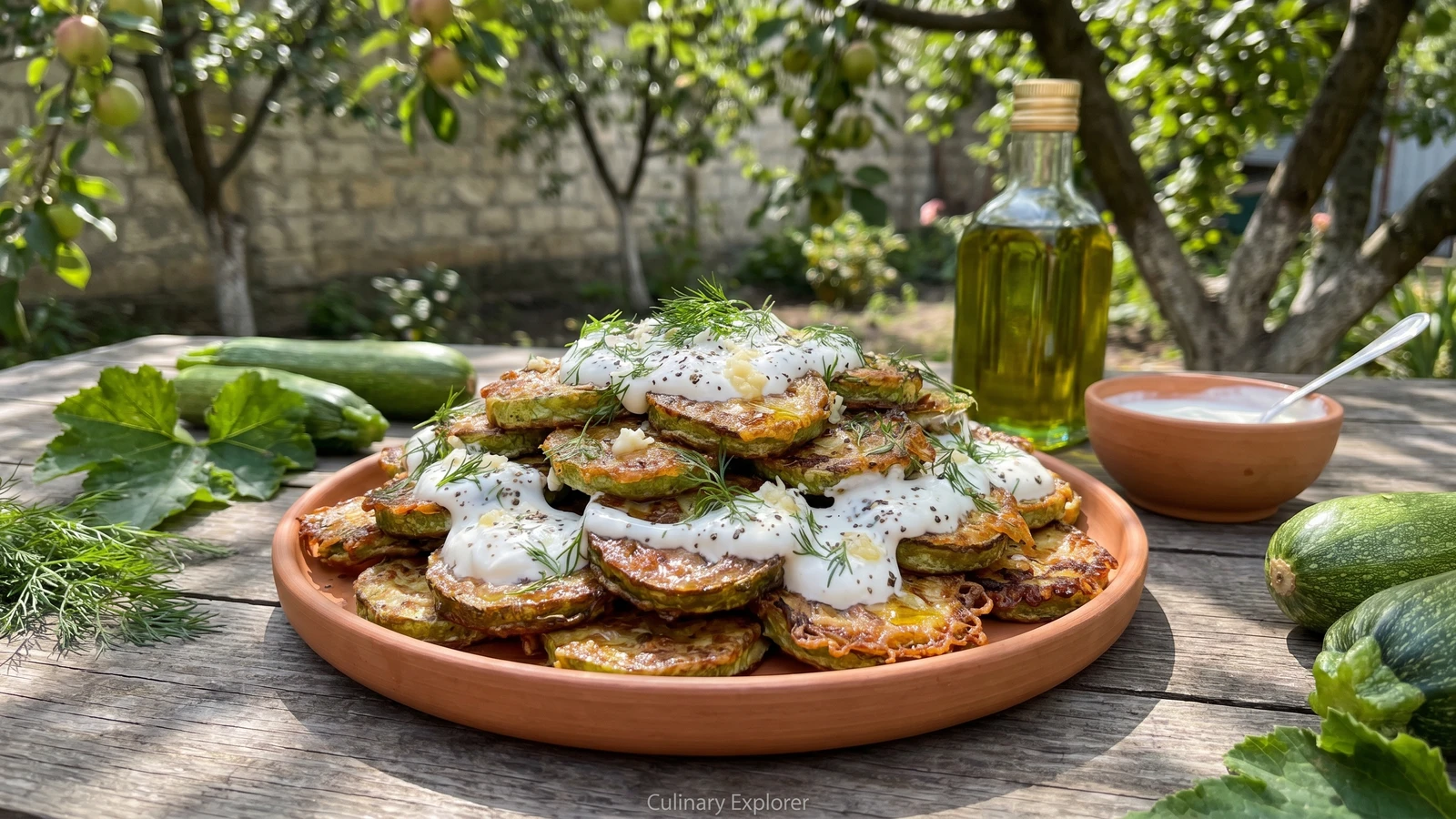
By August the zucchini stop asking permission. Slice them thin, salt out their water, fry them gold, then bury them under garlic, dill, and cold smetana.
By August the zucchini stop asking permission. One day they are small and neat under the leaves; the next they are lying in the path like green clubs, and every table in the south has to answer them. This is the best answer I know: rounds salted until they weep, dusted lightly with flour, fried in sunflower oil until the edges turn gold, then covered with crushed garlic, dill, and cold smetana.
The whole dish is decided before the first slice hits the pan. Salt pulls the water out, and drying the rounds lets the flour cling in a thin skin instead of turning to paste. If the pan sings when the zucchini goes in, you're on the right road. If it sighs, the oil is too cool and the slices will drink it like gossip.
My aunt's letter only said, "fry until it sounds right," which was annoying until it became useful. Listen for the busy little crackle, watch the pale flesh go translucent at the center, and stop when the rim browns before the middle collapses. Serve them warm, room temperature, or straight from the fridge the next morning, if anyone left you any.
Kabachky, summer squash and zucchini, became everyday garden vegetables across Ukraine in the twentieth century, especially in the southern steppe where heat, chernozem soil, and long summers make them absurdly generous. Fried zucchini with garlic belongs to the litnya kuhnia, the summer kitchen, where quick pan dishes handled the daily glut before the rest went into jars, brines, and salads. The smetana version is home-table food: practical, seasonal, sharp with garlic, and much brighter than the dull stereotype outsiders keep trying to put on Ukrainian cooking.
Quantity
1.2 kg
sliced into 7mm rounds
Quantity
1 1/2 teaspoons, plus more to finish
Quantity
80g
Quantity
1/2 teaspoon, plus more to serve
Quantity
150ml, plus more as needed
for frying
Quantity
4 cloves
crushed to a paste
Quantity
200g
Quantity
1 small bunch
finely chopped
Quantity
1 teaspoon
| Ingredient | Quantity |
|---|---|
| small to medium zucchinisliced into 7mm rounds | 1.2 kg |
| fine sea salt | 1 1/2 teaspoons, plus more to finish |
| plain flour | 80g |
| black pepper | 1/2 teaspoon, plus more to serve |
| unrefined sunflower oilfor frying | 150ml, plus more as needed |
| garliccrushed to a paste | 4 cloves |
| smetana or full-fat sour cream | 200g |
| dillfinely chopped | 1 small bunch |
| lemon juice or fermented tomato brine (optional) | 1 teaspoon |
Lay the zucchini rounds in a wide bowl or tray and toss them with the salt. Leave them until beads of water gather on the surface and the slices bend a little instead of snapping. This is not fussing. This is how you stop them from steaming in the pan.
Tip away the salty liquid, then pat the rounds dry with a clean towel. Mix the flour with black pepper and dredge the zucchini lightly, shaking off anything thick or clumpy. You want a dusty coat, not a winter jacket.
Pour enough sunflower oil into a wide frying pan to cover the base generously. When a pinch of flour fizzes at once, add the zucchini in a single layer. The pan should sound busy, a steady crackle, not a dull hiss. Fry until the edges turn gold and the centers soften, then turn and do the other side.
Lift the fried rounds onto a paper-lined tray or a rack and salt them while the oil still shines on the surface. Keep frying in batches, adding more oil when the pan looks dry. The best pieces have a soft middle, a golden rim, and a smell that has changed from raw green to nutty-sweet.
Stir the crushed garlic into the smetana with most of the dill. Add the lemon juice or fermented tomato brine if your smetana tastes too flat. It should be cold, sharp, and a little rude from the garlic.
Arrange the zucchini on a wide plate in loose overlapping layers, spooning a little garlic smetana between them and over the top. Scatter with the remaining dill and black pepper. Eat warm, at room temperature, or chilled for a picnic, with bread nearby to catch the oil and smetana.
1 serving (about 200g)
Culinary guides, cultural storytelling, and the editorial depth that makes cooking meaningful.
Discover Culinary ExplorerChef Lesia
Buckwheat is the color people mistake for dull until the mushrooms give it their black forest juices, the onion turns sweet, and every grain starts shining with green sunflower oil.

Chef Lesia
Buckwheat is never grey if you treat it properly: toast it until it smells nutty, then fold it through onions gone sweet and glossy in green sunflower oil.
Chef Lesia
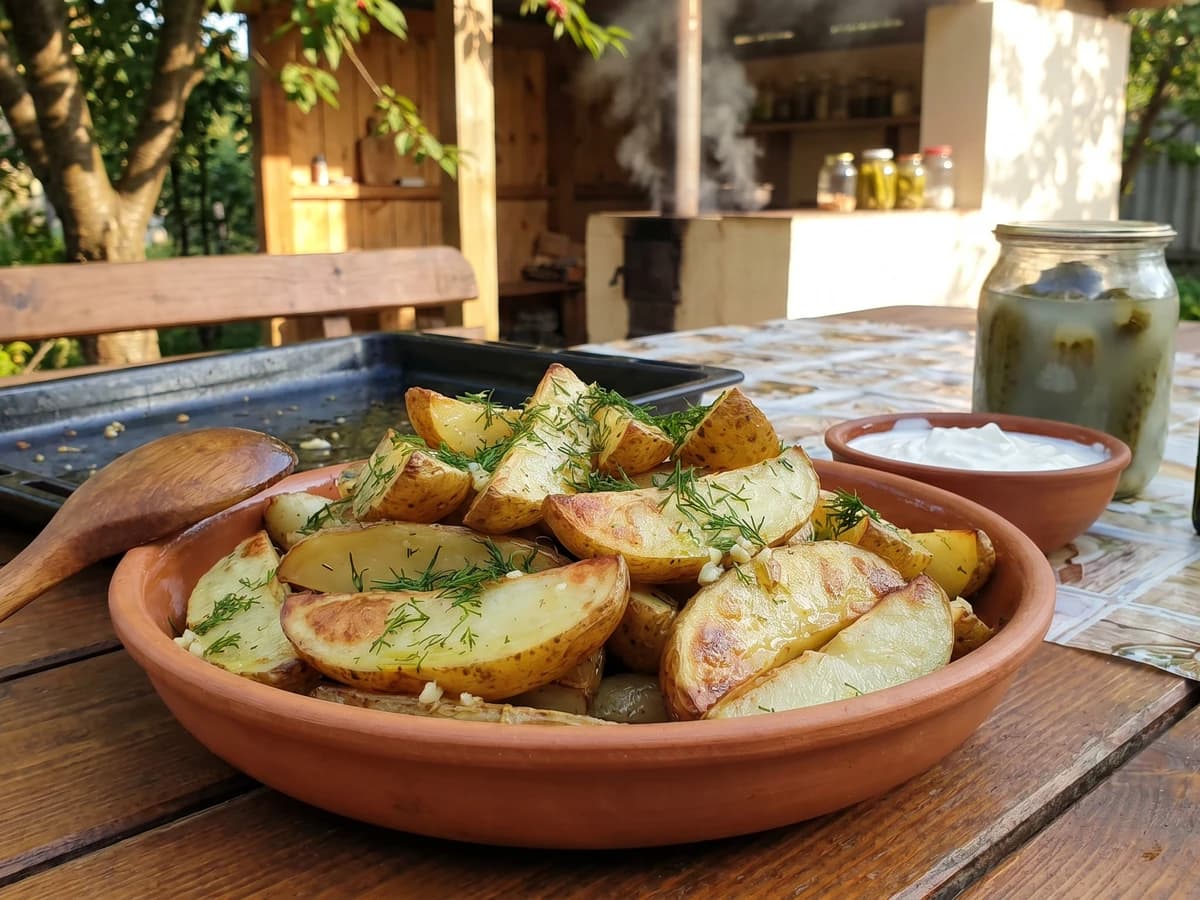
The trick is not the potato, it's the cracked edge: rough wedges roast until golden, then drink garlic, dill, and unrefined sunflower oil while still hot.

Chef Lesia
Flour and warm water sit overnight until the bowl smells like rye bread and orchard fruit, then the batter cooks into a glossy sweet-sour pudding. Almost nobody makes it now. We will.