
Chef Lesia
Hrechka z Hrybamy (гречка з грибами, mushroom buckwheat)
Buckwheat is the color people mistake for dull until the mushrooms give it their black forest juices, the onion turns sweet, and every grain starts shining with green sunflower oil.
A cooking platform built around craft, culture, and the stories behind what we eat.

Created by
Cabbage tells you when it is ready by sound first: the wet hiss softens, the pan quiets, and the pale leaves begin catching gold at the edges.
Cabbage tells you when it is ready by sound first. At the start it hisses and throws off water like laundry in a hot pan; then the noise drops, the smell changes, and the pale leaves begin catching gold at the edges. That is the moment. Not brown, not limp, not punished. Sweet, glossy, and alive with sunflower oil.
This is the quick cabbage every Ukrainian grandmother can make while talking over her shoulder, but quick does not mean careless. The onion and carrot need their own slow moment first, a little zasmazhka, the sweet fried base we lean on everywhere. Then the cabbage goes in by handfuls so it fries instead of boiling in its own puddle. Aunt Nadia once wrote only, "cook until it sounds right," which is annoying until you hear it. Then you never forget.
Serve it as a side with potatoes, buckwheat, sausages, or fried eggs, or cool it and tuck it into pyrizhky or varenyky. Make a full pan. Cabbage is cheap, yes, but cheap food can still know exactly who it is.
Fried and stewed cabbage dishes sit across Ukraine because cabbage stored well through winter, but the southern steppe version leans bright with unrefined sunflower oil, carrot sweetness, and dill rather than long heavy braising. In many homes smazhena kapusta also becomes a filling for pyrizhky and varenyky, which is why cooks fry off the moisture first: dry, sweet cabbage seals inside dough without making it soggy.
Quantity
1 medium, about 1 kg
cored and finely shredded
Quantity
1 large
thinly sliced
Quantity
1 large
coarsely grated
Quantity
4 tablespoons
Quantity
1 tablespoon
Quantity
1
Quantity
1 teaspoon, plus more to taste
Quantity
1/2 teaspoon
Quantity
1 teaspoon
Quantity
1 tablespoon or a splash
Quantity
small bunch
chopped
| Ingredient | Quantity |
|---|---|
| white cabbagecored and finely shredded | 1 medium, about 1 kg |
| onionthinly sliced | 1 large |
| carrotcoarsely grated | 1 large |
| unrefined sunflower oil | 4 tablespoons |
| tomato paste (optional) | 1 tablespoon |
| bay leaf | 1 |
| fine sea salt | 1 teaspoon, plus more to taste |
| black pepper | 1/2 teaspoon |
| sugar (optional) | 1 teaspoon |
| apple vinegar or fermented tomato brine (optional) | 1 tablespoon or a splash |
| dillchopped | small bunch |
Put the shredded cabbage in a wide bowl, sprinkle with the salt, and squeeze it with your hands until it softens slightly and glistens. You are not making sauerkraut. You are only helping the leaves relax so they hit the pan ready to cook, not fight.
Warm the sunflower oil in your widest pan and add the onion. Let it soften until translucent and sweet-smelling, then add the grated carrot. Cook until the oil turns orange and the carrot slumps into the onion.
Add the cabbage by handfuls, tossing well after each addition so it meets the hot oil. At first the pan will hiss loudly as the cabbage gives up water. Keep stirring, and when the sound quiets and the smell turns from raw brassica to something sweet and nutty, let a few edges catch gold before you move it again.
Tuck in the bay leaf, add black pepper, and stir in the tomato paste if you want a warmer color and a little tang. If the cabbage is dry, splash in two tablespoons of water and cover for a few minutes, then uncover so the moisture cooks away. It should be soft but not collapsed.
Taste. If the cabbage tastes flat, add the sugar only if it needs sweetness, and a splash of vinegar or fermented tomato brine only if it needs lift. Pull out the bay leaf, stir in most of the dill, and finish with a thin shine of sunflower oil. Serve warm, or cool completely if you are using it for dumplings or pies.
1 serving (about 160g)
Culinary guides, cultural storytelling, and the editorial depth that makes cooking meaningful.
Discover Culinary ExplorerChef Lesia
Buckwheat is the color people mistake for dull until the mushrooms give it their black forest juices, the onion turns sweet, and every grain starts shining with green sunflower oil.

Chef Lesia
Buckwheat is never grey if you treat it properly: toast it until it smells nutty, then fold it through onions gone sweet and glossy in green sunflower oil.
Chef Lesia
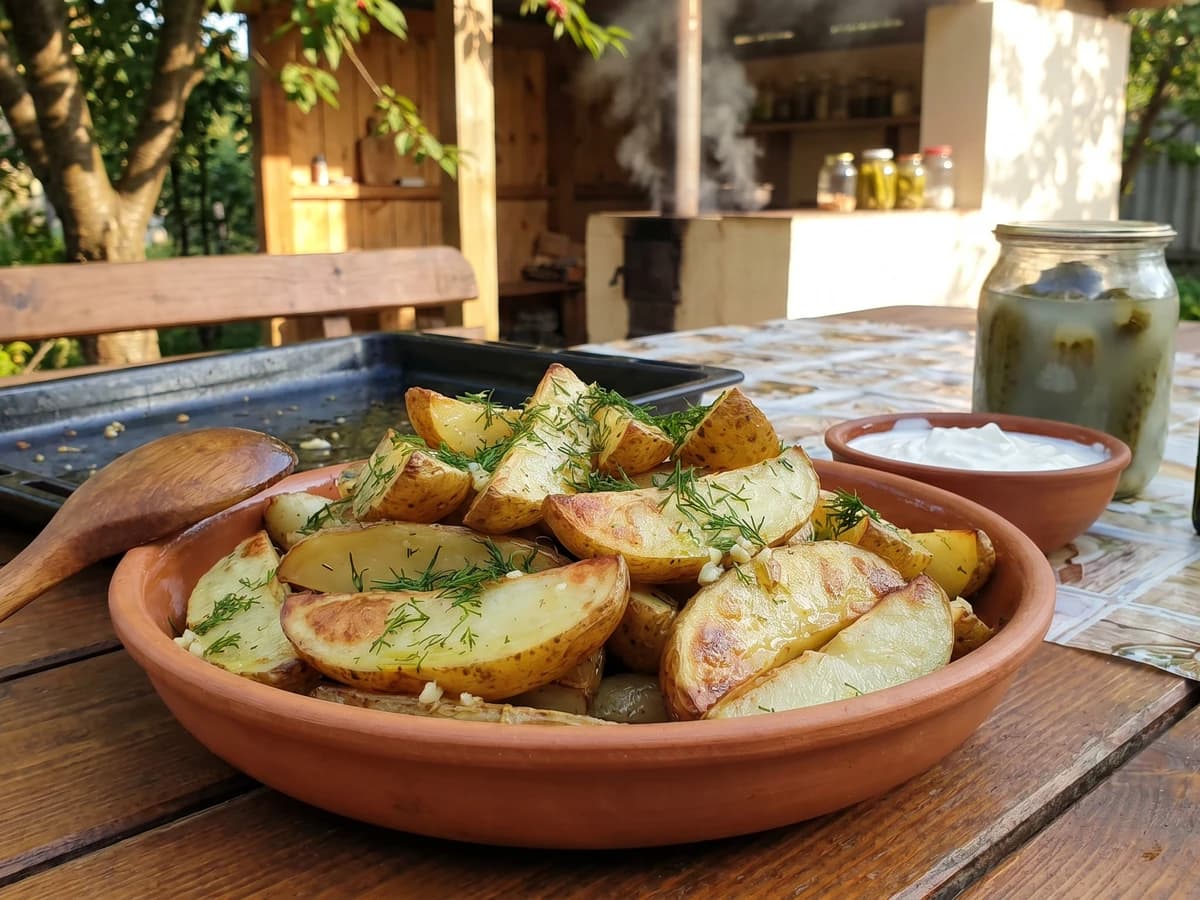
The trick is not the potato, it's the cracked edge: rough wedges roast until golden, then drink garlic, dill, and unrefined sunflower oil while still hot.

Chef Lesia
Flour and warm water sit overnight until the bowl smells like rye bread and orchard fruit, then the batter cooks into a glossy sweet-sour pudding. Almost nobody makes it now. We will.