
Chef Lesia
Makivnyk (маківник, poppy seed roll)
The black poppy filling is the point: dense, glossy, honeyed, almost mineral, rolled so tightly through soft dough that every slice looks like a winter night with a gold edge.
A cooking platform built around craft, culture, and the stories behind what we eat.
Created by
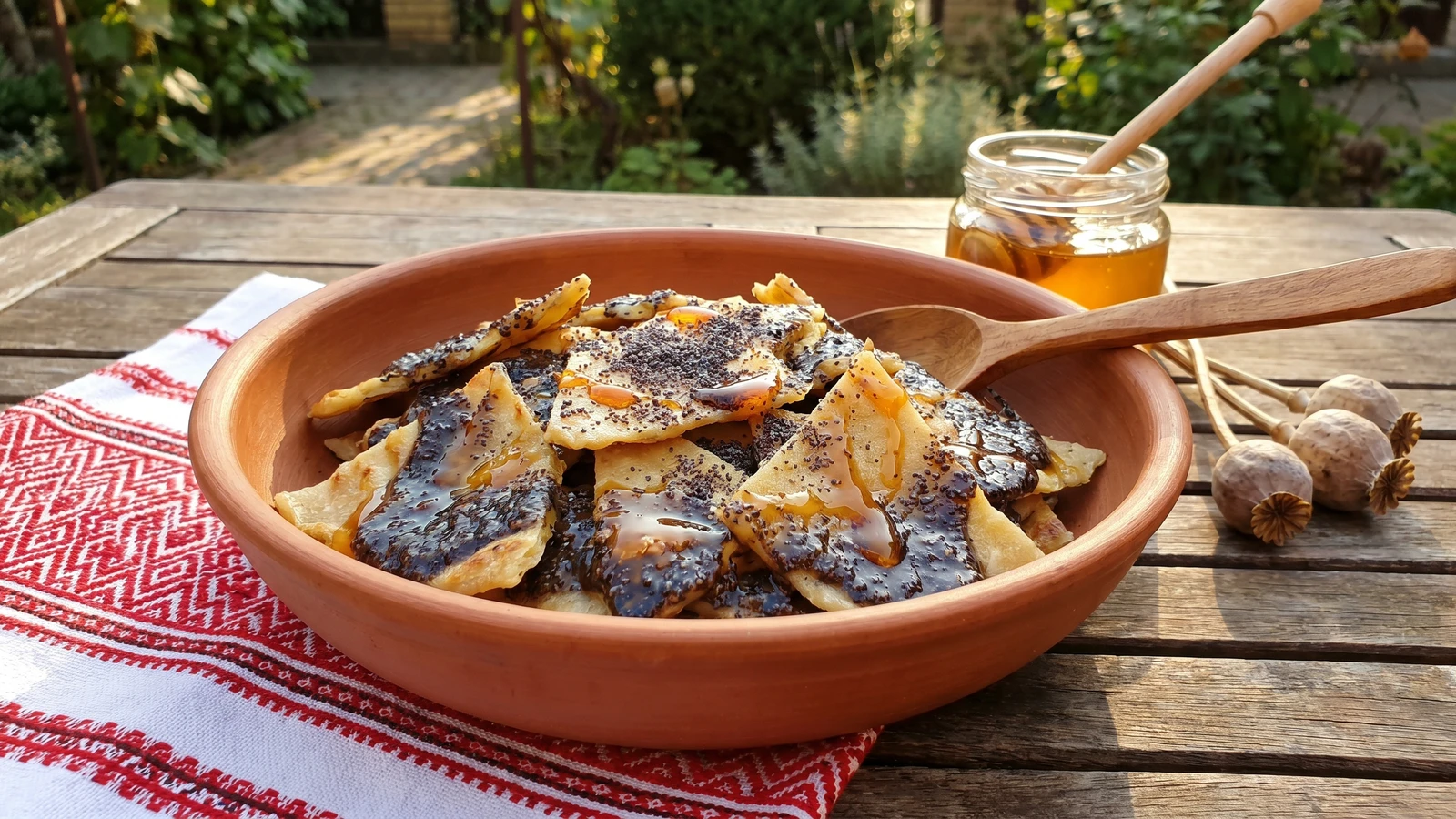
A cake you are meant to break: thin wheat korzh snapped into shards, then drowned in black poppy seed and honey until every piece goes soft.
The beautiful thing is the breaking. You bake one thin, plain wheat korzh until it smells nutty at the edges, then you ruin its neatness with your hands, snapping it into rough pieces and letting them fall into a bowl of ground poppy seed and honey. That is the dish. Not a cake sliced politely, not a biscuit kept crisp, but shards made soft on purpose.
Shulyky belong to Makoviy, the August feast when poppy heads, herbs, and honey come to the table together. In the villages of central Ukraine, especially around Poltava and Cherkasy, this is the sweet that appears after church, after the makoviichyk bouquet has been carried home, after somebody has found the big bowl. My Aunt Nadia wrote only, "break it small enough to drink the honey," which is unhelpful until you do it once and understand she meant each piece must have torn edges, because torn edges drink.
The one thing that decides the dish is the poppy. It must be ground until it darkens, releases its oil, and starts to smell warm and grassy, not just sprinkled in like decoration. Whole poppy seeds roll around your teeth and do nothing. Ground poppy becomes milk, sauce, memory, the black-speckled sweetness that clings to every softened piece.
Make more than you think. Shulyky look modest when dry, then swell in the bowl, and still somehow disappear by the spoonful. Enough for eight guests or one hungry Ukrainian.
Shulyky, also called lomantsi in some regions because the cake is broken or "lamany," are tied to Makoviy, the Honey Savior marked on 14 August and the start of the Dormition Fast in the Ukrainian folk calendar. The dish is especially associated with central Ukraine, where a lean wheat flatcake was soaked in makove moloko, poppy milk sweetened with honey, after poppy heads and herbs were blessed in church. Its ritual logic is older than the tidy cake slice: grain, poppy, and new honey brought together at the moment summer begins leaning toward autumn.
Quantity
350g
plus extra for rolling
Quantity
1 tablespoon
Quantity
1/2 teaspoon
Quantity
1 teaspoon
Quantity
80ml
plus extra for brushing
Quantity
160ml
Quantity
250g
Quantity
350ml
for soaking the poppy seeds
Quantity
120g
plus more to taste
Quantity
150ml
for loosening the sauce
Quantity
pinch
Quantity
1 tablespoon
| Ingredient | Quantity |
|---|---|
| plain flourplus extra for rolling | 350g |
| sugar | 1 tablespoon |
| fine sea salt | 1/2 teaspoon |
| baking powder | 1 teaspoon |
| unrefined sunflower oilplus extra for brushing | 80ml |
| warm water | 160ml |
| poppy seeds | 250g |
| boiling waterfor soaking the poppy seeds | 350ml |
| honeyplus more to taste | 120g |
| warm waterfor loosening the sauce | 150ml |
| fine sea salt | pinch |
| lemon juice or sour cherry syrup (optional) | 1 tablespoon |
Put the poppy seeds in a bowl and cover them with the boiling water. Leave them until they swell, darken, and smell faintly green and nutty. Drain well through a fine sieve. If water sits in the seeds, the sauce will taste thin instead of rich.
Mix the flour, sugar, salt, and baking powder in a wide bowl. Pour in the sunflower oil and rub it through with your fingers until the flour feels slightly sandy, then add the warm water and gather everything into a firm dough. Knead only until smooth. This is a flatcake, not bread, so don't work it into obedience.
Cover the dough and let it sit until it relaxes under your hand, about the time it takes to clear the table and heat the oven to 200C. Roll it on a floured surface into one thin round or rectangle, roughly the thickness of two stacked coins. Prick it all over with a fork so it bakes flat, then brush lightly with sunflower oil.
Slide the flatcake onto a baking tray and bake until the surface is dry, the edges are golden, and the kitchen smells of toasted wheat. It should sound firm when you tap it, not soft like bread. Let it cool until your hands can handle it.
Grind the drained poppy seeds until they bruise, darken, and begin to clump from their own oil. Stop and scrape often. You are waiting for the smell to change: first dusty, then warm, almost like cut grass and nuts. Stir in the honey, warm water, salt, and the lemon juice or sour cherry syrup if you want a little lift.
Break the cooled korzh by hand into bite-size shards, not neat squares. Put them into a deep bowl and pour the poppy-honey sauce over the top, turning gently so every rough edge gets coated. Leave it until the pieces soften but still remember they were baked. Taste one from the bottom of the bowl; that's where the honey gathers.
Spoon the shulyky into small bowls with extra sauce from the bottom. Serve at room temperature, sticky, dark, and a little messy. A tidy portion would miss the point.
1 serving (about 135g)
Culinary guides, cultural storytelling, and the editorial depth that makes cooking meaningful.
Discover Culinary ExplorerChef Lesia
The black poppy filling is the point: dense, glossy, honeyed, almost mineral, rolled so tightly through soft dough that every slice looks like a winter night with a gold edge.

Chef Lesia
Poppy seeds are the sound of Makoviy: toasted, crushed, and whispering under your teeth in small honey cookies baked when the heads ripen in the August heat.

Chef Lesia
The cherries fight back: tart July fruit cuts through sweet, oily poppy seed filling, staining the soft yeast crumb violet at the seams.
Chef Lesia
These little open cups carry their name like a road: mandryky, wanderers, with crumbly golden edges and sweet curd cheese sitting soft in the middle.