
Chef Takumi
Abura Soba (油そば, brothless ramen)
Abura soba is ramen without the hiding place of soup: hot noodles, strong shōyu tare, fragrant oil, and the discipline to mix while every strand is still hot.
A cooking platform built around craft, culture, and the stories behind what we eat.
Created by
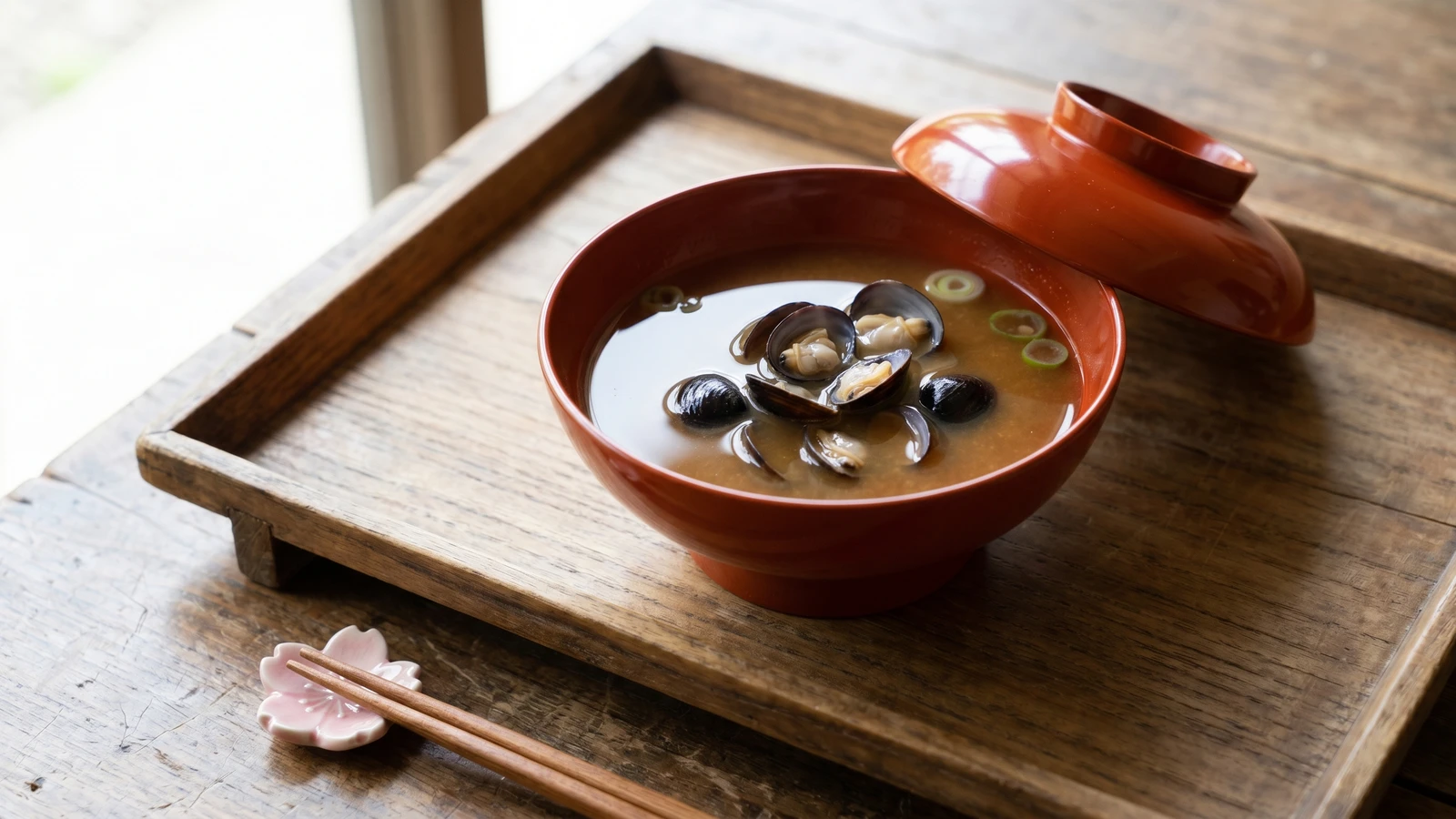
Small shijimi make the stock themselves. Purge them well, simmer only until the shells open, skim cleanly, then stir in miso off the heat so the broth stays clear and alive.
Shijimi look too small to carry a bowl of soup, which is their little joke. These dark freshwater clams give up a broth deeper than their size should allow, especially when they are at 旬 (shun, at its prime): midsummer doyō shijimi, or winter kan shijimi. Buy them live and clean-smelling, and the dish is already leaning toward you.
People worry about clam soup because of grit. Good. Worry about the right thing. The one detail that decides this bowl is sunanuki, sand purging: a mild salt bath, shallow and dark, so the clams relax and release what you don't want in your teeth. Lift them out, never pour the water back through them, and you have done the hard part.
After that, it is almost rude how little cooking remains. Start the clams in cold water, with a small square of konbu if you want a rounder broth, and bring them up gently so the clam liquor enters the water before the meat tightens. Skim, then turn off the heat and dissolve the miso. Don't boil it. Miso has fragrance from fermentation, and boiling flattens it into salt. A breakfast bowl, a weeknight bowl, a comfort bowl, the method is the same: let the shells open, and leave the flavor unhidden.
Shijimi clams have been eaten in Japan since prehistoric times; Corbicula shells appear in Jōmon-period shell middens near river mouths and brackish lagoons. Modern markets especially prize Yamato shijimi from brackish waters such as Lake Shinji in Shimane, and seasonal language still names two peaks: doyō shijimi in midsummer and kan shijimi in deep winter. In misoshiru, the clam itself functions as dashi, which is why many household versions use only water, shijimi, and miso.
Quantity
400g
uncracked and clean-smelling
Quantity
1 liter
for purging
Quantity
10g
for purging
Quantity
4 cups
for the soup
Quantity
1 small piece (about 5g)
Quantity
1 tablespoon
Quantity
3 to 4 tablespoons
Quantity
1 small scallion or 4 small sprigs
very thinly sliced if using scallion
| Ingredient | Quantity |
|---|---|
| live shijimi (freshwater clams)uncracked and clean-smelling | 400g |
| cold waterfor purging | 1 liter |
| sea saltfor purging | 10g |
| cold waterfor the soup | 4 cups |
| konbu (dried kelp) (optional) | 1 small piece (about 5g) |
| sake (optional) | 1 tablespoon |
| aka miso or awase miso | 3 to 4 tablespoons |
| scallion or mitsuba (optional)very thinly sliced if using scallion | 1 small scallion or 4 small sprigs |
Discard any shijimi with cracked shells or a sour smell. Mix 1 liter cold water with 10g sea salt in a shallow bowl, then add the clams in one layer and cover loosely. Keep them cool and dark for 2 to 3 hours. Shijimi are freshwater to brackish clams, so this mild 1 percent salt bath is enough; the stronger seawater bath used for asari is not the one we want here.
Lift the clams out of the purging water with your hands or a small sieve, leaving the grit behind. Don't pour the water through them. Rub the shells together under cold running water until they feel clean and no grit catches under your fingers. If any shell gapes and will not close when tapped, discard it.
Put the cleaned shijimi, 4 cups cold water, the optional konbu, and the optional sake into a medium pot. Bring it up slowly over medium-low heat. If using konbu, pull it out when the water trembles and small bubbles climb the sides, before the boil arrives. Boiled konbu can turn the broth faintly bitter and slick, and this little soup has no heavy seasoning to hide that mistake.
When the first shells open, lower the heat so the broth barely moves. Skim off the pale scum as it gathers. Cook only until most shells have opened, usually 3 to 5 minutes, then discard any that stay shut. A hard boil knocks the shells around, clouds the broth, and makes the tiny clams tough.
Turn off the heat. Put 3 tablespoons miso into a miso koshi, or into a ladle, and loosen it with hot broth before stirring it back into the pot. Taste, then add more miso only if the broth asks for it. Never boil miso once it is in the soup; boiling drives off its fragrance and leaves a rough salt edge.
Ladle the clams and broth into warm bowls and finish with a few thin scallion rings or one small sprig of mitsuba. Serve at once, while the surface is glossy and the clam fragrance is still clear. The clams are small, but they are not decoration; pick them from the shells as you drink the soup.
1 serving (about 265g)
Culinary guides, cultural storytelling, and the editorial depth that makes cooking meaningful.
Discover Culinary ExplorerChef Takumi
Abura soba is ramen without the hiding place of soup: hot noodles, strong shōyu tare, fragrant oil, and the discipline to mix while every strand is still hot.
Chef Takumi
Akadashi asks you to trust the dark miso. Build a clear dashi, loosen the Hatchō mame-miso gently, and the soup turns coffee-dark, savory, and clean.

Chef Takumi
Toast the rice until its skin is firm, then let it meet chicken broth, burdock, maitake, and seri. The pot looks grand, but the work is rice, broth, and patience.
Chef Takumi
Shottsuru nabe is Akita winter in one pot: clean dashi, hatahata at shun, tofu and napa cabbage carrying a salt-deep broth without anything heavy enough to hide the fish.