
Chef Takumi
Abura Soba (油そば, brothless ramen)
Abura soba is ramen without the hiding place of soup: hot noodles, strong shōyu tare, fragrant oil, and the discipline to mix while every strand is still hot.
A cooking platform built around craft, culture, and the stories behind what we eat.
Created by
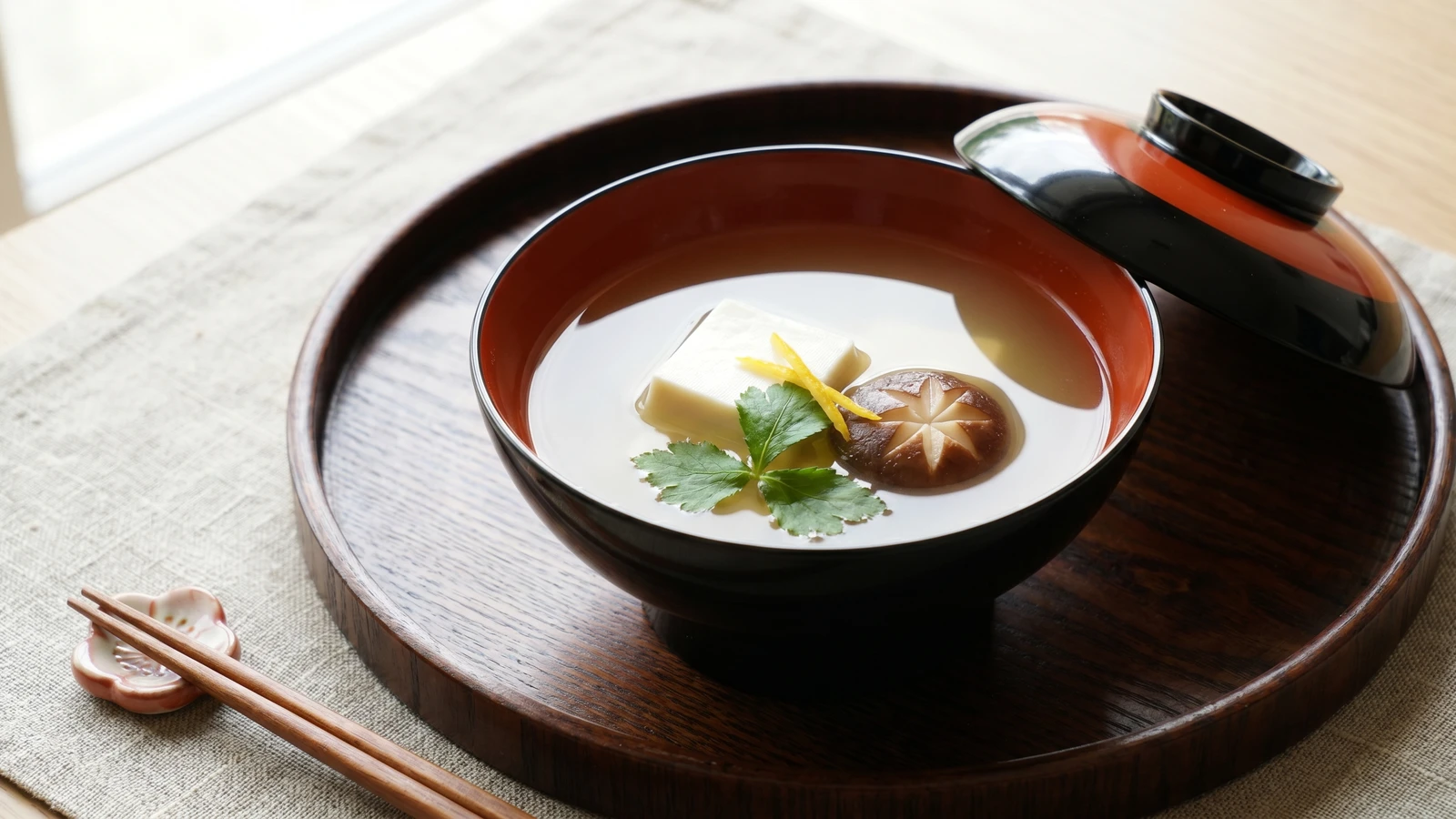
Sumashijiru is the clear soup that teaches restraint: first-pressing dashi, a breath of light soy and salt, then one or two seasonal things left visible.
Aclear soup has no curtain. You see the bottom of the bowl, and then you taste whether the cook was paying attention. This is why people make sumashijiru sound delicate and severe. It isn't difficult. It only refuses to be rescued at the end.
The first secret is ichiban dashi, the first stock drawn from konbu and katsuobushi. Bring the kelp up slowly and remove it before the water boils, because boiling pulls bitterness and a slick mouthfeel from it. Add the bonito flakes off the heat, let them sink, then strain without squeezing. The soup stays clear because you protected it twice.
After that, season lightly. A little usukuchi shōyu, a little salt, perhaps a spoon of sake, and stop. The bowl should taste clean, deep, and almost bare. Put in one or two things at their prime: a cube of tofu, a shiitake cap, a curl of yuzu peel, a sprig of mitsuba. In a Japanese meal, this soup is not decoration. It is the quiet space that lets the rice, grilled fish, and simmered dishes speak in turn. Leave it room.
Sumashijiru belongs to the family of suimono, clear soups served in lidded bowls as part of formal Japanese meals and everyday ichijū-sansai, one soup and three dishes. Its name comes from sumasu, meaning to clarify or refine, a reminder that the cook's work is to keep the broth clean rather than enrich it heavily. In kaiseki, the clear soup course often reveals the season through a single central morsel, called wan-dane, and an aromatic accent, called suikuchi.
Quantity
1 piece (about 10g)
Quantity
4 cups
Quantity
20g
Quantity
1 tablespoon
Quantity
1 teaspoon
Quantity
1/2 teaspoon, plus more to taste
Quantity
120g
cut into 4 neat cubes
Quantity
4
stems removed and caps lightly scored
Quantity
4 small sprigs
Quantity
4 thin strips
| Ingredient | Quantity |
|---|---|
| konbu (dried kelp) | 1 piece (about 10g) |
| cold water | 4 cups |
| katsuobushi (bonito flakes) | 20g |
| sake | 1 tablespoon |
| usukuchi shōyu (light soy sauce) | 1 teaspoon |
| sea salt | 1/2 teaspoon, plus more to taste |
| silken or soft tofucut into 4 neat cubes | 120g |
| fresh shiitake mushroom capsstems removed and caps lightly scored | 4 |
| mitsuba | 4 small sprigs |
| yuzu peel | 4 thin strips |
Wipe the konbu lightly with a damp cloth, but don't scrub it. The pale powder on the surface is not dirt, it's part of the flavor. Put the konbu and cold water in a pot and warm it slowly over low heat until small bubbles gather at the sides, about ten minutes. Lift the konbu out before the water boils, because boiling pulls bitterness and cloudiness from the kelp.
Bring the water just to a gentle boil, add the katsuobushi all at once, and immediately turn off the heat. Leave the pot alone for two to three minutes, until the flakes sink. Don't stir. Stirring muddies the stock and draws out harsher flavors you don't need.
Line a fine-mesh strainer with a clean cloth or sturdy paper towel and strain the dashi into a clean pot. Let it drip by itself. Don't squeeze the flakes, because squeezing presses out oily, rough flavors and clouds the clear gold stock. This is ichiban dashi, the first stock, and it should smell clean and faintly smoky.
Add the sake, usukuchi shōyu, and salt to the dashi. Warm it gently and taste. It should be savory and clear, with the salt supporting the stock rather than announcing itself. If it tastes flat, add a pinch of salt. If it tastes thin, the answer is better dashi, not more soy.
Add the tofu cubes and shiitake caps and warm them gently for two to three minutes. Keep the broth below a hard boil. A rolling boil roughens the tofu, dulls the mushroom aroma, and disturbs the clean surface you worked for.
Place one tofu cube and one shiitake cap in each warmed soup bowl. Ladle the clear broth around them, not over them, so the arrangement stays calm. Finish each bowl with one sprig of mitsuba and one strip of yuzu peel. Cover with lids and serve at once, while the aroma is still gathered inside.
1 serving (about 260g)
Culinary guides, cultural storytelling, and the editorial depth that makes cooking meaningful.
Discover Culinary ExplorerChef Takumi
Abura soba is ramen without the hiding place of soup: hot noodles, strong shōyu tare, fragrant oil, and the discipline to mix while every strand is still hot.
Chef Takumi
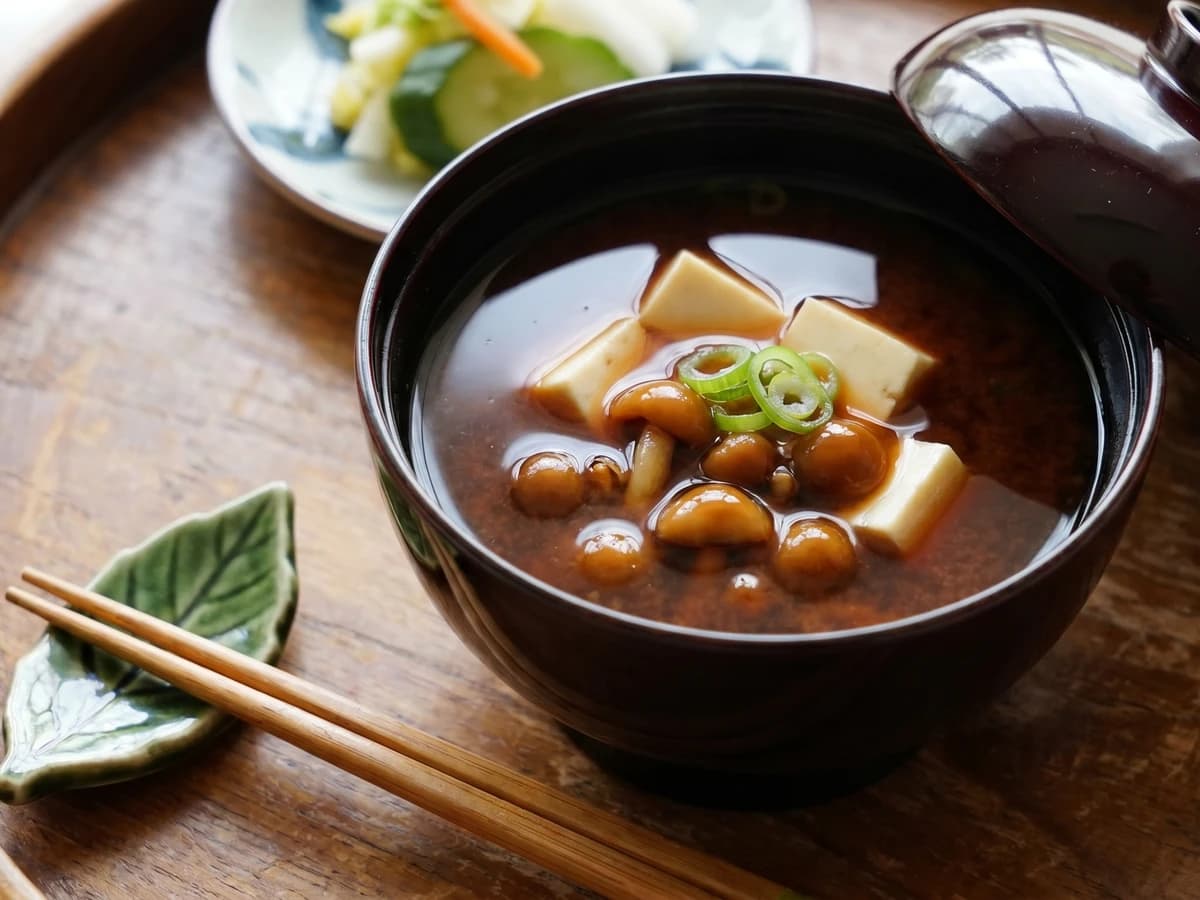
Akadashi asks you to trust the dark miso. Build a clear dashi, loosen the Hatchō mame-miso gently, and the soup turns coffee-dark, savory, and clean.

Chef Takumi
Toast the rice until its skin is firm, then let it meet chicken broth, burdock, maitake, and seri. The pot looks grand, but the work is rice, broth, and patience.
Chef Takumi
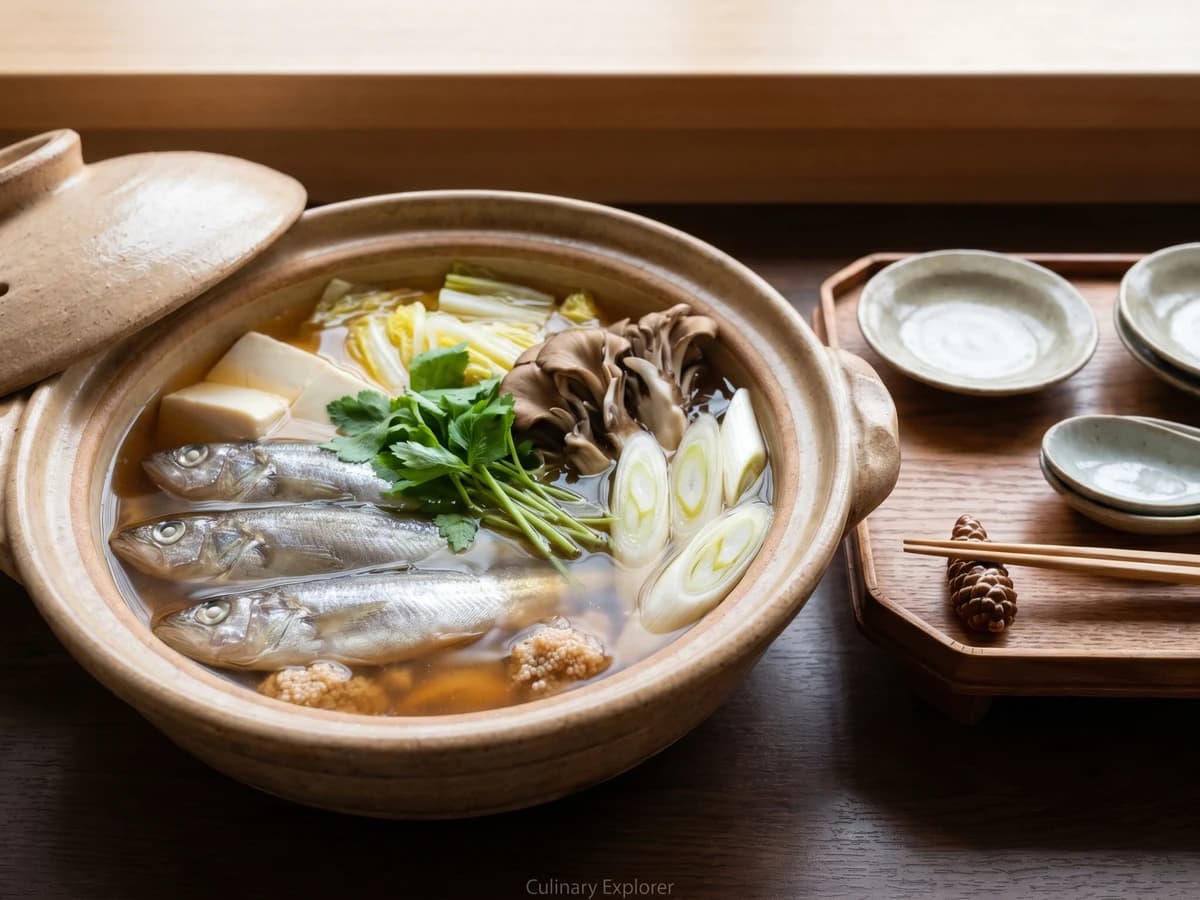
Shottsuru nabe is Akita winter in one pot: clean dashi, hatahata at shun, tofu and napa cabbage carrying a salt-deep broth without anything heavy enough to hide the fish.